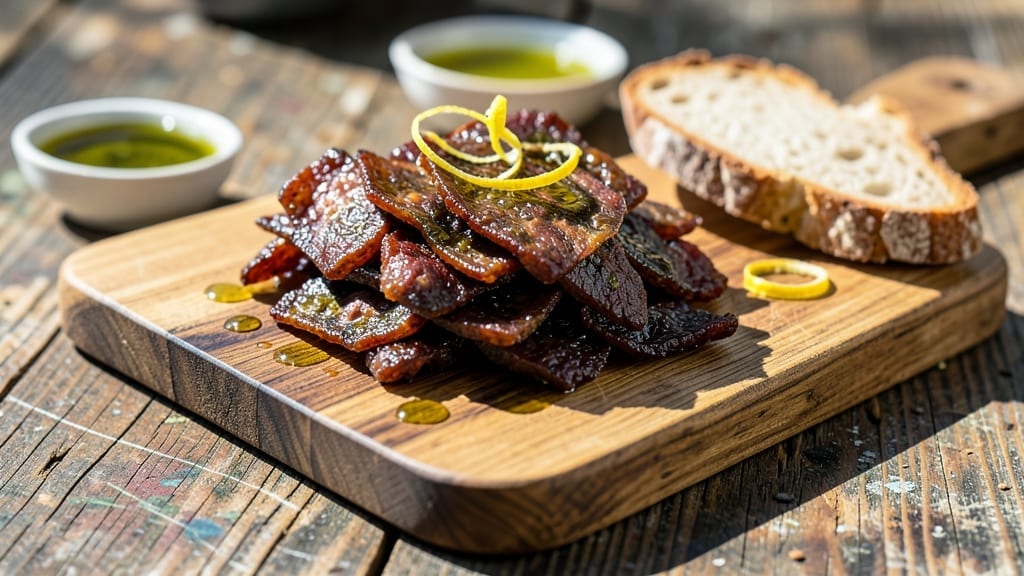
Creating smoked sweet beef jerky that’s perfectly tender and caramelized takes patience, but the result is worth every minute. The key lies in balancing sweetness with smoky depth while ensuring the meat stays tender enough to chew—not snap.
I developed this recipe after years of experimenting with different wood types and marinades, and it consistently delivers that perfect harmony of flavors.
This process begins with proper meat preparation—thin, even slices that cook uniformly—and a sweet marinade that caramelizes beautifully during smoking. Using a mix of hickory and fruitwoods adds that signature smoky backbone without overpowering the sweetness.
The slow smoking method ensures the jerky remains tender while developing that irresistible caramelized crust.
By the end, you’ll have jerky that’s chewy yet tender, with a glossy caramelized finish and a perfect balance of sweet and smoky flavors. It’s the kind of snack that disappears quickly, whether you’re prepping for a road trip or stocking your pantry for emergencies.
Let’s get started on creating your own batch.
The best part? This jerky keeps well in your pantry for months, making it a versatile snack for any occasion. Store it properly, and you’ll have a delicious, protein-packed treat ready whenever you need it.
Ingredients for smoked sweet beef jerky
Three pounds of beef, sweet marinade magic, and slow smoke perfection. Worth every hour.
| Ingredient | Amount | Notes |
|---|---|---|
| Flank Steak 🥩 | 3 lb | Thinly sliced against grain |
| Brown Sugar 🍚 | 1 ½ cups | Granulated, for marinade sweetness |
| Honey 🍯 | 1 cup | Pure, for caramelization |
| Worcestershire Sauce 🍶 | ¼ cup | High-quality for depth |
| Apple Cider Vinegar 🍎 | ¼ cup | For tenderizing and tang |
| Garlic Powder 🧄 | 2 tbsp | Freshly ground preferred |
| Onion Powder 🧅 | 2 tbsp | For savory backbone |
| Black Pepper 🌶️ | 1 tbsp | Freshly cracked |
| Smoked Paprika 🌶️ | 1 tbsp | For authentic smoky flavor |
| Salt 🧂 | 1 tbsp | Diamond Crystal kosher |
| Hickory Wood Chips 🔥 | 1 package | Soaked 30+ minutes before use |
| Fruitwood Chips 🍒 | ½ package | Apple or cherry for balance |
| Butcher Paper 📄 | 2 sheets | For drying and hanging |
[recipe_ingredient_scaler]
The flank steak is your star—look for well-marbled cuts from a butcher shop like Whole Foods or Costco for premium quality. Slice it 1/8-inch thick against the grain—this is non-negotiable for tenderness. I always buy it frozen and thaw it overnight in the fridge to maintain freshness. The hickory and fruitwood chips are where the magic happens—soak them in apple juice for at least 30 minutes to prevent flare-ups. Camp Chef or Traeger brand chips work best for consistent smoke.
No Worcestershire? Substitute 2 tbsp soy sauce + 1 tbsp molasses for that umami punch. Short on honey? Maple syrup works but adds a different depth. Want extra smokiness? Add 1 tbsp liquid smoke to the marinade. The smoked paprika is key for authentic flavor—Penzeys or Badia brands are my go-tos. For a quicker option, use pre-sliced jerky meat from the grocery store (like Jack Link’s), but marinating fresh gives you that unmatched texture.
Marinate the beef for at least 12 hours (24 hours is ideal) in the fridge. Butcher paper is essential for drying slices before smoking—it absorbs moisture without sticking. After smoking, let the jerky cool completely on the paper before slicing. It keeps 4-6 months in an airtight container at room temperature. For extra freshness, freeze portions in ziplock bags—they’ll last 1 year. The caramelization happens during the last 30 minutes of smoking, so keep an eye on it!
Why You’ll Love This Recipe
- No-Fuss Smoking: Honestly, this is one of those recipes where the hardest part is waiting for the smoker to heat up. The marinade—just toss the sliced steak in that sweet, tangy mix of brown sugar, honey, and apple cider vinegar—and you’re done. No fancy prep, no stress. The real magic happens during the 4-6 hours of smoking, but that’s just you kicking back while the jerky works its smoky, caramelized wonder.
- Sweet-Smoky Perfection: That combo of hickory wood chips and fruitwood chips? Game-changer. The hickory gives it that deep, campfire vibe, while the apple or cherry wood keeps it from tasting like a barbecue joint gone wild. And the brown sugar and honey? They caramelize into this glossy, addictive crust that’s dangerously good. One bite and you’ll forget jerky could ever be boring.
- Stockpile Your Pantry: This isn’t just for trail mix. Pack a few pieces in your gym bag for post-workout protein, toss some in a lunchbox for a no-cook snack, or even slice it into a charcuterie board. It’s the kind of thing that turns a simple meal into something special—no effort, just instant flavor. And since it keeps for months, you’ll always have a backup when cravings strike.
- Budget-Friendly Protein: Three pounds of flank steak might seem like a lot, but let’s be real—this isn’t just for you. Divide it among friends, freeze half for later, or share with your hiking buddy who’s always complaining about trail snacks. The ingredients are simple, the process is straightforward, and you’re left with a snack that costs way less than store-bought jerky but tastes like you slaved over it for hours. (Spoiler: You didn’t.)
Step-by-step instructions for smoked sweet beef jerky
Here’s the method to transform tough flank steak into melt-in-your-mouth jerky with caramelized sweetness.
Prepare the Marinade for Maximum Flavor Infusion
In a large mixing bowl, combine the 1½ cups brown sugar, 1 cup honey, ¼ cup Worcestershire sauce, and ¼ cup apple cider vinegar. Whisk vigorously until the brown sugar dissolves completely and the mixture becomes syrupy. This is your flavor foundation – the sugar will caramelize during smoking while the vinegar tenderizes the meat.
Next, add the 2 tbsp garlic powder, 2 tbsp onion powder, 1 tbsp smoked paprika, 1 tbsp black pepper, and 1 tbsp salt. Mix thoroughly until all dry ingredients are fully incorporated and the marinade takes on an even, rich color. Here’s the thing – the spices need to be completely distributed so every slice gets that perfect balance of sweet, smoky, and savory flavors.
Set the marinade aside while you prepare the steak. The longer it sits, the more flavor it will absorb, but don’t let it sit for more than 4 hours or the sugars might start to break down.
Slice and Marinate the Flank Steak
Place the 3 lb flank steak on a cutting board and identify the grain direction – you’ll see long muscle fibers running through the meat. Using a very sharp boning knife, slice against the grain into strips approximately ¼-inch thick. This is crucial for tenderness – slicing against the grain shortens the muscle fibers, making each bite more manageable.
Transfer the sliced steak to a large zip-top bag and pour the marinade over the meat. Seal the bag and massage it gently to ensure every piece is coated. Place the bag in a shallow dish to catch any spills and refrigerate for 4-12 hours, turning the bag occasionally to ensure even marinating. The acid in the vinegar will begin breaking down the muscle fibers right away, while the sugars penetrate the meat creating that irresistible caramelized crust later.
For best results, marinate overnight. This extended time allows the flavors to fully penetrate while keeping the meat tender. If you’re short on time, 4 hours will still yield excellent results, though the flavor depth might be slightly less intense.
Smoke the Jerky with Precision Temperature Control
Soak the 1 package hickory wood chips and ½ package fruitwood chips in water for at least 30 minutes before smoking. This prevents them from burning and creates better smoke production. Drain well before using. Set up your smoker to maintain a consistent 165°F temperature – this is the sweet spot for jerky that’s perfectly tender but safe to eat.
When the smoker reaches temperature, arrange the marinated steak slices on the smoker grates in a single layer, leaving space between each piece for proper air circulation. This isn’t just about cooking – it’s about creating that beautiful caramelized crust while ensuring the center reaches a safe internal temperature of 160°F. Smoke the jerky for 4-6 hours, checking occasionally to ensure the wood chips are producing steady, blue smoke.
The reason for the extended smoking time is twofold: first, it allows the sugars in the marinade to caramelize gradually, creating that sweet, glass-like coating. Second, it ensures the jerky reaches a safe internal temperature while maintaining moisture through the smoking process. Don’t rush this step – patience is what transforms good jerky into extraordinary jerky.
Dry and Package for Long-Lasting Freshness
Once the jerky reaches 160°F internally and has developed a deep caramelized crust, remove it from the smoker and transfer to a clean work surface lined with the 2 sheets butcher paper. The butcher paper creates a non-stick surface while allowing excess moisture to evaporate. Arrange the jerky strips in a single layer, leaving space between each piece for proper air circulation during drying.
Let the jerky cool completely to room temperature – this typically takes about 1 hour. The cooling process is crucial as it allows the caramelized sugars to set properly, creating that beautiful glossy finish. Once cooled, transfer the jerky to a food dehydrator set to 145°F and dry for an additional 2-4 hours to remove any remaining surface moisture. This final drying step extends shelf life while maintaining that perfect caramelized texture.
For storage, place the dried jerky in airtight containers or resealable bags. When properly prepared and stored, this jerky will maintain its quality for up to 3 months in the refrigerator or 1 month at room temperature. The combination of smoking and proper drying creates a product that’s both delicious and shelf-stable.
Pro Tips For Making Smoked Sweet Beef Jerky
- Whisk Until Syrupy: I used to skip this step and ended up with grainy brown sugar clumps clinging to the meat—like eating candy-coated rocks. Whisk that marinade until it’s smooth and syrupy, especially when mixing the 1.5 cups brown sugar and 1 cup honey. A few extra strokes with a fork won’t cut it; this is where the caramelization magic starts.
- Slice Against the Grain (No Exceptions): Thinly slicing the 3 lb flank steak against the grain is non-negotiable, but I’ve seen people cut with the grain and wonder why their jerky chews like boot leather. Use a sharp boning knife and slice at a ¼-inch thickness—any thicker, and you’re fighting for tenderness. Trust the process, even if it takes a little longer.
- Space the Meat on the Grates: Crowding the jerky on the smoker grates is a rookie mistake. I learned this after my first batch turned out sticky and under-smoked. Leave space between each slice so the hickory and fruitwood chips can circulate smoke evenly. This also guarantees that 160°F internal temp hits every piece consistently—no cold spots, no soggy jerky.
- Cool Before Dehydrating: Skipping the cooling step after smoking is how you end up with a sticky mess on your dehydrator trays. Let the jerky cool to room temperature (about 1 hour) on the butcher paper—this lets the caramelized sugars set properly. Rushing it means your jerky will either stick to the paper or dry unevenly. Patience here pays off in texture.
Pro cooking tips for great smoked sweet beef jerky
Precision Temperature Control
Keeping your smoker at 165°F is non-negotiable—this is the sweet spot where jerky gets tender yet safe. I use a Traeger thermometer with dual probes because it’s the only way to track both smoker temp and internal meat temperature simultaneously.
Pro tip: Soak those hickory and fruitwood chips in apple juice instead of water—the fruitiness balances the hickory’s bite and prevents flare-ups. 🔥
The Vinegar Trick
The ¼ cup apple cider vinegar in your marinade isn’t just for tang—it’s your secret tenderizer. The acid breaks down muscle fibers, making each slice chewy but not tough. I let the marinade sit for 12 hours minimum (overnight is ideal) because that’s when the flavors really meld.
Don’t skip this step—it’s what turns tough flank steak into melt-in-your-mouth jerky.
Butcher Paper Magic
After smoking, lay your jerky strips on butcher paper instead of foil. The paper absorbs moisture without sticking, while foil traps it and makes your jerky soggy.
I let it cool completely on the paper before dehydrating—this sets the caramelized sugars properly and gives that glossy finish. Trust me, it’s worth the patience. ✨
Dehydrator vs. Oven Hack
If you don’t have a dehydrator, use your oven on 170°F with the door cracked open for airflow. Line a baking sheet with parchment paper and arrange jerky in a single layer.
Check every 30 minutes—you want it dry but not brittle. I’ve also used a pellet grill on “warm” mode for this step, which works surprisingly well. The key is consistency.
Storage Game-Changer
Store your jerky in quart-sized mason jars with a paper towel inside to absorb any lingering moisture. Label them with the date—they’ll stay fresh for 4-6 months at room temp.
For longer storage, freeze portions in ziplock bags. I keep a jar in my motorcycle saddlebag for road trips; it’s the perfect snack when you’re cruising the coast. 🏍️
Nutrition facts
Frequently asked questions
Why does slicing against the grain matter for jerky?
Slicing the 3 lb flank steak against the grain is essential because it shortens the muscle fibers, making each bite more tender and easier to chew. This technique prevents the jerky from becoming chewy or tough, even after smoking. Trust me—it’s the difference between a snack you love and one you regret!
Can I use pre-sliced jerky meat instead of fresh flank steak?
While you can use pre-sliced jerky meat like Jack Link’s for convenience, marinating fresh flank steak gives you unmatched texture and flavor. The marinade penetrates the meat better, creating that perfect balance of sweetness and smokiness. If you’re short on time, pre-sliced meat works in a pinch, but fresh is always better!
What’s the best way to store smoked sweet beef jerky?
Store your jerky in airtight containers or resealable bags to keep it fresh. It maintains quality for 4-6 months at room temperature. For longer storage, freeze portions in ziplock bags—they’ll stay fresh for even longer. Pro tip: Use quart-sized mason jars with a paper towel inside to absorb any moisture!
How do I know when the jerky is fully cooked?
Your jerky is ready when it reaches an internal temperature of 160°F and has a deep caramelized crust. Use a meat thermometer to check the thickest part—this ensures it’s tender and safe to eat. Overcooking can make it dry, so keep an eye on it during the last 30 minutes of smoking. Patience is key!
What if I don’t have a dehydrator?
No dehydrator? No problem! Use your oven on 170°F with the door cracked open for airflow. Line a baking sheet with parchment paper and check every 30 minutes until it’s dry but not brittle. A pellet grill on “warm” mode also works great—just keep an eye on it!

Trained in classic French technique but raised on slow-cooked ribs and spicy rubs, she blends culinary skill with smoke and soul.
- Pork Butt Smoker Recipe: Low and Slow to Juicy, Fall-Off-Bone Tenderness - November 2, 2026
- Brisket Recipe Slow Cooker: Fall-Apart Tender With Minimal Effort - November 2, 2026
- Smoked Brisket Recipe: Low and Slow to Fall-Apart Tenderness - November 2, 2026