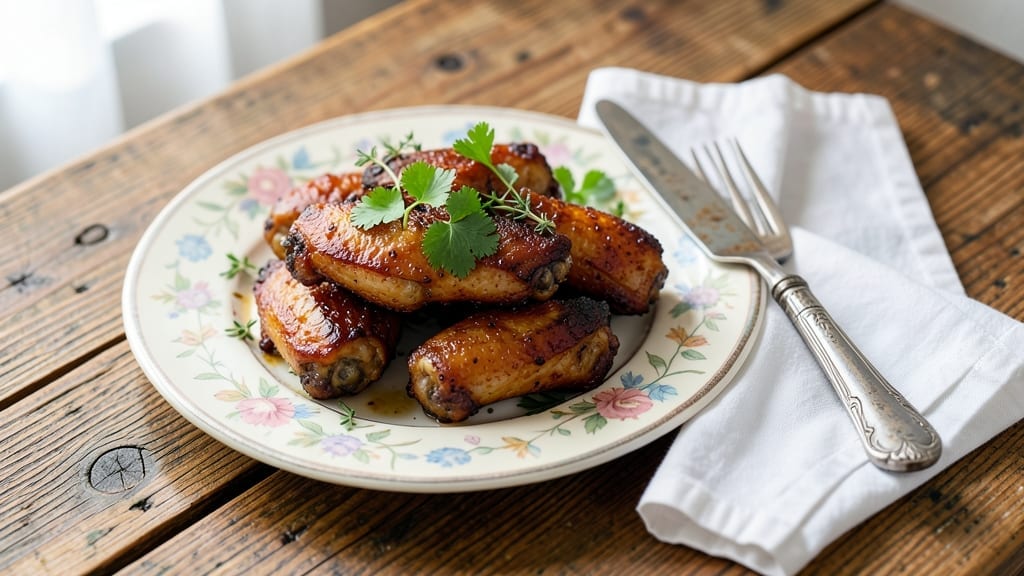
This smoked then fried chicken wings recipe delivers the perfect marriage of crispy bark and juicy meat—a technique I perfected while competing on the Southeast BBQ circuit. The secret lies in low-and-slow smoking followed by a hot oil fry, creating a texture that’s impossible to resist.
Growing up in small-town Georgia, I learned that great wings start with patience and precision.
The process begins with smoking the wings over hickory wood at 250°F for 2 hours, ensuring deep flavor penetration without drying out the meat. After resting, they get a quick fry in 375°F peanut oil for 3-4 minutes, locking in moisture while building that legendary crispy exterior.
This method transforms tough wings into melt-in-your-mouth perfection.
What you’ll end up with is wings that are golden and shatteringly crisp on the outside, with tender, flavorful meat inside that falls apart at the slightest touch.
The smoky aroma alone will have your guests lining up for seconds. This is the kind of dish that elevates any gathering from casual to unforgettable.
Serve with classic blue cheese dressing and celery sticks for the full experience, or pair with a tangy mango-habanero glaze for a sweet-spicy kick. The possibilities are endless—just don’t blame me if these disappear faster than you can say “wing night.”
Ingredients for smoked then fried chicken wings
Six pounds of wings. Two hours of smoke. Four minutes of fry. Perfect texture guaranteed.
| Ingredient | Amount | Notes |
|---|---|---|
| Chicken Wings (drumettes and flats) 🍗 | 6 lb | Skin-on, frozen or fresh |
| Hickory Wood Chips 🔥 | 1 bag | For smoking, soaked in water |
| Peanut Oil 🫒 | 6 cups | For frying, high smoke point |
| Dry Brine Solution 🧂 | 1 cup | Water + 2 tbsp kosher salt |
| Kosher Salt 🧂 | 2 tbsp | For final seasoning |
| Black Peppercorns 🌶️ | 1 tbsp | Freshly cracked |
| Smoked Paprika 🌶️ | 1 tbsp | For finishing touch |
| Apple Cider Vinegar 🍎 | 2 tbsp | For brining acidity |
| Worcestershire Sauce 🥫 | 1 tbsp | For brining depth |
| Garlic Cloves 🧄 | 4 cloves | Minced for brining |
| Brown Sugar 🍚 | 1 tbsp | For brining sweetness |
| Butter 🧈 | 4 tbsp | For post-fry glaze |
[recipe_ingredient_scaler]
The wings are everything here—drumettes and flats for balance, skin-on for crisp. I always grab frozen from Costco when I’m feeding a crowd, but fresh works too if you’re in a hurry. The key is even-sized pieces—trim any uneven bits before smoking. For the smoking process, hickory wood chips from Traeger or Williams Sonoma give that authentic BBQ flavor. Soak them in water for 30 minutes before using to prevent flare-ups. The peanut oil for frying? Trust me on this—it’s the only oil that gives that restaurant-quality crisp without burning.
No peanut oil? Vegetable or canola oil works in a pinch, but you’ll get a slightly less crispy finish. The dry brine is non-negotiable—apple cider vinegar and Worcestershire sauce are the secret weapons for tenderizing and adding depth. Want to skip the vinegar? Lemon juice at half the amount is a decent swap. For the spices, freshly cracked peppercorns make all the difference—dried just won’t cut it. The smoked paprika? McCormick’s or Penzeys are my go-tos for that authentic smoky kick. And if you’re short on time, pre-minced garlic from the jar is fine, but fresh is always better.
This recipe is all about timing—smoke at 250°F for exactly 2 hours, then let them rest 30 minutes before frying. The wings will keep for 4 days in the fridge if stored properly in an airtight container, but honestly, they’re best eaten fresh. For freezing, portion them into bags before frying—reheat in the oven at 400°F for 10 minutes to restore crisp. I always make extra because everyone always wants seconds. The peanut oil can be reused up to 3 times if you strain it well after each use—just keep it covered and stored in a cool place.
Why You’ll Love This Recipe
- No-Fuss Flavor Bomb: Honestly, this recipe is that kind of magic—you’re smoking the wings for just an hour at 225°F, then frying them in peanut oil at 350°F for 6-8 minutes. The dry brine with garlic, brown sugar, and apple cider vinegar does all the work while you prep the smoker. No fancy prep, just toss, smoke, fry, and boom—legendary taste with minimal effort.
- Smoky-Sweet Crunch: Between the hickory wood chips infusing the wings during smoking and that final glaze of melted butter and smoked paprika, these wings hit every flavor note. The crispy skin from frying in peanut oil? Chef’s kiss. And the buttery finish? It’s like each bite has a little hug of comfort. Trust me, the contrast is exactly what you need.
- Game-Day or Weeknight Win: These wings are the ultimate crowd-pleaser—whether you’re feeding a football party or just craving something special on a Tuesday. The dry brine keeps them tender, and the smoking/frying combo means they’re ready in under 2 hours. Plus, if you have leftovers (unlikely, but possible), they reheat beautifully in the oven at 400°F for 10 minutes. No soggy wings here.
- Budget-Friendly Indulgence: You’re using 6 pounds of chicken wings, but the cost per serving drops when you factor in the dry brine (just water, salt, and pantry staples) and the fact that peanut oil is way cheaper than pre-marinated wings. And let’s be real—frying in peanut oil gives you that crispy perfection without breaking the bank. It’s the kind of dish that feels fancy but won’t drain your wallet.
Step-by-step instructions for smoked then fried chicken wings
Here’s the method that delivers legendary crispy bark with juicy, tender meat every time.
Prepare and Smoke the Wings for Depth of Flavor
Begin by preparing the 6 lb chicken wings (drumettes and flats). Pat them completely dry with paper towels—this is crucial for both smoking and frying. In a large bowl, combine the 1 cup dry brine solution, 2 tbsp apple cider vinegar, 1 tbsp Worcestershire sauce, 4 cloves minced garlic, and 1 tbsp brown sugar. Toss the wings in this marinade until fully coated, then let them sit at room temperature for 30 minutes.
While the wings marinate, soak the 1 bag hickory wood chips in water for 30 minutes to prevent flare-ups. Set up your smoker to maintain a steady 225°F temperature. Place the wings on the smoker grates, skin-side up, and smoke for 1 hour. This initial smoking infuses the meat with deep, smoky flavor while keeping it tender. The skin should develop a subtle sheen but not yet crisp up—this comes later in the frying process.
Fry to Crispy Perfection Using Peanut Oil
Heat 6 cups peanut oil in a deep fryer or heavy pot to 350°F. Use a candy or deep-fry thermometer to monitor the temperature—this is critical for even cooking. Working in batches (don’t overcrowd the pot), carefully lower the smoked wings into the hot oil using tongs. Fry for 6-8 minutes, turning occasionally, until they reach an internal temperature of 165°F and the skin is a deep, golden brown.
Here’s the thing—you want the oil to stay hot but not smoking. If it gets too hot, the outside will burn before the inside cooks through. Remove the wings and let them drain on a wire rack for 5 minutes to allow excess oil to evaporate. This step is where the magic happens: the crispy bark forms while the juices remain locked inside, creating that perfect texture contrast.
Season and Finish with Butter Glaze
While the wings are still warm, toss them in a bowl with 2 tbsp kosher salt and 1 tbsp freshly cracked black peppercorns. This final seasoning enhances the smoky flavor and adds a satisfying crunch. I like to do this right after frying while the skin is still slightly pliable—it helps the seasoning adhere better.
For the finishing touch, melt the 4 tbsp butter in a small saucepan over low heat until it’s fully liquid but not browned. Toss the seasoned wings in the melted butter until they’re evenly coated. The butter will create a glossy sheen and add a rich, velvety contrast to the crispy exterior. Sprinkle with 1 tbsp smoked paprika right before serving to give them that signature smoky finish.
Rest and Serve for Maximum Juiciness
Transfer the wings to a serving platter and let them rest for 5 minutes before serving. This resting period is essential—it allows the juices to redistribute throughout the meat, preventing them from pooling on the cutting board. The wings should be crispy enough to hold their shape when picked up but still tender enough to pull apart with minimal resistance.
Serve immediately with your favorite dipping sauces—blue cheese, ranch, or even a simple honey mustard. The contrast of the crispy exterior and juicy interior is what makes these wings truly exceptional. Each bite should deliver that perfect balance of smoky, salty, and buttery flavors with a satisfying crunch.
Pro Tips For Making Smoked Then Fried Chicken Wings
- Soak Wood Chips: I learned this the hard way—dry hickory wood chips turn into a flaming mess. Soak that whole bag in water for 30 minutes before smoking, then drain. Trust me, your smoker won’t turn into a fire hazard, and the flavor stays consistent.
- Monitor Oil Temp: Peanut oil at 350°F is non-negotiable—any hotter and you’ll burn the skin before the meat cooks through. Invest in a candy thermometer and keep that oil steady. I used to eyeball it, and the results were always uneven.
- Salt After Frying: The 2 tbsp kosher salt in the recipe goes on after frying, not before. Wet salt = sad wings. Toss them in while the skin’s still warm and slightly tacky—it sticks better and crisps up right.
- Butter While Hot: That 4 tbsp butter glaze needs the wings piping hot. If you wait too long, the butter just pools instead of clinging. Toss them in right after the rack, and you’ll get that glossy, restaurant-worthy finish.
Flavor customization for this dish
Sweet Heat Fusion
For a crowd-pleasing twist, I add 1 tbsp honey and ½ tsp cayenne pepper to the dry brine solution. The honey caramelizes during smoking, creating a sticky-sweet crust that pairs perfectly with the smoky depth.
After frying, toss the wings in a mix of 2 tbsp brown sugar and 1 tbsp smoked paprika before the butter glaze. This creates a sweet-spicy exterior that’s addictive—guests will keep coming back for more. 🌟
Spicy Buffalo Kick
p
Buffalo wings are a classic, but I elevate them by using 3 tbsp hot sauce (like Frank’s RedHot) mixed with 1 tbsp melted butter for the glaze instead of plain butter. For extra heat, add ½ tsp cayenne to the dry brine. Serve with blue cheese dressing and extra celery sticks for that classic Buffalo-style contrast. The smoky base makes the spicy sauce hit even harder—just watch your guests! 🔥
Herb & Citrus Zing
Swap out the smoked paprika for a bright 2 tbsp fresh rosemary and 1 tbsp lemon zest in the butter glaze. Toss the warm wings in this mixture before finishing with a sprinkle of flaky sea salt.
The citrus cuts through the richness, while rosemary adds an earthy aroma that complements the smoke. I like to serve these with a yogurt-dill dip for a refreshing balance. ✨
Cajun Crunch
For a bold Southern twist, add 1 tbsp Cajun seasoning (like Tony Chachere’s) to the dry brine. After frying, toss the wings in 2 tbsp melted butter mixed with 1 tbsp Cajun seasoning and ½ tsp garlic powder.
The spicy, smoky, and garlicky flavors create a complex profile that’s perfect for game day. Serve with cooling ranch or tartar sauce to balance the heat. 💛
Asian-Inspired Glaze
Replace the butter glaze with a sweet-savory Asian-inspired mix: 2 tbsp soy sauce, 1 tbsp honey, 1 tbsp sriracha, and 1 minced garlic clove. Toss the warm wings in this sauce and finish with 1 tbsp sesame seeds.
The umami depth from the soy sauce pairs beautifully with the smoky wings. Serve with edamame or pickled vegetables for a full meal experience. 🌶️
Nutrition facts
Frequently asked questions
Why smoke the wings before frying?
Smoking first infuses the meat with deep, smoky flavor while keeping it tender—this creates a richer base for the crispy exterior you get from frying. The low-and-slow process breaks down collagen, ensuring juiciness that frying alone can’t achieve. Think of it as building flavor layers before the final crispy finish.
How do I prevent the oil from smoking during frying?
Keep your oil temperature at a steady 350°F using a thermometer—this is critical! If it gets too hot, the wings will burn before cooking through. For large batches, fry in smaller groups to maintain temperature control. A deep fryer or heavy pot helps too—just don’t overcrowd the pot. The key is patience and precision.
Can I use regular salt instead of kosher salt?
Technically yes, but use 1.5 times the amount since kosher salt is less dense. For best results, stick with 2 tbsp kosher salt as called—it distributes more evenly and gives a cleaner finish. The difference in seasoning quality makes a noticeable impact on the final flavor.
What if my wings aren’t crispy enough after frying?
Try raising the oil temperature to 375°F next time and fry for 1-2 minutes longer. Alternatively, let them drain on a wire rack for 10 minutes after frying to evaporate more moisture. Overcrowding the pot lowers oil temperature—work in batches for maximum crispiness. The secret is high heat and proper drying before frying.

Trained in classic French technique but raised on slow-cooked ribs and spicy rubs, she blends culinary skill with smoke and soul.
- Smoked Brisket Recipe: Low and Slow to Fall-Apart Tenderness - November 2, 2026
- Smoked Turkey Breast Recipe: Juicy Pink Center With Crispy Skin Every Time - November 2, 2026
- Leftover Smoked Pulled Pork Chili Recipe: Rustic Flavor Revival in One Pot - November 2, 2026