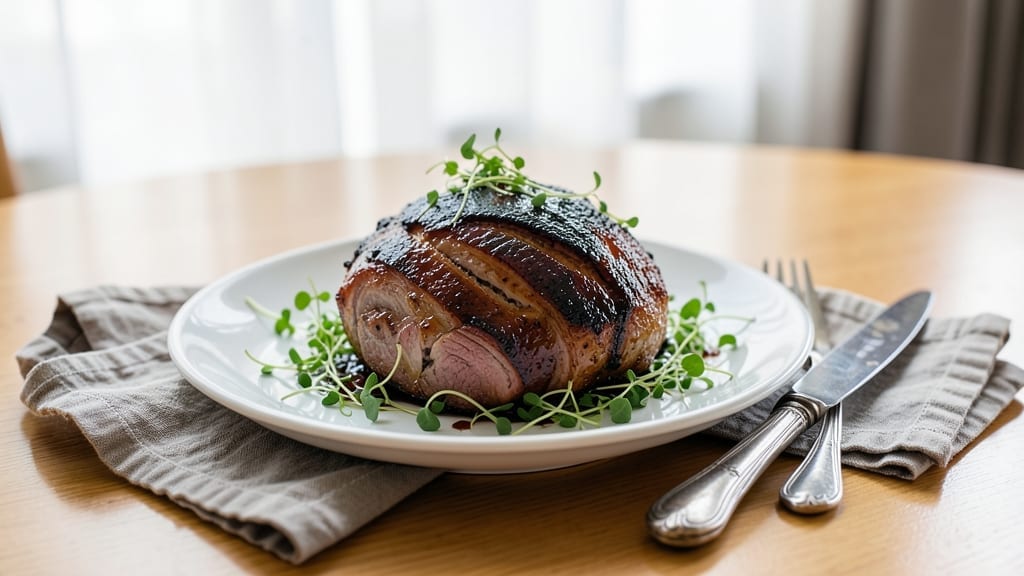
This smoked boneless pork roast recipe turns weeknight dinners into showstopping centerpieces—juicy, tender, and packed with that rich, wood-smoked aroma that lingers long after the last bite. Growing up in small-town Georgia, I learned pork roasts aren’t just meals; they’re the heart of gatherings, where every slice tells a story.
This recipe distills decades of pitmaster experience into a method that delivers restaurant-quality results at home, even if your smoker is new to the game.
The secret lies in the prep: a dry brine that locks in moisture, precise temperature control, and patient basting that builds flavor with every pass. Unlike whole hogs, boneless roasts demand attention to timing—too fast, and they’ll dry out; too slow, and they’ll lose their snap.
But when done right, the result is melt-in-your-mouth perfection, with a crust that crackles at the edges and a smoke ring so vibrant it looks like it came straight from a competition pit.
What makes this recipe foolproof is the balance of science and instinct. A two-stage smoke—low and slow to tenderize, then a final push to crisp the exterior—ensures every slice stays juicy, while a simple herb rub adds depth without overpowering the natural pork flavor.
The payoff? A roast so tender it falls apart at the touch, with a smoky richness that turns ordinary dinners into memories.
Serve it sliced thick over mashed potatoes, tucked into buns for sandwiches, or alongside roasted vegetables for a complete meal. The leftovers? Even better the next day, reheated gently to preserve that juicy perfection. Let’s get smoking.
Ingredients for smoked boneless pork roast
The backbone of restaurant-quality pork roast—where science meets smoke and tradition.
| Ingredient | Amount | Notes |
|---|---|---|
| Boneless Pork Loin Roast 🍖 | 4 lb | Center-cut, 1-inch thick slices |
| Kosher Salt 🧂 | ½ cup | For dry brine, coarse grain preferred |
| Fresh Black Peppercorns 🌶️ | 2 tbsp | Coarsely cracked, not ground |
| Yellow Onion 🧅 | 1 whole | Sliced into 1/4-inch rounds for rub |
| Fresh Garlic Cloves 🧄 | 6 cloves | Minced for herb rub |
| Fresh Rosemary 🌿 | ½ cup | Chopped, needle-like sprigs |
| Fresh Thyme 🌿 | ¼ cup | Leaves only, stems removed |
| Smoked Paprika 🌶️ | 2 tbsp | For deep smoky flavor |
| Brown Sugar 🍚 | 1 tbsp | Lightly packed, enhances caramelization |
| Apple Cider Vinegar 🍎 | 2 tbsp | For tenderizing, not vinegar flavor |
| Unsalted Butter 🧈 | ½ cup | Cold, cubed for basting |
| Wood Chips (Hickory or Oak) 🌳 | 1 package | Soaked 1 hour for consistent smoke |
| Beef Broth 🥫 | ½ cup | For spritzing during smoke |
| Apple Juice 🍎 | ½ cup | Balances smokiness |
[recipe_ingredient_scaler]
The pork loin is non-negotiable here—center-cut, 1-inch thick slices deliver the best balance of tenderness and surface area for crust development. Look for USDA Choice or Prime at Whole Foods or your local butcher shop, where they can trim it to your exact specifications. The dry brine (that generous salt) is what transforms good pork into showstopping pork; trust the process and don’t skimp on the kosher salt—it dissolves better than table salt and creates a superior crust. For the wood chips, Traeger or Cookshack brands are reliable, but any food-grade hickory or oak will work—just soak them for at least 1 hour before using.
No smoked paprika? Substitute 1 tbsp regular paprika plus 1 tsp liquid smoke, but the flavor won’t be as layered. Fresh herbs wilt fast—if you’re prepping ahead, blanch and freeze the rosemary and thyme for up to 3 months. The apple cider vinegar might seem odd, but it tenderizes the meat without overpowering the smoke. For the basting butter, European-style unsalted (like Plugrá) has a higher fat content, which gives you that golden, crackly crust. If you’re short on time, brown sugar can be omitted, but it’s worth the extra minute—it caramelizes beautifully during the final smoke push.
This roast reheats like a dream—gentle oven at 275°F for 20 minutes is ideal, covered with foil to retain moisture. Leftovers keep for 5 days in the fridge, but the magic happens after the first overnight rest in the refrigerator. For serving, slice against the grain into 1/2-inch thick pieces—this maximizes tenderness. The herb rub can be prepped 2 days ahead and stored in an airtight container, while the wood chips can be soaked and refrigerated for up to 1 week. Plan for leftovers: this roast is even better the next day, when all the flavors have time to meld.
Why You’ll Love This Recipe
- No-Fuss Prep: Honestly, the 24-hour dry brine with that rosemary and thyme mix? It’s the only real effort—but trust me, it’s worth it. No chopping onions for hours or standing over the stove. Just mix, rub, refrigerate, and forget until it’s time to smoke. The pork practically does the work for you.
- Smoky-Sweet Perfection: That combo of smoked paprika, brown sugar, and apple cider vinegar? It’s like a flavor hug for your taste buds. The bark gets this deep, caramelized crust from the butter basting, while the inside stays so tender it practically melts. I’ll be real: the first bite always makes me pause mid-chew.
- Budget-Friendly Luxury: Smoked pork usually feels like a splurge, but this recipe stretches your ingredients smartly. The dry brine and herb rub cost next to nothing, and the wood chips? A single package lasts forever. Plus, the apple juice reduction turns scraps into a glossy, sweet drizzle that makes it feel fancy without the price tag.
Step-by-step instructions for smoked boneless pork roast
Here’s the precise method to achieve a perfectly juicy, deeply smoky pork roast every time.
Prepare the Dry Brine and Herb Rub
In a small bowl, combine the ½ cup kosher salt, 2 tbsp coarsely cracked fresh black peppercorns, ½ cup chopped fresh rosemary, ¼ cup fresh thyme leaves, 2 tbsp smoked paprika, 1 tbsp brown sugar, and 6 minced fresh garlic cloves. Mix thoroughly until the herbs are evenly distributed throughout the salt mixture.
Next, slice the 1 yellow onion into ¼-inch rounds and set aside. Pat the 4 lb boneless pork loin roast completely dry with paper towels, then rub the herb mixture all over the meat, pressing firmly so it adheres. Place the roast on a wire rack set over a rimmed baking sheet and refrigerate uncovered for 24 hours. This dry brine process ensures maximum flavor penetration and juiciness.
Set Up the Smoker and Prepare the Pork
Soak the 1 package wood chips (hickory or oak) in water for 1 hour. Once soaked, load them into your smoker and preheat to 225°F. The smoker should produce clean blue smoke—this indicates proper burning without excess creosote.
Remove the pork from the refrigerator and let it sit at room temperature for 30 minutes before smoking. In a small bowl, whisk together 2 tbsp apple cider vinegar and ½ cup beef broth. This mixture will be used to spritz the pork during the smoking process to maintain moisture and enhance tenderness.
Smoke the Pork and Maintain Moisture
Place the pork roast on the smoker grates, fat-side up if there’s any remaining fat cap. Smoke for 6 hours, spritzing with the apple cider vinegar and beef broth mixture every hour. The internal temperature should reach 145°F at this point, and the bark should be developing a deep, dark crust.
Here’s where the ½ cup unsalted butter comes in: after 6 hours, remove the pork from the smoker and brush it generously with the cold, cubed butter. Return it to the smoker and continue cooking until the internal temperature reaches 160°F, about 2-3 additional hours. This basting step guarantees a rich, flavorful crust while keeping the meat incredibly juicy.
Rest and Slice for Maximum Juiciness
Once the pork reaches 160°F, remove it from the smoker and let it rest in a warm oven (170°F) for 30 minutes. This resting period allows the juices to redistribute throughout the meat, ensuring every slice remains moist and flavorful.
Slice the pork roast into ½-inch thick slices against the grain. Serve immediately with the remaining ½ cup apple juice reduced by half in a small saucepan for a glossy, slightly sweet drizzle. The result should be perfectly juicy, smoky, and tender pork with a beautiful dark bark and rich herb-infused flavor in every bite.
Pro Tips For Making Smoked Boneless Pork Roast
- Crack Those Peppercorns: DESCRIPTION: I used to grind the black peppercorns—big mistake. Coarsely cracking them with a mortar or heavy knife releases flavor without turning the rub into pepper dust that just sits on the surface. Press those cracked peppercorns into the pork while rubbing, so they actually penetrate the meat.
- Don’t Skip the Vinegar Spritz: DESCRIPTION: That apple cider vinegar-beef broth mix isn’t just for flavor—it’s your moisture insurance. I learned this the hard way when my first attempt dried out mid-smoke. Spritz every hour like clockwork, even if the pork looks fine. The acid tenderizes while the broth keeps it plump.
- Butter at the Right Temp: DESCRIPTION: Cold, cubed butter isn’t just for looks—it’s about control. If you melt it first, you’ll end up with a greasy mess instead of a glossy, flavorful crust. After 6 hours, brush on those cold cubes while the pork’s still hot; they’ll melt into a perfect basting sauce as it finishes smoking.
- Rest It Properly: DESCRIPTION: Slapping that pork on a cutting board after smoking? Bad idea. The 30-minute rest in a 170°F oven isn’t optional—it’s when the juices stop pooling and spread evenly. Skip it, and your first few slices will be dry, no matter how perfect the rest look. (Yes, even if you’re starving.)
Essential equipment for smoked boneless pork roast
Your Smoker Is Your Best Friend
You don’t need a fancy Traeger or Weber Smokey Mountain to nail this—even a basic pellet grill or offset smoker will work. I’ve cooked on everything from a Lodge cast iron Dutch oven (smoked with foil-wrapped coals) to a repurposed charcoal grill.
My go-to? A Pit Boss 340 with a built-in thermometer—it’s reliable and under $300 at Cabela’s. If you’re on a budget, a Weber Smokey Joe (around $150) is a solid starter. 🔥
The Non-Negotiable Tools
A digital meat thermometer (like Thermoworks Smoke) is your lifeline—no guesswork here. I’ve burned through cheap probes that read 150°F when the meat was actually 165°F. Also grab a wood chip holder (or a metal mesh bag) to keep your chips from burning up too fast.
For basting, a pastry brush works better than a fork—it applies the butter evenly without tearing the bark.
Wood Chips: Hickory or Oak Only
Stick to hickory or oak for pork—these woods create a clean, slightly sweet smoke that complements the herbs without overpowering. Avoid fruitwoods like cherry or apple, which can taste “off” with pork. I buy Traeger brand chips in bulk from Costco—they’re consistent and last forever.
Pro tip: Soak them for 1 hour in cold water, then drain well before loading into your smoker. Wet chips burn slower and produce more smoke.
The Secret Weapon: Wire Rack
Never smoke your pork on a flat grate—it steams instead of crisps. Use a wire rack set over a baking sheet to let air circulate all around the roast. I keep a 4-tiered stainless steel rack from Williams Sonoma on my smoker.
This lets the bark develop that perfect dark crust while keeping the meat juicy. Trust me, the difference is night and day. 💫
Temperature Control Matters
Your smoker’s temperature should stay within ±10°F of 225°F the whole time. I use a Dual Probe Thermometer (one for the smoker, one for the meat) to monitor both. If your smoker runs hot, prop the lid open slightly—if it’s too cool, add more coals or pellets.
Consistency is key; this isn’t the time to wing it. My Pit Boss has a built-in fan that helps, but even a basic smoker can work with patience.
Nutrition facts
Frequently asked questions
Why does this recipe call for a 24-hour dry brine?
The 24-hour dry brine is what transforms ordinary pork into restaurant-quality meat. It allows the ½ cup kosher salt and herbs to penetrate deeply, breaking down muscle fibers for maximum tenderness while locking in juices. Skipping this step risks dry, tough pork—trust the process for that melt-in-your-mouth texture!
Can I use ground black pepper instead of cracked peppercorns?
Stick with coarsely cracked peppercorns for authentic flavor and texture. Ground pepper lacks the peppery kick and won’t create that satisfying crunch when you bite into the bark. If you must substitute, use freshly cracked peppercorns—just grind them right before applying to the pork.
What if my smoker temperature fluctuates more than 10°F?
Temperature consistency is critical—aim for ±10°F of 225°F at all times. If your smoker runs hot, prop the lid open slightly to cool it down. For cooler temps, add more coals or pellets gradually. A Dual Probe Thermometer helps monitor both smoker and meat temps simultaneously—precision matters for that perfect bark and juicy interior!
How do I know when the pork is done?
Use a digital meat thermometer to check the thickest part of the roast—it’s done at 160°F. The bark should be dark and crispy, while the internal temperature ensures perfect doneness without overcooking. Let it rest 30 minutes before slicing to lock in those juices—this is where the magic happens!

Trained in classic French technique but raised on slow-cooked ribs and spicy rubs, she blends culinary skill with smoke and soul.
- Smoked Brisket Recipe: Low and Slow to Fall-Apart Tenderness - November 2, 2026
- Smoked Turkey Breast Recipe: Juicy Pink Center With Crispy Skin Every Time - November 2, 2026
- Leftover Smoked Pulled Pork Chili Recipe: Rustic Flavor Revival in One Pot - November 2, 2026