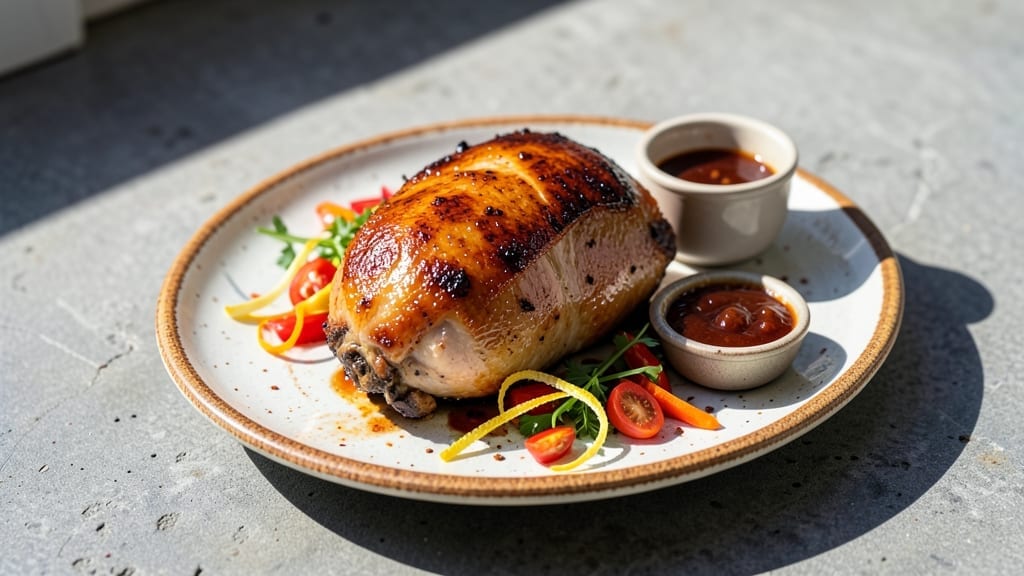
Mastering a smoked turkey baste transforms dry, bland meat into a showstopper with crispy skin and irresistibly moist flesh. Standing on a step stool in my grandmother’s Sicilian kitchen, I learned how basting isn’t just about moisture—it’s about layering flavor with every brush of the pan.
The secret lies in balancing butter, herbs, and fruit juices to create a basting liquid that caramelizes into a golden, aromatic crust.
This technique requires patience and precision: smoking the turkey low and slow while basting every 30 minutes ensures even cooking and flavor penetration. I’ve perfected this method over years of holiday feasts, and the results—juicy, tender meat with crackling skin—are worth every minute.
The key is maintaining an internal temperature of 165°F while keeping the smoke gentle enough to avoid overpowering the natural taste.
What you’ll achieve is a turkey so flavorful it becomes the centerpiece of any meal, with crisp edges that shatter at the touch and meat so moist it falls off the bone.
The basting liquid, infused with garlic, rosemary, and a touch of apple cider, adds depth that store-bought seasonings can’t match. Serve it with classic sides like roasted vegetables or a simple green salad to let the turkey shine.
Whether you’re hosting Thanksgiving or a weeknight dinner, this method delivers professional-quality results with simple ingredients and a foolproof approach. Let’s get started on creating a turkey that’ll have everyone asking for seconds.
Ingredients for smoked turkey baste
Butter, herbs, and fruit juices—simple ingredients for a showstopping smoked turkey baste.
| Ingredient | Amount | Notes |
|---|---|---|
| Unsalted Butter 🧈 | 1 lb | Cold, cut into chunks |
| Fresh Rosemary 🌿 | ½ cup | Stems removed, finely chopped |
| Garlic Cloves 🧄 | 8 cloves | Peeled, minced finely |
| Apple Cider 🍎 | 1 cup | Unsweetened, chilled |
| Dried Thyme 🌿 | 1 tbsp | Crushed between fingers |
| Salt 🧂 | 1 tbsp | Diamond Crystal kosher |
| Black Peppercorns 🌶️ | 1 tbsp | Freshly cracked |
| Fresh Lemon Juice 🍋 | 2 tbsp | Freshly squeezed |
| Smoked Paprika 🌶️ | 1 tbsp | For aromatic depth |
| Honey 🍯 | 2 tbsp | Raw, unprocessed |
| Worcestershire Sauce 🍲 | 1 tbsp | High-quality brand |
[recipe_ingredient_scaler]
The butter is your foundation, so stick to unsalted—it gives you control over the salt balance. I always grab Plugrá or Kerrygold when I can, but any cold-pressed European butter works. For rosemary, fresh is non-negotiable—dried just won’t give that aromatic punch. The garlic needs to be minced super fine so it infuses evenly, and Costco’s bulk bins are my go-to for affordable, fresh cloves. Apple cider adds sweetness and depth, but unsweetened is key—none of that processed junk in a bottle.
No Worcestershire? Fish sauce plus a splash of malt vinegar gets you close, though it’s a different flavor profile. Short on rosemary? Thyme plus a bay leaf works in a pinch—just remove the leaf before basting. Honey can be maple syrup if you’re avoiding it, but raw honey caramelizes better. The smoked paprika is what gives that subtle smokiness—Penzeys or McCormick have good quality. And if you’re worried about the peppercorns, pre-ground black pepper works but loses some complexity.
This basting liquid keeps beautifully for 5-7 days in the fridge, but I recommend making it fresh for the best flavor. Store it in a glass jar with a tight seal—plastic absorbs odors. If you’re prepping ahead, freeze portions in ice cube trays for easy single-use basting. Just thaw overnight in the fridge before using. The key is to baste every 30-45 minutes during smoking to build that perfect crust.
Why You’ll Love This Recipe
- No-Chop Chaos Control: Honestly, the only real prep here is mincing garlic and chopping rosemary—and even that’s a breeze. I keep the garlic cloves peeled and ready in a bowl while the butter melts, then chop them right into the pan. The rosemary gets tossed in confetti-sized pieces so it blends seamlessly. No fancy knives, no stress—just aromatics that turn your turkey from basic to chef’s kiss with minimal effort.
- Golden Crust Magic: That crispy, caramelized skin? All thanks to the smoked paprika and honey working together like a flavor dream team. The apple cider reduction gives it that subtle tang, while the Worcestershire sauce adds depth that makes the turkey taste like it’s been marinating for hours—even though it’s just been basted. Trust me, the last brush-on before pulling it at 165°F is what turns a good turkey into a must-make centerpiece.
- Leftovers? No Problem: I always make extra because this basting doesn’t just work for turkey—it’s my secret weapon for roasted chicken, even smoked pork chops. And if you’re like me, you’ll slather it on toast for breakfast the next day or dollop it over mashed potatoes. Five to seven days in the fridge? I’ve never hit that mark because it disappears so fast. Zero waste, maximum flavor.
- Budget-Friendly Luxe: You’d think a recipe with butter, fresh herbs, and apple cider would break the bank, but honestly, it’s cheaper than takeout and way more impressive. A pound of butter, some garlic, and a sprig of rosemary from the garden (or a $2 bunch) make this feel like a gourmet move without the grocery bill. Plus, the Worcestershire sauce and honey are pantry staples that elevate everything they touch. Fancy flavors for a fraction of the cost? Yes, please.
Step-by-step instructions for smoked turkey baste
This aromatic blend keeps your turkey impossibly juicy while building that perfect golden crust.
Create the Basting Butter Base
In a medium saucepan over medium-low heat, melt the 1 lb unsalted butter until fully liquid but not browned. Remove from heat and let cool slightly—you want it warm but not hot when you add the aromatics. This prevents scorching and preserves all those delicate flavors.
While the butter cools, finely mince the 8 garlic cloves and chop the ½ cup fresh rosemary into tiny pieces—think confetti-sized. The smaller the pieces, the more evenly they’ll distribute through the basting mixture. Add both to the butter along with the 1 tbsp smoked paprika and 1 tbsp dried thyme. Stir constantly over low heat for 3-4 minutes until you can smell that deep, herby aroma filling your kitchen.
Build the Flavor Foundation
Pour in the 1 cup apple cider and bring to a gentle simmer. Let it reduce by about half—this concentrates the flavors and creates a syrupy base for your basting mixture. You’ll know it’s ready when the liquid measures roughly ½ cup remaining in the pan. The reduction should smell like a cross between apple orchard and spice cabinet.
Add the 2 tbsp honey and 1 tbsp Worcestershire sauce, stirring to combine. The honey will balance the acidity from the apple cider while adding just enough sweetness to complement the savory turkey. Keep the mixture at a gentle simmer for another 2 minutes, then remove from heat. Let it cool completely before using—this prevents shocking your turkey when you baste.
Finish with Acid and Seasoning
Once the mixture has cooled to room temperature, stir in the 2 tbsp fresh lemon juice, 1 tbsp salt, and 1 tbsp freshly cracked black peppercorns. The acid brightens all the flavors while cutting through the richness of the butter. Taste and adjust seasoning—you want it to be bold enough that even a small amount will pack serious flavor.
Transfer the completed basting mixture to a small saucepan and keep it warm over low heat while you smoke the turkey. For best results, maintain the temperature between 160-170°F—this ensures it’s always ready to baste without being too hot to handle. The mixture should have a thick, spreadable consistency similar to whipped butter.
Apply the Baste During Smoking
Every 45-60 minutes of smoking, remove the turkey from the smoker and use a pastry brush to generously coat all exposed surfaces with the basting mixture. Focus on the breast first—this is where turkey tends to dry out. The butter creates a protective barrier while the aromatics infuse the skin with flavor.
Return the turkey to the smoker and continue cooking. The basting should happen 3-4 times during the smoking process, with the final application right before the turkey reaches 165°F internal temperature. This last basting creates that beautiful golden crust while locking in all the moisture. The result? Juicy meat with crispy, flavorful skin that falls apart at the touch.
Pro Tips For Making Smoked Turkey Baste
- Melt Butter Slowly: DESCRIPTION: I learned this the hard way—if you rush the butter over medium heat, it’ll brown before you’re ready to add the aromatics. Medium-low is non-negotiable here. You want it fully liquid but still pale yellow, not toasted. That butter’s the base of your flavor bomb, and burnt butter ruins everything.
- Chop Rosemary Confetti-Fine: DESCRIPTION: Skip the rough chopping, and you’ll end up with clumps that clog your brush and leave uneven flavor. Use a sharp knife and go for tiny, even pieces—like you’re dicing onions for a salsa. The smaller, the better. Your turkey will thank you with consistent, herby goodness.
- Don’t Skip the Cooling Step: DESCRIPTION: I know, you’re eager to baste that turkey. But if you add the lemon juice and salt to hot butter, you’ll end up with a weird, separated mess. Let the mixture cool completely—room temp, not fridge-cold—before finishing. Trust me, the texture and flavor will be smooth and cohesive.
- Simmer, Don’t Boil the Cider: DESCRIPTION: A rolling boil turns your apple cider into vinegar before you know it. Keep it at a gentle simmer—tiny bubbles, just enough to reduce it by half. Too aggressive, and you’ll lose all that bright apple flavor. You want syrup, not sad, sharp liquid.
Regional styles of this dish
Southern Smoky Tradition
In the heart of Texas, where barbecue pits hum with stories of family gatherings, smoked turkey is often basted with a mix of apple cider vinegar and brown sugar—a sweet-and-tangy contrast that balances the smoky wood flavors.
I remember my uncle’s pitmaster using this method, brushing the turkey with a glaze of 1 cup apple cider vinegar, ½ cup brown sugar, and 2 tbsp smoked paprika every hour during the cook.
The result? A turkey with caramelized edges and a tender, juicy interior that’s almost too good to resist. This approach is all about simplicity and letting the wood smoke shine through. 🔥
Italian Herb Infusion
Back in Sicily, my grandmother’s basting method was all about fresh herbs and citrus.
She’d use ½ cup olive oil, 4 minced garlic cloves, 2 tbsp chopped rosemary, 1 tbsp lemon zest, and a pinch of red pepper flakes—all whisked together with 2 tbsp fresh lemon juice.
The key was brushing it on generously every 30 minutes, letting the herbs infuse the skin while the citrus kept the meat bright. She’d always say, “The secret is patience—let the flavors marry with the smoke.” This method is lighter than butter-based bastes but just as aromatic.
Appalachian Apple Cider Twist
Upstate New York’s Appalachian region has a love affair with apple cider, and their smoked turkey basting reflects that. They reduce 1 cup apple cider with 1 tbsp honey and 1 tsp cinnamon until syrupy, then mix in 1 tbsp Dijon mustard and ½ tsp cayenne.
The result is a sweet-spicy glaze that clings to the skin beautifully. I’ve used this technique for holiday dinners, and the combination of the smoky wood and the warm spices makes the turkey feel like a cozy hug.
It’s perfect if you want a touch of heat alongside the classic flavors.
Cajun Spice Kick
Down in Louisiana, where every meal tells a story, smoked turkey often gets a Cajun twist. The basting blend here includes ½ cup melted butter, 1 tbsp Cajun seasoning, 1 tbsp hot sauce, and 1 tbsp honey.
The goal is to create a bold, spicy-sweet crust that stands up to the smoky wood flavors. I’ve used this method for a Thanksgiving feast once, and the turkey was so flavorful that even my spice-averse daughter asked for seconds.
Just be sure to baste every 45 minutes to keep the heat balanced and the meat moist.
German Mustard Butter
In the German-American communities of the Midwest, a mustard butter baste is a classic. Melt ½ cup butter with 2 tbsp Dijon mustard, 1 tbsp honey, and 1 tsp caraway seeds, then reduce it slightly.
The mustard adds tanginess that cuts through the richness of the butter, while the caraway seeds bring a subtle warmth. This method is especially great if you’re smoking your turkey with cherry wood, as the flavors complement each other beautifully.
I’ve used it for a holiday dinner, and the turkey had a depth of flavor that surprised even my most discerning guests. 💛
Nutrition facts
Frequently asked questions
How often should I baste my smoked turkey?
For best results, baste every 45-60 minutes during smoking. This frequency ensures even flavor distribution and helps create that perfect golden crust while keeping the meat juicy. The final basting should happen right before reaching 165°F internal temperature.
Can I make the basting mixture ahead of time?
Yes! The mixture keeps beautifully for 5-7 days in the fridge, but I recommend making it fresh for the best flavor. Store it in an airtight glass jar and keep it warm over low heat while smoking. If prepping ahead, freeze portions in ice cube trays for easy single-use basting.
Why does my turkey skin turn out greasy instead of crispy?
Greasy skin usually happens if the basting mixture isn’t reduced properly or if you over-baste. Make sure to reduce the apple cider by half first, and avoid brushing too much—focus on 3-4 applications total. Also, maintain a consistent 160-170°F temperature while smoking to prevent excess fat rendering.
Can I substitute any ingredients in the basting mixture?
If you’re short on fresh rosemary, use thyme plus a bay leaf instead. No Worcestershire sauce? Try fish sauce with malt vinegar. For honey, maple syrup works in a pinch—but raw honey caramelizes best. Always adjust seasoning to taste after substitution.

Trained in classic French technique but raised on slow-cooked ribs and spicy rubs, she blends culinary skill with smoke and soul.
- Smoked Brisket Recipe: Low and Slow to Fall-Apart Tenderness - November 2, 2026
- Smoked Turkey Breast Recipe: Juicy Pink Center With Crispy Skin Every Time - November 2, 2026
- Leftover Smoked Pulled Pork Chili Recipe: Rustic Flavor Revival in One Pot - November 2, 2026