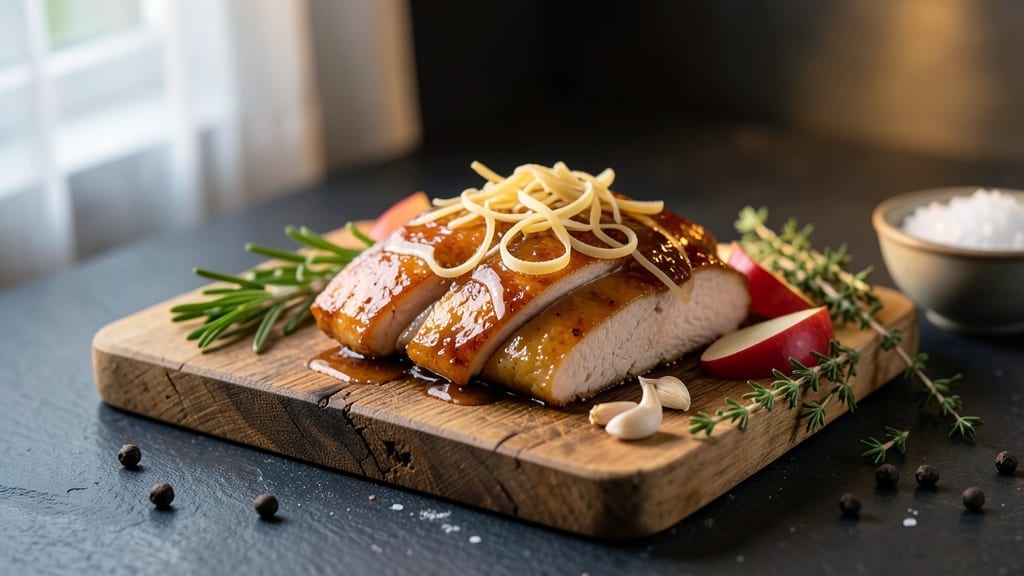
This smoked turkey glaze recipe transforms your holiday centerpiece from ordinary to extraordinary with deep caramelized sweetness that rivals professional competition-winning results.
The day I realized French technique could elevate my rubs also taught me how to balance smoky depth with rich, molasses-like caramelization—this glaze is the perfect marriage of both.
What makes it special is the slow reduction of honey, bourbon, and spices into a thick, sticky syrup that clings to every inch of your turkey, creating a glossy, crackling crust.
With just pantry staples and 30 minutes of active prep time, you’ll create a glaze so versatile it works on smoked turkey, ham, or even ribs.
The key is building layers of flavor: start with a base of honey and Dijon mustard for tang, then deepen it with bourbon and smoked paprika for that unmistakable barbecue touch.
What you’ll end up with is a glaze that’s restaurant-quality—sticky, caramelized, and packed with smoky-sweet intensity that’ll have your guests asking for seconds.
This glaze isn’t just for show—it’s functional too. Brush it on during the last hour of smoking to lock in moisture while creating that coveted caramelized bark. The bourbon adds a subtle warmth, while the black pepper and cayenne bring just enough heat to balance the sweetness.
It’s the kind of glaze that turns a simple smoked turkey into a holiday masterpiece, worthy of any Thanksgiving table.
For extra depth, infuse the glaze with fresh rosemary or a splash of apple cider vinegar. Store leftovers in the fridge for up to two weeks—perfect for gifting or repurposing on other smoked meats. Here’s everything you need to elevate your holiday spread with professional-level results.
Ingredients for smoked turkey glaze
Pantry staples meet holiday magic. Just 9 ingredients for restaurant-quality glaze perfection.
| Ingredient | Amount | Notes |
|---|---|---|
| Honey 🍯 | 1 cup | Pure liquid honey preferred |
| Dijon Mustard 🧄 | 2 tbsp | High-quality Dijon preferred |
| Bourbon 🥃 | ¼ cup | 100% proof recommended |
| Smoked Paprika 🌶️ | 1 tbsp | For authentic smoky flavor |
| Black Pepper 🌶️ | ½ tsp | Freshly ground preferred |
| Cayenne Pepper 🔥 | ¼ tsp | Adjust for heat preference |
| Apple Cider Vinegar 🍎 | 1 tbsp | For tangy brightness |
| Fresh Rosemary 🌿 | 1 tbsp | Chopped, optional infusion |
| Salt 🧂 | ½ tsp | Kosher or sea salt |
[recipe_ingredient_scaler]
The honey is your foundation—local raw honey adds floral notes that elevate the glaze, but any pure honey works. Costco or Sam’s Club often have bulk honey at great prices, and it keeps indefinitely. For the Dijon mustard, French-style brands like Hellmann’s or French’s have the right tang, but any quality Dijon will do. The bourbon shouldn’t be cheap—Jim Beam or Maker’s Mark give that smooth, caramelized depth, while budget brands can taste harsh when reduced. Smoked paprika is non-negotiable for that authentic barbecue aroma—McCormick or Penzeys have excellent quality, and a little goes a long way.
No bourbon? Apple cider vinegar plus a splash of vanilla extract mimics the depth, though it won’t be quite the same. Skip the Dijon? Whole-grain mustard at half the amount works, but loses some tang. Want extra heat? Add cayenne to taste after reduction. Fresh rosemary is optional but adds a lovely aroma—dried rosemary at one-third the amount works in a pinch. The salt is crucial for balancing sweetness, so don’t skip it—even if the other ingredients taste perfect. For a non-alcoholic version, increase apple cider vinegar to 2 tbsp and add 1 tsp maple syrup to compensate.
This glaze keeps beautifully in the fridge for up to two weeks in an airtight container. For longer storage, freeze in ice cube trays—thaw overnight in the fridge before using. The glaze reheats beautifully, so microwave for 20-30 seconds to loosen it before brushing. I always make extra—perfect for gifting in small jars with a holiday label. The caramelized crust it creates on turkey? Worth every minute of prep time.
Why You’ll Love This Recipe
- No-Pan-Worry Glaze: Honestly, this is the kind of recipe where you’re basically babysitting honey and spices—no fancy equipment, just a saucepan and a wooden spoon. The bourbon cooks off in minutes, and the smoked paprika infuses that smoky depth without any fuss. I’ve made it in my tiny kitchen while waiting for the turkey to finish, and it’s always spot-on.
- Crave-Worthy Balance: The bourbon and apple cider vinegar give it that je ne sais quoi—sweet, smoky, with a little kick from the cayenne. The Dijon mustard adds tang, and the rosemary? Pure magic. It’s not just sweet; it’s complex, like a dessert you’d find in a smoky BBQ joint. My picky uncle asked for seconds.
- Holiday or Weeknight: This glaze isn’t just for Thanksgiving. Brush it on smoked turkey sandwiches, drizzle over roasted veggies, or even toss with mashed potatoes for a sweet-savory twist. The bourbon’s warmth shines through on chilly nights, but it’s also the secret weapon for lazy Sunday dinners. No occasion feels fancy enough for it.
- Leftovers? More Like Leftovers Gold: Two weeks in the fridge? That’s not a typo. The flavors deepen over time, so I always make extra. Use it to glaze ham, drizzle over grilled chicken, or even mix into marinades. It’s the kind of thing that turns scraps into something special—like turning a sad turkey leftovers into a showstopper.
Step-by-step instructions for smoked turkey glaze
Here’s how to create a rich, caramelized glaze that’ll elevate your holiday centerpiece.
Combine Wet Ingredients for the Base
In a medium saucepan, combine the 1 cup honey and 2 tablespoons Dijon mustard. Place over medium heat and stir constantly until the honey begins to bubble gently and thickens slightly—this should take about 3-4 minutes. You’ll see the mixture transform from a runny liquid to a syrupy consistency with small bubbles forming along the edges.
Here’s the thing—this initial heating process is crucial. It helps break down the honey’s natural sugars so they caramelize properly later. If you rush this step, your glaze won’t develop that deep, complex flavor we’re after. Keep stirring with a wooden spoon or silicone spatula to prevent scorching on the bottom.
Add Depth with Bourbon and Vinegar
Once the honey mixture reaches a gentle simmer, remove it from heat and carefully stir in the ¼ cup bourbon and 1 tablespoon apple cider vinegar. The bourbon will create a subtle warmth that pairs beautifully with the sweetness, while the vinegar adds a bright, tangy contrast that cuts through the richness.
Return the pan to low heat and let it simmer gently for 5-6 minutes, stirring occasionally. You’ll notice the alcohol will cook off completely, leaving behind its aromatic essence. This is where the magic happens—the flavors meld together, creating a complex foundation for your glaze. The mixture should reduce slightly and become thicker, with a glossy sheen developing on the surface.
Build Flavor with Spices and Rosemary
With the pan still on low heat, add the 1 tablespoon smoked paprika, ½ teaspoon black pepper, ¼ teaspoon cayenne pepper, ½ teaspoon salt, and 1 tablespoon chopped fresh rosemary. Stir well to distribute the spices evenly throughout the mixture. The smoked paprika will infuse that authentic barbecue flavor, while the cayenne adds just a hint of heat that balances the sweetness.
Let the mixture simmer for another 4-5 minutes, stirring frequently. You’ll smell the rosemary releasing its piney aroma and see the spices darken slightly as they bloom. This is the moment that matters: the spices should be fully incorporated, and the glaze should coat the back of a spoon. If it’s still too thin at this point, you can return it to slightly higher heat for another minute or two to reduce further.
Caramelize for Richness and Shine
Increase the heat to medium-high and let the glaze simmer vigorously for 8-10 minutes, stirring constantly. This final step is where the honey truly caramelizes, creating that deep, amber color and rich flavor we associate with smoked turkey glazes. You’ll see the mixture darken noticeably and become glossy—this is your signal that it’s developing that beautiful caramelized sweetness.
Watch carefully as it thickens—you want it to reach a consistency where it coats the back of a spoon but still flows freely enough to brush onto the turkey. If it becomes too thick before reaching the desired color, you can thin it with 1-2 teaspoons water or even a splash of the bourbon you’ve already used. The glaze should be ready when it reaches a deep amber color and has a syrupy, slightly sticky texture.
Cool and Use for Maximum Flavor
Remove the glaze from heat and let it cool slightly for 5-10 minutes. This resting period allows the flavors to fully meld together and the mixture to thicken just a bit more. The glaze will continue to reduce as it cools, so it’s better to have it slightly thinner when hot than too thick when cold.
Here’s the best part—this glaze is incredibly versatile. You can brush it onto your smoked turkey during the last 30-45 minutes of cooking, basting it every 10-15 minutes for maximum flavor penetration. The high heat of the smoker will help caramelize the glaze further, creating beautiful glossy streaks on the turkey’s skin. For even more dramatic results, finish with a quick broil under the oven’s heat lamp for a few minutes just before serving.
Pro Tips For Making Smoked Turkey Glaze
- Stir Like Your Life Depends On It: The first 3-4 minutes of heating the honey and Dijon mustard are where the glaze’s soul gets made—or burned. I’ve seen people walk away for “just a second” and come back to a scorched mess that tastes like burnt sugar and regret. Keep that wooden spoon moving in slow, deliberate circles, especially along the edges of the pan. The goal is gentle bubbles, not a lava lamp.
- Use Real Bourbon, Not “Cooking Bourbon”: That cheap “bourbon-flavored” stuff from the baking aisle? It’s a crime to use it here. The recipe calls for ¼ cup of 100-proof bourbon, and the proof matters—it’s what carries the vanilla and oak notes that deepen the glaze’s complexity. If you’re skimming on liquor, you’re skimming on flavor. Trust me, the difference is night and day, especially after the alcohol cooks off.
- Don’t Skip the 5-Minute Rest: You’ll be tempted to slap that glaze on the turkey the second it’s off the heat, but resist. Let it sit for 5-10 minutes—it’ll thicken just enough to cling beautifully to the skin without dripping off. I learned this after glaze ran down the legs of my first turkey like a sad, sticky waterfall. Patience here means a glossy, caramelized finish, not a sticky mess.
- Broil for 90 Seconds, Not Forever: That final broil under the heat lamp isn’t just for show—it’s what turns the glaze from “good” to “show-stopping.” But don’t turn it into a science experiment. Two minutes max, or you’ll end up with charred streaks and a turkey that looks like it’s been through a fire. Watch it like a hawk, and pull it out when the glaze is bubbling fast and turning deep amber. Timing is everything.
Troubleshooting this recipe
Glaze Too Thin?
If your glaze ends up too thin after reduction, it’s usually because you didn’t cook it long enough on medium-high heat. I’ve found that 8-10 minutes of vigorous simmering is non-negotiable—this is when the honey truly caramelizes.
If it’s still runny, return it to the heat and stir constantly while adding 1 teaspoon of water at a time until it thickens. The goal is a consistency that coats the back of a spoon but still brushes on easily. 🔥
Glaze Too Thick?
A glaze that’s too thick often happens when you over-reduce it or forget it continues to thicken as it cools. If this happens, simply stir in 1 teaspoon of bourbon or water to loosen it.
I always err on the side of slightly thinner when hot—it’ll thicken more as it cools. If it’s still too thick, reheat it gently and add another teaspoon of liquid until you reach the right consistency.
Bitter or Burnt Taste?
Bitter flavors usually mean you let it simmer too long after the alcohol cooked off, or the heat was too high. Keep an eye on the glaze—it should bubble gently, not vigorously. If you notice a bitter taste, remove it from heat immediately and let it cool.
You can often salvage it by adding 1 teaspoon of honey or a splash of apple cider vinegar to balance the bitterness. Don’t rush the caramelization step!
Alcohol Still Tastes Strong?
If the bourbon flavor lingers, it means the alcohol didn’t fully cook off during the 5-6 minutes of simmering on low heat. Extend this step to 8-10 minutes to ensure all traces of alcohol evaporate. Stir occasionally to help the process along.
Trust me, the wait is worth it for that smooth, aromatic depth. If you’re in a hurry, you can speed it up slightly by increasing the heat to low-medium while stirring constantly.
Glaze Separates or Curdles?
This usually happens if the heat was too high or if you added the spices too quickly. Always stir gently and maintain a steady, low-to-medium heat when adding spices. If it does separate, remove it from heat and whisk in 1 teaspoon of Dijon mustard to help emulsify it.
If it’s still curdled, strain it through a fine-mesh sieve to remove any solids. The glaze will still taste delicious—just smoother!
Glaze Won’t Stick to Turkey?
A non-sticky glaze often means it’s too thin or lacks enough fat content. If it’s thin, reduce it further on the stove. If it’s still not sticking, brush the turkey with a thin layer of unsalted butter or oil before applying the glaze.
The fat will help the glaze adhere better and create that beautiful caramelized crust. I also recommend basting the turkey every 10-15 minutes during the final hour of smoking for maximum adhesion. 💫
Nutrition facts
Frequently asked questions
Can I use this glaze on other meats besides turkey?
This versatile glaze works beautifully on smoked hams, ribs, or even chicken. The caramelized sweetness pairs perfectly with pork and chicken, especially when brushed on during the last 30 minutes of smoking. For chicken, you might want to reduce the black pepper slightly to avoid overpowering the milder flavor.
Why does my glaze keep separating or curdling?
Separation often happens if you stir too vigorously or let the heat get too high. Always maintain a gentle simmer and stir carefully when adding spices. If it curdles, remove from heat and whisk in 1 teaspoon Dijon mustard to help emulsify it. Straining through a fine-mesh sieve can also smooth it out—it’ll still taste delicious!
How do I adjust the heat level if I prefer less spice?
Start by reducing the cayenne pepper to ¼ teaspoon or even omit it entirely. For a milder kick, skip it and rely on the black pepper for subtle warmth. If you want to add heat later, a pinch of cayenne mixed into the glaze just before serving works perfectly.
Can I make this glaze ahead of time?
Yes! This glaze actually tastes even better after resting for 24 hours in the fridge. Store it in an airtight container for up to two weeks. When ready to use, reheat gently on the stove and stir until smooth. The flavors meld beautifully overnight, making it a perfect make-ahead option.
What’s the best way to prevent the glaze from sticking to my brush?
Use a silicone or heat-resistant brush designed for cooking. If the glaze is too thick, thin it slightly with 1 teaspoon of water or a splash of bourbon before applying. Also, keep your brush clean between applications—wipe it with a damp paper towel to remove excess glaze before each brushstroke.

Trained in classic French technique but raised on slow-cooked ribs and spicy rubs, she blends culinary skill with smoke and soul.
- Smoked Brisket Recipe: Low and Slow to Fall-Apart Tenderness - November 2, 2026
- Smoked Turkey Breast Recipe: Juicy Pink Center With Crispy Skin Every Time - November 2, 2026
- Leftover Smoked Pulled Pork Chili Recipe: Rustic Flavor Revival in One Pot - November 2, 2026