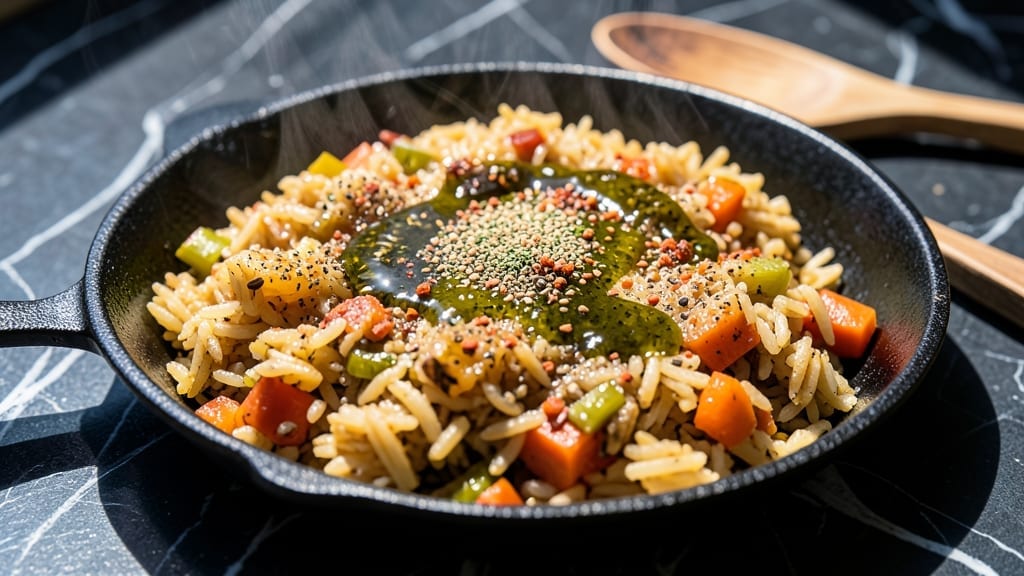
This smoked veg biryani recipe transforms humble vegetables into a restaurant-worthy centerpiece with layers of smoky depth and aromatic spices. 🔥 The secret lies in slow-smoking the vegetables—bell peppers, potatoes, and cauliflower—until they develop a charred, caramelized edge while retaining their tender core.
I developed this method after years of perfecting smoky flavors in my backyard pit, adapting those techniques to create a vegetarian biryani that’s just as rich and satisfying as its meat-based counterparts.
The layered cooking process is where the magic happens: basmati rice, marinated vegetables, and whole spices like cardamom and cloves are carefully arranged in a heavy pot, then sealed with a yogurt-mint broth. This method ensures every grain of rice absorbs the smoky essence while staying perfectly fluffy.
The final resting period lets the flavors meld, resulting in a dish that’s fragrant, complex, and impossible to resist. No special equipment is needed—just patience and a few key techniques.
What you’ll end up with is a smoky, aromatic biryani that’s vibrant with color and bursting with layered flavors—charred vegetables, fragrant rice, and a hint of minty freshness. The crispy fried onions and fresh herbs on top add a satisfying crunch and bright finish.
This dish is hearty enough for a family dinner but elegant enough for guests, proving that vegetarian meals can be just as impressive as they are delicious.
The beauty of this recipe is its flexibility: swap in paneer or tofu for extra protein, or adjust the spice level to your taste. Serve it with raita or a side of cucumber salad to balance the richness.
Let’s bring the flavors of a smoky backyard feast to your table—one perfectly layered pot at a time.
Ingredients for smoked veg biryani
Smoky vegetables, fragrant rice, and aromatic spices create this vegetarian biryani masterpiece.
| Ingredient | Amount | Notes |
|---|---|---|
| Basmati Rice 🍚 | 2 cups | Long-grain, uncooked preferred |
| Red Bell Peppers 🍅 | 2 whole | Thick slices for smoking |
| Russet Potatoes 🥔 | 2 whole | Cut into chunks for smoking |
| Cauliflower 🥬 | 1 whole | Cut into florets for smoking |
| Yellow Onions 🧅 | 2 whole | Thinly sliced for frying |
| Plain Yogurt 🥛 | 1 cup | Full-fat preferred |
| Fresh Mint Leaves 🌿 | ½ cup | Chopped, for yogurt broth |
| Cardamom Pods 🌶️ | 10 whole | Lightly crushed, for broth |
| Cloves 🌶️ | 5 whole | For aromatic depth |
| Cumin Seeds 🌿 | 1 tbsp | Toasted for richness |
| Ghee 🧈 | ½ cup | For layering and richness |
| Fresh Cilantro 🌿 | ¼ cup | Chopped, for garnish |
| Salt 🧂 | 1 tsp | Fine grain preferred |
| Black Peppercorns 🌶️ | ½ tsp | Freshly ground preferred |
| Lemon Juice 🍋 | 1 tbsp | Freshly squeezed, for brightness |
[recipe_ingredient_scaler]
The vegetables are the heart of this dish—red bell peppers, russet potatoes, and cauliflower need to develop that perfect charred edge. I slow-smoke them on a grill or in my oven until they’re tender with crispy edges. Costco’s pre-cut veggies save time, but fresh is always better. The potatoes should be waxy varieties like Yukon Gold for that perfect texture. Don’t skip the ghee—it’s what gives the biryani its luxurious richness, especially when layered between the rice and vegetables. The cardamom and cloves should be lightly crushed to release their oils without losing their structure.
No fresh mint? Dried mint at half the amount works in a pinch, but it won’t have that bright, fresh pop. Want extra protein? Paneer cubes or extra-firm tofu (pressed and cubed) blend right in. The yogurt broth is non-negotiable—Greek yogurt thickens it beautifully, but regular plain yogurt works too. For the onions, Trader Joe’s pre-sliced saves time, but homemade fried onions are worth the effort. The lemon juice at the end balances the richness, so don’t skip it—even if it’s just a squeeze of what’s left in the fridge.
This biryani tastes even better the next day as the flavors meld. Store in an airtight container for 4-5 days in the fridge, or freeze portions for up to 3 months. I always make extra because it reheats beautifully—just add a splash of water and cover tightly. The ghee solidifies when cold, but that’s normal. The key is to layer everything gently when assembling—no need to press down. Let it rest for at least 20 minutes before serving, or the rice will be mushy.
Why You’ll Love This Recipe
- Smoke-Free Stress: Honestly, I used to think biryani required hours of stirring and constant attention—but this version? I smoke the veggies while I prep the rice, and by the time I layer everything, the house smells like a restaurant. The 45-50 minutes on the smoker is hands-off magic.
- Yogurt Broth Magic: That golden-brown onion base in the yogurt broth? It’s the secret. The 1 tbsp toasted cumin seeds and cardamom pods release their aroma while the onions caramelize, then the yogurt thickens into something creamy but still bright with lemon. One bite and you’ll forget store-bought sauces exist.
- Leftovers That Shine: I make this on Sundays, and by Wednesday, I’m still eating it. The smoked potatoes and cauliflower get even more tender with time, and reheating? Just add a splash of water and cover. It’s the kind of meal that gets better the next day—no sad, dry rice here.
- Budget-Friendly Feast: Two whole bell peppers, two potatoes, and a cauliflower? That’s a fraction of the cost of pre-cut veggies or restaurant portions. Plus, the ½ cup ghee (yes, it’s rich) stretches over four servings, and the spices? A pinch goes a long way. Feeds a crowd without breaking the bank.
Step-by-step instructions for smoked vegetable biryani
Here’s how to build layers of smoky flavor and tender vegetables in one aromatic pot.
🔥 Step 1: Smoke the Vegetables for Deep Flavor
Begin by preparing your smoker or grill for indirect heat at 250°F. Cut the 2 red bell peppers into thick slices, the 2 russet potatoes into large chunks, and the 1 cauliflower into florets. Place them on the smoker grates away from direct heat.
Smoke for 45-50 minutes until the vegetables develop charred edges and a smoky aroma. The potatoes should be tender when pierced with a fork, and the cauliflower should yield slightly. This slow smoking infuses the vegetables with that signature biryani depth. Transfer them to a large bowl and set aside.
🍳 Step 2: Build the Yogurt Broth with Toasted Spices
While the vegetables smoke, heat ½ cup ghee in a large pot over medium heat. Add the 1 tbsp toasted cumin seeds, 5 cloves, and 10 lightly crushed cardamom pods, stirring constantly for 1 minute until the spices release their intense aroma. Add the 2 thinly sliced yellow onions and cook for 5 minutes until golden brown.
Pour in the 1 cup plain yogurt and stir vigorously to combine. Add 1 cup water, bring to a gentle simmer, and cook for 5 minutes until slightly thickened. Stir in 1 tsp salt and ½ tsp freshly ground black peppercorns, then remove from heat. Add the ½ cup chopped fresh mint leaves and 1 tbsp freshly squeezed lemon juice, stirring well to incorporate.
🥘 Step 3: Layer Rice and Vegetables for Perfect Biryani
Rinse the 2 cups basmati rice thoroughly until the water runs clear, then soak for 20 minutes. Drain well and set aside. In the same pot used for the yogurt broth, add 1 additional cup of water and bring to a boil. Add the drained rice and cook for 5 minutes until the rice is 70% cooked (it should still have a slight bite). Drain any excess water and spread the rice evenly on a large plate to cool slightly.
In a heavy-bottomed pot (preferably with a tight-fitting lid), combine the smoked vegetables and the partially cooked rice. Pour the yogurt broth evenly over the top, ensuring every layer is moistened. The rice should be just submerged—don’t overdo it or the biryani will be mushy. Dot the surface with the remaining ½ cup ghee for extra richness.
🔥 Step 4: Seal and Steam for Maximum Flavor
Cover the pot tightly with the lid and seal it completely with aluminum foil to create an airtight environment. Place the pot over low heat and cook for 20 minutes. Then, increase the heat to medium-low and cook for another 15 minutes, allowing the steam to build pressure and infuse every layer.
Remove from heat and let the biryani rest 10 minutes before opening. The steam will have transformed the rice into fluffy, fragrant grains with vegetables that are tender yet retain their smoky character. Fluff gently with a fork and garnish with ¼ cup chopped fresh cilantro just before serving.
Pro Tips For Making Smoked Veg Biryani
- Smoke Vegetables Evenly: Don’t crowd the grill—space those potato chunks and cauliflower florets at least an inch apart. I learned this the hard way: overpacking means some pieces steam instead of smoking, and you end up with bland, soggy spots in your biryani. Let that smoke circulate like it’s got room to breathe.
- Toast Spices Hard: Those cumin seeds and cloves need to pop and darken slightly—don’t just warm them. I used to rush this step, and the broth tasted like perfume instead of flavor. One minute of constant stirring over medium heat until they’re fragrant and just turning golden. That’s when the magic starts.
- Rice Must Stay Slightly Firm: The recipe says 70% cooked, but I still catch myself overdoing it. Test with a taste—it should have a tiny bite, not be fully tender. If it’s mushy, your biryani will turn into a gluey mess when you steam it later. Spread that rice on a plate to cool fast—don’t skip this.
- Seal the Lid Like a Pro: Crumple that aluminum foil tight around the pot’s edges—no gaps. I once left a tiny space, and half the steam escaped, leaving dry rice and sad vegetables. Think of it like a pressure cooker’s seal: if it’s not airtight, you’re wasting effort. Trust me, your future self will notice.
Make-ahead tips for this recipe
Prep Ahead for Smoky Perfection
I always prep the vegetables the night before—smoking them ahead saves time and deepens flavor. Cut the 2 red bell peppers, 2 russet potatoes, and 1 cauliflower into their final pieces and store them uncovered in the fridge for up to 12 hours.
This ensures they’re ready to smoke first thing in the morning, and the cold prep actually enhances the smoky char. Just wipe them dry before smoking to prevent steaming. 🔥
Broth Boost for Next-Day Flavor
The yogurt broth is where biryani magic happens, and it tastes even better after resting overnight. After making it, let it cool completely, then refrigerate it in an airtight container. When you’re ready to cook, simply bring it to a gentle simmer again—it’ll thicken up beautifully.
I like adding an extra ½ tsp crushed cardamom when reheating for a fresh burst of aroma. This method also prevents the yogurt from separating.
Rice Prep for Fluffiness
Partially cooking the rice ahead is a game-changer. Rinse and soak the 2 cups basmati rice overnight—this cuts soaking time in half and ensures perfect texture. Store it drained in a sealed container in the fridge for up to 24 hours.
When ready, just heat 1 cup water to boiling, add the rice, and cook for 5 minutes as instructed. This method prevents mushy grains and keeps the rice light and separate. 💡
Layering the Night Before
For serious time-savers, assemble the biryani layers the evening before cooking. Combine the smoked vegetables, partially cooked rice, and yogurt broth in your pot, then cover tightly with foil. Refrigerate for up to 12 hours.
When you’re ready to cook, bring the pot to room temperature first, then seal with aluminum foil and cook as directed. This method ensures even heating and maximum flavor infusion. Honestly, this is my favorite shortcut!
Garnish Prep for Freshness
Fresh cilantro and fried onions lose their crispness quickly, so prep these separately. Chop the ¼ cup cilantro and store it in a damp paper towel-lined container in the fridge for up to 3 days.
For the onions, fry them in 1 tbsp ghee until golden, then spread on a wire rack to cool completely. Store in an airtight container—they’ll keep their crunch for 2 days. Add them just before serving for that perfect crunch and aroma. ✨
Nutrition facts
Frequently asked questions
Why smoke the vegetables instead of just cooking them?
Smoking the red bell peppers, russet potatoes, and cauliflower adds a deep, charred layer of flavor that’s impossible to replicate with regular cooking. The slow process at 250°F creates tender centers with crispy edges, infusing the vegetables with that signature smoky aroma that defines biryani. This technique transforms humble veggies into the star of your dish!
Can I use a different type of rice for this recipe?
Stick with basmati rice for the best results—it absorbs flavors beautifully and stays separate when cooked. While other long-grain rices might work, basmati’s natural aroma and texture are essential for authentic biryani. The soaking and partial cooking steps are specifically designed for this variety.
What if my smoked vegetables aren’t charred enough?
If your vegetables lack char, extend the smoking time by 10-15 minutes and check the temperature—keep it at 250°F for even cooking. For extra char, broil them for 2-3 minutes at the end, watching closely to avoid burning. The key is tender centers with crispy edges—adjust until you achieve that perfect balance.
How can I make this dish spicier?
Boost the heat by adding 1 tbsp red chili powder or 2-3 green chilies (sliced) when layering the vegetables. For extra depth, toast ½ tsp turmeric with the cumin seeds in the yogurt broth. The smoky base will complement the spice beautifully, creating a well-rounded flavor profile.
Is there a way to reduce the amount of ghee used?
You can cut the ½ cup ghee by 25% while maintaining richness—just use ¼ cup for layering and 1 tbsp for frying onions. For an even lighter option, replace some ghee with olive oil in the broth, though the flavor won’t be quite as luxurious. The ghee adds that signature depth, so reducing it means sacrificing some authenticity.

Trained in classic French technique but raised on slow-cooked ribs and spicy rubs, she blends culinary skill with smoke and soul.
- Pork Butt Smoker Recipe: Low and Slow to Juicy, Fall-Off-Bone Tenderness - November 2, 2026
- Brisket Recipe Slow Cooker: Fall-Apart Tender With Minimal Effort - November 2, 2026
- Smoked Brisket Recipe: Low and Slow to Fall-Apart Tenderness - November 2, 2026