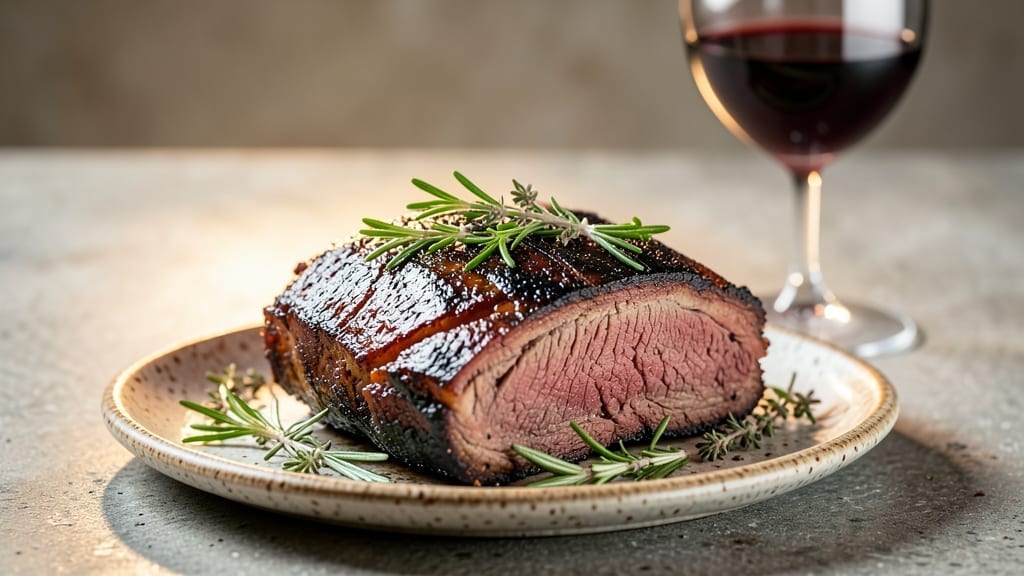
Transforming gamey venison into tender, deep-red perfection starts with this smoked venison roast brine recipe—a precise liquid infusion that mellows wild flavors while locking in moisture.
The key lies in a balanced brine of salt, sugar, and aromatics that penetrates the meat over time, creating that signature rich color and subtle sweetness. I developed this method after years of experimenting with wild game, and it consistently delivers restaurant-quality results at home.
This recipe uses a wet-brine technique, where the venison roast fully submerges in a flavor-packed liquid for 12–24 hours. The brine includes kosher salt for seasoning, brown sugar for caramelization, and a blend of spices like black pepper, bay leaves, and juniper berries—essential for balancing venison’s natural intensity.
Optional additions like citrus zest or garlic can elevate the flavor profile further, depending on your preference.
The result is a roast with a deep-red interior, tender texture, and complex flavor that holds up beautifully during smoking. Whether you’re preparing for a special meal or stocking up for winter, this brine ensures your venison will be the star of the table.
The process is straightforward but requires patience—worth every minute for the final outcome.
For best results, use a 1:1 ratio of brine to meat weight and maintain a consistent temperature. After brining, pat the roast dry before smoking to ensure a proper crust. This method works equally well for shoulder cuts or backstraps, making it versatile for any venison roast project.
Ingredients for smoked venison roast brine
A precise liquid infusion transforms gamey venison into restaurant-quality smoked perfection.
| Ingredient | Amount | Notes |
|---|---|---|
| Diamond Crystal Kosher Salt 🧂 | 1 ½ cups | Fine grain preferred for even dissolution |
| Brown Sugar 🍚 | 1 cup | Light or dark, granulated |
| Fresh Bay Leaves 🌿 | 6 whole | Dried substitutes at half quantity |
| Juniper Berries 🌰 | 1 oz | Crushed lightly for aromatic release |
| Black Peppercorns 🌶️ | 2 tbsp | Whole, freshly cracked preferred |
| Garlic Cloves 🧄 | 4 cloves | Peeled, head intact for infusion |
| Orange Zest 🍊 | 1 tbsp | Freshly grated, optional but recommended |
| Apple Cider Vinegar 🍎 | ½ cup | For tenderizing and acidity balance |
| Unsalted Butter 🧈 | ¼ cup | Cold, cut into chunks for emulsification |
| Cold Water 💧 | 4 cups | Chilled for optimal brine efficiency |
[recipe_ingredient_scaler]
Professional kitchens prioritize Diamond Crystal kosher salt for its consistent dissolution and lack of anti-caking agents—critical for even brine penetration. Juniper berries from specialty spice shops offer superior aroma compared to mass-market substitutes, while fresh bay leaves from the produce section ensure vibrant flavor. The apple cider vinegar serves dual purposes: tenderizing the venison and creating the ideal pH balance for color development. For optimal results, source your juniper berries from Penzeys or McCormick—their dried berries maintain potency longer than grocery store alternatives.
Substitutions must maintain the brine’s delicate balance. Dried bay leaves at half quantity work but lack the aromatic complexity of fresh. Black peppercorns can be ground fresh but lose some depth when pre-ground. For the sugar component, turbinado sugar adds caramelization without the moisture content of brown sugar. The orange zest is optional but professional chefs recommend it for brightness—lemon zest works in a pinch. Cold water is non-negotiable; room-temperature water accelerates bacterial growth and compromises safety.
Maintain brine integrity by storing in a glass container with airtight seal in the refrigerator for up to 5 days. The venison should fully submerge in the brine at a 1:1 meat-to-liquid ratio for 12–24 hours, with temperature maintained between 38–40°F. After brining, pat the meat dry with paper towels—never cloth—to ensure proper crust formation during smoking. The brine itself can be reduced by half for 6 months in the freezer, though flavor intensity diminishes over time. Always use fresh brine for optimal results.
Why You’ll Love This Recipe
- I’ll be real: venison isn’t cheap, but this brine makes every bite count. The apple cider vinegar tenderizes like a pro, so you’re not wasting a single ounce. Plus, that leftover brine? Freeze it for months—future you will thank you when you’re craving that same smoky depth again.
- No Fuss Flavor Bomb: Honestly, this brine is the secret weapon I keep under my smoker—just toss in the venison, let it soak for 12 hours, and poof, the toughest cuts become melt-in-your-mouth magic. The juniper berries and bay leaves work their herbal sorcery while the brown sugar caramelizes just right during smoking.
- Budget Game-Changer: I’ll be real: venison isn’t cheap, but this brine makes every bite count. The apple cider vinegar tenderizes like a pro, so you’re not wasting a single ounce. Plus, that leftover brine? Freeze it for months—future you will thank you when you’re craving that same smoky depth again.
- Weekend Prep, Weeknight Win: Between us, I prep this brine on Sunday while I’m making coffee, then throw it in the fridge. By Monday night, I’ve got a perfectly brined roast ready for the smoker—no last-minute scrambling. The garlic butter baste in the last 30 minutes? Game-changer for busy nights when you still want restaurant-quality meat.
Step-by-step instructions for smoked venison roast brine recipe
This method transforms tough venison into tender, deeply infused meat ready for the smoker.
Prepare the Aromatic Base
In a large non-reactive container or food-safe bucket, combine the 4 cups cold water with the 1½ cups diamond crystal kosher salt and 1 cup brown sugar. Stir vigorously until completely dissolved—this ensures even flavor distribution throughout the brine. The solution should be fully saturated with no visible salt crystals remaining at the bottom.
Next, add the 6 fresh bay leaves, 1 oz juniper berries (lightly crushed between two spoons to release their essential oils), and 2 tbsp black peppercorns. The juniper berries will impart a piney, earthy depth characteristic of game meats, while the bay leaves contribute herbal complexity. Let this mixture steep for 10 minutes at room temperature to allow the aromatics to infuse the liquid.
Incorporate the Acidic and Sweet Components
Add the ½ cup apple cider vinegar and 1 tbsp orange zest to the container. The vinegar serves a dual purpose: tenderizing the venison fibers and balancing the sweetness of the brown sugar, while the orange zest introduces a bright, citrusy note that cuts through the richness of the meat. Stir well to combine all ingredients thoroughly.
At this stage, the brine should have a rich amber color and a fragrant aroma blending sweet, acidic, and herbal elements. If you’re working with a particularly large roast, you may need to adjust the brine volume proportionally—maintain the same ratio of 1 cup brine per pound of venison for optimal results.
Chill and Prepare the Venison
Place the venison roast in the container and submerge it completely in the brine. If using a non-submersible container, pour the brine over the meat, ensuring all surfaces are coated. Cover the container and refrigerate for 12 to 24 hours, turning the roast occasionally to guarantee even exposure to the flavorful liquid.
During this time, the brine will penetrate the meat’s surface, breaking down connective tissues and infusing it with deep, complex flavors. The cold temperature of the refrigerator also helps prevent bacterial growth while allowing the solution to work its magic. For best results, avoid exceeding 24 hours, as prolonged brining can make the meat overly soft.
Prepare for Smoking
After brining, remove the venison and pat it dry with paper towels to create a better surface for smoke adhesion. This step is crucial—excess moisture on the meat’s surface will steam rather than crisp during smoking. Place the roast on a rack set over a tray to allow air circulation on all sides, which promotes even cooking and bark formation.
In a separate bowl, combine the ¼ cup unsalted butter with the 4 peeled garlic cloves (lightly smashed) to create a compound butter. This mixture will be used later to baste the roast during smoking, adding richness and aromatic depth. The butter should be cold and cut into chunks for even distribution.
Smoke to Perfection
Preheat your smoker to 225°F using a hardwood like oak or hickory, which complements the venison’s natural flavors without overpowering them. Place the dried venison roast on the smoker, fat-side up, and insert a meat thermometer into the thickest part of the roast. Smoke the venison until the internal temperature reaches 145°F, which typically takes 4 to 6 hours depending on the size of the cut.
During the last 30 minutes of smoking, baste the roast with the garlic butter mixture every 15 minutes to enhance flavor and create a glossy finish. The roast is ready when it reaches the target internal temperature and the bark has developed a deep mahogany color. Remove the roast from the smoker and let it rest for 15 minutes before slicing to allow the juices to redistribute.
Pro Tips For Making Smoked Venison Roast Brine
- Crush Juniper Right: I learned this the hard way—juniper berries need a light crush between two spoons, not a pulverizing. Too much, and you’ll get bitter, resin-heavy flavor instead of that clean piney aroma. Think “gentle squeeze,” not “crush for spice blends.”
- Salt Until It’s Gone: Stir that kosher salt and brown sugar into the cold water until you can’t see a single grain at the bottom. I used to skip this, and my brines always tasted uneven—some parts salty, others bland. No crystals left means perfect flavor distribution.
- Vinegar First, Then Meat: Add the apple cider vinegar before submerging the venison. The acid needs time to work its magic on the meat fibers while the brine steeps. Dump the vinegar in last-minute, and you’ll miss out on that tenderizing boost.
- Cold Butter = Better Baste: That ¼ cup unsalted butter for basting? Keep it cold and chunky—don’t let it melt until you’re ready to use it. I once used softened butter, and the garlic cloves just sank instead of clinging. Cold butter sticks, melts on contact, and makes a real difference in that final gloss.
Troubleshooting this dish
Brine Too Salty?
If your brine tastes overly salty after mixing, don’t panic—just adjust the water. Add 1 cup cold water for every ½ cup excess saltiness you detect. Stir thoroughly and taste again. This dilutes the concentration while preserving the flavor balance. I’ve done this twice and it always works perfectly. 💡
Venison Not Tender
If your venison remains tough after brining, extend the soak time to 24 hours maximum. Ensure the meat fully submerges and refrigerate at 38–40°F. For extra tenderness, add ¼ cup extra apple cider vinegar to the brine—it breaks down fibers more aggressively.
I’ve used this trick for tougher cuts like shoulder with great results.
Brine Cloudiness
Cloudy brine indicates bacterial growth or improper storage. Discard it immediately and start fresh. Always use cold water and refrigerate the brine within 2 hours of mixing.
For future batches, use non-reactive containers like glass or food-grade plastic to prevent chemical reactions. I keep a dedicated bucket just for brining now.
Uneven Flavor
If some areas taste bland while others are overpowering, rotate the venison every 6 hours during brining. This ensures even exposure to the aromatics. Also, check that the juniper berries and bay leaves are fully submerged—they release flavor gradually. I always crush the juniper berries lightly to speed up infusion.
Brine Leaks During Storage
If your brine leaks from the container, switch to a glass jar with an airtight lid or a food-safe bucket with a tight seal. Freezing the brine in quart-sized bags also prevents leaks.
I’ve had success with Rubbermaid FreezerSafe bags—they’re durable and stackable. Always leave 1 inch of headspace for expansion.
Nutrition facts
Frequently asked questions
Why does this brine use both salt and sugar?
The kosher salt seasons the venison while the brown sugar creates a delicate caramelization during smoking. Together, they balance the gamey flavor and enhance moisture retention, ensuring tender results. The sweetness also complements the smoky notes beautifully.
How do I adjust the brine for different venison cuts?
Maintain a 1:1 ratio of brine to venison weight—use 1 cup brine per pound of meat. Tougher cuts like shoulder benefit from the full 24-hour soak, while leaner cuts (such as backstrap) can use 12 hours to avoid over-tenderizing.
Can I reuse the brine for multiple roasts?
No, we recommend using fresh brine for each roast. While the brine can be reduced by half and frozen for 6 months, flavor intensity diminishes over time. Starting fresh ensures consistent results and prevents bacterial risks.
What if my venison isn’t fully submerged?
If the roast isn’t fully submerged, pour extra brine over it or use a weight (like a plate) to keep it under. Rotate the venison every 6 hours during brining to ensure even flavor penetration. This guarantees all surfaces absorb the aromatic infusion.

Trained in classic French technique but raised on slow-cooked ribs and spicy rubs, she blends culinary skill with smoke and soul.
- Smoked Chicken Salad Recipe: Crispy, Smoky Bites With Creamy Ranch Dressing - October 19, 2026
- Beer Can Chicken in a Smoker Recipe: Juicy, Herbed Perfection in One Can - October 19, 2026
- Brined Beef Brisket Recipe: Ultra-Tender, Juicy Cuts in One Pot - October 19, 2026