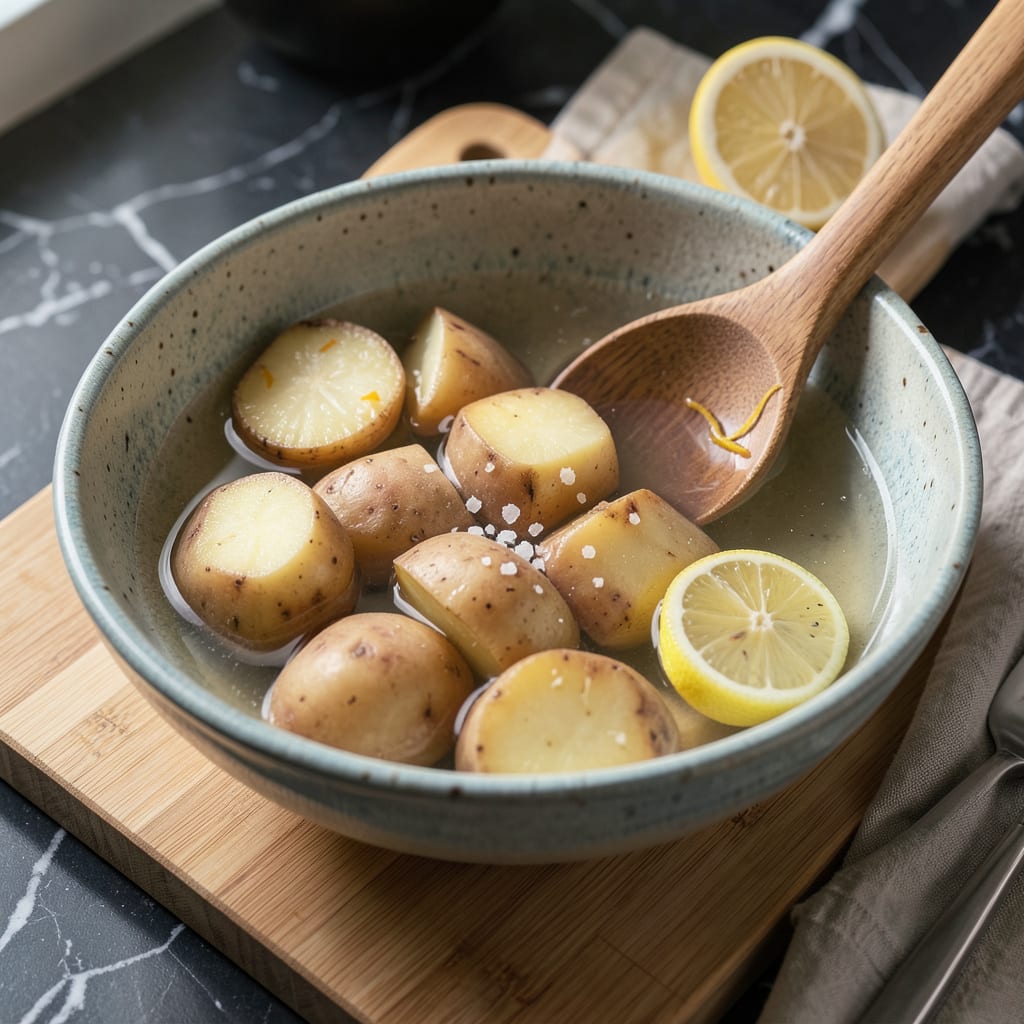
I’ll be real with you: the secret to extra-crispy potatoes isn’t some fancy gadget or expensive ingredient—it’s a simple water bath. After years of testing (and more than a few batches of soggy fries), I discovered that soaking raw potatoes in cold water transforms their texture completely. This one step removes excess starch, which is what makes potatoes gummy instead of golden.
Here’s the thing—it works for everything. French fries come out shatteringly crisp, roasted potatoes develop perfect crunchy edges, and even hash browns hold their shape better. I use this method whether I’m cooking over a fire pit or in my kitchen oven. The science is simple: starch dissolves in water, leaving you with potatoes that brown evenly and stay crisp long after they come out of the oil or oven.
You don’t need special equipment either. Just cut your potatoes, cover them with cold water, and let them soak for 30 minutes to 2 hours (longer for extra-starchy varieties like Russets). Drain well and pat dry—that’s the key to guaranteed crispiness. I’ve converted countless skeptics with this technique, and once you try it, you’ll never skip this step again.
From crispy home fries to restaurant-quality pommes frites, this method elevates every potato dish. It’s the kind of simple trick that makes you wonder why you didn’t start doing it sooner. The difference is that dramatic—trust me, I’ve burned through enough test batches to prove it.
📚 In This Guide
- What You’ll Need
- Instructions
- Tips and Common Mistakes
What Youll Need
- ● Potatoes: 2–4 lbs (900g–1.8kg) of russet, Yukon Gold, or red potatoes (washed and peeled if desired). 🥔
- ● Cold water: Enough to fully submerge potatoes in a large bowl (about 4–6 cups, depending on batch size).
- ● Large mixing bowl: A non-reactive bowl (glass, stainless steel, or food-grade plastic) big enough to hold potatoes + water.
- ● Colander: For draining—opt for a fine-mesh version if you’re soaking cut potatoes to prevent small pieces from slipping through.
- ● Knife & cutting board: A sharp chef’s knife for uniform cuts (1–2 inches thick for even soaking).
- ○ Salt (optional): 1–2 tbsp of kosher or sea salt to enhance flavor and crispiness.
- ○ Vinegar or lemon juice (optional): 1–2 tbsp of white vinegar or lemon juice to prevent browning (great for prepping ahead!).
- ● Kitchen timer: To track soaking time (20–60 minutes, depending on your goal). ⏰
- ● Paper towels or clean kitchen towel: For patting potatoes completely dry post-soak (key for crispiness!).
Instructions for Soaking Potatoes in Water
This simple technique transforms ordinary potatoes into crispy perfection—here’s exactly how to do it right.
Select and Cut Your Potatoes
Choose the right potato variety for your dish. For fries or roasted potatoes, I recommend russet potatoes—their high starch content yields the crispiest results. For potato chips or gratins, Yukon Golds work beautifully with their creamy texture and moderate starch.
Cut your potatoes into even pieces—whether that’s sticks for fries, slices for chips, or cubes for roasting. Uniform size ensures even cooking later. I like to cut them ¼-inch to ½-inch thick for most applications. The more surface area you create, the crispier your final result will be.
Rinse Away Excess Starch
Place your cut potatoes in a large bowl and cover them with cold water. Swirl them around gently with your hands for about 30 seconds. You’ll see the water turn cloudy—that’s the starch releasing from the potatoes. This starch is what makes potatoes gummy when cooked, so we want to remove as much as possible.
Drain the potatoes in a colander, then return them to the bowl. Repeat this rinsing process 2-3 times until the water remains mostly clear. This might seem tedious, but it’s the foundation for achieving that coveted crispiness. The cleaner the water stays, the more starch you’ve successfully removed.
Soak the Potatoes Properly
After rinsing, cover the potatoes completely with fresh cold water—they should be submerged by at least 1 inch. Add 1 tablespoon of white vinegar or lemon juice per quart of water. This slight acidity helps break down the potatoes’ surface just enough to create more crispy edges when cooked.
Let the potatoes soak for at least 30 minutes, though I prefer 1-2 hours for maximum crispiness. You’ll notice the water stays clear this time—that means you’ve successfully removed the excess starch. For even better results, refrigerate the potatoes during soaking. The cold temperature helps firm up the potato structure, leading to crisper edges when cooked.
Drain and Dry Thoroughly
Drain the potatoes in a colander and give them a good shake to remove excess water. Then comes the critical drying step: spread the potatoes on a clean kitchen towel or layers of paper towels. Pat them completely dry—this might take 2-3 minutes of thorough drying.
For extra crispiness, let the dried potatoes sit uncovered at room temperature for 10-15 minutes before cooking. This final drying step ensures any remaining surface moisture evaporates. The drier your potatoes are before they hit the oil or oven, the crispier your final result will be. You should hear a distinct sizzle when they first contact the hot oil—a sign you’ve done this step correctly.
Cook Immediately for Best Results
Now that your potatoes are perfectly prepped, cook them immediately using your preferred method—whether that’s deep frying, air frying, roasting, or pan frying. The soaking process has removed excess starch and moisture, setting you up for maximum crispiness.
For frying, I recommend 325°F for the first cook (if doing double-fry method) and 375°F for the final crisp. For roasting, use 425°F and don’t crowd the pan. You’ll know they’re perfectly crisp when they’re golden brown all over and make a satisfying crunch when bitten. The interior should be fluffy and tender—a perfect contrast to that crispy exterior you’ve worked so hard to achieve.
Tips and Common Mistakes
Here’s what I’ve learned from years of perfecting this simple but transformative technique—small details make all the difference.
The Soaking Time Factor: While the minimum 30-minute soak works, I always aim for the full 1-2 hours when possible. This extended time allows the potatoes to absorb just enough moisture to create that perfect crispy exterior while keeping the interior fluffy. If you’re short on time, even 30 minutes will improve your results, but the longer soak gives you restaurant-quality texture. The water stays clear because you’ve already removed the starch in Step 2—this is exactly what you want to see.
Drying Technique That Changed Everything: Don’t rush the drying process in Step 4. Those 2-3 minutes of thorough patting with paper towels remove surface moisture that would otherwise create steam when cooking. I like to press down firmly with a clean kitchen towel to absorb every last drop. Then, that 10-15 minute air-drying period is crucial—it creates a slightly tacky surface that crisps up beautifully when it hits hot oil or a roasting pan. You’ll hear that satisfying sizzle immediately when you’ve done this right.
Water Temperature Matters: Always use cold water throughout the entire process, from the initial rinses in Step 2 to the final soak in Step 3. Cold water helps firm up the potato’s cell structure, which translates to crisper edges when cooked. I’ve found that refrigerating the potatoes during the soaking process makes an even bigger difference—this extra chill time creates more defined, crunchy edges that hold up better to frying or roasting.
Acid Addition Tip: Don’t skip the 1 tablespoon of white vinegar or lemon juice per quart of water in Step 3. This slight acidity breaks down the potato’s surface just enough to create more crispy edges without making them mushy. I prefer white vinegar because it’s neutral in flavor, but lemon juice works beautifully too—especially if you’re making herbed potatoes where that subtle citrus note complements the final dish.
Pro Tips for Soaking Potatoes In Water
- Here’s what I’ve learned from years of perfecting this simple but transformative technique—small details make all the…
- The Soaking Time Factor: While the minimum 30-minute soak works, I always aim for the full 1-2 hours when possible. T…
- Drying Technique That Changed Everything: Don’t rush the drying process in Step 4. Those 2-3 minutes of thorough patt…
Frequently Asked Questions
Got questions about soaking potatoes? You’re not alone! Here are the most common queries—and quick answers—to help you nail the technique every time.
How long should I soak potatoes in water for maximum crispiness?
For fries or roasted potatoes, soak cut spuds in cold water for 30 minutes to 2 hours. Overnight soaking (8+ hours) works for extra-starchy varieties like Russets but may require rinsing to avoid mushiness. Pro tip: Pat very dry before cooking!
Can I soak potatoes in hot water instead of cold?
Nope! Hot water activates starches, making potatoes gummy. Always use ice-cold water to draw out starch while keeping texture intact. If you’re short on time, add ice cubes to speed up the process.
What’s the best alternative if I don’t have time to soak?
Rinse cut potatoes under cold water for 1–2 minutes, shaking off excess starch in a colander. For roasts, toss them in a mix of cornstarch + oil before baking to mimic the crispy effect.
Why do my potatoes turn gray after soaking?
Grayish tint = oxidation (harmless but unappetizing). Prevent it by adding 1 tbsp vinegar or lemon juice to the soaking water. If they’ve already grayed, a quick rinse before cooking revives their color.
Do I need to soak potatoes for mashed potatoes?
No—soaking removes starch, which is key for creamy mash! Skip it here. Instead, boil potatoes whole (peeled or unpeeled) to preserve starch for fluffier results. Save soaking for crispy dishes only.
Soaking potatoes in water isn’t just an extra step—it’s your secret weapon for perfectly crispy, golden results every time! 🎯 Whether you’re whipping up fries, roasting spuds, or prepping hash browns, this simple trick removes excess starch, cuts down on sticking, and guarantees a texture worth bragging about.
Ready to put it to the test? Grab those potatoes, fill a bowl with cold water, and let them soak while you preheat the oven or oil. Your taste buds (and dinner guests) will thank you! Pro tip: Bookmark this guide for your next kitchen adventure—your crispy potato game is about to level up! 🍟✨

Trained in classic French technique but raised on slow-cooked ribs and spicy rubs, she blends culinary skill with smoke and soul.
- Recipe for Boneless Pork Chops in Cast Iron Skillet: Sear and Baste to Juicy Perfection - October 3, 2026
- Recipe for Boneless Cross Rib Roast: Slow-Roasted Beef with Herb Crust - October 3, 2026
- Hamburgers in Sauce Recipe Crock Pot: Slow-Cooked Savory Delight - October 3, 2026