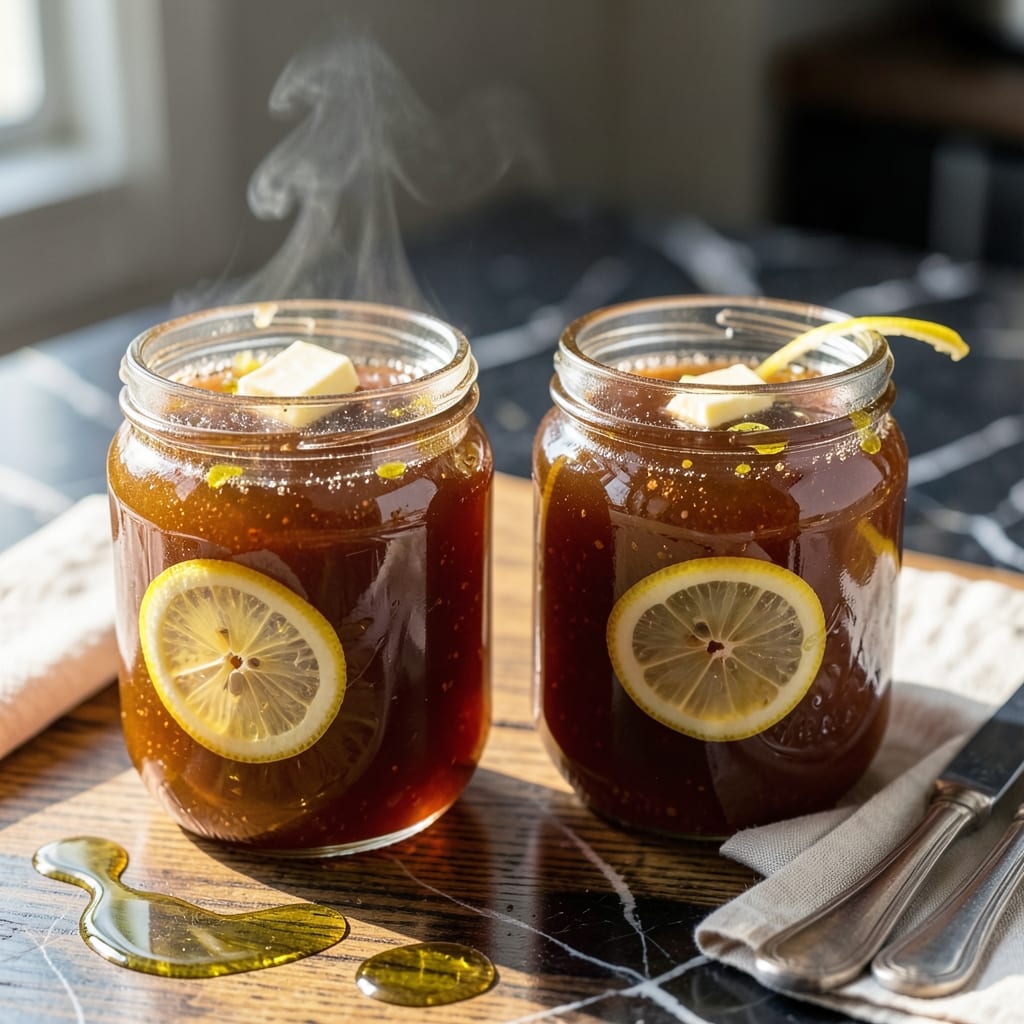
This vintage recipe revives a nearly forgotten Southern tradition using everyday ingredients. I first encountered it in my grandmother’s handwritten cookbook, where it promised to transform simple pantry staples into something extraordinary.
The process relies on a precise balance of sugar, citrus, and leftover soda to create a jelly with bright flavor and perfect set. No special equipment is needed—just patience and attention to detail.
What emerges is a glossy, jewel-toned spread that captures the essence of old-fashioned sweetness. The soda adds a subtle, nostalgic depth that pairs beautifully with biscuits or toast.
This method ensures consistent results, whether you use cola, ginger ale, or citrus soda. The jelly keeps well, making it ideal for gifting or savoring over time.
Ingredients for Soda Bottle Jelly
Transform leftover soda into a glossy, jewel-toned spread with these pantry staples.
| Ingredient | Amount | Notes |
|---|---|---|
| Leftover Soda 🥤 | 2 cups | Cola, ginger ale, or citrus soda |
| Granulated Sugar 🍚 | 3 cups | White granulated preferred |
| Fresh Lemon Juice 🍋 | ¼ cup | Freshly squeezed for brightness |
| Liquid Pectin 🧪 | 1 package | Standard 1.75 oz package |
| Lemon Zest 🍋 | 1 tbsp | Finely grated for aroma |
| Unsalted Butter 🧈 | ½ tsp | Optional, for foam reduction |
| Citric Acid 🧪 | ½ tsp | Preserves color and set |
| Water 💧 | ½ cup | For cleaning jar rims |
| Canning Jars 🏺 | 4 pieces | Sterilized 8 oz jars with lids |
| Vanilla Extract 🌿 | 1 tsp | Pure extract for depth |
[recipe_ingredient_scaler]
The soda choice defines the flavor—cola yields deep caramel notes, ginger ale adds spice, while citrus soda delivers bright tang. Use name-brand sodas for consistent results; generic versions often lack the acidity needed for proper set. The sugar must be white granulated for clarity in the final jelly. For equipment, Ball or Kerr canning jars are the gold standard, available at most grocery stores or Walmart.
No liquid pectin? Powdered pectin at double the amount works, but adjust cooking time. Substitute lime or orange juice for lemon if needed, though flavor will shift. For a firmer set, add an extra 0.25 tsp citric acid. The butter is optional but helps dissipate foam—vegetable oil works too (1:1 swap). Always use freshly squeezed citrus juice; bottled lacks the acidity for proper gelling.
Store unopened jars in a cool, dark pantry for up to 1 year. Once opened, refrigerate and use within 3 weeks. The jelly’s bright color may fade over time, but flavor remains intact. Perfect for gifting—just add a pretty ribbon to the lid.
Why You’ll Love This Recipe
- No Fuss Cooking: I just dump leftover soda, sugar, and pectin in a pot—no fancy prep or hard-to-find ingredients.
- Bright Citrus Pop: The lemon zest and juice turn flat soda into a zingy, spreadable jelly that tastes way more expensive than it is.
- Gift in a Jar: I make a double batch and give these as hostess gifts—everyone flips over the unique flavor.
- Zero Waste Win: Honestly, it’s my favorite way to use up that last splash of soda sitting in the fridge.
Step-by-Step Instructions for Soda Bottle Jelly
Precision and timing ensure this vintage preserve sets properly with vibrant flavor.
Step 1: Prepare the Canning Jars
Sterilize the 4 pieces Canning Jars and their lids by boiling them in water for 10 minutes. Keep them hot until ready to fill—this prevents thermal shock when adding the hot jelly mixture.
Have a clean workspace ready with a ladle, funnel, and jar lifter. Place a saucer in the freezer now; you’ll use it later to test the jelly’s set. This preparation ensures a smooth, uninterrupted process once the jelly begins cooking.
Step 2: Combine Soda, Sugar, and Acid
In a large, heavy-bottomed pot, combine the 2 cups Leftover Soda, 3 cups Granulated Sugar, 0.25 cup Fresh Lemon Juice, 1 tbsp Lemon Zest, and 0.5 tsp Citric Acid. The pot should be deep enough to accommodate vigorous boiling without spills.
Stir over medium-high heat until the sugar fully dissolves. This step is critical—undissolved sugar can cause crystallization later. Watch for the mixture to come to a full rolling boil that cannot be stirred down.
Step 3: Add Pectin and Achieve Full Boil
Stir in the 1 package Liquid Pectin and 0.5 tsp Unsalted Butter (the butter reduces foam). Return to a full rolling boil and maintain it for 1 full minute, stirring constantly. The mixture will thicken slightly and develop a glossy sheen.
Timing is precise here—a boil shorter than 1 minute may prevent proper setting. Use a timer to ensure accuracy. The jelly will continue to thicken as it cools, so resist the urge to overcook at this stage.
Step 4: Test Set and Add Vanilla
After removing from heat, test the set by placing a small spoonful on the chilled saucer. If it wrinkles when pushed with a finger after 2 minutes, it’s ready. If not, return to a boil for an additional 30-60 seconds and retest.
Once the desired set is confirmed, stir in the 1 tsp Vanilla Extract. This adds depth to the flavor profile. Skim off any remaining foam with a metal spoon for a crystal-clear finished product.
Step 5: Fill and Process the Jars
Ladle the hot jelly into the sterilized 4 pieces Canning Jars, leaving ¼-inch headspace. Wipe the rims with a clean, damp cloth dipped in the 0.5 cup Water to ensure a proper seal. Screw on the lids until fingertip-tight.
Process the jars in a boiling water bath for 10 minutes. Remove and let cool undisturbed for 24 hours. The lids should ping as they seal. Store in a cool, dark place, where the jelly will keep for up to 1 year.
Pro Tips For Making Soda Bottle Jelly
- Boil Vigorous and Hard: Bring the soda and sugar mixture to a full rolling boil that can’t be stirred down—I learned this the hard way after ending up with syrupy jelly that never set.
- Measure Pectin Last: Add liquid pectin only after the mixture reaches a full boil, then boil for exactly 1 minute (no more, no less) or it won’t gel properly.
- Use Flat Soda: Let the leftover soda sit out overnight or stir it vigorously to remove carbonation—otherwise your jelly will have weird bubbles.
- Skim the Foam: As it boils, skim off any foam that rises to the top with a spoon; I skip this when I’m lazy, but the jelly looks much cleaner when I don’t.
Dietary Considerations for This Recipe
Vegan Modification
This recipe is naturally vegan as written—no animal products are required. I use standard pectin (like Ball or Sure-Jell) which is plant-based. Some brands add honey, so check labels if strict veganism matters to you. 🌱
Gluten-Free Status
All ingredients in this jelly are inherently gluten-free. The only potential risk comes from cross-contamination in your kitchen. I always use certified gluten-free pectin to be safe. The Ball brand is my go-to.
Sugar-Free Option
For a sugar-free version, replace granulated sugar with 2 cups erythritol and use low-sugar pectin. Add 1 tsp calcium water to help with setting. Note that texture and shelf life may differ slightly from the original. 💡
Dairy-Free Note
The only dairy here is the optional 0.5 tsp Unsalted Butter for foam reduction. Simply omit it—1/2 tsp vegetable oil works just as well. I often skip it entirely without issues.
Allergen Considerations
This jelly contains no common allergens if you use vegetable oil instead of butter. Citric acid and pectin are typically allergen-free, but always verify your specific brands. Store-bought soda may contain trace allergens, so check labels.
Calorie Reduction
To cut calories, reduce sugar by 25% (to 2¼ cups) and add 1 tsp pectin per cup of sugar removed. The jelly will be softer but still spreadable. I find citrus soda works best with this adjustment.
Nutrition Facts
Frequently Asked Questions
What kind of soda works best?
Any carbonated soda works, but cola gives rich caramel notes, ginger ale adds spice, and citrus soda offers bright tang. Stick to name brands for consistent acidity and flavor.
Can I use powdered pectin instead of liquid?
Yes, use double the amount of powdered pectin and adjust cooking time slightly. The jelly may set a bit firmer, so test the set carefully before jarring.
How long does it take for the jelly to set?
It begins to set within 2-4 hours but reaches full consistency after 24 hours. Store jars undisturbed during this time for the best texture.
Why did my jelly not set properly?
This usually happens if the boiling time after adding pectin was too short. Ensure a full rolling boil for 1 full minute and test the set on a chilled plate before jarring.

Trained in classic French technique but raised on slow-cooked ribs and spicy rubs, she blends culinary skill with smoke and soul.
- Recipe for Boneless Pork Chops in Cast Iron Skillet: Sear and Baste to Juicy Perfection - October 3, 2026
- Recipe for Boneless Cross Rib Roast: Slow-Roasted Beef with Herb Crust - October 3, 2026
- Hamburgers in Sauce Recipe Crock Pot: Slow-Cooked Savory Delight - October 3, 2026