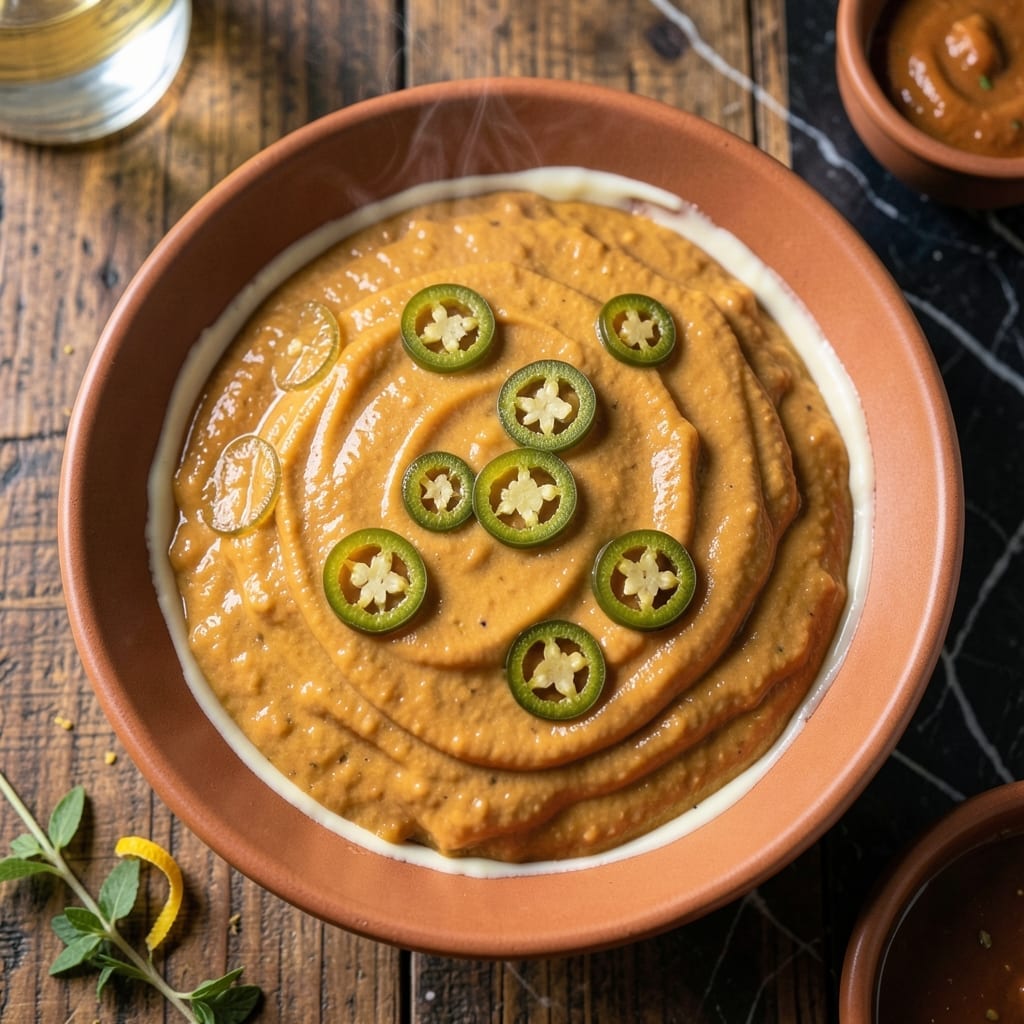
This sauce transforms cheese into silky smooth perfection. Sodium citrate creates a stable emulsion that prevents separation or clumping.
Use this method for nachos, dips, or any dish requiring ultra-smooth melted cheese. The result is restaurant-quality every time.
Ingredients for Sodium Citrate Queso
Nine ingredients create that ultra-smooth, restaurant-quality cheese sauce you crave for nachos or dips.
| Ingredient | Amount | Notes |
|---|---|---|
| Sharp Cheddar Cheese 🧀 | 8 oz | Block, freshly grated for best melt |
| American Cheese 🧀 | 4 oz | Pre-sliced for easy melting |
| Sodium Citrate 🧂 | 2 tsp | Food-grade, powdered form essential |
| Whole Milk 🥛 | ½ cup | Full-fat for creaminess |
| Unsalted Butter 🧈 | 1 tbsp | For richness and smooth texture |
| Pickled Jalapeños 🌶️ | 2 tbsp | Chopped, with brine for tang |
| Lime Juice 🍋 | 1 tsp | Freshly squeezed for brightness |
| Garlic Powder 🧄 | ½ tsp | Balances cheese richness |
| Onion Powder 🧅 | ½ tsp | Adds depth to flavor profile |
| Ground Cumin 🌿 | ¼ tsp | Warm spice for complexity |
[recipe_ingredient_scaler]
The cheese selection is critical here. Sharp cheddar provides bold flavor while American cheese (like Land O’Lakes or Boar’s Head) ensures that velvety texture. Sodium citrate must be food-grade powder—Modernist Pantry is a reliable brand. Avoid pre-shredded cheese as it contains anti-caking agents that disrupt the emulsion. Whole milk adds necessary fat; organic or grass-fed offers superior creaminess.
No sodium citrate? Sodium phosphate works as a substitute at the same ratio. For a spicier kick, swap pickled jalapeños for chipotle peppers in adobo. The butter can be replaced with vegetable oil, though the flavor will be less rich. If using only cheddar, add 1 tbsp cornstarch to help stabilize the sauce. Lime juice can be substituted with apple cider vinegar for a different tang.
Store sodium citrate in an airtight container in a cool, dark place for up to 2 years. The queso keeps in the fridge for 1 week or can be frozen for 3 months. Reheat gently on the stove with a splash of milk to restore its silky texture. Always bring cheese to room temperature before melting for best results.
Why You’ll Love This Recipe
- No-Fuss Melting: I just toss the cheese and sodium citrate in with warm milk—no stirring for hours or worrying about clumping.
- Ultra Creamy: Sharp cheddar and American cheese blend into this ridiculously smooth, velvety dip that coats chips perfectly.
- Party Ready: I make a big batch for game day or movie night, and it stays warm and dip-worthy for hours.
- Budget Stretcher: A little sodium citrate turns affordable cheese into restaurant-quality queso that feeds a crowd.
Step-by-Step Instructions for Sodium Citrate Queso
Master this technique for a velvety, lump-free cheese sauce that stays smooth even as it cools.
Step 1: Create the Sodium Citrate Slurry
In a small bowl, whisk together the 2 tsp Sodium Citrate with the 0.5 cup Whole Milk until the powder fully dissolves. This slurry prevents the proteins in the cheese from clumping, ensuring an emulsified, ultra-smooth texture.
I use a fork for this—it breaks up any stubborn bits of sodium citrate that might resist dissolving. The mixture should look slightly cloudy but uniform. Set this aside while you prepare the cheese.
Step 2: Melt the Cheese Base
In a medium saucepan over medium-low heat, melt the 1 tbsp Unsalted Butter. Once melted, add the 8 oz Sharp Cheddar Cheese and 4 oz American Cheese, stirring constantly with a silicone spatula.
The American cheese contains emulsifiers that work synergistically with the sodium citrate, while the sharp cheddar provides depth of flavor. Keep the heat gentle—you want a slow, even melt, not a rapid boil.
Step 3: Emulsify with the Slurry
Once the cheeses are about 70% melted, slowly pour in the sodium citrate slurry while continuing to stir vigorously. The mixture will transform from a thick, gluey mass to a silky, pourable sauce within 2-3 minutes.
Watch for the texture to become glossy and completely homogeneous. If it looks grainy at any point, reduce the heat slightly and keep stirring—it will smooth out. This step is non-negotiable for that signature velvety finish.
Step 4: Season and Finish
Remove the saucepan from heat and stir in the 0.5 tsp Garlic Powder, 0.5 tsp Onion Powder, and 0.25 tsp Ground Cumin. These spices add complexity without overpowering the cheese.
Next, fold in the 2 tbsp Pickled Jalapeños (with their brine) and 1 tsp Lime Juice. The acidity from both ingredients brightens the richness of the cheese. Taste and adjust seasoning if needed.
Step 5: Serve Immediately or Hold
Transfer the queso to a serving bowl or fondue pot. The sodium citrate ensures it remains smooth and fluid, even if held at serving temperature for up to 1 hour. If it thickens slightly over time, stir in a splash of warm milk to restore the perfect consistency.
For best results, serve while still warm. The ideal texture is thick enough to cling to chips but fluid enough to pour easily. This method guarantees no stringy, separated mess—just pure, creamy indulgence.
Pro Tips For Making Sodium Citrate Queso
- Pre-shred the cheese: Grate your sharp cheddar fresh from the block—pre-shredded has anti-caking agents that make the queso grainy. I learned this the hard way after my first batch turned into cheese glue.
- Dissolve citrate fully: Mix the sodium citrate into warm milk completely before adding cheese, or you’ll get clumps that refuse to melt no matter how long you stir.
- Keep heat gentle: Use low to medium-low heat once the cheese starts melting—too hot and the proteins will seize, leaving you with a stringy, oily mess.
- Add American last: Stir in the American cheese at the very end for that ultra-smooth finish; it’s the insurance policy against any lingering graininess.
Essential Equipment for This Recipe
Precision Scale
A digital kitchen scale is non-negotiable for measuring sodium citrate accurately. I use my OXO Good Grips 11lb scale—it measures down to 1-gram increments, which is essential for this recipe’s chemistry. Even 0.1g can affect the emulsion stability. 💡
Saucepan Selection
Choose a medium heavy-bottomed saucepan (2-3 quart capacity) for even heat distribution. I swear by my All-Clad Stainless Steel—it prevents hot spots that could scorch the cheese. Avoid nonstick pans as they can’t handle the high heat needed for proper emulsification.
Whisk and Spatula
A flat-bottomed silicone spatula is perfect for stirring the melting cheese, while a small wire whisk helps dissolve the sodium citrate completely in the milk. I keep both OXO brand tools within reach—they’re heat-resistant up to 600°F.
Thermometer
An instant-read thermometer ensures you maintain the ideal temperature range of 140-160°F. My ThermoWorks ThermoPop gives accurate readings in 3-4 seconds. Never let the mixture exceed 180°F or the proteins may break down.
Serving Vessel
For parties, a slow cooker on “warm” setting keeps queso perfect for hours. I use a 2-quart Hamilton Beach model. For smaller batches, a double boiler setup works beautifully. Both maintain that silky texture without overheating.
Storage Containers
Glass airtight containers with silicone seals are best for storing leftovers. I prefer Pyex glass containers—they don’t absorb odors and are microwave-safe. Always leave ½ inch headspace for expansion when freezing. ❄️
Nutrition Facts
Frequently Asked Questions
Can I use pre-shredded cheese for this?
No, avoid pre-shredded cheese as it contains anti-caking agents that disrupt the emulsion. Always use block cheese and grate it fresh for the smoothest texture.
Why does my queso get grainy?
Graininess usually means the cheese overheated or the sodium citrate didn’t fully dissolve. Keep heat at medium-low and stir constantly while adding the slurry.
How long can I keep leftover queso?
Store in an airtight container in the fridge for up to 1 week. Reheat gently on the stove with a splash of milk to restore creaminess.
What can I substitute for sodium citrate?
Sodium phosphate works as a 1:1 substitute. For a non-additive option, use 1 tbsp cornstarch mixed with the milk, though results may be less stable.

Trained in classic French technique but raised on slow-cooked ribs and spicy rubs, she blends culinary skill with smoke and soul.
- Recipe for Boneless Pork Chops in Cast Iron Skillet: Sear and Baste to Juicy Perfection - October 3, 2026
- Recipe for Boneless Cross Rib Roast: Slow-Roasted Beef with Herb Crust - October 3, 2026
- Hamburgers in Sauce Recipe Crock Pot: Slow-Cooked Savory Delight - October 3, 2026