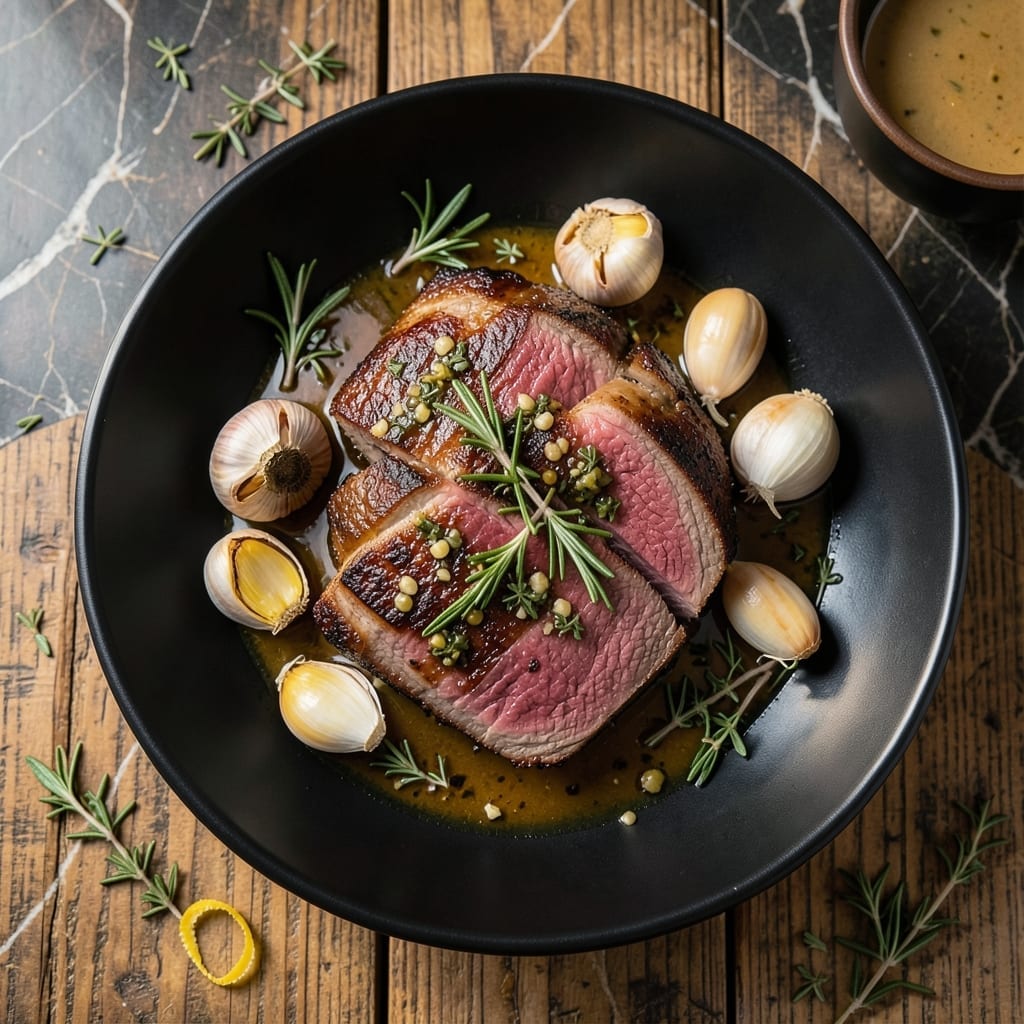
This herb-crusted prime rib transforms holiday meals into unforgettable feasts. I’ve refined this method over years of perfecting roasts for special occasions, ensuring tender, juicy results every time.
The secret lies in a bold herb crust and precise cooking. A slow roast at 325°F guarantees even doneness, while a final sear locks in flavors. It’s the centerpiece that earns compliments without fail.
What emerges is a showstopping dish with a fragrant crust and rich, beefy depth. The aroma alone signals a celebration, and the first slice reveals perfection.
Serve with au jus for dipping and classic sides. This is holiday cooking at its finest.
Ingredients for Southern Living Prime Rib
Quality ingredients create this herb-crusted holiday centerpiece with rich, beefy depth.
| Ingredient | Amount | Notes |
|---|---|---|
| Prime Rib Roast 🥩 | 5 lb | Bone-in, well-marbled preferred |
| Kosher Salt 🧂 | 2 tbsp | Diamond Crystal brand recommended |
| Black Pepper 🌶️ | 2 tsp | Freshly ground, coarse |
| Fresh Rosemary 🌿 | ¼ cup | Chopped, stems removed |
| Fresh Thyme 🍃 | ¼ cup | Chopped, stems removed |
| Fresh Garlic Cloves 🧄 | 6 cloves | Minced into fine paste |
| Dijon Mustard 🟡 | 3 tbsp | Whole-grain variety acceptable |
| Extra-Virgin Olive Oil 🫒 | ¼ cup | High-quality, for crust binding |
| Red Wine 🍷 | 1 cup | Dry variety for au jus |
| Beef Stock 🥩 | 2 cups | Low-sodium preferred |
| Unsalted Butter 🧈 | 4 tbsp | For finishing au jus |
| All-Purpose Flour 🌾 | 2 tbsp | For thickening au jus |
| Horseradish 🌿 | ¼ cup | Prepared, for serving |
[recipe_ingredient_scaler]
The prime rib is non-negotiable for this dish. Bone-in roasts from a reputable butcher yield superior flavor and moisture retention. Look for USDA Prime grade with abundant marbling—Costco or Whole Foods carry excellent options. The fresh herbs should be vibrant green with no wilting; farmers markets often have the best selection. Avoid pre-minced garlic—fresh cloves provide the robust flavor this recipe demands.
No fresh rosemary or thyme? Dried herbs at one-third the amount work in a pinch, though the flavor will be more concentrated. For the wine, any dry red like Cabernet Sauvignon or Merlot is ideal. If avoiding alcohol, substitute with additional beef stock plus 1 tbsp balsamic vinegar. The Dijon mustard can be replaced with whole-grain mustard for a rustic texture.
The roast can rest at room temperature for 2 hours before cooking. Store fresh herbs wrapped in damp paper towels for up to 5 days. Leftovers keep beautifully—slice and refrigerate for 4-5 days, or freeze for 3 months in airtight containers with au jus.
Why You’ll Love This Recipe
- Set It and Forget: I rub the prime rib with salt, pepper, rosemary, and thyme the night before, then let the oven do all the work the next day.
- Herb Crust Perfection: The combo of fresh rosemary and thyme creates this insane crust that’s crispy on the outside, juicy inside.
- Holiday Showstopper: Honestly, this is my go-to for Christmas dinner—impressive enough for guests but unfussy.
- Leftovers for Days: One roast feeds us for three meals, and the sandwiches the next day? Even better than the first serving.
Step-by-Step Instructions for Herb-Crusted Prime Rib
Here’s the method. Straightforward, tested, works every time.
Step 1: Prepare the Herb Crust and Season the Roast
Combine the 0.25 cup Fresh Rosemary, 0.25 cup Fresh Thyme, 6 cloves Fresh Garlic Cloves, 2 tbsp Kosher Salt, and 2 tsp Black Pepper in a small bowl. Stir in the 3 tbsp Dijon Mustard and 0.25 cup Extra-Virgin Olive Oil until it forms a thick paste. This aromatic blend creates the signature crust that locks in juices.
Pat the 5 lb Prime Rib Roast completely dry with paper towels—this ensures the crust adheres properly. Rub the herb paste evenly over the entire surface of the roast, pressing it into the meat. Place it fat-side up on a rack in a roasting pan and let it sit at room temperature for 1 hour before cooking.
Step 2: Roast at High Heat for a Perfect Crust
Preheat your oven to 450°F. This initial high heat sears the exterior, creating a flavorful crust while keeping the interior tender. Place the roast in the oven and cook for 30 minutes without opening the door. You’ll see the crust begin to form a deep golden-brown color.
After the initial sear, reduce the oven temperature to 325°F to continue cooking the roast evenly. This temperature adjustment prevents the exterior from burning while allowing the interior to reach the desired doneness. The fat cap will render slightly, basting the meat naturally as it cooks.
Step 3: Cook to Desired Doneness and Rest
Continue roasting until the internal temperature reaches 120-125°F for medium-rare, which typically takes 1.5 to 2 hours total, depending on your oven. Use a meat thermometer inserted into the thickest part of the roast, avoiding the bone, to check the temperature accurately.
Once the roast reaches the desired temperature, transfer it to a cutting board and tent loosely with foil. Let it rest for 20-30 minutes before carving. This resting period allows the juices to redistribute, ensuring every slice is moist and flavorful.
Step 4: Prepare the Au Jus for Serving
Place the roasting pan with drippings on the stovetop over medium heat. Add the 1 cup Red Wine and 2 cups Beef Stock to the pan, scraping up any browned bits from the bottom. Bring the mixture to a simmer and cook for 5 minutes to reduce slightly.
In a small bowl, mix the 2 tbsp All-Purpose Flour with the 4 tbsp Unsalted Butter to form a beurre manié. Whisk this mixture into the simmering liquid and cook for an additional 2-3 minutes until the au jus thickens. Strain the au jus before serving to remove any solids.
Slice the prime rib against the grain and serve with the prepared au jus and 0.25 cup Horseradish on the side for a traditional Southern touch.
Pro Tips For Making Southern Living Prime Rib
- Salt Generously: Use about 1 tablespoon of kosher salt per pound of prime rib, and apply it at least 2 hours before cooking—I learned this the hard way after my first roast came out bland.
- Start High, Finish Low: Sear the roast at 450°F for 20 minutes, then drop to 325°F to finish. This gives a perfect crust while keeping the inside tender.
- Skip Cold Meat: Let the prime rib sit at room temperature for 1-2 hours before roasting. I used to rush this, and the center always stayed undercooked.
- Herb Slap: Press the fresh rosemary and thyme directly into the meat after salting so the oils stick and infuse every bite.
Perfect Pairings for This Recipe
Classic Sides
I always pair this with creamy mashed potatoes—use Yukon Golds and fold in ½ cup sour cream for extra richness. The potatoes soak up that beautiful au jus perfectly. 💛
Southern Favorites
Collard greens slow-cooked with smoked turkey neck add a nice bitter contrast to the rich beef. Or try buttermilk biscuits—I use White Lily flour for that authentic Southern texture. They’re perfect for mopping up juices.
Wine Pairings
A bold Cabernet Sauvignon from Napa pairs beautifully—the tannins cut through the fat while complementing the herb crust. For white lovers, an oaked Chardonnay with buttery notes works surprisingly well. 🍷
Vegetable Balance
Roasted Brussels sprouts with bacon lardons add crunch and smokiness. Toss them with 1 tbsp maple syrup before roasting at 400°F for 20 minutes. The caramelization echoes the prime rib’s crust.
Fresh Finishes
A simple arugula salad with shaved Parmesan and lemon vinaigrette cuts the richness. I use 3 cups arugula and 2 tbsp fresh lemon juice for 6 servings. The peppery bite refreshes your palate between bites.
Nutrition Facts
Frequently Asked Questions
What’s the best way to ensure even cooking?
Let the roast sit at room temperature for 1 hour before cooking. Use a meat thermometer to check the internal temperature, aiming for 120-125°F for medium-rare. This prevents uneven doneness.
Can I use dried herbs instead of fresh?
Yes, but reduce the amount to one-third since dried herbs are more concentrated. The flavor will be slightly different but still delicious. Fresh herbs provide the best aromatic quality.
How do I prevent the crust from burning?
Start with high heat at 450°F for 30 minutes, then reduce to 325°F. This sears the exterior without overcooking. Tent with foil if it browns too quickly.
How long should it rest before slicing?
Rest the prime rib for 20-30 minutes after removing it from the oven. This allows juices to redistribute, ensuring every slice is moist and tender.

Trained in classic French technique but raised on slow-cooked ribs and spicy rubs, she blends culinary skill with smoke and soul.
- Recipe for Boneless Pork Chops in Cast Iron Skillet: Sear and Baste to Juicy Perfection - October 3, 2026
- Recipe for Boneless Cross Rib Roast: Slow-Roasted Beef with Herb Crust - October 3, 2026
- Hamburgers in Sauce Recipe Crock Pot: Slow-Cooked Savory Delight - October 3, 2026