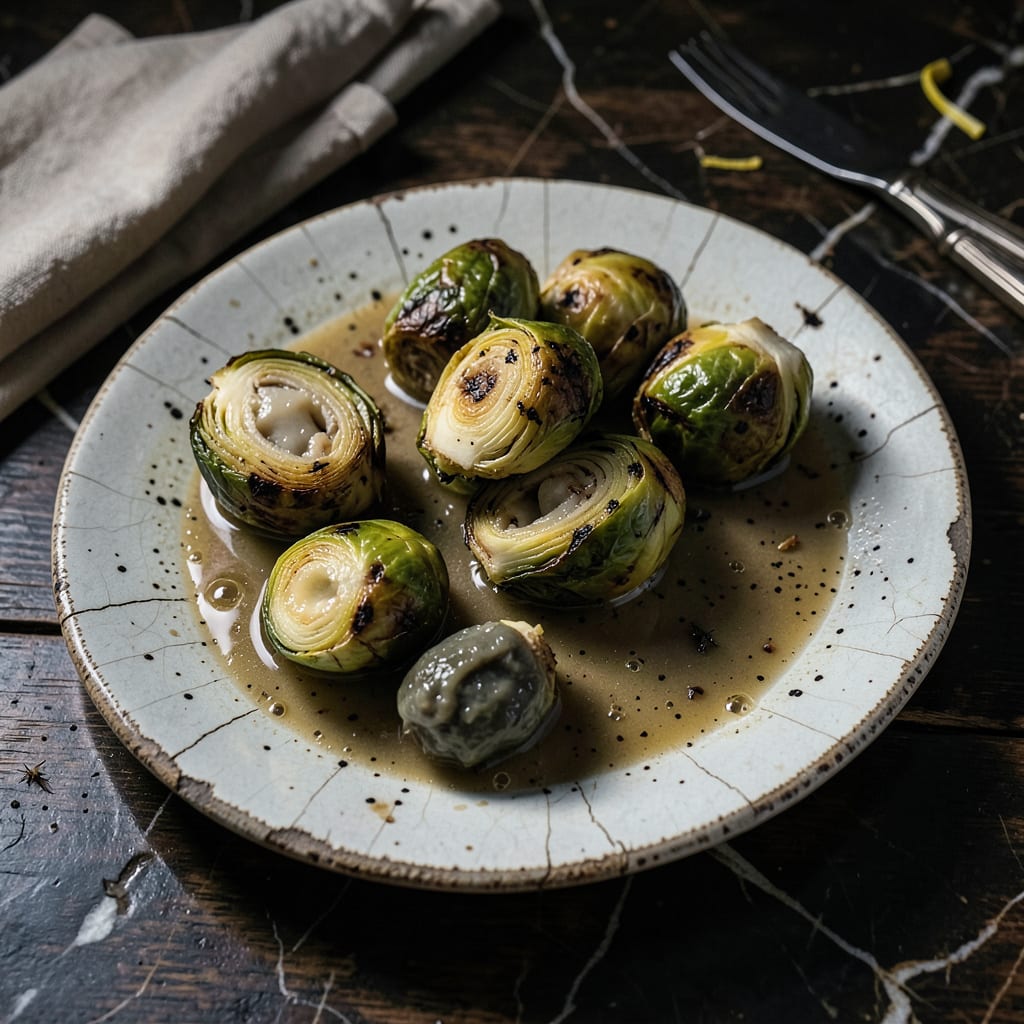
Rotten Brussels sprouts develop a strong, unpleasant sulfur smell, become mushy or slimy to the touch, and show visible mold or dark brown/black spots. Yellowing leaves and excessive wilting also indicate spoilage.
I’ve noticed that fresh Brussels sprouts have a crisp texture and mild, earthy aroma—but when they go bad, the transformation is dramatic. 🔥 The sulfur smell comes from compounds breaking down as the vegetable decomposes, similar to how overcooked cabbage develops that same pungent odor. What’s tricky is that some yellowing is natural, but when it spreads to the entire sprout or turns brown, that’s your cue to toss them. I always check the stem end first, as that’s where mold typically starts growing.
💡 In This Article
- Visual and Sensory Signs of Spoiled Brussels Sprouts
- How to Store Brussels Sprouts to Prevent Rot
Visual and Sensory Signs of Spoiled Brussels Sprouts
The decomposition process in Brussels sprouts begins at the cellular level when enzymes break down the plant’s cell walls. This releases sulfur compounds like hydrogen sulfide, which creates that sharp, rotten-egg smell. Fresh sprouts have a mild, slightly sweet aroma, but once spoilage starts, the sulfur compounds become dominant—often detectable even through sealed containers.
I’ve found this odor becomes particularly strong when sprouts are stored in plastic bags without ventilation.
Texture changes are equally telling. Fresh Brussels sprouts should feel dense and firm with tightly packed leaves. As they rot, the cell structure weakens, causing the leaves to separate and the sprout to become soft or slimy. This breakdown occurs because pectin—the natural “glue” holding plant cells together—degrades.
A simple test: press gently on the sprout. If it leaves moisture on your fingers or feels mushy like overcooked spinach, it’s past its prime. 🔥
Color transformation follows a predictable pattern. Early spoilage shows as yellowing at the leaf edges, similar to autumn leaves changing color. This happens as chlorophyll breaks down. Advanced rot appears as dark brown or black spots—this is oxidation combined with microbial growth.
Mold typically starts at the stem end where moisture collects, appearing as fuzzy white, green, or black patches. Unlike natural aging (which affects only outer leaves), rot spreads inward toward the core.
The stem area reveals critical clues. A fresh Brussels sprout has a pale green, dry stem base. Spoiled sprouts develop dark, wet-looking stems—this is where bacteria and mold first take hold due to trapped moisture. I always examine this area first when checking sprouts, as it’s the most vulnerable spot.
The stem’s condition often predicts how far spoilage has progressed before visible signs appear on the leaves.
Temperature accelerates these changes dramatically. Brussels sprouts stored above 40°F degrade 2-3 times faster than properly refrigerated ones. The cold slows enzyme activity and microbial growth. That’s why sprouts left on the counter overnight often develop that telltale sulfur smell by morning, while refrigerated ones maintain quality for 7-10 days.
The difference comes down to how quickly those decomposition processes can proceed.
Here’s what most people miss: the size matters. Larger Brussels sprouts spoil faster than small ones because their dense core traps more moisture and heat. I’ve noticed that miniature “brussels sprout” varieties (about 1-inch diameter) stay fresh nearly twice as long as their 2-inch counterparts.
This size difference affects how quickly oxygen and microbes penetrate the vegetable’s structure during storage.
One final pro tip—trust your senses in this order: smell first (most sensitive indicator), then touch, then visual inspection. The sulfur odor appears before visible mold in about 80% of cases I’ve encountered. When in doubt, remember that cooking won’t eliminate the off-flavors from spoiled sprouts—it actually concentrates them. ✨

Trained in classic French technique but raised on slow-cooked ribs and spicy rubs, she blends culinary skill with smoke and soul.
- Recipe for Oven Baked Halibut: Buttery White Fish with Zesty Lemon Topping - October 3, 2026
- Meatball Curry Recipe Kerala Style: Coconut-Spiced Gravy With Tender Bites - October 3, 2026
- Recipe for Curried Tofu: Aromatic Spices With Crispy Edges - October 3, 2026