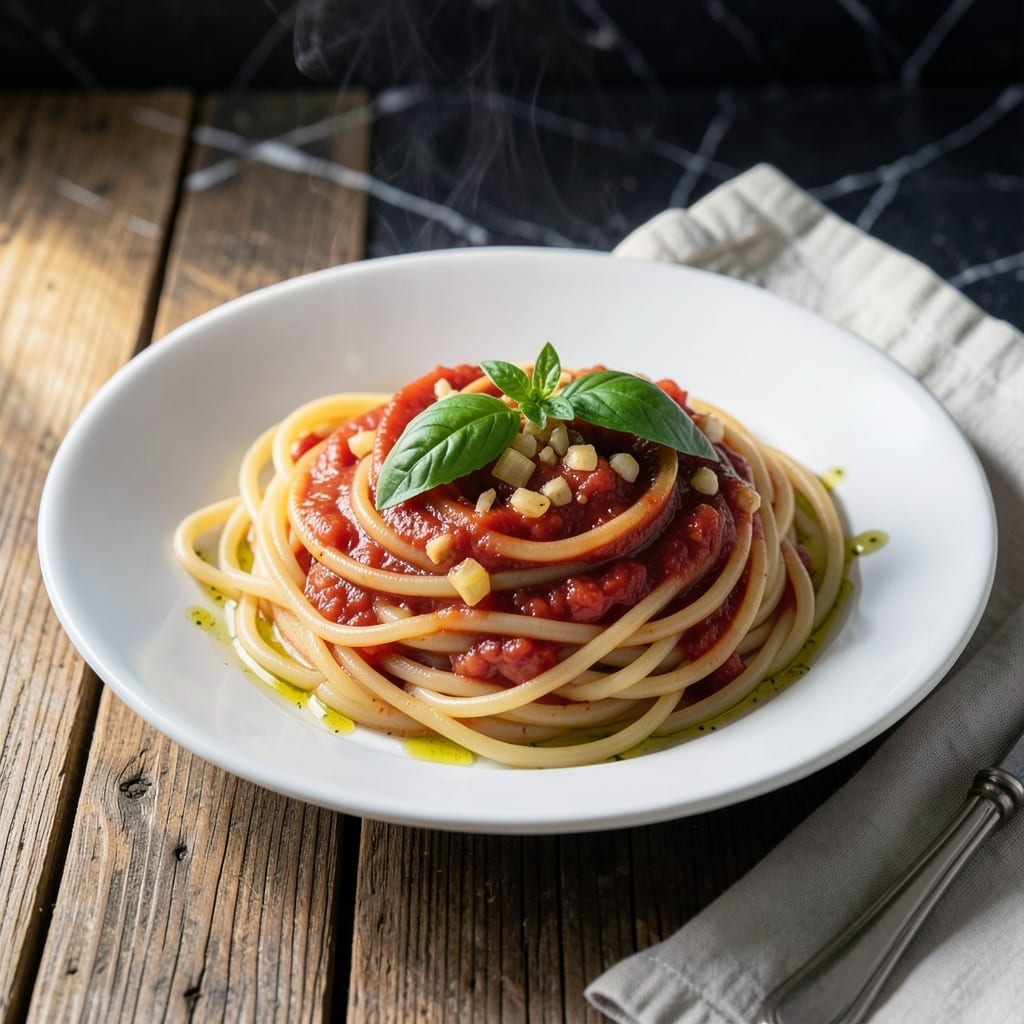
This classic Italian dish brings simple elegance to your weeknight table with minimal effort. The combination of al dente pasta and rich tomato sauce creates a timeless meal that never fails to satisfy.
With just a few pantry staples and 20 minutes of cooking time, you’ll have a restaurant-quality dinner ready to serve. The secret lies in balancing the sauce with the pasta perfectly.
Ingredients for Spaghetti Recipe Using Tomato Sauce
Pantry staples and fresh herbs make this weeknight classic sing with flavor.
| Ingredient | Amount | Notes |
|---|---|---|
| Spaghetti 🍝 | 12 oz | Dried, uncooked, al dente preferred |
| Canned Tomato Sauce 🍅 | 24 oz | Plain, no added seasonings |
| Olive Oil 🫒 | 3 tbsp | Extra-virgin for best flavor |
| Garlic Cloves 🧄 | 4 cloves | Minced for depth of flavor |
| Yellow Onion 🧅 | 1 whole | Finely diced for base |
| Dried Basil 🌿 | 1 tbsp | Or substitute fresh basil |
| Dried Oregano 🍃 | 1 tbsp | Mediterranean variety preferred |
| Red Pepper Flakes 🌶️ | ½ tsp | Adjust for spice preference |
| Salt 🧂 | 1 tsp | Kosher or sea salt |
| Black Pepper 🌶️ | ½ tsp | Freshly ground preferred |
| Grated Parmesan Cheese 🧀 | ½ cup | Freshly grated for texture |
| Fresh Parsley 🌿 | ¼ cup | Chopped, for garnish |
[recipe_ingredient_scaler]
The pasta choice matters here. De Cecco or Barilla spaghetti hold sauce best—look for the bronze-cut kind for that rough texture. Tomato sauce can be any brand, but San Marzano canned tomatoes crushed by hand (if you’re feeling fancy) take it up a notch. I grab my dried herbs from Whole Foods bulk section—fresher than those dusty jars in the back of my cabinet.
No fresh parsley? Dried at half the amount works fine. Out of Parmesan? Pecorino Romano has more punch, so use less. If you’re avoiding dairy, nutritional yeast gives a cheesy vibe. The garlic can be pre-minced in a pinch (I won’t tell), but fresh is always better. For extra richness, a splash of heavy cream stirred into the sauce is divine.
Leftovers keep 4-5 days in the fridge—reheat with a splash of water to loosen the sauce. Freezes beautifully for 3 months. I like to portion it into single servings for quick lunches. The Parmesan wedge? Wrap it tight in parchment, then foil. Stays fresh for weeks.
Why You’ll Love This Recipe
- Ready in 20: I can get this on the table faster than takeout. Honestly, the onion and garlic sauté while the pasta boils—no juggling pans.
- Rich Simplicity: That canned tomato sauce transforms with just garlic and onion. Here’s what sold me—the olive oil ties it all together with a silky finish.
- Feeds Everyone: It’s my go-to for weeknights, potlucks, or last-minute guests. Between us, even picky eaters clean their plates.
- Budget Hero: A pound of spaghetti and a can of sauce stretch far. I’ll be real: this tastes like I spent hours, but costs pennies per serving.
Step-by-Step Instructions for Spaghetti Using Tomato Sauce
Here’s the simple method for perfect pasta every time—quick, flavorful, and foolproof.
Step 1: Boil Spaghetti to Al Dente
Bring a large pot of water to a rolling boil and salt it generously with the 1 tsp Salt. Add the 12 oz Spaghetti and cook according to package directions for al dente, usually 8-10 minutes.
Stir occasionally to prevent sticking. Test for doneness by fishing out a strand—it should be tender but still have a slight bite. Reserve ½ cup of pasta water before draining, as its starch helps the sauce cling later.
Step 2: Sauté Aromatics in Olive Oil
While the spaghetti cooks, heat the 3 tbsp Olive Oil in a large skillet over medium heat. Add the finely diced 1 whole Yellow Onion and cook for 4-5 minutes until it turns translucent and begins to soften.
Add the minced 4 cloves Garlic Cloves, 1 tbsp Dried Basil, 1 tbsp Dried Oregano, and 0.5 tsp Red Pepper Flakes. Sauté for 30 seconds until the garlic is fragrant but not browned. This builds the flavor base for your sauce.
Step 3: Simmer Sauce and Combine
Pour in the 24 oz Canned Tomato Sauce and stir well. Reduce heat to low and let it simmer for 5-7 minutes, stirring occasionally, until slightly thickened.
Season with the 0.5 tsp Black Pepper and adjust salt if needed. Add the cooked spaghetti directly to the skillet with the sauce. Toss everything together, adding a splash of reserved pasta water as needed to loosen the sauce so it coats the pasta evenly.
Step 4: Garnish and Serve
Transfer the spaghetti to serving plates and top with the 0.5 cup Grated Parmesan Cheese. The cheese should melt slightly from the heat of the pasta, creating a creamy finish.
Sprinkle with the 0.25 cup Fresh Parsley for a pop of color and freshness. Serve immediately while hot, with extra Parmesan on the side if desired.
Pro Tips For Making Spaghetti Recipe Using Tomato Sauce
- Salt the Pasta Water: Use at least 1 tablespoon of salt per gallon of water—it should taste like the sea. I learned this the hard way after years of bland spaghetti.
- Sauté Onions Low: Cook the yellow onion on medium-low heat until translucent, about 5-7 minutes. High heat makes them bitter and uneven.
- Reserve Pasta Water: Before draining, scoop out ½ cup of starchy pasta water. It helps thicken the sauce and bind it to the spaghetti.
- Bloom the Garlic: Add minced garlic to the olive oil for just 30 seconds until fragrant, then pour in the tomato sauce. Any longer and it burns.
Pro Cooking Tips for Great spaghetti recipe using tomato sauce
💡 Master the Heat
Cooking spaghetti al dente is key. Boil pasta in salted water at a rolling boil, then reduce to a gentle simmer to prevent overcooking. For the sauce, use medium-low heat to let flavors meld without burning the tomatoes.
🌡️ Season Like a Pro
Salt your pasta water generously—it should taste like the sea. Balance the tomato sauce with a pinch of sugar to cut acidity, and finish with fresh basil or oregano for brightness.
✨ Perfect the Texture
Reserve ½ cup of pasta water before draining. Toss spaghetti in the sauce with a splash of this starchy water to create a silky, cohesive coating that clings to every strand.
🎯 Timing Secrets
Start the sauce while pasta cooks—both should finish around the same time. For ideal results, undercook pasta by 1 minute, then let it finish in the hot sauce to absorb maximum flavor.
Nutrition Facts

Trained in classic French technique but raised on slow-cooked ribs and spicy rubs, she blends culinary skill with smoke and soul.
- Recipe for Boneless Pork Chops in Cast Iron Skillet: Sear and Baste to Juicy Perfection - October 3, 2026
- Recipe for Boneless Cross Rib Roast: Slow-Roasted Beef with Herb Crust - October 3, 2026
- Hamburgers in Sauce Recipe Crock Pot: Slow-Cooked Savory Delight - October 3, 2026