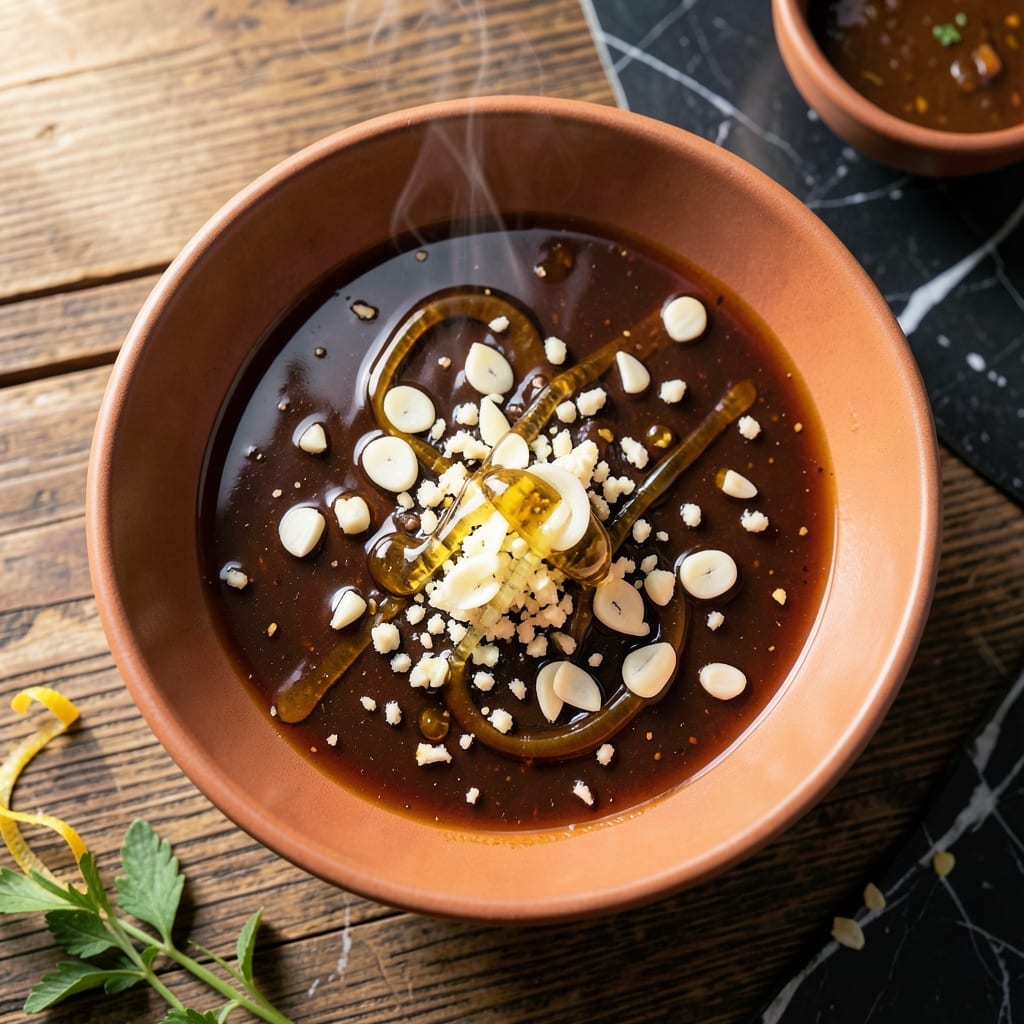
This soy sauce-based marinade transforms salmon into a flavor-packed centerpiece with minimal effort. The umami-rich blend infuses every bite with depth.
Ready in minutes, it requires no cooking and delivers professional results every time. Simple ingredients create complex flavors that elevate your dish.
Ingredients for Salmon Marinade Recipe Soy Sauce
Nine simple ingredients create this umami-rich soy sauce marinade for salmon.
| Ingredient | Amount | Notes |
|---|---|---|
| Soy Sauce 🫒 | ½ cup | Low-sodium preferred for balance |
| Olive Oil 🫒 | ¼ cup | Extra-virgin for richness |
| Honey 🍯 | 3 tbsp | Local or raw for depth |
| Fresh Ginger 🌿 | 1 tbsp | Finely grated for even distribution |
| Garlic Cloves 🧄 | 4 cloves | Minced for maximum flavor infusion |
| Rice Vinegar 🍚 | 2 tbsp | Balances sweet and savory notes |
| Sesame Oil 🫒 | 1 tbsp | Toasted for nutty aroma |
| Green Onions 🧅 | ¼ cup | Thinly sliced for garnish and flavor |
| Lime Juice 🍋 | 2 tbsp | Freshly squeezed for brightness |
[recipe_ingredient_scaler]
The soy sauce is non-negotiable—Kikkoman or San-J for consistent quality. Olive oil should be extra-virgin; the good stuff makes a difference here (the cold-pressed, single-origin bottles). Fresh ginger loses potency fast, so grate it just before mixing. Garlic from a jar works in a pinch, but fresh minced has more punch. Rice vinegar adds the perfect tangy counterbalance.
No honey? Maple syrup or agave at equal parts works fine. Out of rice vinegar? Apple cider vinegar at half the amount gets you close. Ginger paste from a tube is a decent sub (use one-third less since it’s more concentrated). Want more depth? Add 1 tsp fish sauce (optional but traditional). The sesame oil should be toasted—untasted lacks that signature nutty flavor.
Marinade keeps 5 days in the fridge. Freeze for 3 months in ice cube trays for easy portions. Always marinate salmon 15-30 minutes max—longer can make the texture mushy. Discard used marinade; never reuse raw fish marinade.
Why You’ll Love This Recipe
- 5-Minute Mix: I just dump soy sauce, honey, and olive oil in a bowl, whisk, and it’s ready—no fancy steps.
- Umami Bomb: The garlic and ginger soak into the salmon, giving it that sticky, savory-sweet depth I crave.
- Meal Prep Hero: I marinate a big batch on Sunday and cook portions all week—dinner’s half done before I walk in the door.
- Pantry Staples: Between us, I always have soy sauce and honey on hand, so this saves me from last-minute grocery runs.
Step-by-Step Instructions for Salmon Marinade
Master this technique to infuse your salmon with bold, balanced flavors in minimal time.
Step 1: Combine Wet Ingredients for the Base
In a medium bowl, whisk together the 0.5 cup Soy Sauce, 0.25 cup Olive Oil, 3 tbsp Honey, and 2 tbsp Rice Vinegar. Use a fork or small whisk to fully incorporate the honey, which will be thick and resistant at first.
The soy sauce provides the umami backbone, while the olive oil ensures the marinade clings to the salmon. The honey adds depth and helps caramelize the surface during cooking, and the rice vinegar introduces a subtle tang that balances the richness.
Step 2: Add Aromatics for Depth
Stir in the 1 tbsp Fresh Ginger, 4 cloves Garlic Cloves, and 1 tbsp Sesame Oil. The ginger and garlic should be finely grated or minced to distribute their flavors evenly throughout the marinade.
The sesame oil adds a nutty aroma that complements the soy sauce beautifully. Ensure all ingredients are well combined—you should see small flecks of ginger and garlic suspended in the liquid, with no separation of the oils.
This combination of aromatics creates a complex flavor profile that enhances the natural richness of the salmon without overpowering it.
Step 3: Finish with Bright, Fresh Elements
Add the 0.25 cup Green Onions and 2 tbsp Lime Juice to the bowl. The green onions should be thinly sliced to release their mild, oniony flavor, and the lime juice should be freshly squeezed for maximum brightness.
Stir everything together until the green onions are evenly distributed. The lime juice not only adds a citrusy zing but also helps tenderize the salmon slightly, ensuring it stays moist and flavorful after cooking.
Step 4: Marinate the Salmon for Optimal Flavor
Place the salmon fillets in a resealable plastic bag or shallow dish and pour the marinade over them, ensuring all surfaces are coated. For best results, marinate in the refrigerator for at least 30 minutes or up to 2 hours.
If marinating longer than 30 minutes, turn the salmon halfway through to ensure even exposure. The acidity in the lime juice and rice vinegar will begin to break down the fish if left too long, so avoid marinating overnight.
When ready to cook, remove the salmon from the marinade and pat it dry with paper towels. This helps achieve a better sear or crispy skin when cooking, as excess moisture can cause steaming instead of browning.
Pro Tips For Making Salmon Marinade Recipe Soy Sauce
- Marinate Just 30 Minutes: Any longer and the soy sauce will start curing the salmon like ceviche—I learned this the hard way with a mushy, over-marinated fillet.
- Grate the Ginger: Sounds tedious, but finely grated ginger distributes way better than minced and won’t leave chewy bits in your marinade.
- Skip the Metal Bowl: Acidic ingredients like soy sauce and honey can react with metal, so use glass or ceramic to keep flavors clean.
- Warm the Honey: 10 seconds in the microwave thins it enough to blend smoothly with the olive oil and soy sauce—no clumps, no stirring forever.
Dietary Considerations for This salmon marinade recipe soy sauce
Keto-Friendly Options
This salmon marinade recipe soy sauce can easily fit a keto diet with a few tweaks. Replace honey or sugar with a low-carb sweetener like erythritol or monk fruit to keep it ketogenic. Soy sauce is naturally low in carbs, but opt for a sugar-free variety to be safe. 💪
Gluten-Free
Traditional soy sauce contains gluten, but you can use tamari or coconut aminos as gluten-free alternatives. These options maintain the umami depth while ensuring the marinade is safe for those with gluten sensitivities. Always check labels for hidden gluten.
Allergens
Common allergens in this marinade may include soy (from soy sauce) and fish (if using fish-based sauces like Worcestershire). For a soy-free version, try coconut aminos or a soy-free seasoning sauce. If allergies are a concern, verify all ingredient sources carefully. 📊
Vegetarian Modifications
To adapt this marinade for a vegetarian diet, simply use it on tofu, tempeh, or hearty vegetables like eggplant or portobello mushrooms. The soy sauce base already provides a rich, savory flavor that complements plant-based proteins beautifully.
Low-Sodium
If you’re watching your sodium intake, use low-sodium soy sauce or reduce the amount of soy sauce and boost flavor with fresh herbs, garlic, or citrus. A squeeze of lemon or lime can add brightness without the extra salt. 🍋
Nutrition Facts

Trained in classic French technique but raised on slow-cooked ribs and spicy rubs, she blends culinary skill with smoke and soul.
- Recipe for Boneless Pork Chops in Cast Iron Skillet: Sear and Baste to Juicy Perfection - October 3, 2026
- Recipe for Boneless Cross Rib Roast: Slow-Roasted Beef with Herb Crust - October 3, 2026
- Hamburgers in Sauce Recipe Crock Pot: Slow-Cooked Savory Delight - October 3, 2026