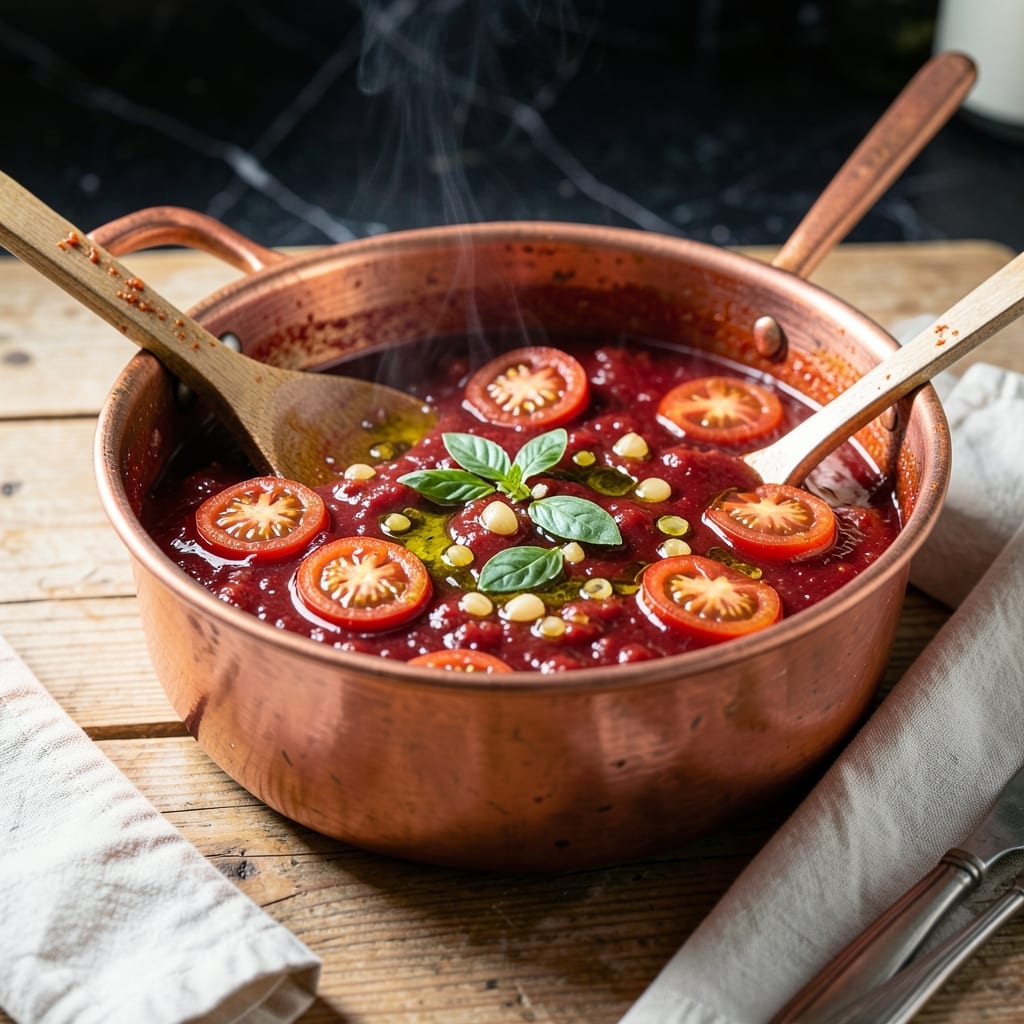
This time-tested method preserves summer’s peak tomato flavor in every jar. The process combines fresh produce with simple seasonings to create a sauce that tastes like it simmered all day.
With careful canning techniques, you’ll have restaurant-quality spaghetti sauce ready for quick meals. This approach ensures safety while maintaining that just-picked garden taste.
Ingredients for Spaghetti Sauce Recipe for Canning
Eleven ingredients transform peak summer tomatoes into restaurant-quality sauce worth preserving.
| Ingredient | Amount | Notes |
|---|---|---|
| Fresh Tomatoes 🍅 | 10 lb | Ripe Roma or San Marzano preferred |
| Tomato Paste 🍅 | ½ cup | Double-concentrated for richness |
| Yellow Onion 🧅 | 2 whole | Finely diced for even distribution |
| Garlic Cloves 🧄 | 8 cloves | Minced for robust flavor |
| Extra-Virgin Olive Oil 🫒 | ½ cup | Cold-pressed for quality |
| Dried Basil 🌿 | 2 tbsp | Crushed for better infusion |
| Dried Oregano 🍃 | 2 tbsp | Mediterranean variety preferred |
| Granulated Sugar 🥄 | 2 tbsp | Balances acidity naturally |
| Kosher Salt 🧂 | 2 tbsp | Diamond Crystal brand recommended |
| Black Pepper 🌶️ | 1 tsp | Freshly ground for best results |
| Crushed Red Pepper 🌶️ | 1 tsp | Adjust to heat preference |
| Bottled Lemon Juice 🍋 | ½ cup | Required for safe canning acidity |
[recipe_ingredient_scaler]
The tomatoes are non-negotiable—Roma or San Marzano for their meaty texture and low water content. Source from local farmers markets at peak season for maximum flavor. Tomato paste adds depth; Muir Glen organic offers consistent quality. For onions, Yellow Spanish varieties hold up best during long cooking. Always use cold-pressed extra-virgin olive oil for superior aroma.
No fresh tomatoes? High-quality canned San Marzano tomatoes work in a pinch (28 oz cans, drained). Short on dried herbs? Fresh basil and oregano at triple the amount, but dried is preferred for canning safety. The bottled lemon juice is critical—fresh doesn’t have consistent acidity for safe preservation. Sugar can be reduced, but don’t omit entirely; it balances the acidity.
Sauce must be processed in a water bath canner for 35-40 minutes per quart. Store unopened jars in a cool, dark place for up to 12 months. Once opened, refrigerate and use within 1 week. The flavor actually improves after 4-6 weeks of storage as it melds.
Why You’ll Love This Recipe
- Minimal Chopping Required: I just quarter the tomatoes and let them simmer down—no fancy knife work here.
- Deep Garlicky Richness: The slow-cooked garlic and tomato paste give it that restaurant-quality depth I crave.
- Pantry Staple: I can this sauce in batches, so I’ve got dinner ready in minutes any night of the week.
- Budget Winner: Fresh summer tomatoes are cheap in season, and this makes gallons for pennies.
Step-by-Step Instructions for Spaghetti Sauce for Canning
This method ensures safety and preserves the vibrant taste of peak-season tomatoes.
Step 1: Prepare and Peel the Tomatoes
Wash the 10 lb fresh tomatoes thoroughly, then core and quarter them. To remove the skins easily, blanch the tomato quarters in boiling water for 30-60 seconds until the skins begin to split. Immediately transfer them to an ice bath to cool.
The skins will slip off effortlessly with your fingers or a paring knife. Discard the skins and any tough cores. This peeling step is essential for a smooth sauce texture and prevents bitterness from the tomato skins in your final product.
Step 2: Sauté Aromatics for Depth of Flavor
In a large, heavy-bottomed stockpot, heat the 0.5 cup extra-virgin olive oil over medium heat. Add the finely diced 2 whole yellow onion and cook for 5-7 minutes until translucent and just beginning to caramelize at the edges.
Add the 8 cloves minced garlic cloves, 2 tbsp dried basil, and 2 tbsp dried oregano. Stir constantly for 1 minute until the garlic becomes fragrant but hasn’t taken on any color. This builds the aromatic foundation that will infuse the entire batch.
Step 3: Simmer and Reduce the Sauce
Add the peeled tomatoes and their juices to the pot, along with the 0.5 cup tomato paste, 2 tbsp granulated sugar, 2 tbsp kosher salt, 1 tsp black pepper, and 1 tsp crushed red pepper. Stir well to combine all ingredients thoroughly.
Bring the mixture to a gentle boil, then reduce heat to maintain a steady simmer. Cook uncovered for 1.5-2 hours, stirring occasionally to prevent sticking. The sauce should reduce by about one-third and develop a rich, thick consistency where a spoon leaves a clear trail.
Step 4: Add Acid and Finalize the Sauce
Stir in the 0.5 cup bottled lemon juice during the last 10 minutes of cooking. This crucial addition ensures the sauce reaches the proper acidity level for safe canning, preventing the growth of harmful bacteria while preserving quality.
Taste and adjust seasoning if needed, though be cautious with additional salt as flavors will concentrate slightly during the canning process. The finished sauce should have a balanced sweet-tart flavor with visible oil pooling on the surface—a sign of proper reduction.
Step 5: Prepare for Canning
Ladle the hot sauce into clean, sterilized canning jars, leaving ½-inch headspace at the top of each jar. Remove any air bubbles by running a clean knife or bubble tool around the inside of the jars. Wipe the rims clean with a damp cloth to ensure a proper seal.
Process the jars according to your canner’s manufacturer instructions. For a boiling water canner, process pint jars for 35 minutes and quart jars for 40 minutes, adjusting for altitude as necessary. The sauce will keep for up to 12-18 months in a cool, dark place.
Pro Tips For Making Spaghetti Sauce Recipe For Canning
- Simmer Low and Slow: I learned this the hard way—rushing the simmer gives you watery sauce. Keep it at a gentle bubble for at least 2 hours to concentrate the flavors.
- Peel Those Tomatoes: Sounds tedious, but it’s worth it: blanch fresh tomatoes for 30 seconds in boiling water, then ice bath—the skins slip right off.
- Skip Raw Garlic: Resist the urge to toss raw garlic in with the onions. Sauté it first in the olive oil until fragrant, or it’ll taste harsh in the final sauce.
- Add Paste Early: Stir the tomato paste into the onions and garlic for 2-3 minutes before adding tomatoes—this caramelizes the sugars and deepens the flavor.
Storing and Reheating This Recipe
Pantry Storage
After canning, store your sealed jars in a cool, dark place like a basement or pantry. Keep temperatures between 50-70°F for optimal shelf life. I keep mine on a wooden shelf away from direct light to prevent flavor degradation. 🌟
Shelf Life
Unopened jars maintain peak quality for 12-18 months. Check seals before storing and discard any jars that didn’t seal properly. I label each jar with the date using masking tape and permanent marker.
Refrigerator Storage
Once opened, transfer unused sauce to an airtight container. It will keep in the fridge for up to 1 week. I recommend using glass containers to avoid absorbing odors from plastic.
Freezing Option
For longer storage of opened sauce, freeze in quart-sized freezer bags with all air removed. Lay flat to save space. It maintains quality for 3-4 months in the freezer without texture changes.
Reheating Tips
Thaw frozen sauce overnight in the fridge before reheating. Warm gently in a saucepan over low heat for 10-15 minutes, stirring occasionally. Add 1-2 tbsp water if it’s too thick. ❄️
Quick Meal Prep
Portion sauce into 1-cup containers before freezing for easy meal prep. This makes it simple to grab just what you need for a quick weeknight dinner with pasta or as a pizza base.
Nutrition Facts
Frequently Asked Questions
Why do I need to add lemon juice?
The bottled lemon juice ensures safe acidity levels for canning. This prevents harmful bacteria growth while preserving the sauce’s quality and flavor. Never skip this step for safety.
Can I use fresh herbs instead of dried?
Fresh herbs can be used, but use 3x the amount of dried. However, dried herbs are preferred for canning safety and consistent results. Dried also concentrate better during long simmering.
How long does canned sauce last?
Properly canned sauce keeps for 12-18 months in a cool, dark place. Always check seals before storing and discard any jars that didn’t seal properly.
What if my jars don’t seal?
If jars don’t seal within 24 hours, refrigerate and use within 1 week. Alternatively, reprocess with new lids in a water bath canner for the full 35-40 minutes.

Trained in classic French technique but raised on slow-cooked ribs and spicy rubs, she blends culinary skill with smoke and soul.
- Recipe for Boneless Pork Chops in Cast Iron Skillet: Sear and Baste to Juicy Perfection - October 3, 2026
- Recipe for Boneless Cross Rib Roast: Slow-Roasted Beef with Herb Crust - October 3, 2026
- Hamburgers in Sauce Recipe Crock Pot: Slow-Cooked Savory Delight - October 3, 2026