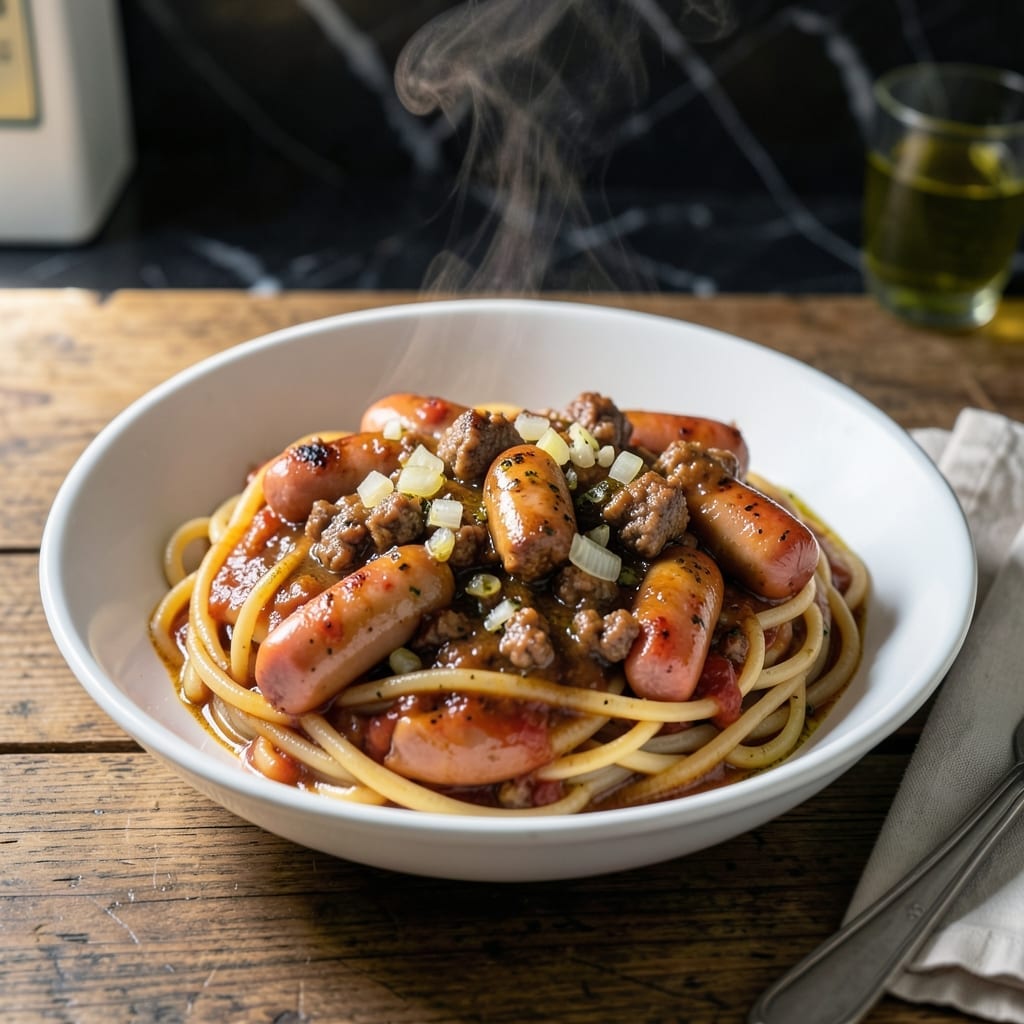
This Filipino-style spaghetti sauce delivers a rich tomato base with distinct sweet and savory notes. I developed this recipe to capture the authentic taste of Pinoy spaghetti that’s beloved in every household.
What makes this sauce special is its balance of tangy tomato, sweet banana ketchup, and hearty ground meat. It’s versatile enough to elevate any pasta dish with its bold, comforting flavors.
Ingredients for Spaghetti Sauce Recipe Pinoy
Ten ingredients deliver bold, authentic Pinoy flavor with sweet and savory depth.
| Ingredient | Amount | Notes |
|---|---|---|
| Tomato Sauce 🍅 | 2 cups | Pureed, unsalted variety |
| Banana Ketchup 🍌 | ¾ cup | Filipino brand preferred |
| Ground Pork 🐖 | 1 lb | Lean or regular ground |
| Onion 🧅 | 1 whole | Medium-sized, finely diced |
| Garlic Cloves 🧄 | 5 cloves | Peeled and minced |
| Hot Dogs 🌭 | 2 whole | Red beef variety, sliced |
| Brown Sugar 🥄 | 2 tbsp | Light or dark variety |
| Soy Sauce 🫙 | 2 tbsp | All-purpose or light |
| Olive Oil 🫒 | 2 tbsp | For sautéing aromatics |
| Salt 🧂 | 1 tsp | Adjust to taste |
| Black Pepper 🌶️ | ½ tsp | Freshly ground preferred |
[recipe_ingredient_scaler]
The tomato sauce base is critical—San Marzano canned tomatoes or high-quality tomato sauce provides the best foundation. Jufran banana ketchup is the gold standard for authentic Filipino flavor, though Del Monte works in a pinch. For the ground pork, opt for 80/20 lean-to-fat ratio for optimal richness. These are widely available at Asian markets or well-stocked supermarkets.
No banana ketchup? Regular ketchup plus 1 tbsp sugar mimics the sweetness, though the flavor won’t be identical. Ground beef or chicken can replace the pork if preferred. The hot dogs add signature texture—all-beef types work best, but turkey dogs are acceptable. For a vegetarian version, textured vegetable protein or mushrooms provide meaty texture without animal products.
Sauce keeps 5 days refrigerated in an airtight container. For longer storage, freeze in portioned containers for up to 3 months. Reheat gently on the stove, adding a splash of water if too thick. Flavor deepens after a day, making leftovers even better.
Why You’ll Love This Recipe
- I’ll be real: one batch makes enough to feed my family twice, and it tastes even better the next day.
- One Pot Wonder: I toss everything in a single pan—ground pork, onions, garlic—and let the tomato sauce and banana ketchup do the work.
- Sweet & Tangy: The banana ketchup adds that distinct Pinoy sweetness that pairs crave-worthy with the rich tomato base.
- Weeknight Winner: Between us, this is my go-to for busy evenings when I need something hearty on the table fast.
Step-by-Step Instructions for Filipino-Style Spaghetti Sauce
Master this process and achieve the signature sweet-savory balance that defines authentic Pinoy spaghetti.
Step 1: Sauté Aromatics in Olive Oil
Heat the 2 tbsp Olive Oil in a large pot over medium heat. Add the diced 1 whole Onion and cook for 3-4 minutes until it turns translucent and begins to soften at the edges. This builds the flavor foundation.
Add the minced 5 cloves Garlic Cloves and sauté for an additional 30-60 seconds until fragrant. Be careful not to let it brown—burnt garlic will impart a bitter taste to the sauce. The aroma should be rich and inviting, not sharp or acrid.
Step 2: Brown the Ground Pork and Hot Dogs
Increase the heat to medium-high and add the 1 lb Ground Pork. Break it up with a wooden spoon and cook for 6-8 minutes, stirring occasionally, until the pork is no longer pink and begins to brown.
Add the sliced 2 whole Hot Dogs and cook for another 3-4 minutes, allowing them to take on a light golden color. The hot dogs will release their flavors into the mixture, adding a distinct depth that’s characteristic of Filipino-style spaghetti.
Step 3: Incorporate Sauces and Seasonings
Pour in the 2 cups Tomato Sauce and 0.75 cup Banana Ketchup, stirring to combine with the meat and aromatics. The mixture will turn a deep, rich red. Add the 2 tbsp Soy Sauce, 2 tbsp Brown Sugar, 1 tsp Salt, and 0.5 tsp Black Pepper.
Stir well to evenly distribute the seasonings. The soy sauce adds umami, while the brown sugar balances the acidity of the tomato sauce. Taste at this stage—you should detect a harmonious blend of sweet, savory, and tangy notes.
Step 4: Simmer to Perfection
Reduce the heat to low and let the sauce simmer uncovered for 20-25 minutes. Stir occasionally to prevent sticking and ensure even cooking. The sauce will thicken slightly as it reduces, coating the back of a spoon.
You’ll know it’s ready when the flavors have melded together and the sauce has a glossy, rich appearance. The pork should be tender, and the hot dogs will have absorbed the surrounding flavors, contributing to the overall depth of the dish.
Pro Tips For Making Spaghetti Sauce Recipe Pinoy
- Brown the Pork Well: Cook the ground pork on medium-high heat until deeply browned, not just gray—this builds a rich base flavor that tomato sauce alone can’t provide.
- Sauté Onions Slow: Let the onions soften and turn translucent before adding garlic; rushing this step leaves them raw and sharp in the finished sauce.
- Skip the Water: I learned this the hard way—adding water to thin the sauce early just dilutes the flavor; let it reduce naturally instead.
- Balance with Banana Ketchup: Stir in the banana ketchup last, about 2-3 tablespoons, to add that signature Pinoy sweetness without overpowering the tangy tomato base.
Regional Styles of spaghetti sauce recipe pinoy
🥘 Luzon Style
In Luzon, the spaghetti sauce often leans toward a sweet and savory profile, influenced by Spanish and American culinary traditions. Key ingredients include tomato paste, ground pork, hotdogs, and liver spread, giving it a rich, umami-packed base. The sauce is typically simmered for hours to deepen flavors, and banana ketchup is sometimes added for a uniquely Filipino twist. This style is a staple in family gatherings, especially during birthdays and fiestas.
🍳 Visayas Style
The Visayas region puts its own spin on spaghetti sauce by incorporating seafood like shrimp or squid, reflecting its coastal geography. The sauce here is often lighter and tangier, with a splash of calamansi or vinegar for brightness. Some versions include coconut milk for a creamy texture, blending traditional Filipino flavors with Italian roots.
🔥 Mindanao Style
In Mindanao, spaghetti sauce takes on a spicier and bolder character, thanks to the region’s love for heat. Chili peppers, siling labuyo, or even curry powder are common additions, giving the sauce a fiery kick. The use of fresh tomatoes and local herbs like basil or oregano also sets it apart, offering a fresh, garden-to-table taste.
⏰ Metro Manila Style
Metro Manila’s version of spaghetti sauce is the most commercialized, often found in fast-food chains and home kitchens alike. It’s sweet, meaty, and thick, with a heavy dose of tomato sauce, ground beef, and sometimes even cheese or condensed milk for extra richness. This style caters to the urban palate, balancing convenience with the comforting flavors of home.
Nutrition Facts

Trained in classic French technique but raised on slow-cooked ribs and spicy rubs, she blends culinary skill with smoke and soul.
- Recipe for Boneless Pork Chops in Cast Iron Skillet: Sear and Baste to Juicy Perfection - October 3, 2026
- Recipe for Boneless Cross Rib Roast: Slow-Roasted Beef with Herb Crust - October 3, 2026
- Hamburgers in Sauce Recipe Crock Pot: Slow-Cooked Savory Delight - October 3, 2026