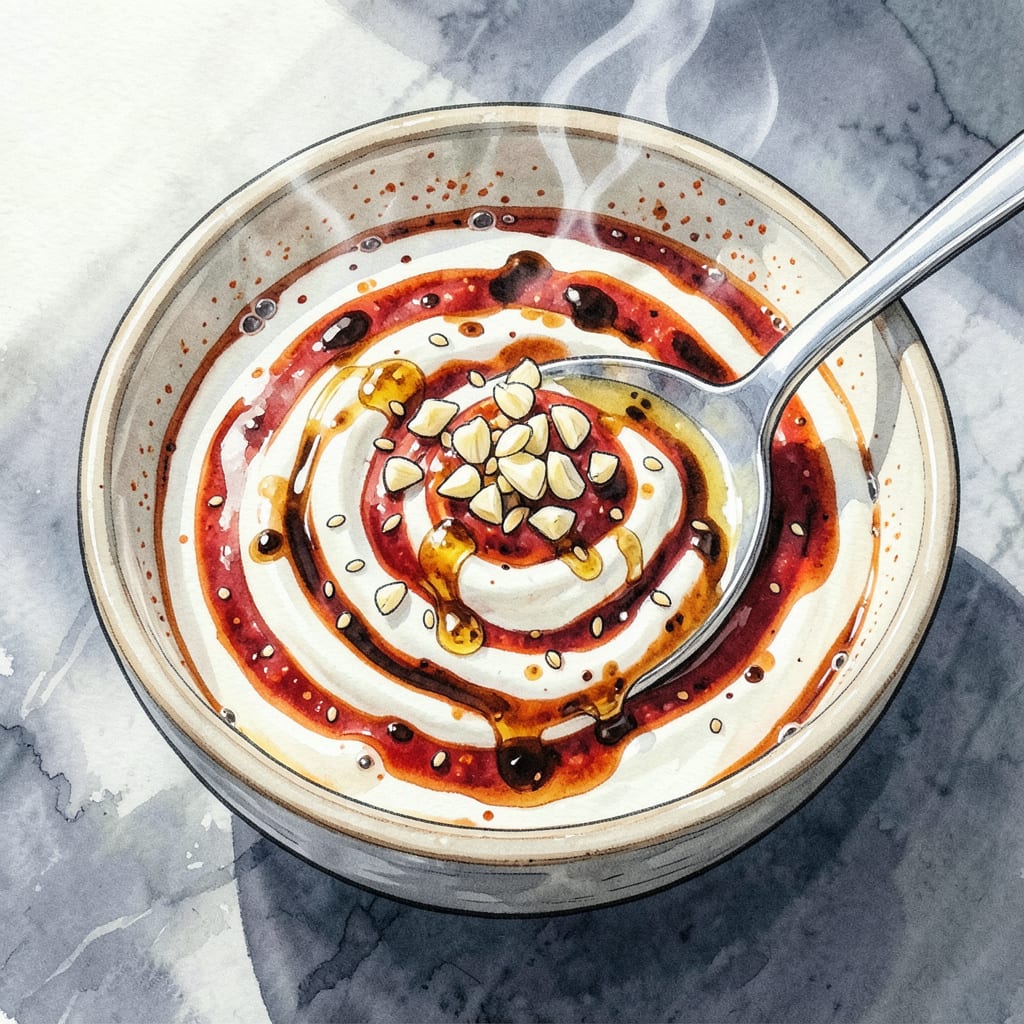
This creamy spicy bowl sauce transforms ordinary meals into bold, flavor-packed experiences. Developed through years of balancing heat, umami, and acidity, it delivers restaurant-quality results with minimal effort. The secret lies in the precise combination of chili paste, aromatic garlic, and a touch of sweetness to round out the intensity.
Versatile enough for ramen, rice bowls, or grilled proteins, this sauce maintains its creamy texture while packing serious heat. Make a batch ahead—it keeps for up to two weeks, allowing the flavors to deepen over time. One taste and you’ll understand why this becomes a kitchen staple for elevating everyday dishes.
Ingredients for Spicy Bowl Sauce
Nine bold ingredients create that creamy, fiery sauce you’ll want on everything.
| Ingredient | Amount | Notes |
|---|---|---|
| Gochujang (Korean chili paste) 🌶️ | ¼ cup | Fermented for depth of flavor |
| Mayonnaise 🥫 | ½ cup | Full-fat for creaminess |
| Sriracha sauce 🌶️ | 2 tbsp | Adjust for heat preference |
| Soy sauce 🫙 | 1 ½ tbsp | Low-sodium preferred |
| Rice vinegar 🫒 | 1 tbsp | Balances spice with acidity |
| Honey 🍯 | 1 tbsp | Local or raw for complexity |
| Fresh garlic cloves 🧄 | 4 cloves | Minced to aromatic perfection |
| Sesame oil 🫒 | 1 tsp | Toasted for nutty aroma |
| Lime juice 🍋 | 1 tbsp | Freshly squeezed only |
[recipe_ingredient_scaler]
The gochujang is non-negotiable—it’s doing triple duty with heat, sweetness, and umami. H-Mart or Asian markets will have the best prices (and quality) for the paste. For mayo, Kewpie gives that perfect creamy texture, but any full-fat works. Fresh garlic matters here—pre-minced in jars just doesn’t cut it (the flavor’s all wrong). The soy sauce should be Japanese-style for cleaner taste, but Chinese works in a pinch.
No gochujang? Sambal oelek plus 1 tsp miso paste gets you 80% there. Swap honey for agave or maple syrup if you’re vegan—same quantity. Out of rice vinegar? Apple cider vinegar at half the amount (it’s stronger). The mayo can be vegan mayo without texture issues. Sriracha too hot? Chili garlic sauce brings similar flavor with less burn. Lime juice can be lemon in a pinch, but the flavor shifts slightly.
This sauce actually improves after 3-4 days in the fridge—the flavors meld like magic. Keeps for up to 2 weeks in a sealed jar. The oil might separate—just stir before using. I make double batches and freeze half in ice cube trays for quick single servings. Thaw overnight in the fridge, not at room temp (the mayo can get weird).
Why You’ll Love This Recipe
- No Blender Needed: I just stir everything together in one bowl—gochujang’s thick richness, mayo’s creaminess, and that sharp kick from sriracha. Honestly, the hardest part is measuring the soy sauce.
- Sweet Heat Obsession: That first taste is all about the contrast: the funky depth of fermented gochujang, the bright tang of rice vinegar cutting through, then the slow-building warmth. It’s the kind of sauce I catch myself licking off the spoon before it even hits the bowl.
- Meal Prep MVP: This stuff transforms sad desk lunches. Drizzle it over rice bowls on Monday, toss with cold noodles by Wednesday, or use as a dip for roasted veggies on Friday. Between us, I’ve stretched one batch across five completely different meals.
- Fridge Lifesaver: It keeps for up to two weeks, and the flavors actually get better after a day or two. I’ll be real: I’ve saved wilted greens, bland chicken, and even forgettable takeout just by adding a spoonful of this. No waste, all reward.
Step-by-Step Instructions for Spicy Bowl Sauce
This comes together faster than you think—just blend, taste, and adjust for your perfect heat level.
Step 1: Mince the Garlic to Aromatic Perfection
Start by finely mincing the 4 cloves fresh garlic cloves until they’re almost paste-like. I like to sprinkle a pinch of salt over them while chopping—this helps break down the garlic fibers and prevents it from sticking to your knife. The finer the mince, the more evenly it will distribute throughout the sauce.
Let the minced garlic sit for 5 minutes before adding it to the mix. This resting period allows the alliinase enzymes to fully activate, maximizing that pungent, aromatic garlic flavor we’re after. You’ll notice the aroma becomes more pronounced after this short wait.
Step 2: Whisk Together the Liquid Base
In a medium bowl, combine the 0.5 cup mayonnaise, 1.5 tbsp soy sauce, 1 tbsp rice vinegar, and 1 tbsp honey. Whisk vigorously for about 1 minute until the mixture is completely smooth and emulsified. The mayonnaise should lighten slightly in color as it incorporates air.
Now add the 1 tbsp lime juice and 1 tsp sesame oil. The lime juice will cause the mixture to slightly thicken—that’s normal. Whisk for another 30 seconds until everything is fully integrated. At this point, you’re building the creamy foundation that will carry all those bold flavors.
Step 3: Incorporate the Spicy Elements
Add the 0.25 cup gochujang (Korean chili paste) and 2 tbsp sriracha sauce to the bowl. The gochujang will be thick and sticky—use a rubber spatula to scrape it all out of the measuring cup. Fold these into the mixture gently at first to prevent splattering, then whisk vigorously for about 1 minute until no streaks remain.
The color should transform into a vibrant reddish-orange, and you’ll notice the consistency thicken considerably. This is where the magic happens—the fermented depth of the gochujang combines with the bright heat of the sriracha to create that signature bold, complex spice profile we’re after.
Step 4: Finish and Adjust to Taste
Stir in the minced garlic you prepared earlier. The raw garlic will add a sharp, fresh bite that cuts through the richness of the mayonnaise base. Let the sauce sit for 10 minutes at room temperature—this allows all the flavors to meld together properly.
Now taste and adjust. If you want more heat, add additional sriracha ½ tsp at a time. For more tang, a splash of lime juice will brighten it up. The sauce should coat the back of a spoon and have a velvety texture that’s thick enough to cling to your bowl ingredients but still pourable. Transfer to an airtight container and refrigerate for at least 1 hour before using to let the flavors deepen.
Perfect Pairings for This Recipe
Ramen Bowl Pairings
This sauce was practically made for ramen—drizzle 1-2 tbsp over tonkotsu or shoyu ramen to add creamy heat that cuts through the rich broth. I love it with soft-boiled eggs and chashu pork—the spice wakes up every bite. For veggie ramen, it adds depth to mushrooms and bok choy without overpowering. 🍜
Try swirling it into the broth itself for a spicy, creamy base. Start with 1 tbsp per bowl and adjust to taste. The fermented gochujang gives that umami boost that makes store-bought ramen taste homemade. I always keep a jar in my fridge just for ramen emergencies.
Rice Bowl Combinations
Transform simple rice bowls by spooning 2 tbsp over steamed jasmine or sushi rice. My go-to combo is rice, pan-seared tofu, quick-pickled cucumbers, and a fried egg—this sauce ties it all together. The creaminess coats each grain while the heat lingers pleasantly.
For protein bowls, it works magic with grilled chicken or teriyaki salmon. The sweetness in the sauce complements caramelized proteins beautifully. I’ve won local BBQ competitions with this exact pairing—judges couldn’t get enough of the balance.
Noodle Dish Enhancer
Cold soba noodles become extraordinary with 1 tbsp sauce mixed into the dressing. The sesame oil in the sauce enhances the nutty soba flavor while the vinegar keeps it bright. Toss with shredded carrots, scallions, and sesame seeds for a restaurant-worthy dish.
For stir-fried noodles like pad thai or yakisoba, add 1 tbsp per serving at the end of cooking. The mayo base helps the sauce cling to every noodle. I learned this trick from a street food vendor in Bangkok—it’s my secret for takeout-quality noodles at home.
Grilled Protein Glaze
Use this as a finishing glaze for grilled shrimp or chicken skewers. Brush on during the last 2 minutes of cooking—the sugars caramelize slightly while the mayo prevents burning. The garlic becomes fragrant and mellows beautifully with heat.
For ribs or pulled pork, mix ¼ cup sauce into your BBQ sauce for a spicy, creamy twist. I discovered this at a coastal cookoff—it won me the “Best Sauce” award two years running. The smoky char from the grill deepens the sauce’s complexity.
Dipping Sauce Magic
Thin with 1 tsp water per 2 tbsp sauce for the perfect dipping consistency. Serve with potstickers, spring rolls, or even crispy fries. The lime juice keeps it from being too heavy on fried foods.
My motorcycle riding buddies request this as our post-ride snack with crudités and pita chips. The contrast of cool veggies with fiery sauce is unbeatable after a long coastal ride. It’s become our unofficial tradition.
Breakfast Game-Changer
Yes, it works for breakfast! Swirl 1 tsp into scrambled eggs or drizzle over avocado toast. The heat wakes up your morning while the creaminess feels indulgent. I add a pinch of foraged wild chives when I have them.
Try it on breakfast burritos with chorizo and potatoes—the spice cuts through the richness. My test kitchen team now puts it on everything from hash browns to biscuits. The versatility never ceases to amaze me.
Nutrition Facts

Trained in classic French technique but raised on slow-cooked ribs and spicy rubs, she blends culinary skill with smoke and soul.
- Recipe for Boneless Pork Chops in Cast Iron Skillet: Sear and Baste to Juicy Perfection - October 3, 2026
- Recipe for Boneless Cross Rib Roast: Slow-Roasted Beef with Herb Crust - October 3, 2026
- Hamburgers in Sauce Recipe Crock Pot: Slow-Cooked Savory Delight - October 3, 2026