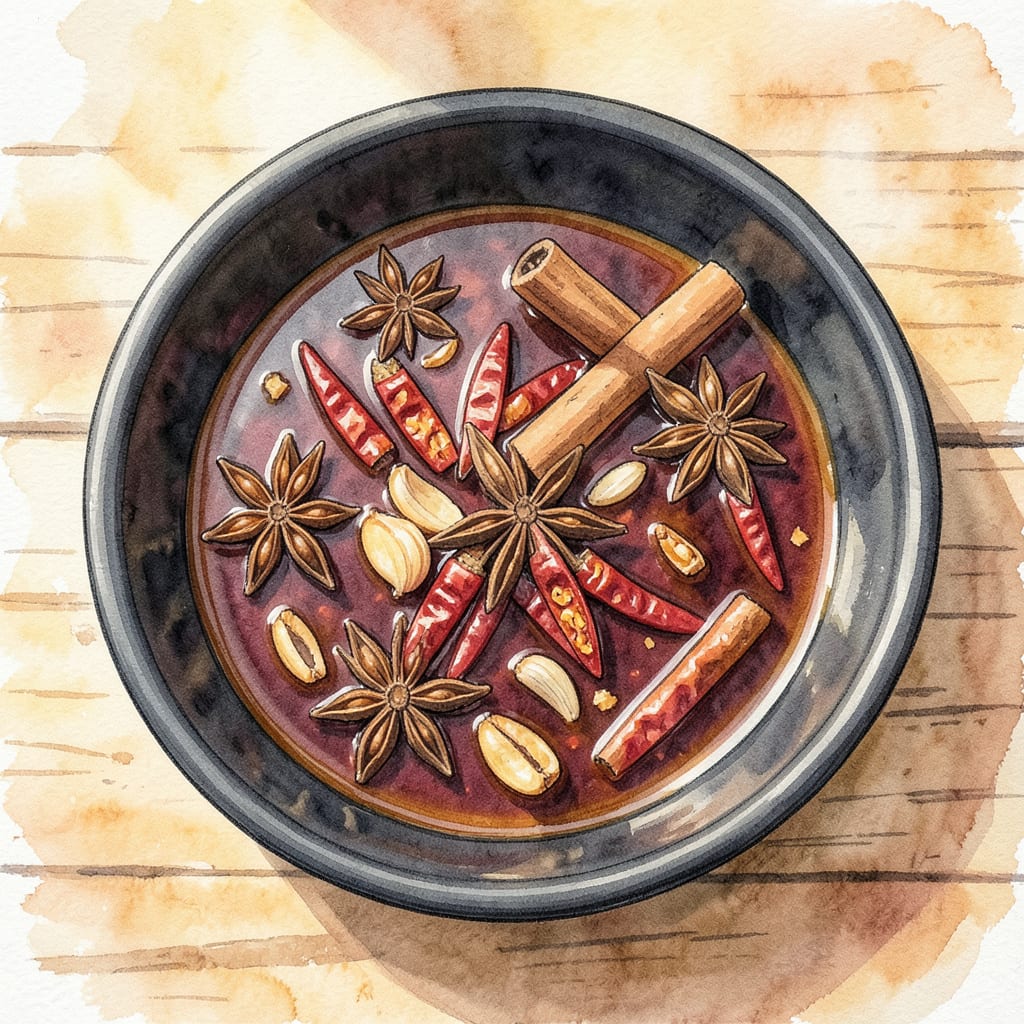
This Vietnamese chili oil delivers the perfect balance of heat and aromatic depth that transforms any dish. I developed this recipe after years of experimenting with different chili varieties and infusion techniques, focusing on achieving that signature fragrant complexity without overwhelming spice.
The process is straightforward yet precise: toasted chilies, garlic, and shallots infuse slowly in neutral oil, creating layers of flavor that build with each minute. What emerges is a versatile condiment that adds fiery dimension to pho, noodles, or even as a finishing drizzle for grilled meats. Store it properly, and this oil will maintain its potency for months.
Ingredients for Vietnamese Chili Oil
Nine carefully selected ingredients create this complex, aromatic chili oil with balanced heat and depth.
| Ingredient | Amount | Notes |
|---|---|---|
| Dried Thai Bird's Eye Chilies 🌶️ | ¾ cup | Stems removed, roughly chopped |
| Shallots 🧅 | 4 whole | Thinly sliced, about 1 cup |
| Garlic Cloves 🧄 | 8 cloves | Thinly sliced, not minced |
| Neutral-Flavored Oil 🫒 | 2 cups | Avocado or grapeseed preferred |
| Star Anise Pods ✨ | 2 whole | Lightly toasted before infusing |
| Cinnamon Stick 🌿 | 1 whole | 2-inch piece, broken |
| Sichuan Peppercorns 🌶️ | 1 tsp | Lightly crushed (optional) |
| Fish Sauce Substitute 💧 | 1 tbsp | Soy sauce or coconut aminos |
| Palm Sugar 🍯 | 1 tbsp | Or light brown sugar |
| Fine Sea Salt 🧂 | 1 tsp | Adjust to taste post-infusion |
[recipe_ingredient_scaler]
The chilies are fundamental—Thai Bird’s Eye delivers authentic heat and fruity undertones. Source from Asian specialty markets for optimal freshness and potency. Shallots and garlic must be sliced uniformly to ensure even browning during infusion; mandoline slicers achieve ideal consistency. For oil, avocado oil (225°F smoke point) preserves delicate aromatics better than peanut oil, though both work effectively. Star anise and cinnamon should be freshly purchased—old spices lose volatile oils critical for infusion.
For heat adjustment, reduce Thai chilies by half and supplement with 1 tbsp gochugaru (Korean chili flakes) for milder versions. Sichuan peppercorns add numbing complexity but omit if unavailable. Fish sauce substitute is non-negotiable for umami—Red Boat Fish-Free Fish Sauce (at Whole Foods) mimics traditional depth. Palm sugar balances heat; coconut sugar offers similar caramel notes. Oil quantity is fixed—2 cups minimum ensures proper submergence of aromatics during infusion.
Store completed oil in dark glass bottles (UV protection) at room temperature for 3-4 months. Refrigeration extends shelf life to 6 months but may cause cloudiness (reheat gently to clarify). Strain solids after 2 weeks to prevent bitterness from prolonged steeping. Label with date—flavor peaks at 1 month as aromatics meld. Always use clean, dry utensils to avoid contamination.
Why You’ll Love This Recipe
- One-Pot Magic: Honestly, I love recipes where cleanup is nonexistent. Just toss the chilies, shallots, garlic, and star anise into a single pot with oil, let it simmer, and you’re done—no blender, no straining, no fuss.
- Umami Bomb: That first whiff when the shallots turn golden and the star anise perfumes the oil? It’s like the kitchen version of a warm hug. The garlic gets crispy, the chilies toast just enough to wake up your sinuses, and suddenly everything tastes richer—even plain rice or a fried egg.
- My Pantry MVP: Between us, I keep a jar of this in the fridge at all times. It’s my emergency flavor boost for noodles, soups, dumplings, or even just drizzled over avocado toast when I’m too lazy to cook. (Yes, even on a Tuesday night.)
- Budget-Friendly Stash: A handful of dried chilies, a couple shallots, and oil I already have? That’s all it takes to make something that lasts for weeks. I’ll be real: it costs less than a fancy store-bought version and tastes ten times better—no weird preservatives, just pure, spicy, garlicky gold.
Step-by-Step Instructions for Vietnamese Chili Oil
This method ensures maximum flavor extraction while maintaining the perfect balance of heat and aroma.
Step 1: Prepare the Chili Base and Aromatics
Begin by removing stems from the 0.75 cup dried Thai bird’s eye chilies and roughly chopping them. The size should be about ¼-inch pieces—this exposes more surface area for infusion without making the final oil too gritty. Transfer to a heatproof bowl that can accommodate all 2 cups neutral-flavored oil with room to spare.
Thinly slice the 4 whole shallots (yielding about 1 cup) and 8 cloves garlic cloves. The slices should be 1/16-inch thick—thin enough to crisp perfectly during infusion but not so fine they burn. Add these to the bowl with chilies, keeping them separate for now. This preparation ensures even cooking and optimal flavor transfer.
Step 2: Infuse the Oil with Spices
In a small saucepan, combine the 2 cups neutral-flavored oil with 2 whole star anise pods, 1 whole cinnamon stick (broken into pieces), and 1 tsp Sichuan peppercorns. Heat over medium-low until the oil reaches 250°F—this takes about 8-10 minutes. You’ll see tiny bubbles forming around the spices and smell their aroma blooming.
Maintain this temperature for 5 minutes to gently toast the spices without burning them. The star anise will darken slightly, and the Sichuan peppercorns will release their citrusy, numbing compounds. Remove from heat and let steep for 2 minutes before straining through a fine-mesh sieve directly into the bowl with chilies and aromatics.
Step 3: Cook the Chili-Aromatic Mixture
Return the oil-chili mixture to medium heat and cook for 12-15 minutes, stirring occasionally. The shallots and garlic will begin to turn golden brown at about the 8-minute mark, while the chilies will deepen in color and become slightly crisp. Watch for the oil to develop a deep red hue—this indicates proper chili infusion.
Regulate the heat carefully—if the oil bubbles too vigorously, reduce to medium-low. The ideal temperature range is 275-300°F. You’ll know it’s ready when the garlic slices are uniformly golden and the chilies have lost their raw brightness. Remove from heat immediately to prevent over-browning.
Step 4: Finish and Balance the Flavors
Stir in the 1 tbsp palm sugar and 1 tsp fine sea salt while the oil is still hot. The residual heat will dissolve the sugar completely. Then add the 1 tbsp fish sauce substitute, stirring vigorously to emulsify. The mixture will slightly thicken as it cools.
Let the chili oil rest at room temperature for 30 minutes before tasting. The flavors will meld and intensify during this time. Adjust the fine sea salt if needed, but remember the oil will become slightly more potent as it sits. Transfer to a clean glass jar once completely cooled.
Troubleshooting Perfect Results
Oil Too Hot
If your oil starts smoking or smells acrid, remove it from heat immediately. The ideal infusion temperature is 275-300°F—any higher risks burning the aromatics. I keep a candy thermometer clipped to my pan for precision. If you overshoot, let the oil cool to 250°F before continuing. 🌡️
Garlic Burning Quickly
Thin garlic slices can go from golden to burnt in seconds. If yours are browning too fast, reduce heat to medium-low and stir constantly. I recommend slicing garlic 1/16-inch thick for even cooking. If some pieces do burn, strain them out immediately—they’ll make your oil bitter.
Chilies Not Infusing
If your oil isn’t turning red after 12 minutes, the chilies may be too dry or old. Try crushing them slightly before adding to the oil to expose more surface area. I’ve found freshly purchased Thai chilies from Asian markets give the best color and heat. For stubborn batches, extend cooking time by 3-5 minutes at 275°F.
Oil Too Gritty
Grit usually comes from finely chopped chilies or over-straining. Use a coarse-mesh strainer first to catch larger pieces, then switch to cheesecloth for the final strain. If you prefer texture, skip the final strain entirely—I love the crunchy bits in my pho! For ultra-smooth oil, let it settle overnight and pour off the clear top layer.
Flavors Too Mild
If your oil lacks punch, it likely needs more infusion time. Return the strained oil to the pan with ¼ cup fresh chilies and heat at 250°F for another 10 minutes. For umami depth, add 1 tsp soy sauce or ½ tsp MSG after cooling. I always taste after 24 hours—flavors intensify dramatically overnight. 🔥
Oil Separating
Separation happens when the oil cools too quickly. After adding sugar and salt, let the mixture cool gradually at room temperature. If separation occurs, gently reheat to 180°F while whisking. Store in a dark glass bottle to maintain emulsion. Shake well before each use—I find a quick 10-second shake redistributes everything perfectly.
Nutrition Facts

Trained in classic French technique but raised on slow-cooked ribs and spicy rubs, she blends culinary skill with smoke and soul.
- Recipe for Boneless Pork Chops in Cast Iron Skillet: Sear and Baste to Juicy Perfection - October 3, 2026
- Recipe for Boneless Cross Rib Roast: Slow-Roasted Beef with Herb Crust - October 3, 2026
- Hamburgers in Sauce Recipe Crock Pot: Slow-Cooked Savory Delight - October 3, 2026