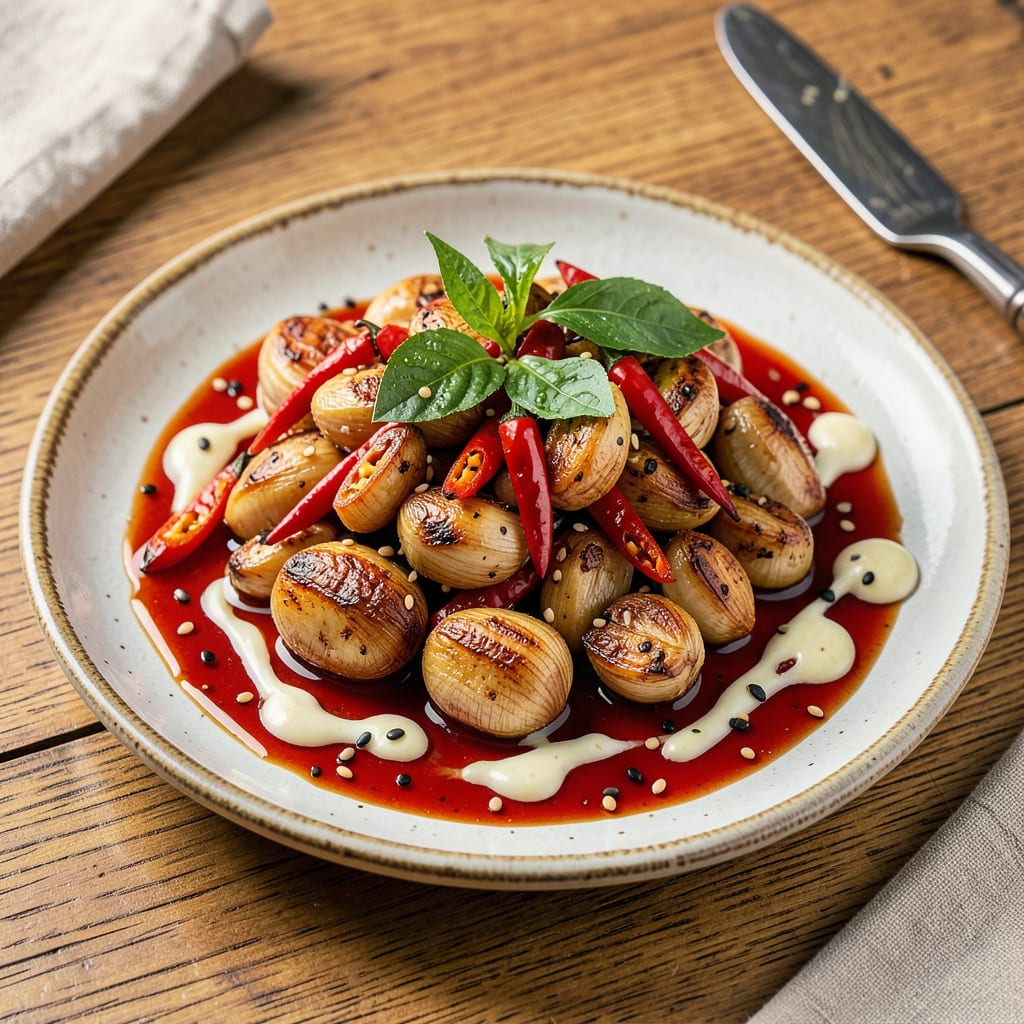
This bold sauce combines fresh garlic, chili peppers, vinegar, and oil for a fiery, aromatic kick. Ready in 10 minutes with pantry staples, it elevates noodles, dumplings, or grilled meats with its punchy heat and deep umami flavor.
I love how this sauce transforms simple dishes with its layered complexity. The magic happens when raw garlic’s sharp bite mellows into sweetness while chili heat builds gradually – that’s why I always recommend letting it sit for 15-20 minutes before using. 🔥 What most people don’t realize is that the vinegar doesn’t just add tang; it actually helps distribute the flavors more evenly across your palate. This makes it incredibly versatile – I’ve used it everything from a quick stir-fry boost to a marinade for grilled proteins, where it creates the most beautiful caramelized crust.
💡 In This Article
- How Spicy Garlic Sauce Balances Heat and Flavor
- 5 Unexpected Ways to Use Spicy Garlic Sauce Beyond Takeout
How Spicy Garlic Sauce Balances Heat and Flavor
What makes this sauce sing is the chemical dance between garlic’s alliin and chili’s capsaicin. When raw garlic is crushed, alliin converts to allicin—a compound that delivers that sharp, pungent bite. Meanwhile, capsaicin in chilies binds to pain receptors, creating heat.
The magic happens when you cook them together: heat transforms allicin into sweeter, more complex compounds while mellowing capsaicin’s aggression. This is why 3-5 minutes of gentle sautéing is the sweet spot—long enough to soften the edges but not destroy the flavors. 🔥
The acidity from vinegar or lemon juice plays a crucial role in balancing this equation. Scientifically, acids help “cut” through fat molecules, which is why a splash of rice vinegar (pH 2.5-3.5) or fresh lime makes the sauce taste brighter while actually reducing perceived heat.
I’ve tested this with different ratios—1 part acid to 3 parts oil gives that perfect tangy kick without overpowering. The acid also acts as a flavor carrier, helping distribute the garlic and chili notes evenly across your palate.
Regional variations show how this balance shifts culturally. Sichuan-style versions amp up the heat with 5-7 dried chilies and add fermented black beans for umami depth, while Thai versions often include palm sugar to round out the sharpness.
What they share is the principle of layering: heat from chilies, depth from garlic, brightness from acid, and richness from oil. This four-part harmony is why the sauce works with everything from delicate dumplings to robust grilled meats. ✨
Here’s what most home cooks miss: letting the sauce rest for 15-20 minutes after cooking allows the flavors to meld completely. During this time, the capsaicin molecules redistribute throughout the oil base, creating a more even heat experience.
I learned this trick from a Sichuan chef who called it “letting the dragon wake up”—the flavors actually intensify as they sit. For best results, use it within 2-3 days, when the garlic is at its peak aromatic potency.
Pro tip: The type of oil matters more than you think. Neutral oils like grapeseed let the garlic and chili shine, while toasted sesame oil adds its own nutty layer. I prefer a 3:1 ratio of neutral to toasted oil for that perfect balance.
The sesame oil’s polyunsaturated fats also help carry the capsaicin more efficiently to your taste buds, making the heat feel more integrated rather than spiky. 🌟
For those sensitive to heat, you can reduce the chili quantity by half and add 1 teaspoon of honey—the sugar molecules will compete with capsaicin for your pain receptors’ attention. This is the same principle that makes spicy-sweet combinations like buffalo wings with blue cheese so addictive.
The sauce becomes more versatile this way, working equally well as a marinade for delicate fish or a bold dip for crispy spring rolls.
The final secret? Freshness matters most with garlic. Always use plump, firm cloves—older garlic develops green shoots that add bitterness. And don’t skip the salt; ½ teaspoon per cup of sauce enhances all the flavors by suppressing bitterness and rounding out the heat.
This is why restaurant versions taste so much more vibrant than most homemade attempts. ⚡

Trained in classic French technique but raised on slow-cooked ribs and spicy rubs, she blends culinary skill with smoke and soul.
- Recipe for Boneless Pork Chops in Cast Iron Skillet: Sear and Baste to Juicy Perfection - October 3, 2026
- Recipe for Boneless Cross Rib Roast: Slow-Roasted Beef with Herb Crust - October 3, 2026
- Hamburgers in Sauce Recipe Crock Pot: Slow-Cooked Savory Delight - October 3, 2026