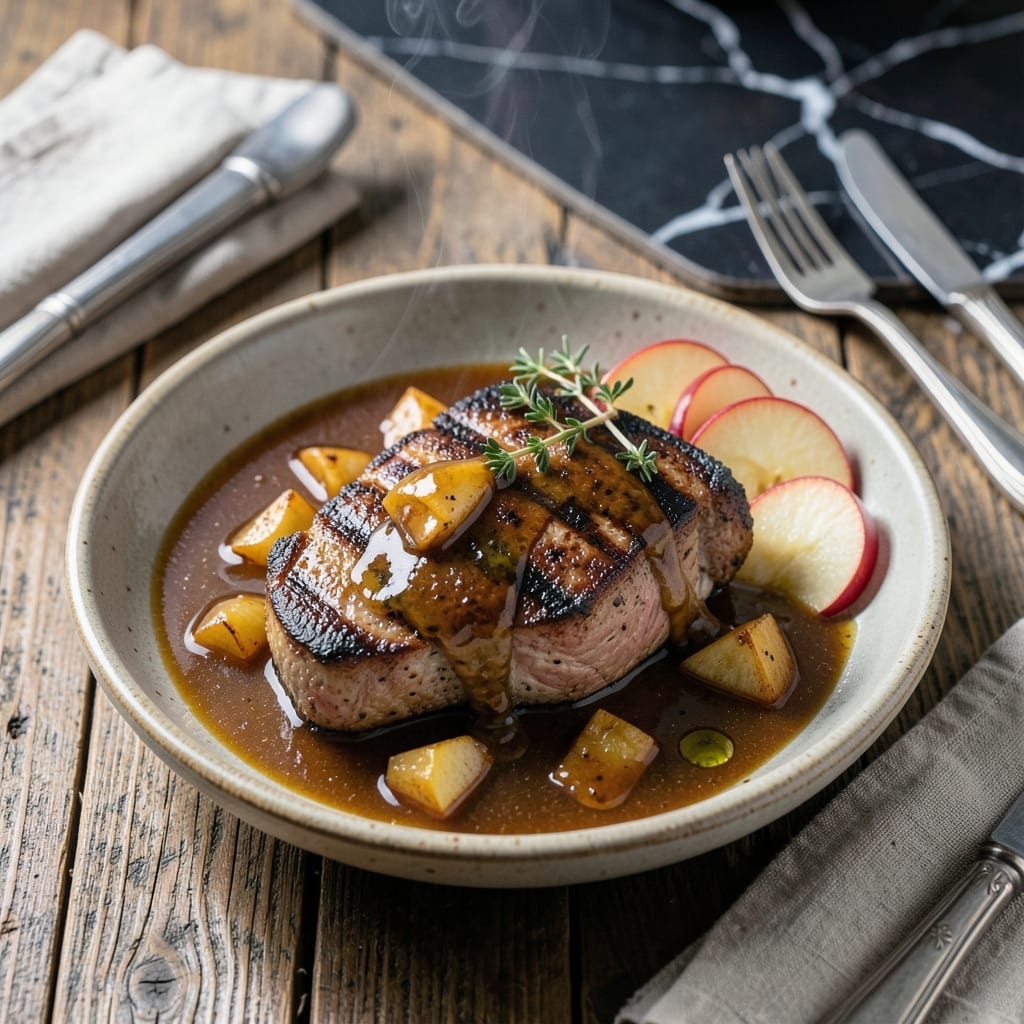
This sauce brings the perfect balance of sweet and smoky to any grill-out. I developed it after years of experimenting with fruit-based glazes, and it’s become a staple in my kitchen.
A slow roast concentrates the apple flavor while caramelizing the natural sugars, creating a thick, glossy finish. The addition of warm spices and a touch of vinegar adds depth without overpowering the dish.
It clings beautifully to meats and veggies, adding a restaurant-quality finish with minimal effort. The sauce keeps well, so you can make a batch ahead and use it all season.
Ideal for brushing on ribs, chicken, or even grilled vegetables. This is the kind of glaze that elevates everything it touches.
Ingredients for Stonewall Kitchen Roasted Apple Grille Sauce
Sweet apples, warm spices, and a touch of tang come together for this glossy grilling glaze.
| Ingredient | Amount | Notes |
|---|---|---|
| Apples 🍎 | 3 whole | Peeled, cored, and diced (Sweet varieties like Fuji or Gala) |
| Apple Cider Vinegar 🍏 | ¼ cup | For tangy depth |
| Brown Sugar 🍚 | ½ cup | Light or dark for sweetness |
| Honey 🍯 | 2 tbsp | For natural sweetness |
| Tomato Paste 🍅 | 2 tbsp | For richness and body |
| Worcestershire Sauce 🫒 | 1 tbsp | Vegetarian version if preferred |
| Ground Cinnamon 🌿 | ½ tsp | Warm spice for depth |
| Ground Allspice 🌶️ | ¼ tsp | For smoky complexity |
| Kosher Salt 🧂 | ½ tsp | Adjust to taste |
| Black Pepper 🌶️ | ¼ tsp | Freshly ground preferred |
[recipe_ingredient_scaler]
The apples are the soul here. Fuji or Gala are my go-tos for their natural sweetness and soft texture after roasting. Grab them from Whole Foods or your local farmers market for the best flavor. If you’re feeling fancy, Honeycrisp works too but costs a bit more. The brown sugar should be fresh—not that hard, clumpy stuff hiding in the back of your pantry (we’ve all been there).
No apple cider vinegar? White vinegar with a splash of apple juice gets you close. Swap honey for maple syrup if you want a vegan take. Tomato paste can be one-third the amount of ketchup in a pinch. Missing allspice? Cloves at half the amount work—just go easy. The Worcestershire adds umami, but if you’re avoiding anchovies, soy sauce or coconut aminos do the trick.
This keeps like a champ. 2 weeks in the fridge, 6 months frozen. I batch it in mason jars—perfect for gifting or having on hand for spontaneous grill sessions (worth the extra effort).
Why You’ll Love This Recipe
- One Pot Wonder: I toss everything in a single pan—apples, vinegar, sugar—and let the oven do the work.
- Sweet-Tangy Magic: The honey and apple cider vinegar balance so well, it’s ridicoulsy good on ribs or chicken.
- Grill Season MVP: I slather this on burgers, brats, even roasted veggies. Honestly, it’s my summer secret weapon.
- Makes Extra: I always double the batch—keeps for weeks, and I’m glad because everyone asks for more.
Step-by-Step Instructions for Roasted Apple Grille Sauce
Here’s the simple method for a glossy, flavor-packed sauce that’s ready in under an hour.
Step 1: Roast the Apples Until Tender
Preheat your oven to 400°F. Peel, core, and dice the 3 whole Apples into even ½-inch pieces for consistent cooking. Spread them on a parchment-lined baking sheet in a single layer—no crowding, or they’ll steam instead of roast.
Roast for 20-25 minutes, stirring once halfway, until the apples soften and their edges turn lightly golden brown. You’ll smell their natural sweetness intensify, and a fork should slide through them with ease. This step builds the sauce’s base flavor, so don’t rush it.
Step 2: Simmer the Aromatic Base
In a medium saucepan, combine the roasted apples with 0.25 cup Apple Cider Vinegar, 0.5 cup Brown Sugar, 2 tbsp Honey, 2 tbsp Tomato Paste, and 1 tbsp Worcestershire Sauce. Stir well to dissolve the sugar and distribute the tomato paste evenly.
Bring the mixture to a gentle boil over medium heat, then reduce to medium-low. Let it simmer for 10-12 minutes, stirring occasionally, until the apples break down and the liquid reduces slightly. You’ll notice the sauce thicken and take on a deeper color.
Step 3: Add Warm Spices and Finish
Stir in 0.5 tsp Ground Cinnamon, 0.25 tsp Ground Allspice, 0.5 tsp Kosher Salt, and 0.25 tsp Black Pepper. These spices add warmth and complexity, so taste as you go—you can always adjust the salt later if needed.
Simmer for another 5-7 minutes until the sauce coats the back of a spoon. It should be thick but still pourable, with a balance of sweet, tangy, and smoky notes. If it’s too thick, add a splash of water to loosen it. Remove from heat and let it cool slightly before using.
Step 4: Blend for a Smooth Texture (Optional)
For a silky-smooth sauce, transfer the mixture to a blender or use an immersion blender to puree until smooth. If you prefer a chunkier texture, simply mash the apples with a fork or leave them as-is for a rustic finish.
Let the sauce cool completely before storing. It will thicken further as it cools, so resist the urge to thin it out too much. This sauce keeps well in the refrigerator for up to 2 weeks, and the flavors deepen over time.
Pro Tips For Making Stonewall Kitchen Roasted Apple Grille Sauce
- Roast Apples Longer: I learned this the hard way—give those apples a full 45 minutes in the oven until they’re deeply caramelized, not just soft. The brown sugar and honey need that time to develop real depth.
- Balance the Vinegar: After my first batch tasted like a mouthful of acid, I now start with 1/4 cup apple cider vinegar, taste, then add more if needed. It should brighten the sauce, not overpower it.
- Deglaze the Pan: Sounds weird, but it works: after roasting the apples, pour a splash of water or cider into the hot pan and scrape up those sticky brown bits. That’s pure flavor for your sauce.
- Strain for Smoothness: Skip the chunks if you want a silky sauce—press the roasted apples through a fine-mesh sieve. It’s an extra 5 minutes, but the texture is worth it, especially for grilling.
Pro Cooking Tips for Perfect Results
Perfect Apple Selection
For the best flavor, I always use Fuji or Gala apples—their natural sweetness caramelizes beautifully in the oven. Dice them into ½-inch pieces for even roasting. I learned this trick at a local orchard after years of experimenting with different varieties.
Roasting for Maximum Flavor
Roast at 400°F for 20-25 minutes, stirring halfway. This high heat concentrates the apple’s sugars and develops that deep, caramelized flavor that makes this sauce special. Don’t skip the parchment paper—it prevents sticking and makes cleanup a breeze.
Simmering Technique
After roasting, simmer the mixture for 10-12 minutes on medium-low heat. This gentle cooking allows the flavors to meld without scorching. I use a heavy-bottomed saucepan to prevent hot spots. Stir occasionally to keep everything incorporated.
Spice Balance
The cinnamon and allspice are key, but go easy—they should complement, not dominate. Add them during the final 5-7 minutes of simmering to preserve their aromatic qualities. Taste as you go and adjust the salt to your preference.
Texture Control
For a smoother sauce, blend with an immersion blender. For rustic texture, mash with a fork. If it thickens too much while cooling, thin with 1-2 tbsp water. The sauce will naturally thicken as it cools, so don’t overdo it. 💡
Flavor Development
Let the sauce rest for 30 minutes before using. This allows the flavors to fully marry. I’ve found that overnight refrigeration deepens the taste even more—perfect for making ahead for your next grill-out.
Nutrition Facts
Frequently Asked Questions
Can I use a different type of apple?
Yes! While Fuji or Gala work best, Honeycrisp or Granny Smith can be used. Sweeter apples caramelize better, but tart ones add a nice contrast.
How long does the sauce stay fresh?
It keeps for 2 weeks in the fridge or 6 months frozen. Store in an airtight container for best results. The flavors actually deepen over time!
What if my sauce is too thick?
Thin it with 1-2 tbsp water or apple juice. Remember it thickens as it cools, so let it sit before adjusting. Avoid adding too much liquid at once.
Can I make this vegan?
Easily! Replace honey with maple syrup and use vegetarian Worcestershire. All other ingredients are already plant-based.

Trained in classic French technique but raised on slow-cooked ribs and spicy rubs, she blends culinary skill with smoke and soul.
- Recipe for Boneless Pork Chops in Cast Iron Skillet: Sear and Baste to Juicy Perfection - October 3, 2026
- Recipe for Boneless Cross Rib Roast: Slow-Roasted Beef with Herb Crust - October 3, 2026
- Hamburgers in Sauce Recipe Crock Pot: Slow-Cooked Savory Delight - October 3, 2026