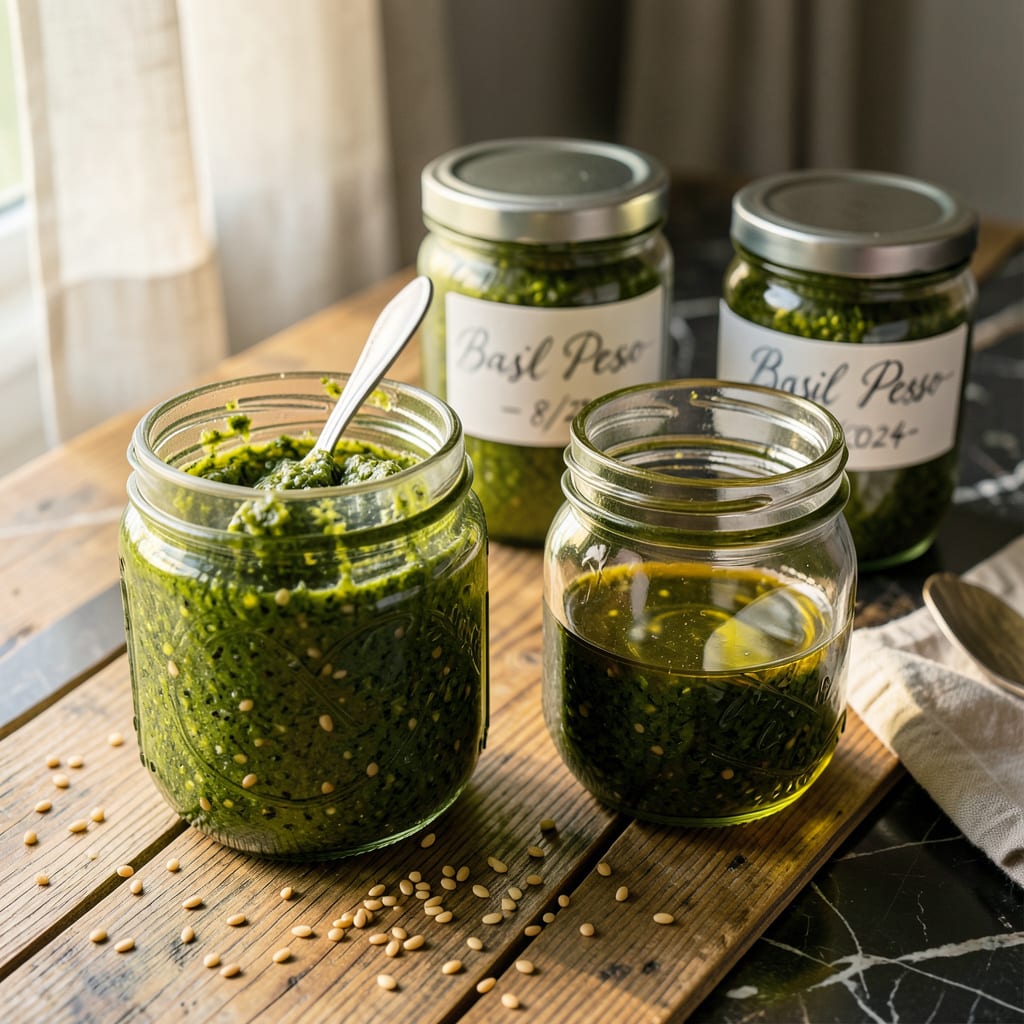
Here’s the thing—nothing beats fresh homemade pesto, but keeping it vibrant and flavorful for more than a day or two can be tricky. I’ve wasted too many batches of beautiful basil pesto that turned brown or lost its punch in the fridge. The solution isn’t complicated, though. With the right storage methods, you can preserve that just-made flavor for weeks.
A simple layer of olive oil on top creates an airtight seal that locks in color and freshness. For short-term storage, a clean jar in the fridge works perfectly—just press plastic wrap directly onto the surface before sealing. But if you want to stock up for winter or meal prep, freezing is your best friend. Ice cube trays make perfect single-serving portions that thaw in minutes.
What you’ll end up with is pesto that stays bright green and packed with flavor, ready to transform pasta, sandwiches, or roasted vegetables on demand. No more sad, oxidized pesto or last-minute grocery runs when cravings hit. This method works for classic basil versions, vegan pesto without cheese, or even nut-free variations with sunflower seeds.
Between you and me, I always make double batches during peak basil season. That way, I’ve got summer flavors ready to go straight through winter. Here’s exactly how to store it right—no special equipment needed, just smart techniques that actually work.
📚 In This Guide
- What You’ll Need
- Instructions
- Tips and Common Mistakes
What Youll Need
- ● Fresh pesto: 1–2 cups (homemade, oil-based, no dairy added yet if freezing).
- ● Storage containers: Glass jars (8–16 oz, airtight with lids) for fridge storage.
- ● Ice cube trays (silicone preferred) for small freezer portions.
- ● Freezer-safe bags (quart-sized, heavy-duty) for bulk freezing.
- ● Extra virgin olive oil: ½–1 tbsp per jar (to create a protective layer).
- ○ Plastic wrap: (optional, for pressing directly on pesto to minimize air exposure).
- ● Labels & marker: (to date your batches—trust us, you’ll forget!).
- ○ Lemon juice or ascorbic acid: (optional, ½ tsp per cup to slow browning).
- ○ Vacuum sealer: (optional but chef’s kiss 🤌 for long-term freezer storage).
Instructions for Storing Homemade Pesto
Here’s my foolproof method to preserve that fresh basil flavor and vibrant color for weeks.
Prepare the Pesto for Storage
Start by making sure your pesto is completely cooled to room temperature. I always let it sit for about 30 minutes after blending—this prevents condensation from forming inside the storage container, which can lead to spoilage or ice crystals if freezing.
Give your pesto a good stir to redistribute any oil that may have separated to the top. This ensures all the ingredients are evenly incorporated before storing. If your pesto seems thick, you can stir in an extra 1-2 tablespoons of olive oil—this creates a protective barrier that helps preserve the color and flavor.
Choose the Right Storage Method
For short-term storage (up to 5 days), transfer your pesto to an airtight glass container. I prefer glass because it doesn’t absorb odors or stains like plastic can. Press a piece of plastic wrap directly onto the surface of the pesto before sealing the container—this minimizes air exposure, which is the enemy of fresh basil flavor.
For longer storage, freezing is your best option. I like to use ice cube trays for perfect single-serving portions. Fill each compartment about ¾ full (pesto expands slightly when frozen), then drizzle a thin layer of olive oil over each portion. This oil cap prevents freezer burn and helps maintain that beautiful green color.
Freeze for Long-Term Freshness
Place your filled ice cube trays in the freezer and let them freeze completely—this usually takes about 4-6 hours. You’ll know they’re ready when the pesto cubes are solid and hold their shape when pressed gently. The olive oil on top should be firm but not rock-hard.
Once frozen, pop the pesto cubes out of the tray and transfer them to a freezer-safe bag or container. I always label mine with the date—properly stored, your pesto will maintain its vibrant flavor for up to 3 months. When you’re ready to use a cube, there’s no need to thaw: just drop it directly into hot pasta or soups, and it will melt beautifully.
Revive Your Stored Pesto
When using refrigerated pesto, you might notice some separation—that’s completely normal. Just give it a good stir to recombine the ingredients. If the color has darkened slightly, don’t worry; the flavor is still there. A quick stir and a fresh drizzle of olive oil will bring it right back to life.
For frozen pesto, I recommend using it within 3 months for best quality. The texture might be slightly different after freezing, but the flavor remains remarkably fresh. If you’re using it in cooked dishes, add it at the very end of cooking to preserve its bright, herby notes. For cold applications like sandwiches or dips, let it thaw in the refrigerator overnight for the smoothest consistency.
Tips and Common Mistakes
After years of making and storing pesto, I’ve learned these key details that make all the difference in keeping it fresh and vibrant.
Cooling is Critical: That 30-minute cooling period in Step 1 isn’t just a suggestion—it’s essential. I’ve ruined batches by rushing this step, only to find ice crystals forming in my frozen pesto. The condensation that forms when warm pesto hits a cold container creates moisture that degrades flavor. Trust me, set a timer and let it cool completely on the counter before storing.
Oil Protection: When adding that extra 1-2 tablespoons of olive oil in Step 1, don’t just stir it in—drizzle it over the surface after transferring to your storage container. This creates a protective seal that prevents oxidation, which is what turns pesto brown. I use a high-quality extra virgin olive oil for this step; its antioxidants help preserve the color even better.
Freezing Strategy: The ¾ full recommendation in Step 2 is precise for a reason. Pesto expands when frozen, and overfilling leads to messy spills. I learned this the hard way when my first batch of pesto cubes turned into a frozen green blob in my freezer. Use a small spoon to fill each compartment, then level it off with the back of a knife for perfect portions every time.
Reviving Technique: For frozen pesto in Step 4, here’s what nobody tells you: don’t microwave it to thaw. The quick temperature change can make the oils separate. Instead, place the frozen cube in a small bowl and set it in warm (not hot) water for 5-10 minutes. This gentle thawing preserves the emulsion and keeps the texture smooth.
Pro Tips for Storing Homemade Pesto
- After years of making and storing pesto, I’ve learned these key details that make all the difference in keeping it fr…
- Cooling is Critical: That 30-minute cooling period in Step 1 isn’t just a suggestion—it’s essential. I’ve ruined batc…
- Oil Protection: When adding that extra 1-2 tablespoons of olive oil in Step 1, don’t just stir it in—drizzle it over …
Frequently Asked Questions
How long does homemade pesto last in the fridge?
Fresh pesto stays vibrant for 5–7 days in the fridge when stored in an airtight container with a thin layer of olive oil on top. For longer shelf life, freeze it in ice cube trays (up to 3–6 months). Always check for off smells or mold before using!
Can I freeze pesto without losing flavor?
Yes! Freezing locks in flavor if done right. Portion pesto into ice cube trays, cover with olive oil or plastic wrap, and transfer to a freezer bag once solid. Avoid repeated thawing—use within 6 months for best taste.
Why does my pesto turn brown in the fridge?
Browning happens when basil oxidizes (like an avocado!). Prevent it by pressing plastic wrap directly onto the pesto’s surface to limit air exposure, or add a splash of lemon juice. A thin oil layer on top also helps!
What’s the best container for storing pesto?
Glass jars with airtight lids (like mason jars) are ideal—they’re non-reactive and easy to clean. For freezing, silicone ice cube trays or small freezer-safe containers work great. Avoid metal, which can react with the acids in pesto.
Can I store pesto without cheese for longer shelf life?
Omit the Parmesan if storing for more than a week—cheese shortens freshness. Add it fresh when you use the pesto instead. Vegan? Nutritional yeast is a great shelf-stable alternative.
With the right storage tricks, your homemade pesto can stay fresh, flavorful, and vibrant for weeks—or even months! 🌿 Whether you choose the fridge, freezer, or oil-topping method, the key is keeping air out and quality in. Now that you’re armed with these tips, why not whip up a big batch and stock your pantry? Your future pasta nights, sandwiches, and dips will thank you! 😉

Trained in classic French technique but raised on slow-cooked ribs and spicy rubs, she blends culinary skill with smoke and soul.
- Recipe for Boneless Pork Chops in Cast Iron Skillet: Sear and Baste to Juicy Perfection - October 3, 2026
- Recipe for Boneless Cross Rib Roast: Slow-Roasted Beef with Herb Crust - October 3, 2026
- Hamburgers in Sauce Recipe Crock Pot: Slow-Cooked Savory Delight - October 3, 2026