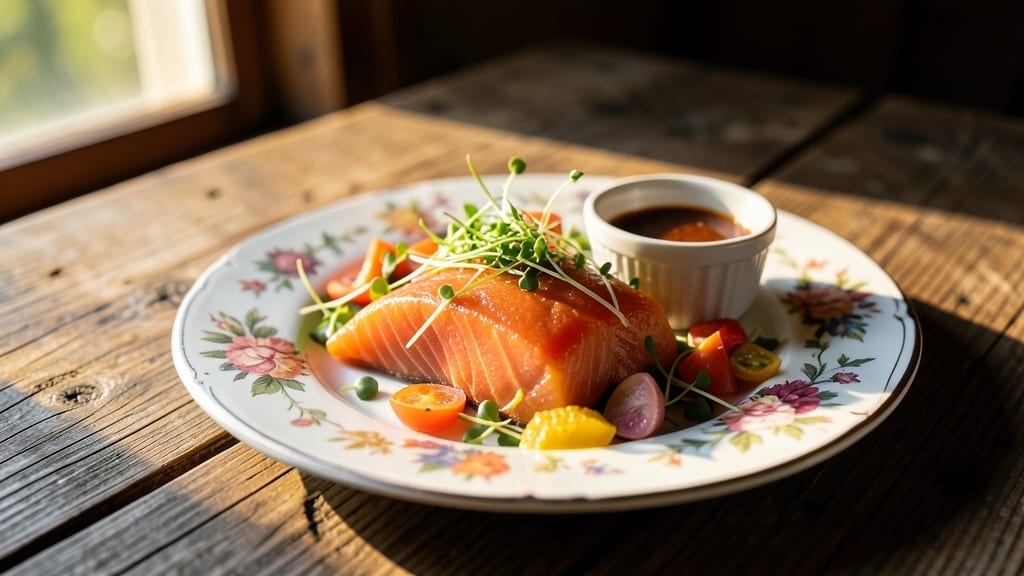
This sugar-free smoked salmon recipe transforms delicate fillets into crispy, prosciutto-style bites that pack a savory punch without any sweetness. The secret lies in a precise marinade of citrus and dill that enhances the salmon’s natural richness while creating that coveted crispy texture through careful baking.
I developed this method after years of perfecting smoked salmon dishes, drawing from my French technique training to balance acidity and heat for a restaurant-quality result.
The beauty of this recipe is its simplicity—just a few high-quality ingredients and a method that delivers professional results at home. You’ll start with fresh salmon fillets, marinated in a zesty lemon-dill mixture, then baked until the edges achieve that satisfying crispness.
The marinade works double duty, infusing flavor while tenderizing the fish for perfect texture. No added sugars here, just bright, clean flavors that let the salmon shine.
What you’ll end up with is a plate of golden, crispy salmon bites that look elegant enough for a special occasion but are simple enough for a weeknight dinner. The lemon-dill zing cuts through the richness, creating a perfect balance that’s both satisfying and refreshing.
Pair these with a sugar-free dill cream sauce or fresh cucumber slices for a complete meal that’s as nutritious as it is delicious.
This recipe is particularly special for those watching sugar intake or following a low-carb lifestyle, as every element is designed to deliver maximum flavor without any sweetness.
The crispy texture comes from a combination of proper baking technique and ingredient selection, ensuring you get that prosciutto-style crunch without compromising on taste. Let’s get started on creating this showstopping dish!
Ingredients for sugar free smoked salmon
Bright citrus and fresh dill meet delicate salmon for a sugar-free dish that delivers crispy, restaurant-quality bites.
| Ingredient | Amount | Notes |
|---|---|---|
| Fresh Atlantic Salmon Fillets 🐟 | 1 ½ lb | Skin-on, center-cut preferred |
| Extra-Virgin Olive Oil 🫒 | 2 tbsp | High-quality, fruity variety |
| Fresh Lemon Juice 🍋 | ¼ cup | From 2-3 medium lemons |
| Fresh Dill Weeds 🌿 | ½ cup | Finely chopped, stems removed |
| Garlic Cloves 🧄 | 3 cloves | Minced, fresh preferred |
| Dijon Mustard 🍯 | 1 tbsp | High-quality, no added sugar |
| Coarse Sea Salt 🧂 | 1 ½ tsp | Kosher or Maldon preferred |
| Freshly Ground Black Pepper 🌶️ | ½ tsp | Freshly cracked preferred |
| Smoked Paprika 🌶️ | ½ tsp | For subtle smokiness |
| Unsalted Butter 🧈 | 2 tbsp | Cold, cubed for crisping |
| Almond Flour 🌰 | ¼ cup | For crispy coating |
| Fresh Cucumber Slices 🥒 | 1 cup | For serving (optional) |
[recipe_ingredient_scaler]
The salmon is the star—center-cut fillets with skin-on deliver the best texture, though skinless works too. Whole Foods Market or high-end seafood counters carry the freshest cuts, but any reputable fishmonger will do. Look for fillets with vibrant color and minimal fishy odor. If using frozen, thaw overnight in the fridge (never at room temperature). The lemon juice should be freshly squeezed—bottled juice lacks the bright acidity needed to balance the richness. For the dill, fresh is non-negotiable—dried lacks the bright, fresh flavor that cuts through the salmon’s richness. Store-bought dill bundles often contain stems; remove them completely for the finest texture.
No fresh dill? Dried dill at one-third the amount works in a pinch, though the flavor will be more muted. Substitute lemon juice with lime juice at the same quantity, though the flavor profile shifts slightly. For a smokier profile, increase smoked paprika to 1 teaspoon. The almond flour can be swapped for crushed pork rinds for a lower-carb option, though texture will differ. If you’re avoiding almonds, crushed cornflakes provide a similar crispness. The Dijon mustard should be 100% mustard with no additives—check labels for hidden sugars. For those avoiding mustard entirely, 1 teaspoon of white wine vinegar works as a substitute.
Salmon marinates best in the fridge for up to 12 hours, though 2-4 hours yields optimal flavor without over-tenderizing. The almond flour mixture should be kept dry until ready to use—store in an airtight container for up to 1 week. Leftover salmon bites reheat beautifully in a 350°F oven for 5-7 minutes, though texture won’t be as crisp. For meal prep, freeze portions on parchment paper for up to 3 months. The lemon-dill marinade can be made 2 days ahead and stored in the fridge, though flavor diminishes slightly over time. Serve immediately after crisping for the best texture.
Why You’ll Love This Recipe
- I’ll be real: fresh salmon can feel pricey, but this recipe stretches it into plenty of servings. The almond flour and lemon juice are cheap staples, and you’re using every bit of the fillet without waste. Plus, the crispy coating makes it feel like a restaurant dish—without the restaurant price tag. Win-win.
- No-Fuss Crispy Magic: I love how this recipe turns something that could feel fussy into a no-brainer. Just pat the salmon dry, toss it in almond flour, and boom—you’ve got crispy edges without the hassle of breading or batter. The lemon-dill marinade takes all of 10 minutes to whip up while you prep the pan, and that’s chef’s kiss efficiency.
- Bright & Complex: Honestly, the flavor here is what keeps me coming back. That lemon juice and fresh dill don’t just taste bright—they balance the richness of the salmon, while the garlic and Dijon mustard add a depth that’s dangerously good. The crispy almond flour coating? It’s not just texture—it’s the perfect crunch that makes every bite feel special.
- Weeknight to Weekender: Between us, this is my go-to for everything from a quick Tuesday dinner to a fancy brunch the next day. Serve it over cucumber slices for a light lunch, or pile it on a charcuterie board for a crowd-pleasing appetizer. The crispy strips even reheat beautifully—just pop them back in the pan for a minute, and you’ve got leftovers that still taste fresh.
Step-by-step instructions for crispy prosciutto-style salmon
Here’s how to transform fresh salmon into crispy, sugar-free bites with a perfect balance of texture and flavor.
Prepare the Salmon for Crisping
Pat the 1½ lb fresh Atlantic salmon fillets dry with paper towels, removing any moisture from the skin side. This step is crucial for achieving crispiness—wet skin won’t brown properly. Using a sharp knife, cut each fillet lengthwise into ½-inch thick strips, keeping the skin intact on one side. You should end up with about 16-20 strips total.
In a small bowl, mix together the ¼ cup almond flour, 1½ tsp coarse sea salt, ½ tsp freshly ground black pepper, and ½ tsp smoked paprika. This dry coating will create the crispy texture we’re after. Working with one strip at a time, press each salmon strip lightly into the almond flour mixture, coating both sides completely but not pressing too hard to avoid breaking the delicate fish.
Create the Lemon-Dill Marinade
In a separate bowl, whisk together the ¼ cup fresh lemon juice, 1 tbsp Dijon mustard, 3 minced garlic cloves, and ½ cup finely chopped fresh dill weeds. This bright, herby marinade will infuse the salmon with flavor while keeping it sugar-free. The Dijon mustard adds depth without any sweetness, while the lemon juice prevents the salmon from overcooking during the crisping process.
Place the coated salmon strips in a single layer on a plate and pour the lemon-dill marinade evenly over them. Let them marinate for 15-20 minutes at room temperature while you prepare your cooking surface. Don’t skip this step—it ensures the salmon stays tender inside while developing that beautiful crispy exterior.
Cook the Salmon to Crispy Perfection
Heat a large skillet over medium-high heat until it’s very hot. Add the 2 tbsp extra-virgin olive oil and let it shimmer for about 30 seconds. Working in batches to avoid crowding, carefully place the marinated salmon strips in the skillet, skin-side down. Press down gently with a spatula for 10 seconds to ensure good contact with the pan.
Cook for 2-3 minutes per side until the almond flour coating turns golden brown and crispy, and the salmon reaches an internal temperature of 125°F. You’ll notice the edges curling slightly—that’s your signal the skin is crisping properly. Transfer the cooked salmon to a paper towel-lined plate to drain any excess oil while you finish the remaining batches.
Finish with Butter and Serve
Return the skillet to medium heat and add the 2 tbsp unsalted butter. Let it melt completely, then pour it over the crispy salmon strips. Toss gently to coat each piece in the buttery sauce, which adds richness while keeping the dish sugar-free. The butter should melt into a glossy finish that enhances the crispy texture.
Serve the crispy salmon bites immediately on a platter lined with the 1 cup fresh cucumber slices. The cool cucumber provides a refreshing contrast to the warm, crispy salmon. Garnish with additional chopped fresh dill weeds if desired, and enjoy while everything is at its peak texture and temperature.
Pro Tips For Making Sugar Free Smoked Salmon
- Press for Crisp: That 10-second press with the spatula isn’t just for show—it’s what seals the skin to the pan and guarantees that golden, shatteringly crisp crust. Skip it, and you’ll end up with sad, limp edges. (Trust me, I’ve learned this the hard way with salmon that looked done but tasted like it was still swimming.)
- Lemon Juice First: Whisk the lemon juice into the marinade before adding the Dijon mustard—this keeps the mustard from curdling and makes the marinade silky smooth. I used to add them in reverse order and ended up with a weird, grainy mess. (Your salmon deserves better than that.)
- Batch Control: Crowd the pan, and your salmon will steam instead of crisp. Work in batches of 4-5 strips max, even if it means two trips to the skillet. The extra 30 seconds waiting for the pan to reheat is worth the difference between soggy and perfect.
- Butter Timing: Let that skillet cool just enough to melt the butter gently—if it’s still screaming hot, you’ll burn the butter and turn your crispy salmon into a sad, greasy pile. Medium heat is your friend here. (Yes, even if you’re impatient like me.)
Pro cooking tips for perfect results
Mastering the Crisp
The secret to perfect crispiness lies in your pan temperature and the almond flour coating. Heat your skillet until it’s so hot that a drop of water sizzles and evaporates instantly—this is your medium-high heat sweet spot.
I use a cast-iron skillet because it retains heat like a dream, but a well-seasoned stainless steel will work too. Press the salmon strips gently into the pan for those first 10 seconds—this ensures the almond flour sticks and crisps properly.
Overcrowding the pan will lower the temperature and steal the crisp, so cook in batches. 2-3 minutes per side is your target, but watch closely—salmon cooks fast! 🔥
Temperature Control
Use a meat thermometer to avoid overcooking. The salmon should reach 125°F internal temperature—any higher, and it’ll turn dry. I’ve learned this the hard way, trusting my eyes instead of the thermometer. The edges will curl slightly when ready, but that’s just the skin crisping.
Let the salmon rest for 2 minutes off the heat before serving—this lets the juices redistribute, keeping it juicy inside while the outside stays crispy.
Butter Finishing Touch
The butter finish is where the magic happens. After crisping, return the skillet to medium heat and add those 2 tbsp cold butter cubes. Let it melt completely, then toss the salmon in the buttery foam. This step adds richness without sugar, balancing the bright lemon-dill flavors.
I swear by European-style unsalted butter—it has a cleaner taste and melts more evenly. The result? A glossy, buttery sheen that makes every bite sing. ✨
Equipment Essentials
Invest in a good digital meat thermometer—it’s the only way to guarantee perfect results. I use the Thermoworks Smoke model because it’s accurate and durable. A sharp chef’s knife is non-negotiable for cutting the salmon into even strips.
And don’t skip the paper towels—they’re essential for draining excess oil after cooking. These tools might seem basic, but they’re the difference between good and great. 💡
Avoiding Common Pitfalls
Never skip the marinating step—it’s what keeps the salmon tender while the coating crisps. If you rush it, the salmon will dry out before the exterior gets crispy. Also, avoid high heat—it’ll burn the coating before the salmon cooks through.
And here’s a pro tip: if your almond flour sticks to the pan too much, lightly grease it with olive oil before adding the salmon. This prevents the coating from clumping and ensures even crispiness. 🌟
Nutrition facts
Frequently asked questions
Why does this recipe use almond flour instead of breadcrumbs for crispiness?
The almond flour creates a lighter, crispier texture without the heaviness of breadcrumbs. It also pairs perfectly with the salmon’s natural richness while keeping the dish sugar-free. Plus, almond flour adds a subtle nutty flavor that complements the lemon-dill marinade beautifully. This method gives you that prosciutto-style crunch without any added sugars!
Can I use frozen salmon for this recipe?
Yes, but thaw it properly first. Place the frozen fillets in the fridge overnight to thaw slowly—never use room temperature for thawing. Once thawed, pat it dry thoroughly before cutting and coating. This ensures even crispiness and prevents the salmon from steaming instead of crisping.
What if I don’t have fresh dill? What’s the best substitute?
Use dried dill at one-third the amount (about ⅛ cup for the marinade), though the flavor will be milder. For a stronger herbal note, try 1 tablespoon of dried tarragon or 1 teaspoon of dried basil. The texture won’t be identical, but it’ll still add depth to your dish.
How do I prevent the salmon from sticking to the pan?
Ensure your skillet is very hot before adding the salmon, and lightly grease it with 1 teaspoon of olive oil if needed. Press each strip gently for 10 seconds to secure the almond flour coating. Avoid overcrowding the pan—cook in batches for even crispiness. This technique guarantees a perfect sear without sticking.
Can I make this recipe ahead of time?
The lemon-dill marinade can be prepped 2 days ahead and stored in the fridge. The almond flour coating mixture keeps for 1 week in an airtight container. However, cook the salmon just before serving for the best texture—reheating will soften the crispy coating. Store cooked salmon in the fridge for up to 3 days if you must prep ahead.

Trained in classic French technique but raised on slow-cooked ribs and spicy rubs, she blends culinary skill with smoke and soul.
- Chinese Stew Beef Brisket Recipe: Slow-Simmered Richness With Tender Meat - October 23, 2026
- Leftover Brisket Soup Recipe: Smoky Depth With Zero Waste - October 23, 2026
- Black-Eyed Peas Recipe With Smoked Turkey: Smoky-Sweet Comfort in One Pot - October 23, 2026