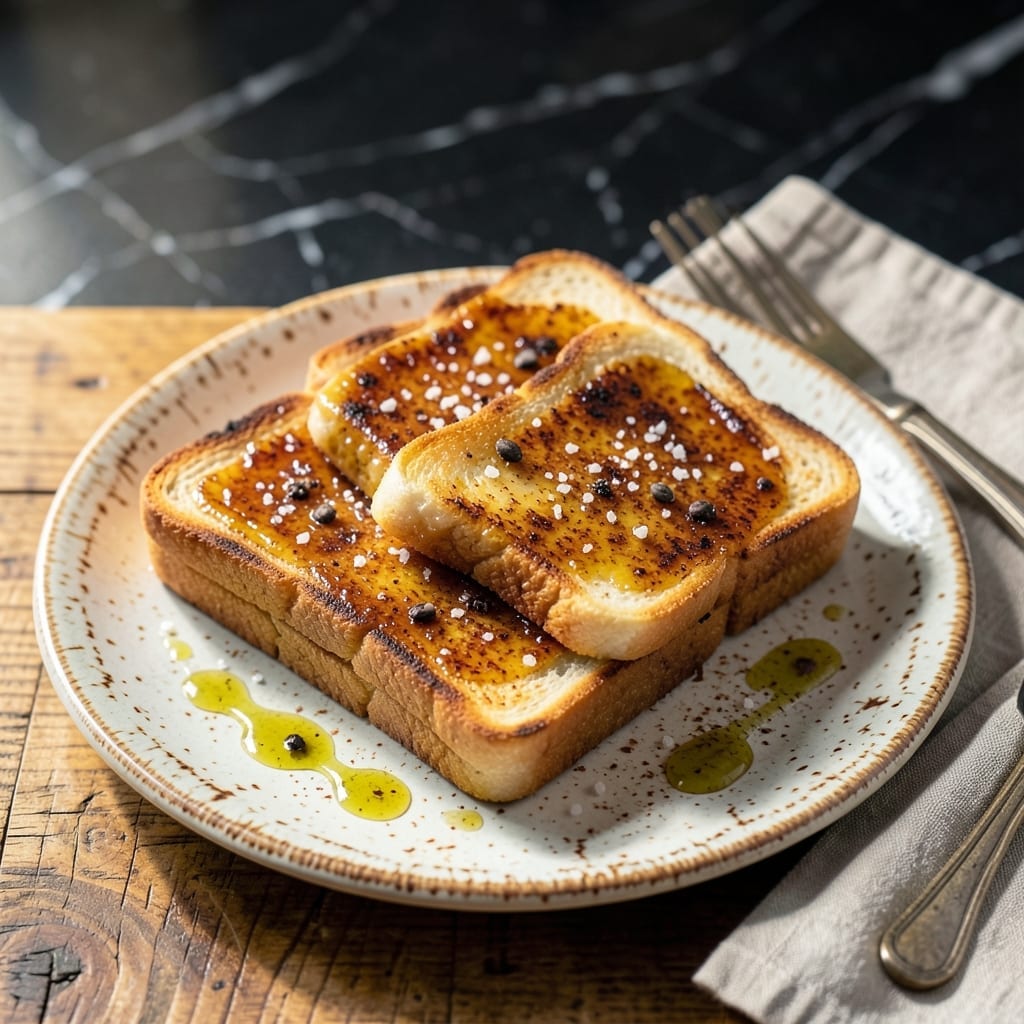
This sugar toast delivers buttery, caramelized perfection with minimal effort. I developed this method after one too many rushed breakfasts left me craving something sweet yet simple.
The technique is straightforward: toast the bread, butter it generously, then sprinkle with sugar. The heat transforms the sugar into a crisp, golden layer that shatters with every bite. It’s a foolproof way to elevate ordinary toast.
What you get is a treat with a delicate crunch and rich, buttery sweetness. The contrast between the crisp sugar and soft bread makes it irresistible. It’s the kind of dish that turns a quick snack into something special.
Use any bread you have on hand—white, sourdough, or brioche all work beautifully. Ready in 5 minutes or less, this recipe is a game-changer for busy mornings.
Ingredients for Sugar Toast
Six ingredients, five minutes, and your breakfast just got an upgrade.
| Ingredient | Amount | Notes |
|---|---|---|
| White Bread Slices 🍞 | 4 slices | Or sourdough, brioche preferred |
| Unsalted Butter 🧈 | 4 tbsp | Softened for easy spreading |
| Granulated Sugar 🥄 | ¼ cup | Fine grain for even caramelization |
| Cinnamon 🌿 | ½ tsp | Optional, for warmth |
| Vanilla Extract 💧 | ¼ tsp | Pure for best flavor |
| Sea Salt 🧂 | 0.125 tsp | Flaky for finishing touch |
[recipe_ingredient_scaler]
The bread is everything here. Brioche or sourdough (from a good bakery) gives you that perfect chew and crisp—avoid the pre-sliced sandwich loaf if you can. Butter needs to be soft enough to spread thickly but not melted (that’s a whole different recipe). I always use Plugra or Kerrygold for that extra-rich flavor—worth the splurge for a treat like this.
No granulated sugar? Caster sugar works even better (it’s finer, melts faster). Want more depth? Add a pinch of cinnamon or cardamom to the sugar before sprinkling. Vanilla extract is optional but adds that bakery-like aroma. If you’re feeling fancy, swap the granulated sugar for light brown sugar—it caramelizes faster and adds a molasses note.
Best eaten fresh (obviously), but if you must prep ahead, toast the bread and store it dry. Add butter and sugar right before serving. Keeps 2-3 days in an airtight container—though let’s be real, it’ll be gone in minutes.
Why You’ll Love This Recipe
- 5-Minute Magic: I can make this from start to finish while my coffee brews—just toast, butter, and a sprinkle of sugar and cinnamon.
- Sweet Nostalgia: That first bite with the warm, buttery crunch and vanilla-cinnamon kick takes me straight back to my grandma’s kitchen.
- Kid-Approved Snack: Honestly, it’s the only breakfast my picky 8-year-old will eat without a fight.
- Pantry Hero: I always have these five ingredients on hand, so it’s my go-to when the fridge is bare.
Step-by-Step Instructions for Sugar Toast
Here’s the method I use to get that perfect caramelized crunch every single time.
Step 1: Prepare the Bread and Butter Mixture
Start with the 4 slices White Bread Slices. I like to use day-old bread for this—it toasts up crispier than fresh. If you only have fresh bread, pop it in the toaster for 30 seconds first to dry it out slightly.
In a small bowl, combine the 4 tbsp Unsalted Butter, 0.25 cup Granulated Sugar, 0.5 tsp Cinnamon, and 0.25 tsp Vanilla Extract. Mix until it forms a smooth, spreadable paste. The butter should be softened but not melted—this ensures it spreads evenly without soaking the bread.
Step 2: Spread the Mixture Evenly
Spread the butter-sugar mixture generously over each slice of bread, going all the way to the edges. I use the back of a spoon for this—it helps press the mixture into all the nooks and crannies of the bread.
Make sure to cover every bit of the surface. The sugar needs to caramelize evenly, and bare spots will toast differently. Don’t be stingy; this is where all the flavor comes from.
Step 3: Toast to Caramelized Perfection
Place the coated bread slices in a preheated skillet over medium-low heat. Cook for 3-4 minutes per side until the sugar turns a deep golden brown and forms a crispy, caramelized crust.
Watch carefully—sugar burns quickly once it starts to caramelize. You want a rich, amber color, not black. If it’s browning too fast, lower the heat slightly. The smell should be sweet and toasty, not acrid.
Step 4: Finish with Sea Salt and Serve
As soon as the toast comes out of the pan, sprinkle each slice with a pinch of the 0.125 tsp Sea Salt. The salt enhances the sweetness and adds a little contrast that makes every bite more exciting.
Let the toast cool for 2 minutes before serving—the caramelized sugar will be extremely hot. Serve immediately while it’s still crispy. The contrast between the crunchy top and the soft, buttery bread underneath is what makes this so addictive.
Pro Tips For Making Sugar Toast
- Toast Lightly First: Butter the bread while it’s still warm from a quick toasting—about 30 seconds per side—so the sugar melts into a caramelized crust instead of burning.
- Use Room-Temp Butter: Softened unsalted butter spreads easier and blends into the sugar better than cold butter straight from the fridge.
- Skip the Clumps: Mix your sugar and cinnamon together first to avoid biting into a dry pocket of cinnamon or a bare patch of sugar.
- Add Vanilla Last: Drizzle the vanilla extract over the buttered, sugared toast right before serving so the alcohol cooks off slightly but the flavor stays bright.
Regional Styles of These Flavors
French Pain Perdu
In France, they transform this concept into pain perdu (“lost bread”), using stale baguette slices soaked in a custard of eggs, milk, and sugar before pan-frying. The result is a creamy interior with a crisp caramelized exterior. I love using a day-old baguette for that authentic texture. 🥖
Mexican Pan Dulce
This version takes inspiration from conchas and other Mexican sweet breads. After toasting, sprinkle with a mix of sugar and cinnamon while still warm. Some bakeries even add a touch of vanilla or anise to the sugar for extra depth.
Southern US Style
In the American South, they often use thick-cut Texas toast as the base, buttering both sides before dusting with sugar. The thicker bread holds up better to the generous butter and sugar, creating a more substantial treat that’s almost like a dessert grilled cheese. 💛
Japanese Shokupan
Using Japanese milk bread (shokupan) creates an ultra-soft, pillowy base that contrasts beautifully with the crisp sugar topping. I like to use a cast-iron skillet for even caramelization. The bread’s slight sweetness pairs perfectly with the sugar crust.
Scandinavian Cardamom
In Sweden, they might add ground cardamom to the sugar for a warm, aromatic twist. This spice is a staple in Scandinavian baking and adds a sophisticated note that elevates the dish. I use about ¼ tsp cardamom mixed into the ¼ cup sugar.
British Toast Rack
The British often enjoy this as a simple tea-time treat using a toast rack to keep the slices crisp. They might use demerara sugar for a coarser, more textured caramelization. Serve with a cup of strong Earl Grey tea for the full experience.
Nutrition Facts
Frequently Asked Questions
Can I use brown sugar instead of white?
Yes! Brown sugar caramelizes faster and adds a molasses note. Use the same amount but watch closely—it can burn in 2-3 minutes.
Why did my sugar turn black?
Your heat was too high. Use medium-low heat and cook for 3-4 minutes per side. Sugar burns quickly at high temperatures.
What bread works best?
Brioche or sourdough gives the best texture. Avoid very soft sandwich bread—it won’t hold up to the butter and sugar.
Can I make this ahead?
Best eaten fresh, but you can toast the bread and store it dry for 2-3 days. Add butter and sugar just before serving.

Trained in classic French technique but raised on slow-cooked ribs and spicy rubs, she blends culinary skill with smoke and soul.
- Meat Loaf Recipe With Beef And Pork: Homestyle Blend With Rich Gravy - October 3, 2026
- Hamburger Patty Recipe No Egg: Juicy Bind With Breadcrumbs and Milk - October 3, 2026
- Recipe for Oven Baked Halibut: Buttery White Fish with Zesty Lemon Topping - October 3, 2026