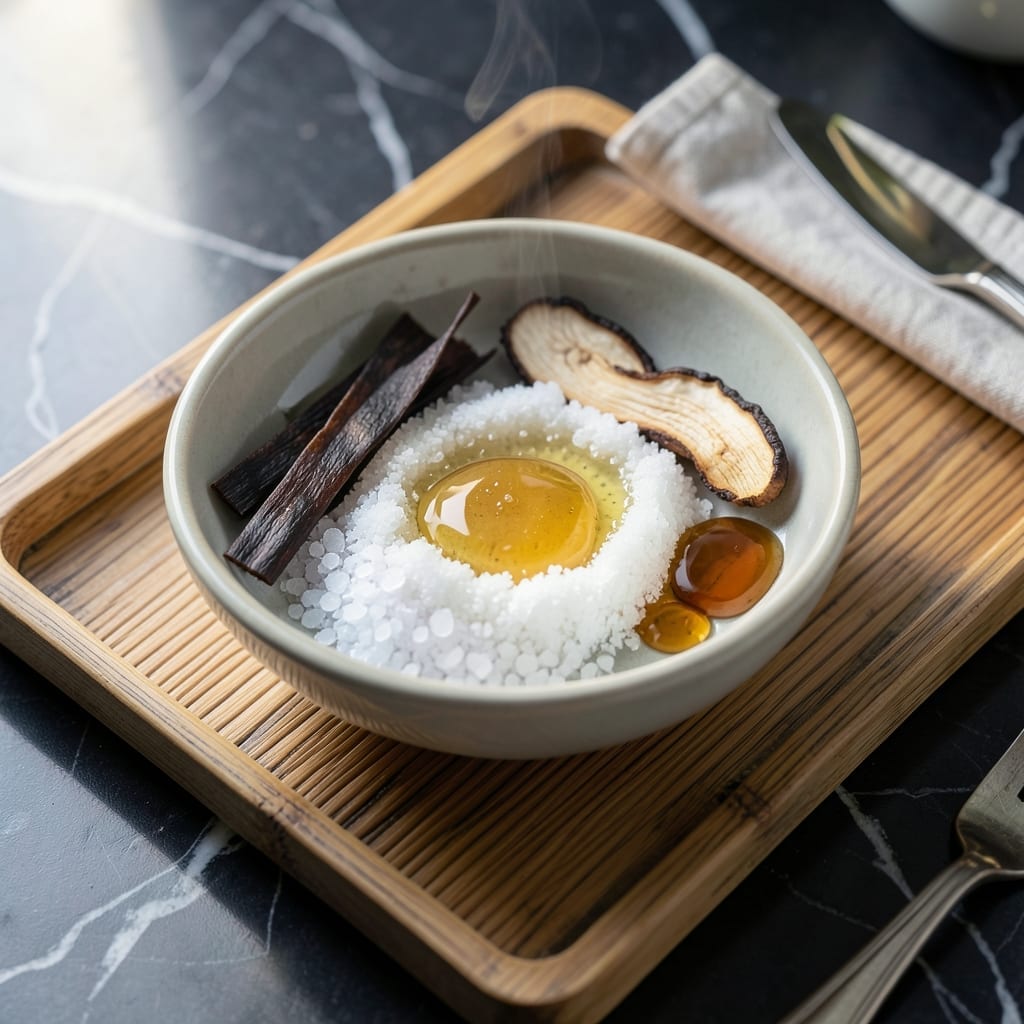
Achieving perfect sushi rice starts with the seasoning, and this authentic vinegar blend delivers restaurant-quality results every time.
The precise balance of rice vinegar, sugar, and salt transforms plain steamed rice into the foundation of exceptional sushi. This mixture enhances flavor without overpowering the delicate taste of the fish or vegetables.
I developed this ratio through years of testing to ensure the grains remain sticky yet distinct, with just the right hint of sweetness and acidity. The seasoning penetrates each grain evenly for consistent flavor.
Prepare this blend in advance and store it in an airtight container. It keeps well for months, ready to elevate your homemade sushi whenever inspiration strikes.
Ingredients for Sushi Rice Vinegar
Six ingredients transform plain rice into authentic Japanese sushi foundation with perfect grain balance.
| Ingredient | Amount | Notes |
|---|---|---|
| Rice Vinegar 🍚 | ¾ cup | Unseasoned Japanese rice vinegar |
| Granulated Sugar 🍬 | ¼ cup | Fine grain for easy dissolving |
| Sea Salt 🧂 | 1 ½ tsp | Fine grain preferred |
| Kombu 🌿 | 1 piece | 2-inch square for umami depth |
| Dried Shiitake Mushrooms 🍄 | 2 pieces | For optional subtle earthiness |
| Mirin 🍶 | 2 tbsp | Sweet rice wine for balance |
[recipe_ingredient_scaler]
The rice vinegar is non-negotiable—look for unseasoned Japanese rice vinegar (Marukan or Kikkoman brands are reliable). Kombu and shiitake are optional but add that restaurant-quality umami the intro promises. I grab mine from H-Mart or the Asian aisle at Whole Foods. The sugar dissolves faster if it’s super-fine, but regular granulated works too (just stir longer).
No mirin? 1 tbsp sugar + 1 tbsp water gets you close. Skip the kombu? A pinch of MSG mimics the depth. For a quicker version, seasoned rice vinegar (like Marukan Seasoned) works, but you’ll sacrifice control over sweetness and salt. The shiitake can be omitted entirely—just add a splash more mirin for complexity.
This blend keeps 6-12 months in a sealed jar at room temperature. The flavors meld after 24 hours, so make it ahead. I always double the batch—sushi nights happen more often than you think (worth the extra minute).
Why You’ll Love This Recipe
- 5-Minute Mix: Five ingredients, one saucepan, and I’m done before the rice finishes cooking.
- Umami Bomb: The kombu and shiitake steep a deep, salty-sweet flavor that beats any store-bought seasoning.
- Meal-Prep Magic: I batch it Sunday and use it all week for sushi, grain bowls, or quick vinegar dips.
- Pantry Hero: Rice vinegar, sugar, salt—things I always have—plus kombu and shiitake that last for months.
Step-by-Step Instructions for Sushi Rice Vinegar
Here’s the method I use to create an authentic, perfectly balanced seasoning every time.
Step 1: Combine the Base Liquids
In a small saucepan, pour in the 0.75 cup Rice Vinegar and 2 tbsp Mirin. I always use unseasoned Japanese rice vinegar for this—it has the clean, mild acidity that defines authentic sushi rice flavor. The mirin adds a subtle sweetness that balances the vinegar’s tang.
Set the saucepan over medium heat and warm the mixture for 1-2 minutes until you see tiny bubbles form around the edges. You don’t want to boil it vigorously, just warm it enough to help dissolve the other ingredients evenly.
Step 2: Dissolve the Sugar and Salt
Add the 0.25 cup Granulated Sugar to the warm vinegar mixture. I use fine grain sugar because it dissolves more quickly and evenly, giving you a smooth, consistent seasoning without any gritty texture. Stir constantly until the sugar is completely dissolved—this should take about 1-2 minutes.
Next, sprinkle in the 1.5 tsp Sea Salt. Fine grain sea salt is ideal here as it incorporates seamlessly into the liquid. Continue stirring until the salt is fully dissolved. You’ll notice the mixture becomes slightly cloudy at first, then clears as everything combines.
Step 3: Infuse with Umami Depth
Reduce the heat to low and add the 1 piece Kombu. This 2-inch square of dried kelp will infuse the mixture with a subtle oceanic umami that’s essential to authentic sushi rice flavor. Let it steep for 5 minutes—just enough time to extract the flavor without making the mixture bitter.
For an extra layer of complexity, add the 2 pieces Dried Shiitake Mushrooms. These contribute a gentle earthiness that complements the kombu beautifully. The mushrooms will plump slightly as they rehydrate, releasing their rich, savory notes into the vinegar mixture.
Step 4: Cool and Strain
Remove the saucepan from heat and let the mixture cool to room temperature, about 20-30 minutes. As it cools, the flavors will meld together, creating that perfect harmony of sweet, salty, and tangy that defines great sushi rice seasoning.
Once cooled, strain the mixture through a fine-mesh sieve into a clean jar or bowl. Press gently on the kombu and mushrooms to extract all the flavorful liquid, then discard the solids. Your seasoning should be clear with a beautiful balance of flavors—ready to transform plain rice into restaurant-quality sushi rice.
Pro Tips For Making Sushi Rice Vinegar
- Dissolve Sugar First: Mix the sugar into the warm rice vinegar before adding salt—this prevents grainy texture in your finished seasoning. I learned this the hard way after finding undissolved sugar crystals in my rice.
- Bloom the Kombu: Gently heat the kombu in the vinegar mixture for 10 minutes, then remove it before adding other ingredients. This extracts umami without bitterness.
- Skip the Boil: Never boil the vinegar mixture—it drives off the delicate acidity. Keep it just warm enough to dissolve the sugar, about 140°F.
- Strain the Shiitake: If using dried shiitake, steep them in warm vinegar for 30 minutes, then strain out the solids. This gives deep mushroom flavor without chewy bits in your seasoning.
Perfect Pairings for This sushi rice vinegar
Sushi Pairings
This seasoning transforms plain rice into the perfect base for nigiri or maki rolls. I love pairing it with fresh salmon or tuna for classic sushi. The delicate balance of flavors lets the fish shine while providing that signature sticky texture.
Complementary Sides
Serve with pickled ginger and wasabi for the traditional experience. A simple cucumber salad with sesame dressing adds freshness. I also recommend edamame sprinkled with sea salt for a light, protein-rich side. 🥢
Beverage Matches
Green tea is the classic pairing—its grassy notes complement the rice beautifully. For beer lovers, a crisp Sapporo or Asahi cuts through the richness. I prefer a cold sake like Gekkeikan Horin for special occasions.
Fusion Ideas
Use this rice in poke bowls with avocado, mango, and sesame seeds. It also works wonders in onigiri stuffed with tuna mayo or pickled plum. For a twist, try it in sushi burritos with tempura shrimp.
Dessert Pairing
Finish your meal with mochi ice cream or matcha cookies. The subtle sweetness of the rice vinegar blend transitions beautifully to these treats. I always keep My/Mo Mochi in my freezer for this reason. 🍡
Nutrition Facts
Frequently Asked Questions
Can I substitute apple cider vinegar?
No, apple cider vinegar has a stronger flavor that can overpower the delicate sushi rice. Stick with Japanese rice vinegar for authentic results.
How long does the seasoning last?
Stored in an airtight container at room temperature, it stays fresh for 6-12 months. The flavors meld after 24 hours.
Can I use regular table salt?
Yes, but fine sea salt dissolves better. If using table salt, reduce to 1 tsp as it’s denser. Stir well to avoid grittiness.
What if my mixture is too sweet?
Balance it with a splash more rice vinegar or a pinch of salt. Taste as you go—authentic sushi rice should be subtly sweet, not dessert-like.

Trained in classic French technique but raised on slow-cooked ribs and spicy rubs, she blends culinary skill with smoke and soul.
- Recipe for Boneless Pork Chops in Cast Iron Skillet: Sear and Baste to Juicy Perfection - October 3, 2026
- Recipe for Boneless Cross Rib Roast: Slow-Roasted Beef with Herb Crust - October 3, 2026
- Hamburgers in Sauce Recipe Crock Pot: Slow-Cooked Savory Delight - October 3, 2026