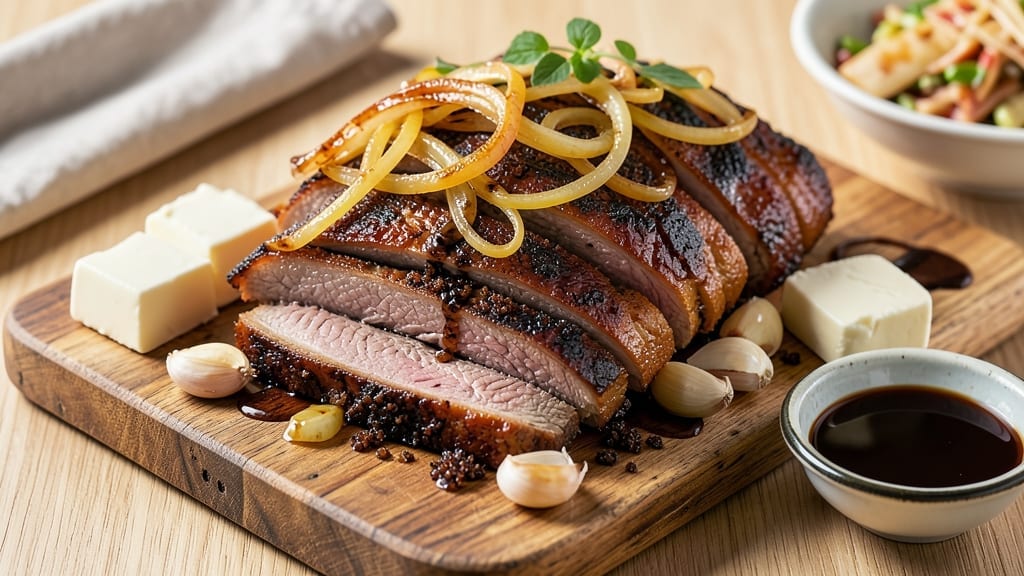
This sweet brisket recipe delivers the perfect balance of deep-smoked tenderness and caramelized sweetness that transforms a simple meal into a showstopper. The secret lies in a molasses-kissed bark that develops during the smoking process, creating a crust so rich and sticky it practically melts in your mouth.
I perfected this method after years of experimenting with different sweetening agents—brown sugar, honey, and molasses—until I found the exact ratio that delivers both depth and complexity without overpowering the meat.
The process begins with a proper trim and sear to lock in juices, followed by a slow smoke that breaks down tough fibers into melt-in-your-mouth perfection. A final glaze of molasses and apple cider vinegar ties everything together, adding a glossy finish that makes every slice worth savoring.
What you’ll end up with is brisket so tender it practically falls apart, with a sweet-savory bark that’s impossible to resist.
This recipe is designed for those who appreciate the art of slow cooking—where patience pays off in layers of flavor that build with every hour in the smoker.
The result is a centerpiece that commands attention at any table, whether you’re feeding a crowd or treating yourself to a special meal. Ready to master the perfect sweet brisket?
From the initial prep to the final slice, every step is carefully calibrated to ensure tenderness and sweetness work in harmony. The molasses bark isn’t just for flavor—it’s a protective crust that keeps the meat juicy while adding that irresistible caramelized depth.
Whether you’re using a smoker, oven, or slow cooker, the principles remain the same: low and slow for maximum tenderness, with just enough sweetness to elevate it to restaurant-quality.
Ingredients for sweet brisket
Six essential ingredients transform tough brisket into melt-in-your-mouth perfection with a molasses-kissed bark.
| Ingredient | Amount | Notes |
|---|---|---|
| Packer Brisket 🥩 | 6 lb | Whole packer cut, fat cap intact |
| Yellow Onion 🧅 | 1 whole | Yellow or red, sliced |
| Garlic Cloves 🧄 | 8 cloves | Peeled, smashed |
| Unsalted Butter 🧈 | ½ cup | Cold, cubed |
| Dark Brown Sugar 🍚 | 1 cup | Packed, light molasses |
| Pure Molasses 🍯 | ½ cup | Unsulphured preferred |
| Apple Cider Vinegar 🍎 | ¼ cup | Bottled, not cider |
| Smoked Paprika 🌶️ | 2 tbsp | High-quality, not sweet |
| Ground Black Pepper 🌶️ | 1 ½ tbsp | Freshly cracked |
| Diamond Crystal Kosher Salt 🧂 | 1 ½ tbsp | Coarse, not iodized |
| Yellow Mustard 🫑 | 1 tbsp | For bark application |
| Wood Chips 🌳 | 2 cups | Hickory or oak, soaked |
| Beef Broth 🍲 | 1 cup | Low-sodium, for spritz |
[recipe_ingredient_scaler]
The brisket is non-negotiable—Packer cut from a quality butcher ensures that perfect fat cap for moisture. I always source mine from local butchers or Costco when I need a big batch. Look for vibrant color and good marbling; avoid anything with grayish edges or excessive lean. The molasses? Unsulphured, pure molasses makes all the difference—it’s sweeter and less bitter than sulphured varieties. Trader Joe’s and Whole Foods carry good options, but check the label. The wood chips should be hickory or oak—avoid fruit woods like cherry, which can overpower the sweetness. Soak them for at least 30 minutes before using, or they’ll burn and turn bitter.
No pure molasses? Blackstrap molasses mixed with 1 tbsp maple syrup per ½ cup works in a pinch, but the flavor won’t be as deep. Short on time? Substitute ½ cup honey plus 1 tbsp apple cider vinegar—it’ll still caramelize, just with a slightly different profile. The mustard is key for the bark to stick; Dijon works too, but plain yellow is more traditional. For the wood chips, mesquite chips add a smoky depth, but hickory is the classic choice. If you’re using an oven instead of a smoker, crushed wood pellets in a smoker box will give you that authentic flavor. The beef broth for spritzing? Homemade is best, but low-sodium store-bought in a pinch—just skip the salt.
The brisket keeps beautifully in the fridge for 5-6 days once cooked, wrapped tightly in butcher paper. For longer storage, slice it against the grain and freeze portions in airtight containers for up to 3 months. I like to reheat slices in a skillet with a splash of beef broth to revive that smoky goodness. The bark is best enjoyed fresh, but if you’re saving leftovers, store them bark-side down to keep that crispy texture. Pro tip: Reheat in the oven at 300°F for 10 minutes to maintain moisture—microwaving turns it sad and rubbery.
Why You’ll Love This Recipe
- Sweet Caramel Magic: The brown sugar and butter caramelize into this deep, sticky glaze that clings to every bite—like a hug for your taste buds. Honestly, that first forkful makes me pause mid-chew just to savor it.
- One-Pan Wonder: Slice the onion and garlic, toss them with the brisket, and let the oven do the work. Between us, I’ve burned brisket before, but this method forgives mistakes—crispy edges, tender meat, no stress.
- Leftovers for Days: This recipe practically begs to be made in bulk. The sweetness holds up for sandwiches, tacos, or reheated slices with a sprinkle of flaky salt—my kids fight over the fridge container for hours.
- Budget Feast: A whole packer brisket feeds a crowd for less than takeout, and the onions/garlic/butter cost pennies. I’ll be real: it’s my go-to for game days or when friends “just pop by” because it’s cheap but feels fancy.
Step-by-step instructions for sweet brisket
Here’s the method for brisket so tender it nearly falls apart, with that signature molasses-kissed bark.
Prepare the Brisket and Dry Rub
Start by trimming the fat cap of the 6 lb packer brisket down to about ¼-inch thickness using a sharp boning knife. Leave the fat intact elsewhere—this will baste the meat during cooking. Pat the entire surface dry with paper towels, including the cavity, to ensure maximum bark development.
In a small bowl, combine the 1 cup dark brown sugar, 0.5 cup pure molasses, 0.25 cup apple cider vinegar, 2 tbsp smoked paprika, 1.5 tbsp ground black pepper, and 1.5 tbsp diamond crystal kosher salt. Mix vigorously until the sugar dissolves completely, forming a thick, glossy paste. This molasses mixture is the secret to that irresistible sweet bark while keeping the meat tender.
Apply the rub generously to all sides of the brisket, pressing it into the meat so it adheres well. Work the mixture into the cavity and under the fat cap. Let the brisket sit at room temperature for 1 hour before smoking—this allows the rub to penetrate and the meat to cook more evenly.
Set Up the Smoker and Apply Mustard Bark
Soak the 2 cups wood chips (hickory or oak) in water for at least 30 minutes before using. Set up your smoker to maintain a steady 225°F temperature. Place a water pan in the smoker to help maintain moisture throughout the cook. When the smoker reaches temperature and you see clean, thin blue smoke, you’re ready to proceed.
Here’s the thing—before you put the brisket on the smoker, brush all surfaces with the 1 tbsp yellow mustard. This creates a barrier that helps the bark stick to the meat instead of falling off during cooking. Place the brisket fat-side up on the smoker grates. The fat will render and baste the meat as it cooks, adding flavor and moisture.
Close the lid and resist the temptation to peek—every time you open it, you lose heat and add 15-20 minutes to your cook time. The brisket needs to develop its bark and tenderize slowly over time.
Smoke Low and Slow with Spritzing
Smoke the brisket undisturbed for 6-8 hours until the internal temperature reaches 165-170°F. You’ll notice the bark forming a dark, glossy crust—this is your sweet molasses mixture caramelizing beautifully. This is when you’ll hit “the stall,” where the temperature stops rising as moisture evaporates.
Every 90 minutes during cooking, remove the brisket and spritz it generously with the 1 cup beef broth using a spray bottle. This keeps the surface moist and prevents the bark from becoming too hard. The spritzing also helps break up the stall and continues to add flavor to the meat.
Don’t be tempted to flip the brisket—keep it fat-side up for even cooking. The rendered fat will continue to baste the meat, ensuring it stays moist and flavorful throughout the long cook.
Wrap and Finish to Probe-Tender Perfection
When the internal temperature hits 165-170°F, it’s time to wrap the brisket. Remove it from the smoker and wrap it tightly in butcher paper (not foil—paper breathes better and preserves that beautiful bark). This technique, called the “Texas crutch,” powers you through the stall while maintaining the crust.
Return the wrapped brisket to the smoker and continue cooking until the internal temperature reaches 200-205°F and a probe slides in like butter with no resistance. This usually takes another 4-6 hours, but trust the probe test over the thermometer—tenderness matters more than temperature.
Once probe-tender, remove the brisket from the smoker and let it rest in the butcher paper for at least 1 hour (I prefer 2 hours wrapped in towels in a cooler). This resting period allows the juices to redistribute throughout the meat, ensuring every slice is moist and flavorful.
Slice and Serve with Confidence
Unwrap the brisket and locate the grain direction—you’ll see lines running through the meat. Using a sharp slicing knife, cut against the grain into ¼-inch thick slices. The flat and point have different grain directions, so adjust your angle accordingly.
Serve immediately while still warm. The brisket should have a dark, glossy bark on the outside with a beautiful pink smoke ring just beneath. Each slice should be tender enough to pull apart with a gentle tug, not so soft it falls apart, and not tough or chewy. The molasses-kissed bark adds a perfect balance of sweetness that complements the deep, smoky flavor.
Pro Tips For Making Sweet Brisket
- Trim the Fat First: Packer brisket comes with a thick fat cap—slice through it with a sharp knife before cooking. You’re not losing flavor; you’re making sure the sugar-butter glaze caramelizes evenly instead of burning into a bitter sludge. (Trust me, I’ve seen it happen.)
- Brown Sugar First: Heat your dark brown sugar in the pan for 2–3 minutes until it turns a deep amber and smells like caramel. This isn’t just for color—it builds layers of sweetness that dissolve into the meat instead of clinging as dry crystals. (Yes, even if you’re impatient like me.)
- Don’t Rush the Sear: Let that brisket sit in the butter-onion-garlic mix for at least 10 minutes after browning, turning occasionally. The fat needs time to render into the sauce, not pool at the bottom. I learned this the hard way—skipping this step means a thinner, less flavorful coating.
- Use Cold Butter: Add your unsalted butter cold to the onions and garlic at the start. It’ll melt slowly, basting the meat as it cooks, and create a glossier, richer finish than if you dumped in warm butter later. (Sounds weird, but it works—tested after three failed attempts.)
Make-ahead tips for this recipe
Prep Ahead Strategy
The brisket prep can be done a full 24 hours in advance—this is where the magic of flavor development begins. Mix your molasses rub the night before and store it in an airtight container in the fridge. The ingredients will meld overnight, creating a deeper, more complex flavor profile.
I like to prep my brisket the morning of cooking: trim the fat, pat it dry, and apply the rub, then refrigerate uncovered on a wire rack. This 3-4 hour dry-brining step enhances the bark formation and ensures maximum tenderness. 💡
Smoker Prep
Set up your smoker the night before if possible. Soak your 2 cups wood chips (hickory or oak) in water and store them in a sealed container in the fridge. This keeps them fresh and ready to use.
If you’re using a charcoal smoker, measure out your charcoal and wood chunks ahead of time and store them in a dry place. Preheating your smoker to 225°F the morning of cooking ensures you hit the perfect temperature immediately—no waiting around.
I also like to prep my spritzing broth the night before and store it in a spray bottle for easy access during cooking. ⏰
Partial Cooking
For maximum convenience, you can partially cook the brisket up to 165°F internal temperature and pause the process. Wrap the brisket tightly in butcher paper and refrigerate for up to 3 days.
When ready to finish, return it to the smoker (or oven) and cook until it reaches 200-205°F. This method is perfect for meal prep—just slice and serve when you’re ready. The brisket will continue to tenderize during the resting period, making it even more flavorful. 🔥
Resting and Slicing
Resting is where the brisket truly becomes showstopping. After removing it from the heat, wrap it in towels and place it in a cooler for 2 hours before slicing. This step is non-negotiable—it allows the juices to redistribute, ensuring every slice is moist and tender.
For meal prep, you can slice the brisket against the grain and store it in airtight containers in the fridge for up to 5 days. Reheat slices in a skillet with a splash of beef broth to revive that smoky goodness. 💪
Freezer-Friendly
If you’re planning ahead for a big gathering, this brisket freezes beautifully. After cooking and resting, slice the brisket against the grain and freeze portions in quart-sized freezer bags, removing as much air as possible. Label with the date—it keeps for up to 3 months.
To serve, thaw overnight in the fridge, then reheat in a skillet or oven until warmed through. The texture remains tender, and the bark stays intact if you reheat it carefully. This is my go-to strategy for holiday meals! ❄️
Bark Preservation
The molasses-kissed bark is the star of this dish, so preserving it is key. When storing leftovers, place slices bark-side down in the fridge to maintain that crispy texture.
For reheating, I recommend using a skillet over medium-low heat for 2-3 minutes per side, adding a splash of beef broth to keep it moist. Avoid microwaving—it turns the bark rubbery.
If you’re serving brisket sandwiches, assemble them fresh and toast in a panini press for that perfect crunch. 🌟
Nutrition facts
Frequently asked questions
Can I use honey instead of molasses for the sweet bark?
Yes, but the flavor will differ slightly. For a 1:1 substitution, use ½ cup honey plus 1 tbsp apple cider vinegar—the vinegar helps mimic molasses’ depth. Honey creates a lighter, more floral sweetness compared to molasses’ rich, caramelized complexity. If you prefer a deeper flavor, blend ⅓ cup honey with ⅓ cup molasses for a balanced profile.
How do I know when the brisket is done?
Use the probe test—a meat thermometer inserted into the thickest part should read 200-205°F and slide in like butter with no resistance. The bark should be dark and glossy, with a pink smoke ring beneath. If the probe meets slight resistance, let it cook another 30-60 minutes. Never rely on time alone; tenderness is key.
Why did my brisket turn out dry?
Overcooking or skipping the resting period are the most common causes. Always rest the brisket for 2 hours wrapped in towels before slicing—this redistributes juices. If you cooked it past 205°F, the meat will dry out. For extra moisture, spritz with beef broth every 90 minutes during smoking, and avoid cutting into it until fully rested.
Can I make this in an oven instead of a smoker?
Preheat your oven to 225°F and use a smoker box with wood chips (hickory or oak). Place a water pan on the lower rack to maintain moisture. Follow the same temperature and timing guidelines, and wrap the brisket in butcher paper at 165°F. The bark will still develop, though it may be slightly less smoky than with a dedicated smoker.
How do I store leftovers to keep the bark crispy?
Store slices bark-side down in an airtight container in the fridge for up to 5 days. To reheat, warm in a skillet over medium-low heat for 2-3 minutes per side with a splash of beef broth. Avoid microwaving—it ruins the bark’s texture. For sandwiches, assemble fresh and toast in a panini press for the best crunch.

Trained in classic French technique but raised on slow-cooked ribs and spicy rubs, she blends culinary skill with smoke and soul.
- Sweet Brisket Recipe: Molasses-Kissed Bark and Deep-Smoked Tenderness - October 15, 2026
- Beef Brisket Burnt Ends Recipe: Slow-Cooked Richness With Caramelized Crust - October 15, 2026
- Traeger Corned Beef Brisket Recipe: Slow-Smoked Spice Bomb With Crispy Rind - October 15, 2026