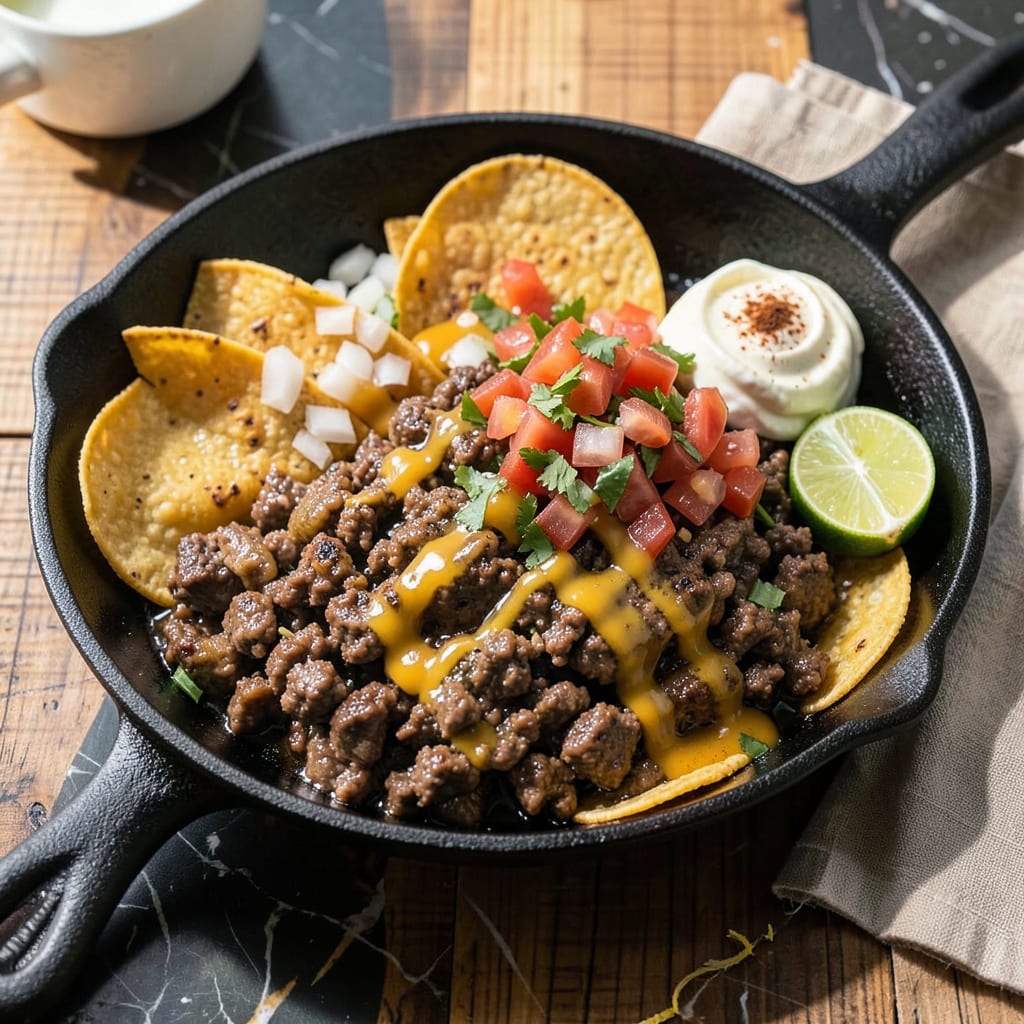
Taco John’s signature meat uses ground beef seasoned with a blend of chili powder, cumin, garlic powder, paprika, and masa harina for texture. Brown the beef, drain fat, then simmer with spices and water for 15-20 minutes.
This isn’t just about throwing spices together—it’s about balancing bold flavors with the right technique. The masa harina acts like a secret weapon, giving that signature thickness while the cumin and chili powder create layers of warmth. 🔥 I’ve tested countless ratios, and the key is letting the spices bloom in the fat before adding liquid. That’s when the magic happens—transforming ordinary ground beef into something that tastes straight from the restaurant.
What most home cooks miss is the simmering stage. The 15-20 minutes isn’t just cooking time—it’s when the flavors meld and the masa harina absorbs moisture, creating that unmistakable texture. ✨ Pro tip: Use a heavy skillet for even heat distribution, and don’t skip draining the fat—it prevents a greasy finish.
💡 In This Article
- Secrets Behind Taco John’s Meat Seasoning Blend
- Step-by-Step Guide to Recreating Taco John’s Meat at Home
Secrets Behind Taco John’s Meat Seasoning Blend
The magic starts with chili powder—not just for heat, but for its complex flavor profile. This blend typically contains ground chilies, oregano, and sometimes cocoa, which adds subtle bitterness that balances the richness of the beef. When heated in fat, the capsaicin compounds in chili powder become more soluble, releasing their full flavor potential.
That’s why browning the beef first is critical—it creates the fat medium needed for proper spice extraction.
Cumin brings the earthy backbone, but here’s the science: Its volatile oils (like cuminaldehyde) activate when toasted. In Taco John’s blend, the cumin is likely added during the browning stage to maximize this effect. 🔥 The ratio matters too—about 1 teaspoon per pound of beef gives that distinctive warmth without overpowering.
Paprika contributes more than color; its sweet, smoky notes come from dried red peppers that caramelize slightly during cooking.
Now for the game-changer: masa harina. This corn flour does double duty—thickening the meat mixture while adding a subtle corn flavor that’s unmistakably Taco John’s. The starch granules in masa absorb liquid as they cook, swelling to create that signature clingy texture.
I’ve found 1 tablespoon per pound of beef hits the perfect balance between thickness and authenticity.
The garlic powder might seem basic, but it’s strategic. Unlike fresh garlic, powder disperses evenly and won’t burn during the high-heat browning stage. Its sulfur compounds (like allicin) mellow as they cook, leaving behind a sweet, aromatic base.
The key is adding it with the other spices during the bloom stage—this lets the flavors marry before liquid is introduced.
Here’s what most copycats miss: the bloom time. Those 2-3 minutes of cooking spices in beef fat before adding water isn’t just tradition—it’s chemistry. Heat transforms the spices’ essential oils into more complex compounds. The result? A depth of flavor that instant seasoning packets can’t replicate. ✨
Water might seem like an afterthought, but the amount matters. Too little and the masa won’t activate; too much and you’ll dilute the flavors. Taco John’s likely uses about 1/2 cup per pound of beef—enough to create steam that helps distribute spices evenly while the masa works its thickening magic.
The simmering stage is when everything comes together, with the liquid reducing just enough to concentrate flavors without drying out the meat.
Pro tip: If you’re at high altitude, reduce the water by 1-2 tablespoons. The lower boiling point means faster evaporation, so you’ll need less liquid to achieve the same texture. And always taste before serving—the flavors deepen as the mixture rests off heat. 💫

Trained in classic French technique but raised on slow-cooked ribs and spicy rubs, she blends culinary skill with smoke and soul.
- Recipe for Boneless Pork Chops in Cast Iron Skillet: Sear and Baste to Juicy Perfection - October 3, 2026
- Recipe for Boneless Cross Rib Roast: Slow-Roasted Beef with Herb Crust - October 3, 2026
- Hamburgers in Sauce Recipe Crock Pot: Slow-Cooked Savory Delight - October 3, 2026