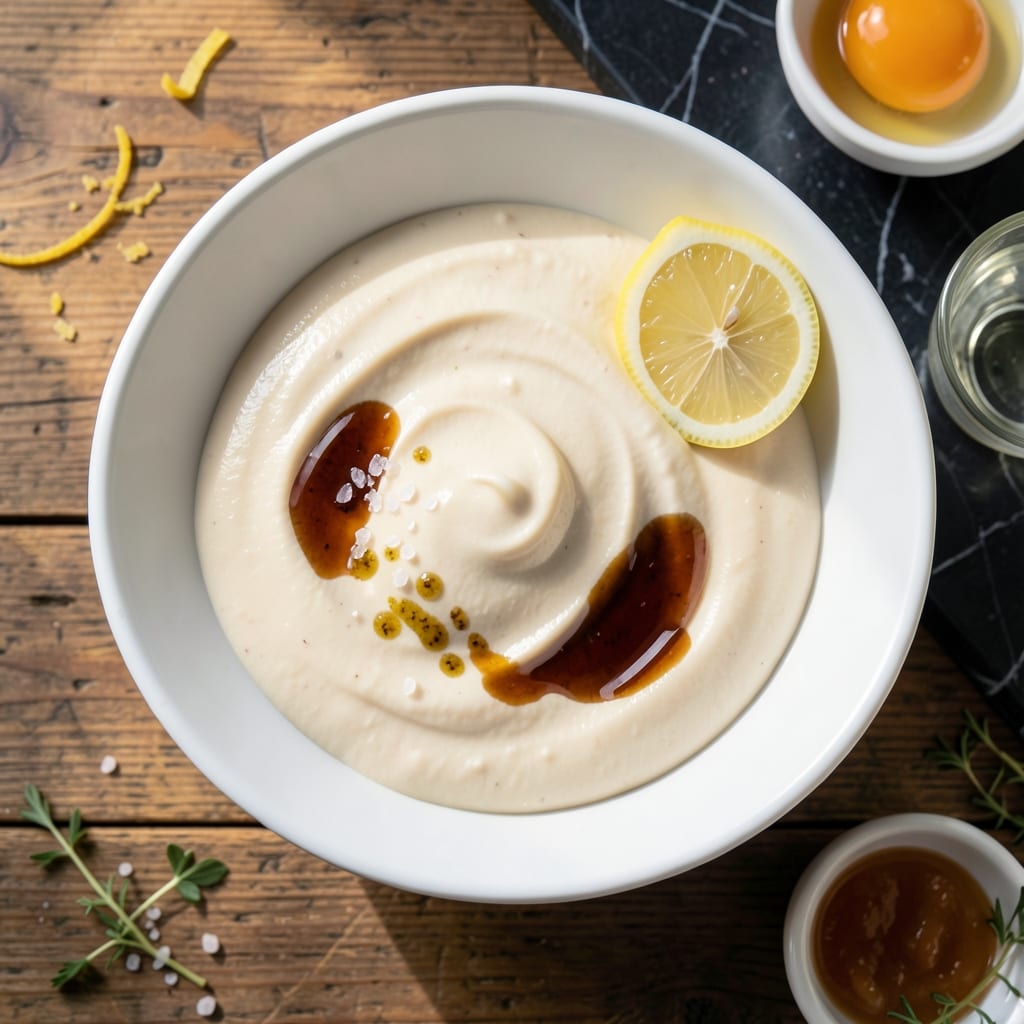
Homemade mayonnaise reaches new heights with this tallow-based version that delivers unmatched richness and depth. I’ve tested countless variations to perfect the emulsification process, ensuring a velvety texture every time.
Using rendered beef tallow instead of neutral oils creates a mayonnaise with a subtle savory note and luxurious mouthfeel. The key is temperature control—both ingredients must be at room temperature for the emulsion to hold properly.
This condiment transforms sandwiches, dresses up vegetables, and elevates grilled meats with its creamy, decadent profile. It keeps for up to two weeks in the refrigerator, giving you a gourmet touch on hand.
No special equipment is required, just patience and a steady hand for whisking. The result is a mayonnaise that stands apart from store-bought versions.
Ingredients for Tallow Mayo
Eight ingredients transform into this luxurious, emulsified condiment with unparalleled depth and richness.
| Ingredient | Amount | Notes |
|---|---|---|
| Rendered Beef Tallow 🥩 | ¾ cup | Room temperature, liquid state |
| Large Egg Yolks 🥚 | 2 whole | Room temperature, pasteurized recommended |
| Dijon Mustard 🟡 | 1 tbsp | High-quality for emulsification |
| White Wine Vinegar 💧 | 1 tbsp | Or substitute apple cider vinegar |
| Lemon Juice 🍋 | 1 tbsp | Freshly squeezed preferred |
| Fine Sea Salt 🧂 | ½ tsp | Adjust to taste |
| Freshly Ground White Pepper 🌶️ | ¼ tsp | Subtle flavor preferred |
| Water 💧 | 1 tsp | Room temperature, as needed |
[recipe_ingredient_scaler]
The rendered beef tallow is non-negotiable for that signature savory depth. Source from a trusted butcher or render your own from beef fat—Epic Provisions offers high-quality pre-rendered options. Ensure it’s completely liquid at room temperature before beginning. Temperature control is critical; both tallow and egg yolks must be at room temperature to achieve proper emulsification. Avoid pre-rendered tallow with added preservatives, as they can affect texture.
No beef tallow? The flavor profile changes entirely, but avocado oil or light olive oil can substitute in a pinch (though the richness won’t be the same). For a tangier mayo, increase the lemon juice to 1.5 tbsp. If using whole eggs, reduce to one egg total to maintain balance. Pasture-raised egg yolks yield a deeper yellow color and richer flavor, but standard eggs work fine. The Dijon mustard acts as the primary emulsifier—do not omit.
Store in an airtight glass jar in the refrigerator for up to 2 weeks. The emulsion may separate slightly over time—simply whisk to reincorporate. If the mayo tastes too sharp, let it sit for 24 hours to mellow. Not suitable for freezing, as it will break the emulsion.
Why You’ll Love This Recipe
- 5-Minute Whip: It’s just egg yolks, tallow, and a splash of vinegar—blend and done.
- Rich & Tangy: The beef tallow gives it a deep, savory richness that store-bought can’t touch. A squeeze of lemon keeps it bright.
- Sandwich Superhero: I slather it on burgers, fry bread, even roasted veggies—this mayo plays well with everything.
- Stays Fresh: Honestly, it keeps in the fridge for over a week without separating. One batch covers my whole meal prep.
Step-by-Step Instructions for Tallow Mayo
Master this emulsification process for a rich, velvety condiment with superior depth of flavor.
Step 1: Prepare the Base Emulsion
Ensure the 0.75 cup Rendered Beef Tallow is at room temperature and fully liquid. In a medium bowl, whisk together the 2 whole Large Egg Yolks, 1 tbsp Dijon Mustard, 1 tbsp White Wine Vinegar, and 1 tbsp Lemon Juice until smooth and slightly thickened.
The mustard acts as an emulsifier, while the acids from the vinegar and lemon juice help stabilize the mixture. This base should look pale yellow and slightly frothy—this indicates proper initial emulsification before adding the fat.
Step 2: Begin the Slow Fat Incorporation
With the whisk in one hand and the bowl steady in the other, start adding the 0.75 cup Rendered Beef Tallow in a very slow, thin stream. Begin with just a few drops at a time, whisking constantly until the mixture starts to thicken and lighten in color.
This initial stage is critical—adding the fat too quickly will break the emulsion. You’ll notice the mixture transform from a thin liquid to a creamy, pale consistency as the fat begins to incorporate. Maintain patience; this process should take 3-4 minutes of continuous whisking.
Step 3: Gradually Increase the Fat Stream
Once the mixture has visibly thickened and the first portion of tallow is fully emulsified, you can increase the stream to a thin, steady pour. Continue whisking vigorously, ensuring the fat is fully incorporated before adding more.
If at any point the mixture looks shiny or separated, stop adding tallow and whisk aggressively until it re-emulsifies. The color should remain consistently pale and creamy. This step requires focus—distractions can lead to a broken emulsion.
Step 4: Season and Adjust Consistency
After all the 0.75 cup Rendered Beef Tallow has been incorporated, whisk in the 0.5 tsp Fine Sea Salt and 0.25 tsp Freshly Ground White Pepper. Taste and adjust seasoning as needed—remember that flavors will intensify slightly as the mayo rests.
If the mixture is too thick, whisk in the 1 tsp Water, one drop at a time, until it reaches your desired consistency. The final product should be smooth, glossy, and hold its shape briefly when a spoon is dipped in. Transfer to a jar and refrigerate for at least 1 hour before use to allow flavors to meld.
Pro Tips For Making Tallow Mayo
- Temper Your Tallow: Let your rendered beef tallow cool to just above room temperature—around 100°F—before mixing. I learned this the hard way when my first batch split because the tallow was too hot and cooked the yolks.
- Use Room-Temp Yolks: Take your egg yolks out of the fridge 30 minutes before starting. Cold yolks resist emulsifying with the tallow, and you’ll spend forever whisking with half the results.
- Skip the Drizzle: Resist the urge to slowly drizzle the tallow like with olive oil mayo. Beef tallow is stable enough to handle a thin, steady pour—it actually emulsifies faster this way.
- Add Acid Last: Hold off on the white wine vinegar and lemon juice until the mayo has fully emulsified. Adding them too early can break the mixture, and I’ve ruined more than one batch by getting impatient here.
Regional Styles of This tallow mayo
Texas-Style Bold
In Texas, this creation gets a smoky kick with 1 tsp smoked paprika or ½ tsp chipotle powder added to the base emulsion. I learned this trick from a pitmaster friend who swears by the depth it adds to his brisket sandwiches. The warmth pairs perfectly with the tallow’s richness. 🔥
French Classic Approach
For a French twist, I substitute 1 tbsp tarragon vinegar for the white wine vinegar and add 1 tsp finely chopped fresh tarragon. This version shines with grilled chicken or as a base for a luxurious tuna salad. The herbaceous notes elevate the mayo to restaurant quality.
Southern Comfort
Down South, I’ve seen 1 tbsp hot sauce (like Crystal or Tabasco) whisked into the finished mayo. It adds a tangy heat that’s perfect for fried chicken sandwiches or as a dip for hushpuppies. The vinegar in hot sauce complements the existing acids beautifully.
Mediterranean Fusion
For a Mediterranean flair, I fold in 1 tbsp chopped capers and 1 tsp lemon zest after emulsification. This bright, briny version is incredible with grilled lamb or as a spread for gyros. The capers add a salty pop that cuts through the richness.
Argentinian Chimichurri
In Argentina, they blend this with 2 tbsp finely chopped parsley, 1 tbsp minced garlic, and 1 tbsp red wine vinegar for a chimichurri-mayo fusion. It’s amazing on grilled meats and empanadas. I first tried this at a parrilla in Buenos Aires. 💫
Kitchen Sink Style
My personal favorite is a “kitchen sink” version with 1 tbsp grated Parmesan, 1 tsp horseradish, and ½ tsp garlic powder. This all-purpose condiment works on everything from burgers to roasted vegetables. It’s become my go-to for Sunday family dinners.
Nutrition Facts
Frequently Asked Questions
Why use tallow instead of oil?
Tallow adds a rich, savory depth that neutral oils can’t match. Its natural beef flavor creates a luxurious mouthfeel perfect for hearty dishes.
Can I use raw egg yolks?
Pasteurized eggs are recommended for safety, but fresh eggs work if very fresh. The acid in vinegar and lemon helps stabilize them.
How do I fix a broken emulsion?
Start with a new yolk in a clean bowl, then slowly whisk in the broken mixture. This re-establishes the emulsion base.
What’s the ideal storage method?
Keep in an airtight glass jar in the fridge for up to 2 weeks. Stir before using if separated.

Trained in classic French technique but raised on slow-cooked ribs and spicy rubs, she blends culinary skill with smoke and soul.
- Recipe for Boneless Pork Chops in Cast Iron Skillet: Sear and Baste to Juicy Perfection - October 3, 2026
- Recipe for Boneless Cross Rib Roast: Slow-Roasted Beef with Herb Crust - October 3, 2026
- Hamburgers in Sauce Recipe Crock Pot: Slow-Cooked Savory Delight - October 3, 2026