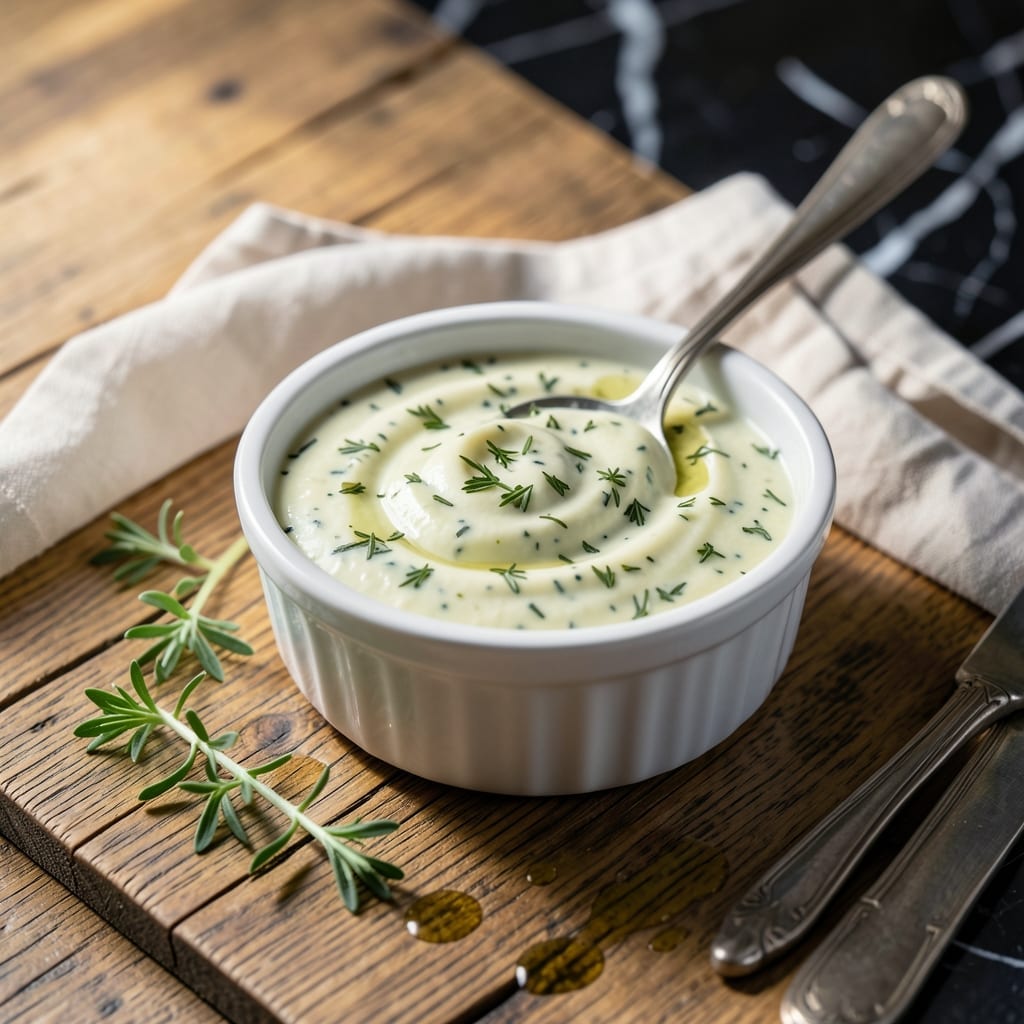
This tarragon mayonnaise transforms any dish with its fresh, herbaceous depth. I developed this recipe after realizing store-bought versions couldn’t match the vibrant flavor of homemade.
The secret lies in using fresh tarragon and a slow emulsification process. Unlike commercial mayonnaise, this version has no preservatives—just rich egg yolks, oil, and a touch of acidity to balance the herbs.
What you’ll get is a creamy, pale green condiment with a delicate anise-like aroma that elevates sandwiches, seafood, or vegetable platters. It keeps for up to a week in the fridge, giving you restaurant-quality flavor on demand.
Perfect for meal prep or last-minute entertaining. This is the kind of sauce that makes everything taste intentional.
Ingredients for Tarragon Mayonnaise
Eight ingredients create this vibrant, herb-infused condiment with restaurant-quality depth of flavor.
| Ingredient | Amount | Notes |
|---|---|---|
| Fresh Tarragon Leaves 🌿 | ¼ cup | Finely chopped, packed |
| Large Egg Yolks 🥚 | 2 whole | Room temperature preferred |
| Dijon Mustard 🟡 | 1 tsp | Smooth variety preferred |
| White Wine Vinegar 💧 | 1 tbsp | Or substitute lemon juice |
| Neutral-Flavor Oil 🫒 | 1 cup | Avocado or light olive oil |
| Salt 🧂 | ½ tsp | Fine sea salt preferred |
| White Pepper ⚪ | ¼ tsp | Freshly ground for best flavor |
| Lemon Juice 🍋 | 1 tsp | Freshly squeezed preferred |
[recipe_ingredient_scaler]
Fresh tarragon is non-negotiable here—look for bright green, perky leaves at Whole Foods or farmers markets. The egg yolks should be the richest you can find (I like Organic Valley or local farm eggs). For the oil, avocado oil gives the cleanest flavor, but any neutral oil works. Don’t use extra-virgin olive oil—it’ll overpower the delicate tarragon.
No fresh tarragon? Dried tarragon at one-third the amount works in a pinch, but the flavor won’t be as bright. Out of Dijon? Yellow mustard in a 1:1 swap keeps it creamy. For a lighter version, Greek yogurt mixed in at the end adds tang without breaking the emulsion. The vinegar can be apple cider if that’s what you’ve got.
This keeps 5-7 days in the fridge (the acidity helps preserve it). Store in a glass jar with a tight lid. If it separates, just whisk it back together. Freezing isn’t recommended—it’ll break the emulsion (and the texture won’t recover).
Why You’ll Love This Recipe
- Whisk in Minutes: I can make a batch faster than it takes to boil pasta—just yolks, oil, and a quick whisk.
- Bright Herbal Kick: The fresh tarragon and Dijon mustard give it this sophisticated zip that’s way better than store-bought.
- Dresses Up Everything: Honestly, it turns a sad chicken sandwich into something restaurant-worthy or brightens up roasted veggies.
- Keeps for Days: One jar lasts me all week in the fridge, so I’m not scrambling for flavor last-minute.
Step-by-Step Instructions for Tarragon Mayonnaise
This method ensures a stable emulsion with vibrant herb flavor in every creamy batch.
Step 1: Prepare the Fresh Tarragon
Finely chop the 0.25 cup Fresh Tarragon Leaves until you have a brilliant green, almost paste-like consistency. I find that packing the leaves into the measuring cup first ensures you’re using the correct amount. The finer the chop, the more evenly the tarragon flavor will distribute throughout your mayonnaise.
Set the chopped tarragon aside. This step is crucial—raw tarragon can be quite potent, and chopping it finely prevents large pieces from overpowering any single bite of your finished creation.
Step 2: Create the Base Emulsion
In a medium bowl, whisk together the 2 whole Large Egg Yolks, 1 tsp Dijon Mustard, 1 tbsp White Wine Vinegar, 0.5 tsp Salt, and 0.25 tsp White Pepper until fully combined. The mustard acts as an emulsifier, while the vinegar adds the necessary acidity to balance the richness.
I always use room temperature yolks for this—they emulsify more easily with the oil. Whisk vigorously for about 30 seconds until the mixture looks slightly pale and thickened. This creates the perfect foundation for your mayonnaise.
Step 3: Slowly Incorporate the Oil
Begin adding the 1 cup Neutral-Flavor Oil in a very slow, thin stream while whisking constantly. This is where the magic happens—the slow addition allows the oil to incorporate properly, creating that signature creamy texture.
Start with just a few drops at a time, then gradually increase to a thin stream as the emulsion begins to form. After adding about ½ cup of oil, the mixture will start to thicken noticeably. If it looks too thick, don’t worry—just continue whisking and adding oil.
If the mixture ever starts to separate or look greasy, stop adding oil and whisk vigorously for 10-15 seconds to re-emulsify before continuing. This rarely happens if you add the oil slowly enough.
Step 4: Finish and Adjust Seasoning
Once all the oil is incorporated, whisk in the chopped tarragon and 1 tsp Lemon Juice. The lemon juice brightens the flavor and complements the tarragon beautifully. Taste and adjust seasoning if needed—I sometimes add a pinch more salt if the tarragon is particularly fresh and bright.
Your mayonnaise should now be thick, creamy, and pale green from the tarragon. If it’s too thick, you can whisk in 1 teaspoon of warm water to loosen it to your desired consistency. Transfer to a jar and refrigerate for at least 30 minutes before using to allow the flavors to meld together.
Pro Tips For Making Tarragon Mayonnaise
- Drip Oil Slowly: Add the neutral oil in a thin, steady stream—about 1 teaspoon at a time at first—to guarantee the emulsion holds. I learned this the hard way after ending up with a broken, greasy mess.
- bruise the tarragon: Lightly crush the fresh tarragon leaves with the flat side of your knife before chopping to release more of its anise-like flavor. Sounds weird, but it works.
- Room Temp Yolks: Use egg yolks straight from the fridge and your mayo might never come together. Let them sit out for 10-15 minutes first.
- Start with Mustard: Whisk the Dijon mustard into the yolks before adding oil—it acts as a natural emulsifier and makes a real difference in stability.
Common Mistakes When Making tarragon mayonnaise
Rushing the Oil
Adding the 1 cup Neutral-Flavor Oil too quickly is the most common mistake. The emulsion needs time to form—start with drops, not a stream. I learned this the hard way in my tiny Boston kitchen when my first batch separated completely. 💪
Using Dried Tarragon
While dried tarragon can work in a pinch, it lacks the bright, fresh flavor that defines this creation. If you must substitute, use only 1 tbsp and rehydrate it in 1 tsp warm water first. Fresh is always worth the effort.
Cold Ingredients
Room temperature 2 Large Egg Yolks emulsify far better than cold ones. I pull mine out 30 minutes before starting. Cold yolks can cause the mixture to seize or separate, leaving you with a greasy mess instead of creamy perfection.
Skipping the Rest
Letting the finished mayonnaise rest for at least 30 minutes allows the Fresh Tarragon Leaves to infuse fully. I once served it immediately and the flavor was noticeably flat. Patience pays off here. ⏰
Wrong Oil Choice
Avoid extra-virgin olive oil—its strong flavor overpowers the delicate tarragon. Stick with avocado oil or light olive oil for a clean taste. I tested this with a robust EVOO once and regretted it instantly.
Over-Whisking
Once the emulsion forms, gentle folding is enough. Vigorous whisking after the oil is incorporated can actually break the emulsion. I switch to a spatula at the end to fold in the chopped tarragon and 1 tsp Lemon Juice.
Nutrition Facts
Frequently Asked Questions
Can I use an immersion blender instead of whisking by hand?
An immersion blender makes this even easier. Blend the yolks, mustard, and vinegar first, then slowly drizzle in the 1 cup oil while blending. It creates a perfect emulsion in 2 minutes with less effort.
Why does my mayonnaise taste bitter?
Bitterness usually comes from using old oil or over-chopping the tarragon. Always use fresh, high-quality neutral oil and finely chop the herbs just before adding. This keeps the flavor clean and bright.
How long does homemade tarragon mayonnaise last?
It stays fresh in the fridge for 5-7 days in a sealed container. The acidity from the vinegar and lemon helps preserve it. If it separates, just whisk it back together before using.
Can I make this with egg substitutes?
Yes, but the texture may differ. Aquafaba (chickpea brine) works well—use 3 tbsp per yolk. The flavor will be neutral, letting the tarragon shine. Test small batches first.

Trained in classic French technique but raised on slow-cooked ribs and spicy rubs, she blends culinary skill with smoke and soul.
- Recipe for Boneless Pork Chops in Cast Iron Skillet: Sear and Baste to Juicy Perfection - October 3, 2026
- Recipe for Boneless Cross Rib Roast: Slow-Roasted Beef with Herb Crust - October 3, 2026
- Hamburgers in Sauce Recipe Crock Pot: Slow-Cooked Savory Delight - October 3, 2026