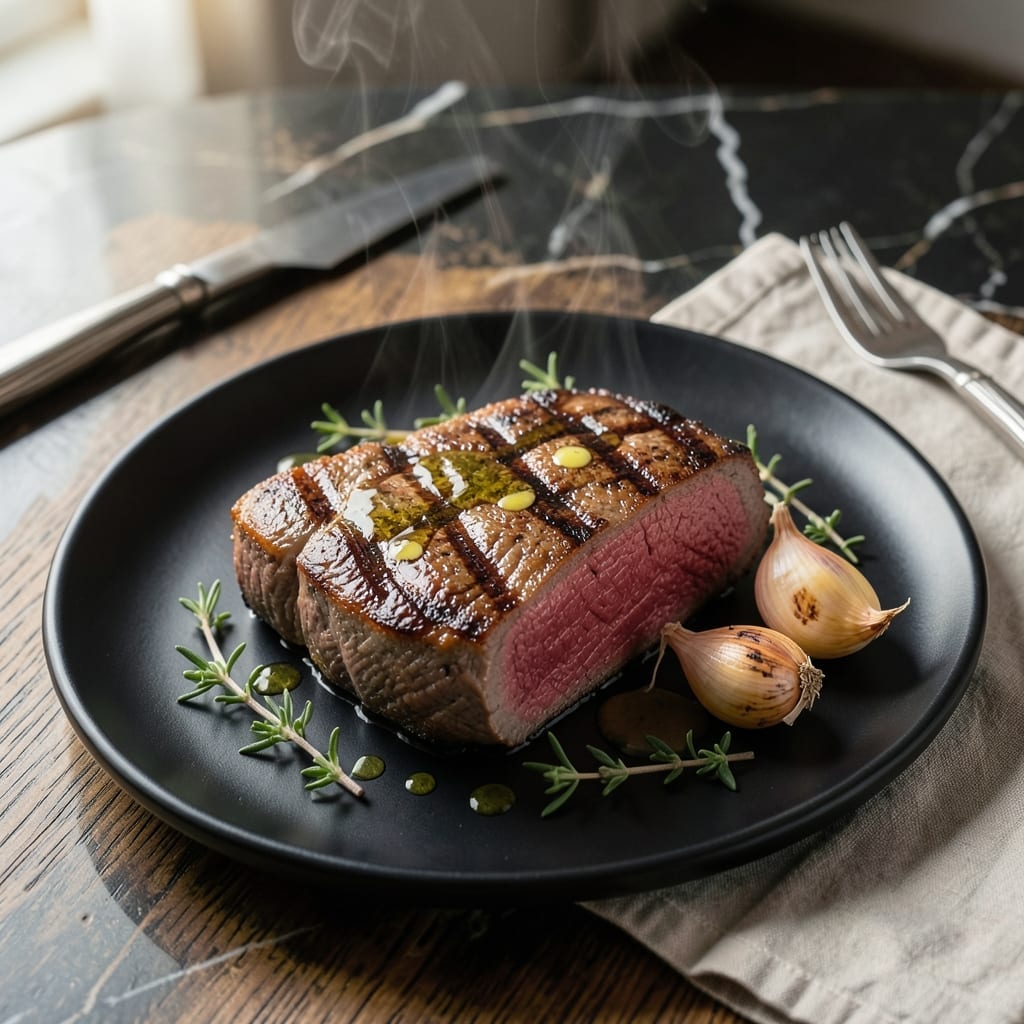
This recipe delivers tender steak with a rich, buttery crust every time. The technique ensures juicy centers without complicated steps.
I rely on a hot pan, quality beef, and precise timing to achieve restaurant-level results. A simple finish with herbs elevates the dish effortlessly.
Ingredients for Tenderloin Steak
Quality beef and a few pantry staples create this elegant yet simple dish.
| Ingredient | Amount | Notes |
|---|---|---|
| Beef Tenderloin Steak 🥩 | 1 ½ lb | Center-cut, 1.5 inches thick |
| Kosher Salt 🧂 | 1 ½ tsp | Diamond Crystal preferred |
| Freshly Ground Black Pepper 🌶️ | 1 tsp | Coarse grind for texture |
| Unsalted Butter 🧈 | 4 tbsp | European-style for richness |
| Garlic Cloves 🧄 | 3 cloves | Smashed, not minced |
| Fresh Thyme Sprigs 🌿 | 4 sprigs | Leaves stripped, stems discarded |
| Fresh Rosemary Sprig 🍃 | 1 whole | Leaves finely chopped |
| Olive Oil 🫒 | 2 tbsp | High smoke point variety |
| Shallot 🧅 | 1 whole | Finely minced for garnish |
| Dry Red Wine 🍷 | ¼ cup | For deglazing pan |
[recipe_ingredient_scaler]
The beef is paramount. Optimal quality requires USDA Prime or Choice grade beef tenderloin—look for bright red color with ample marbling. Professional kitchens use center-cut portions for even cooking. Source from reputable butchers or Whole Foods for consistent results. The thickness should be uniform (1.5 inches ideal) to ensure even doneness throughout.
No red wine? Beef broth with a splash of balsamic vinegar provides adequate depth. Fresh herbs are essential—dried herbs at one-third the quantity lack the vibrant aroma. European-style butter offers superior richness, but standard unsalted works. The garlic can be substituted with 1 tsp garlic powder if fresh is unavailable, though the flavor profile will differ slightly.
Store raw steaks on the coldest shelf of your refrigerator and use within 2-3 days for peak freshness. Cooked steaks keep for 3-4 days when properly sealed. For longer storage, vacuum-seal and freeze for up to 6 months. Always bring steaks to room temperature before cooking for even results.
Why You’ll Love This Recipe
- One Pan Wonder: I sear the tenderloin in a hot pan, then finish it with butter and garlic—minimal cleanup, maximum flavor.
- Buttery Garlic Bliss: The butter and garlic melt into the steak, creating a rich, savory crust that’s ridiculously good.
- Date Night Ready: I’ve served this for anniversaries and weeknight dinners—it feels fancy but takes almost no effort.
- Leftovers? Yes, Please: Honestly, cold slices of this steak make the best sandwiches the next day.
Step-by-Step Instructions for Tenderloin Steak
Master these techniques for a restaurant-quality steak with a buttery crust and perfectly juicy interior.
Step 1: Season and Temper the Beef Tenderloin Steak
Pat the 1.5 lb Beef Tenderloin Steak completely dry with paper towels—moisture prevents proper searing. Season both sides aggressively with the 1.5 tsp Kosher Salt and 1 tsp Freshly Ground Black Pepper, pressing gently to adhere.
Let the steak sit at room temperature for 30-45 minutes. This ensures even cooking from edge to center. The surface should develop a slightly tacky texture as the salt begins to penetrate, a sign it’s ready for the pan.
Step 2: Sear to Develop a Crust
Heat the 2 tbsp Olive Oil in a heavy skillet over high heat until it shimmers but doesn’t smoke. Add the steak and sear undisturbed for 3-4 minutes until a deep brown crust forms. The edges should develop a golden-brown ring about ¼ inch up the sides.
Flip the steak once and add the 4 tbsp Unsalted Butter, 3 cloves Garlic Cloves, 4 sprigs Fresh Thyme Sprigs, and chopped leaves from the 1 whole Fresh Rosemary Sprig. Baste continuously with the foaming butter for 2-3 minutes until the internal temperature reaches 125-130°F for medium-rare.
Step 3: Rest and Prepare the Pan Sauce
Transfer the steak to a cutting board and tent loosely with foil. The internal temperature will rise 5-10°F during resting. For the sauce, pour off all but 1 tablespoon of fat from the skillet, then add the finely minced Shallot and cook over medium heat for 1 minute until softened.
Deglaze with the 0.25 cup Dry Red Wine, scraping up all browned bits with a wooden spoon. Simmer for 2-3 minutes until reduced by half. Remove from heat and whisk in any remaining butter from the pan for a glossy finish.
Step 4: Slice and Serve
After resting for 10 minutes, slice the steak against the grain into ½-inch thick pieces. The center should be rosy pink with clear juices pooling on the cutting board, indicating perfect doneness.
Arrange the slices on a platter and spoon the pan sauce over the top. Serve immediately while the crust remains crisp. Each bite should offer a contrast of tender meat and buttery exterior with aromatic herbs throughout.
Pro Tips For Making Tenderloin Steak
- Dry the Steak: Pat the tenderloin completely dry with paper towels before seasoning—any moisture steams the meat instead of searing it, and I learned this the hard way after ruining two perfectly good steaks.
- Rest Before Serving: Let the steak rest for 8-10 minutes under loose foil after cooking; skipping this makes the juices run all over the plate instead of staying in the meat.
- Baste with Butter: Tilt the pan and spoon the melted butter, garlic, and herbs over the steak for the last 2 minutes—it adds flavor and helps build that glossy, restaurant-style crust.
- Use Room-Temp Meat: Take the tenderloin out of the fridge 30-40 minutes before cooking so it cooks evenly; cold steak seizes up and stays raw in the middle while the outside burns.
Troubleshooting Perfect Results
Uneven Cooking
If your steak is overdone on the outside but rare inside, your pan may not be hot enough. I always preheat my cast iron skillet for 5 minutes on high heat to ensure even searing. A too-cool pan causes uneven cooking as the heat gradually builds. 💡
No Crust Forming
Pat the steak completely dry before seasoning—any moisture creates steam, preventing that coveted crust. I use 3-4 paper towels to blot the surface thoroughly. Also, avoid crowding the pan; cook one steak at a time for best results.
Tough or Dry Texture
Overcooking is the usual culprit. Pull your steak at 125-130°F for medium-rare, as the temperature will rise 5-10°F while resting. I use a ThermoWorks instant-read thermometer for precision. Resting for 10 minutes also keeps juices locked in.
Butter Burning
If your butter browns too quickly, reduce the heat to medium-high after the initial sear. I add the butter only after flipping the steak to prevent burning. The milk solids in butter can scorch, so keep the pan moving and baste continuously.
Bland Flavor
Don’t skimp on seasoning! Be generous with the 1.5 tsp Kosher Salt and 1 tsp Freshly Ground Black Pepper. I also press the seasoning into the meat to ensure it adheres. For extra depth, add a pinch of smoked paprika to the rub. 🔥
Sauce Too Thin
If your pan sauce lacks body, simmer it longer to reduce. I let it cook until it coats the back of a spoon, about 2-3 minutes. If it’s still thin, mix in ½ tsp cornstarch with 1 tbsp cold water and stir until thickened.
Nutrition Facts
Frequently Asked Questions
What’s the best way to check doneness without a thermometer?
Use the touch test: a rare steak feels like the base of your thumb when relaxed, while medium-rare feels like touching your thumb to your index finger. For 125-130°F, it should feel slightly springy with some give.
Can I use a different cut of beef for this method?
Try ribeye or strip steak for a richer flavor. Adjust cooking times—ribeye may need 1-2 extra minutes per side due to higher fat content. Just aim for the same internal temperature.
Why does my steak sometimes turn out tough?
Overcooking is the main culprit. Tenderloin is lean, so it becomes tough quickly above 140°F. Also, ensure you’re slicing against the grain to shorten muscle fibers for a more tender bite.
How do I keep the butter from burning during cooking?
Add butter only after the initial sear, then reduce heat to medium-high. Continuously baste and move the pan to prevent hot spots. Using clarified butter (ghee) can also help raise the smoke point.

Trained in classic French technique but raised on slow-cooked ribs and spicy rubs, she blends culinary skill with smoke and soul.
- Recipe for Boneless Pork Chops in Cast Iron Skillet: Sear and Baste to Juicy Perfection - October 3, 2026
- Recipe for Boneless Cross Rib Roast: Slow-Roasted Beef with Herb Crust - October 3, 2026
- Hamburgers in Sauce Recipe Crock Pot: Slow-Cooked Savory Delight - October 3, 2026