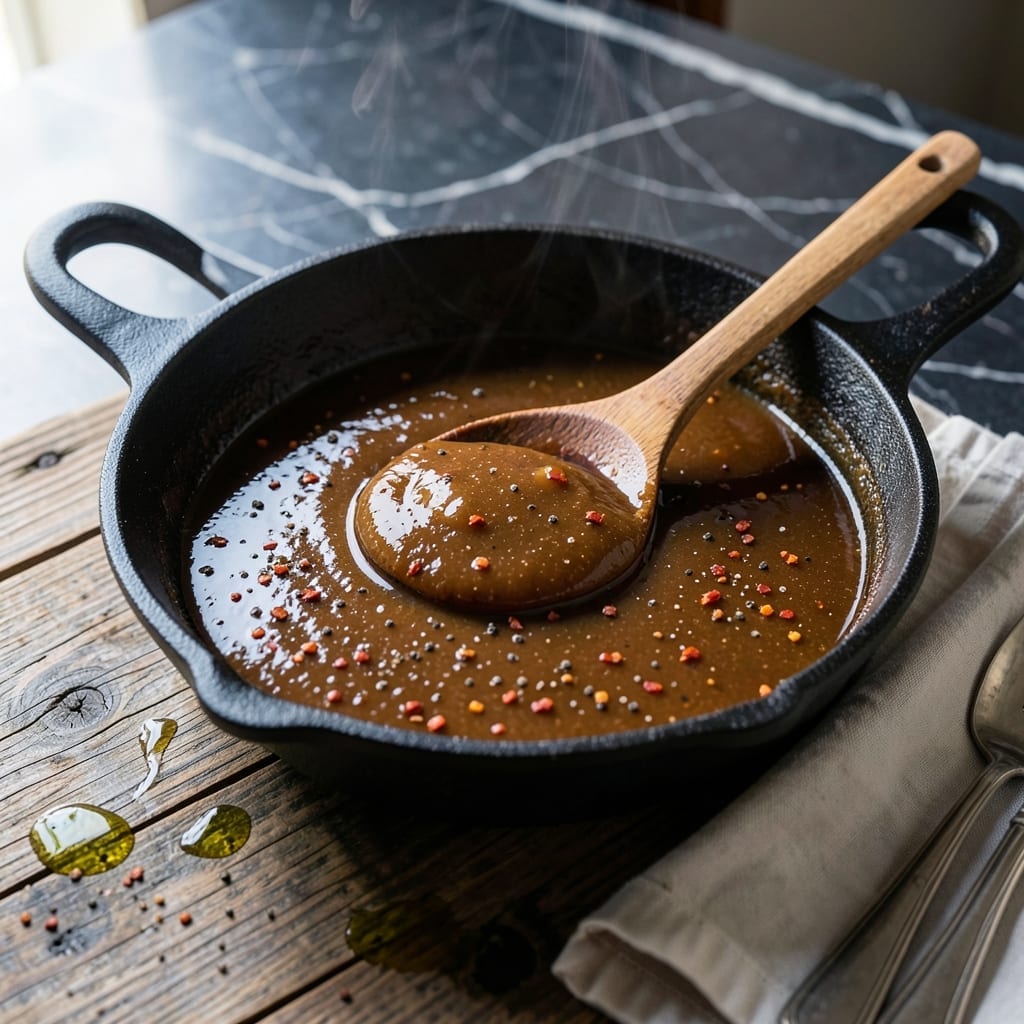
This vinegar-based sauce delivers the signature tang that defines Carolina barbecue, with just enough heat to keep things interesting. The balance of sharp acidity and subtle sweetness makes it perfect for pulled pork.
I’ve refined this recipe over years of competition cooking, focusing on simple ingredients that pack bold flavor. It stays fresh for weeks, ready to elevate your next smoke session.
Ingredients for Carolina Barbecue Sauce
Ten bold ingredients balance sharp vinegar with subtle sweetness and heat for this signature sauce.
| Ingredient | Amount | Notes |
|---|---|---|
| Apple Cider Vinegar 💧 | 2 cups | The foundation of Carolina tang |
| White Vinegar 💧 | ½ cup | Adds extra sharpness |
| Ketchup 🍅 | ½ cup | For subtle sweetness |
| Brown Sugar 🍚 | ¼ cup | Light or dark works |
| Crushed Red Pepper Flakes 🌶️ | 1 tbsp | Adjust for heat preference |
| Ground Black Pepper 🌶️ | 1 tbsp | Freshly ground preferred |
| Kosher Salt 🧂 | 1 tbsp | Diamond Crystal brand ideal |
| Worcestershire Sauce 🫒 | 1 tbsp | Lea & Perrins recommended |
| Hot Sauce 🔥 | 1 tbsp | Texas Pete or similar |
| Yellow Mustard 🟡 | 1 tbsp | Adds depth and color |
[recipe_ingredient_scaler]
The vinegars are non-negotiable here—Heinz apple cider vinegar is the gold standard for Carolina-style sauces, and any white vinegar will do for the sharpness. Ketchup should be full-sugar (no diet versions), as the sweetness counters the acidity. For the brown sugar, Domino or C&H dissolve reliably. I source most of these at Costco for bulk savings, but any supermarket carries the essentials.
No apple cider vinegar? Substitute all white vinegar but reduce total by 25%—it’s harsher. Swap ketchup for tomato paste plus sugar if needed. Honey at half the amount replaces brown sugar in a pinch. For heat, fresh jalapeño can stand in for red pepper flakes (remove seeds for milder kick). Dijon mustard works instead of yellow, though the color shifts slightly.
This keeps 3-4 weeks refrigerated in a sealed jar. The flavors meld after 24 hours, so make it a day ahead. Freeze for up to 6 months if storing longer—thaw and stir before using. Always shake well before serving, as the spices settle.
Why You’ll Love This Recipe
- Five Minute Mix: I just dump everything in a saucepan and let it simmer—no chopping, no fuss.
- Tangy Sweet Heat: The vinegars and brown sugar balance perfectly with a kick from the red pepper flakes.
- Grill or Drip: Slather it on pulled pork, ribs, or even use it as a marinade for chicken.
- Budget Stretcher: A batch costs pennies and keeps for weeks in the fridge. Honestly, I always double it.
Step-by-Step Instructions for Carolina Barbecue Sauce
This tangy vinegar-based sauce comes together quickly with precise measurements and proper technique.
Step 1: Combine Vinegars and Sweet Components
In a medium saucepan, pour in the 2 cups apple cider vinegar and 0.5 cup white vinegar. These form the sharp, tangy foundation characteristic of authentic Carolina sauce. Add the 0.5 cup ketchup and 0.25 cup brown sugar, stirring until the brown sugar begins to dissolve.
The ketchup provides subtle sweetness and body, while the brown sugar adds depth without overpowering the vinegar’s acidity. This balance creates the signature tangy-sweet profile that defines this regional style.
Step 2: Incorporate Seasonings and Umami Elements
Add the 1 tbsp crushed red pepper flakes, 1 tbsp ground black pepper, and 1 tbsp kosher salt to the vinegar mixture. These dry seasonings need time to bloom in the liquid. Stir in the 1 tbsp Worcestershire sauce and 1 tbsp hot sauce next—these contribute complex umami and subtle heat.
The Worcestershire sauce adds fermented depth, while the hot sauce provides a gentle kick that complements rather than overpowers. The crushed red pepper flakes will infuse their heat gradually as the sauce simmers.
Step 3: Finish with Mustard and Simmer
Whisk in the 1 tbsp yellow mustard until fully incorporated. This ingredient adds both color and a subtle tang that enhances the vinegar base. The mustard also acts as a natural emulsifier, helping to bind the various components of the sauce.
Bring the mixture to a gentle simmer over medium heat, then reduce to low heat. Let it cook for 10-15 minutes, stirring occasionally, until the flavors meld and the sauce develops a slightly thickened consistency. You’ll notice the raw vinegar smell mellows into a balanced, aromatic blend.
Step 4: Cool and Store for Optimal Flavor
Remove the sauce from heat and let it cool to room temperature. As it cools, the flavors will continue to develop and the spices will fully infuse. The sauce should have a smooth, pourable consistency with visible specks of spices throughout.
Transfer to a clean glass jar or bottle and store in the refrigerator. The sauce will keep for up to 2 weeks refrigerated. For best results, let it sit for at least 24 hours before using to allow the flavors to fully marry.
Pro Tips For Making Carolina Barbecue Sauce
- Simmer Low and Slow: Keep the heat at a gentle simmer for 15-20 minutes—boiling the vinegars too hard will make the sauce too sharp and can cause the sugars to burn.
- Balance the Vinegars: Use a 2:1 ratio of apple cider vinegar to white vinegar; the apple cider adds fruitiness while the white vinegar keeps the tang clean and bright.
- Bloom the Pepper Flakes: Toast the crushed red pepper flakes in a dry pan for 30 seconds before adding liquids to wake up their flavor—I learned this the hard way after making bland batch after bland batch.
- Sweeten Gradually: Add the brown sugar in two stages, tasting after each addition; it’s easier to fix a sauce that’s too tangy than one that’s cloyingly sweet.
Creative Variations of This Recipe
Eastern NC Style
This is the classic vinegar-forward version that defines Eastern Carolina. I use 3 cups apple cider vinegar and 1 cup white vinegar with no ketchup—just ¼ cup crushed red pepper and 2 tbsp cayenne for pure tangy heat. The color stays translucent, perfect for pulled pork. 🌶️
Western NC Variation
Western Carolina adds tomato for sweetness and body. Keep the base recipe but add ½ cup tomato paste and ¼ cup molasses. This creates a thicker, more complex sauce that clings beautifully to ribs. I love this with my smoked pork shoulder.
Piedmont Style
This version splits the difference between East and West. Use the base recipe but reduce white vinegar to ¼ cup and add ¼ cup tomato sauce. The result is balanced—tangy but with enough sweetness to please a crowd. It’s my go-to for local BBQ competitions.
Spicy Mustard Kick
For a bold twist, swap the yellow mustard for Dijon and add 1 tsp ground mustard. The sharpness of the mustard plays perfectly against the vinegar. I also add 1 tbsp honey to round out the edges. This one’s a favorite among my biker friends.
Sweet Heat Fusion
Increase the brown sugar to ½ cup and add 2 tbsp hot honey for a modern take. The heat from the honey builds gradually, while the extra sweetness makes it kid-friendly. I forage wild hot peppers to infuse in the honey for a unique local touch.
Nutrition Facts
Frequently Asked Questions
How long does homemade vinegar-based sauce last?
Properly stored in an airtight container in the fridge, it stays fresh for 3-4 weeks. For longer storage, freeze for up to 6 months.
Can I reduce the vinegar sharpness without losing flavor?
Yes! Add 1-2 tbsp honey or increase brown sugar to ½ cup. These sweeteners balance acidity while keeping the tangy character intact.
What’s the best way to use this with pulled pork?
Mop it on during the last 30 minutes of smoking, then serve extra on the side. The vinegar helps tenderize the meat while adding that signature Carolina bite.
Is there a non-vinegar substitute for dietary reasons?
Lemon juice works in a pinch, but expect a brighter, less complex flavor. Use ¾ cup lemon juice plus ¼ cup water to replace each cup of vinegar.

Trained in classic French technique but raised on slow-cooked ribs and spicy rubs, she blends culinary skill with smoke and soul.
- Recipe for Boneless Pork Chops in Cast Iron Skillet: Sear and Baste to Juicy Perfection - October 3, 2026
- Recipe for Boneless Cross Rib Roast: Slow-Roasted Beef with Herb Crust - October 3, 2026
- Hamburgers in Sauce Recipe Crock Pot: Slow-Cooked Savory Delight - October 3, 2026