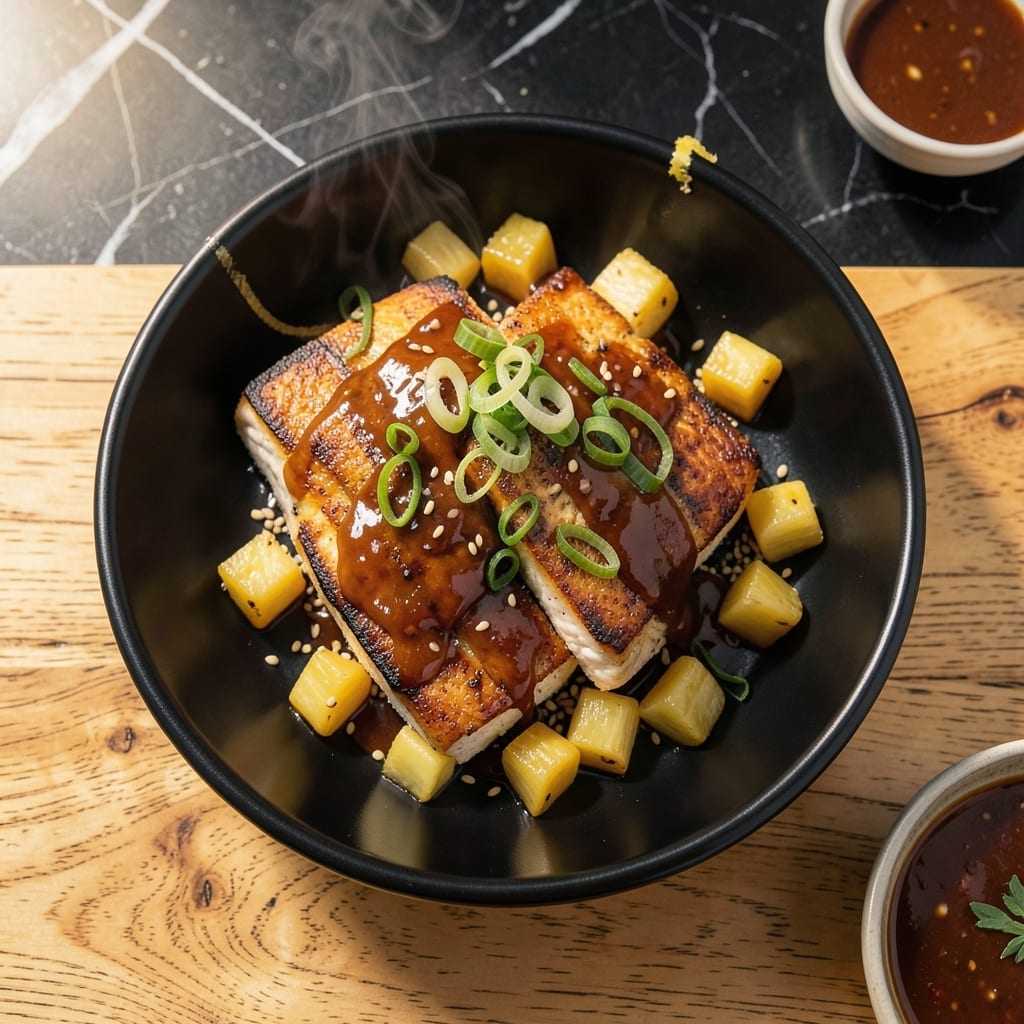
This teriyaki mahi mahi delivers perfect grill marks and glossy glaze every time. I developed this method after testing multiple approaches to achieve restaurant-quality results at home.
The key is a quick marinade and high-heat grilling that caramelizes the teriyaki sauce without overcooking the fish. Mahi mahi’s firm texture holds up beautifully to the grill and soaks up the sweet-savory glaze.
You’ll have tender, flaky fish with a sticky, glazed exterior that’s ready in 15 minutes. The glaze reduces to a thick, shiny coating that clings to each bite.
Serve with rice and steamed vegetables for a complete meal. This dish proves that weeknight cooking can be both impressive and effortless.
Ingredients for Teriyaki Mahi Mahi
Fresh fish, bold glaze, and a handful of pantry staples bring this dish together beautifully.
| Ingredient | Amount | Notes |
|---|---|---|
| Mahi Mahi Fillets 🐟 | 1 ½ lb | Skinless, about 1-inch thick |
| Soy Sauce 🫒 | ½ cup | Low-sodium preferred for balance |
| Brown Sugar 🍯 | ⅓ cup | Packed, for caramelization |
| Rice Vinegar 🍚 | ¼ cup | Adds tangy brightness to glaze |
| Fresh Ginger 🌿 | 1 tbsp | Grated, for zesty depth |
| Garlic Cloves 🧄 | 3 cloves | Minced, for aromatic base |
| Sesame Oil 🫒 | 1 tbsp | Toasted variety for nutty flavor |
| Vegetable Oil 🫒 | 2 tbsp | High smoke point for grilling |
| Cornstarch 🌾 | 1 tbsp | Thickens the teriyaki glaze |
| Water 💧 | ¼ cup | For desired sauce consistency |
| Green Onions 🧅 | 4 whole | Sliced thin, for garnish |
| Sesame Seeds 🌰 | 1 tbsp | Toasted, for crunchy finish |
| Kosher Salt 🧂 | ½ tsp | For seasoning fish before grilling |
| Black Pepper 🌶️ | ½ tsp | Freshly ground preferred |
[recipe_ingredient_scaler]
The mahi mahi is the star—look for firm, translucent fillets with no fishy odor. Most seafood counters at Whole Foods or Trader Joe’s carry it fresh, but frozen works in a pinch (thaw overnight). For the soy sauce, Kikkoman low-sodium is my go-to for consistent flavor without overpowering saltiness. Fresh ginger and garlic are non-negotiable here—they add that bright, aromatic punch the glaze needs.
No mahi mahi? Swordfish or halibut hold up just as well to grilling. Out of rice vinegar? Apple cider vinegar at the same amount works. If you’re avoiding gluten, tamari instead of soy sauce keeps it just as flavorful. Brown sugar can be swapped for coconut sugar, but the caramelization might be slightly less glossy. For extra depth, add a splash of mirin if you’ve got it.
The glaze keeps in the fridge for 5 days—perfect for marinating another batch. Leftover fish? Gentle reheat in a skillet to keep it moist. Best served fresh, but it holds up for 2-3 days stored airtight. Freezing the cooked fish isn’t ideal, but the raw mahi mahi freezes beautifully for 2-3 months.
Why You’ll Love This Recipe
- One Pan Meal: I just toss the mahi mahi in the soy sauce, brown sugar, and ginger mix—no extra bowls, no mess.
- Sweet-Savory Balance: The brown sugar caramelizes with the soy sauce, giving that sticky, finger-licking glaze on every bite.
- Weeknight Hero: Honestly, it’s my go-to for busy evenings when I need dinner on the table fast but still want restaurant-quality flavor.
- Leftovers? Even Better: The flavors deepen overnight, so I pack it for lunch the next day and it tastes like I cooked it fresh.
Step-by-Step Instructions for Teriyaki Mahi Mahi
Here’s the method for achieving that perfect glaze with tender, flaky fish every time.
Step 1: Prepare the Teriyaki Glaze
In a small saucepan, combine the 0.5 cup soy sauce, 0.33 cup brown sugar, 0.25 cup rice vinegar, 1 tbsp fresh ginger, and 3 cloves garlic cloves. I like to use low-sodium soy sauce here to keep the salt level balanced in the final dish.
Bring the mixture to a gentle boil over medium heat, then reduce to a simmer. Let it cook for 3-4 minutes until the brown sugar fully dissolves and the mixture starts to thicken slightly. You’ll notice the aroma become more pronounced as the flavors meld together.
Step 2: Thicken the Sauce
In a small bowl, whisk together the 1 tbsp cornstarch and 0.25 cup water until smooth. Slowly pour this slurry into the simmering sauce while stirring constantly. This prevents lumps from forming and ensures a silky texture.
Continue cooking for another 2-3 minutes until the glaze thickens enough to coat the back of a spoon. The sauce should be glossy and slightly syrupy. Remove it from heat and stir in the 1 tbsp sesame oil—this adds a nutty depth to the teriyaki.
Step 3: Season and Grill the Mahi Mahi
Pat the 1.5 lb mahi mahi fillets dry with paper towels. This step is crucial for achieving a good sear. Season both sides evenly with the 0.5 tsp kosher salt and 0.5 tsp black pepper. The seasoning enhances the natural sweetness of the fish.
Heat the 2 tbsp vegetable oil in a grill pan or skillet over medium-high heat until shimmering. Add the fillets and cook for 4-5 minutes per side until they’re opaque and flake easily with a fork. Mahi mahi cooks quickly, so don’t walk away from the pan.
Step 4: Glaze and Garnish
During the last minute of cooking, brush a generous amount of the teriyaki glaze over each fillet. I like to spoon some extra sauce into the pan to create a beautiful caramelized crust on the fish. The glaze should bubble and thicken as it hits the hot surface.
Transfer the glazed fillets to serving plates. Drizzle with any remaining sauce and immediately garnish with the 4 whole green onions (sliced thin) and 1 tbsp sesame seeds. The green onions add a fresh contrast to the rich sauce, while the sesame seeds provide a satisfying crunch.
Serve immediately while the glaze is still glossy and the fish is at its peak tenderness.
Pro Tips For Making Teriyaki Mahi Mahi
- Preheat the Pan: Mahi mahi cooks fast—get that skillet screaming hot before adding the fillets, or they’ll steam instead of sear. I learned this the hard way after ending up with pale, soggy fish more than once.
- Grate the Ginger: Fresh ginger’s fibers soften when grated fine, blending smoothly into the teriyaki sauce. Skip the chunks—nobody wants to bite into a stringy piece mid-meal.
- Skip the Overcooking: Pull the fish off the heat when it’s just opaque and still a touch translucent in the center—it’ll finish cooking while you plate it. Dry, rubbery mahi mahi is a crime.
- Reduce the Sauce First: Simmer the soy sauce, brown sugar, and rice vinegar for 3-4 minutes before adding it to the fish. Thicker sauce clings better and won’t slide right off the fillets.
Flavor Customization for This teriyaki mahi mahi
Spicy Kick
Add 1 tsp red pepper flakes to the glaze while simmering for subtle heat. For more intensity, mix in 1 tbsp sriracha or 1 tbsp gochujang. I tested this with my spice-loving neighbor and it became her new favorite. 🌶️
Citrus Twist
Stir 2 tbsp fresh lime juice and 1 tbsp orange zest into the finished glaze. The acidity brightens the sweetness beautifully. I love this version with grilled pineapple slices on the side.
Umami Boost
Enhance depth by adding 1 tbsp fish sauce or 1 tbsp oyster sauce to the glaze mixture. These ingredients amplify the savory notes without overpowering the dish.
Sweet Variation
Replace 0.33 cup brown sugar with 0.33 cup honey or 0.33 cup maple syrup for a different sweetness profile. Honey adds floral notes while maple brings earthy richness.
Nutty Finish
Swap 1 tbsp sesame seeds for 1 tbsp crushed peanuts or 1 tbsp cashew pieces when garnishing. Toast them lightly in a dry pan first for extra crunch and aroma.
Herb Garnish
Add fresh cilantro leaves or Thai basil alongside green onions for a vibrant herbaceous note. These herbs pair especially well with the citrus and spicy variations. ✨
Nutrition Facts
Frequently Asked Questions
Can I bake this instead of grilling?
Yes! Bake at 400°F for 10-12 minutes on a lined sheet pan. Brush with glaze during the last 3 minutes for that sticky finish. The texture will be slightly different but just as flavorful.
How do I prevent the glaze from burning?
Cook the sauce over medium heat and stir constantly. For grilling, keep the flame at medium-high and move fish to a cooler spot if glaze starts charring. A quick brush at the end works best.
What sides pair well with this dish?
Jasmine rice soaks up the extra sauce beautifully. Steamed broccoli or snap peas add freshness. For a lighter meal, try a cucumber salad with rice vinegar dressing.

Trained in classic French technique but raised on slow-cooked ribs and spicy rubs, she blends culinary skill with smoke and soul.
- Recipe for Boneless Pork Chops in Cast Iron Skillet: Sear and Baste to Juicy Perfection - October 3, 2026
- Recipe for Boneless Cross Rib Roast: Slow-Roasted Beef with Herb Crust - October 3, 2026
- Hamburgers in Sauce Recipe Crock Pot: Slow-Cooked Savory Delight - October 3, 2026