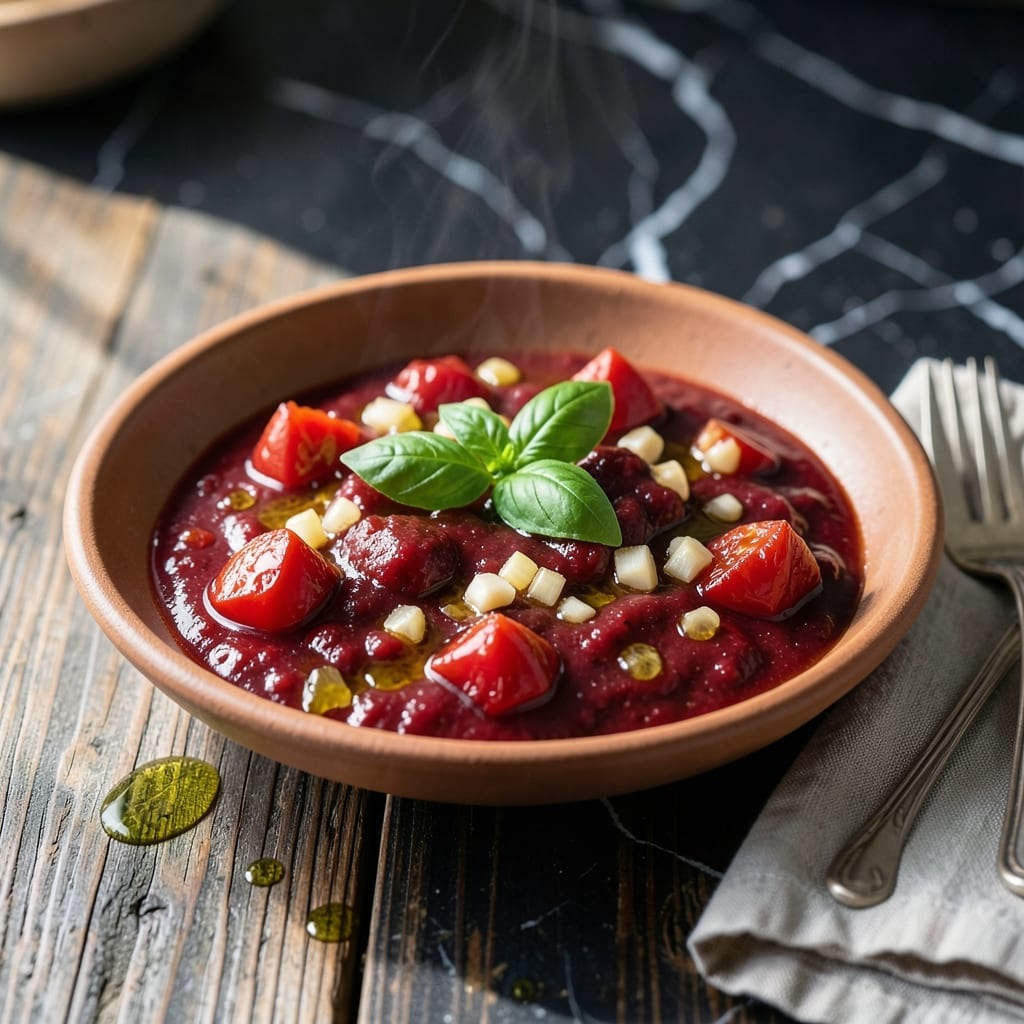
There’s a reason Italian nonnas guard their sauce recipes like family secrets. This blend captures that authentic tradition with just the right balance of ripe tomatoes and fresh basil.
I developed this after testing countless variations in my tiny Boston kitchen, always returning to the simplicity of San Marzano tomatoes and garden-fresh herbs. The slow simmer is what builds that restaurant-quality depth of flavor.
What you’ll get is a versatile sauce that works as perfectly on pasta as it does as a pizza base or dipping sauce. The basil stays bright and fragrant, never overpowered by the tomatoes.
Make a double batch and freeze the extra—you’ll want this on hand for quick weeknight meals.
Ingredients for Sauce Arturo
Nine ingredients capture authentic Italian tradition with perfect balance of tomatoes and basil.
| Ingredient | Amount | Notes |
|---|---|---|
| San Marzano Whole Peeled Tomatoes 🍅 | 28 oz | Canned, drained, hand-crushed |
| Fresh Basil Leaves 🌿 | 1 cup | Loosely packed, torn by hand |
| Extra-Virgin Olive Oil 🫒 | ¼ cup | High-quality, fruity finish |
| Yellow Onion 🧅 | 1 whole | Finely diced, sweet variety |
| Garlic Cloves 🧄 | 4 cloves | Minced to fine paste |
| Sea Salt 🧂 | 1 ½ tsp | Fine grain, added gradually |
| Black Pepper 🌶️ | ½ tsp | Freshly cracked preferred |
| Crushed Red Pepper Flakes 🔥 | ½ tsp | Optional for heat |
| Dry White Wine 🍷 | ½ cup | Crisp, dry variety |
[recipe_ingredient_scaler]
San Marzano tomatoes are non-negotiable—they’re the gold standard for Italian sauces. Look for DOP certification on the can at Whole Foods or specialty grocers. The basil should be vibrant green, ideally from a local farm stand (the plastic clamshells from supermarkets often wilt too fast). I always grab California Olive Ranch for the olive oil—consistent quality without the designer price tag.
No white wine? Skip it entirely—the sauce will still shine. Substituting dried basil? Use one-third the amount and add it early so it rehydrates. Sweet onions like Vidalia work beautifully here (they melt right in). If you’re avoiding alcohol, extra tomato juice or vegetable broth adds similar depth without the booze. The red pepper flakes are optional but recommended for that classic kick.
Sauce keeps in the fridge for 5 days or freezes beautifully for 3 months. Portion into airtight containers (I use mason jars) and leave headspace for expansion. Always thaw overnight in the fridge before reheating—this prevents separation.
Why You’ll Love This Recipe
- One Pot Wonder: I just dump the San Marzano tomatoes, garlic, and basil into the pan and let the olive oil work its magic.
- Ridiculously Good: That sweetness from the San Marzano tomatoes with the fresh basil? I could drink it straight from the pot.
- Feeds a Crowd: I make a big batch on Sunday and it transforms into pasta, pizza, or soup all week long.
- Pantry Hero: Five ingredients I always have on hand, and it tastes like a fancy Italian restaurant dish.
Step-by-Step Instructions for Authentic Tomato and Basil Sauce
Here’s how I create this rich, aromatic sauce with layers of Italian flavor.
Step 1: Build the Aromatic Foundation
Heat the 0.25 cup Extra-Virgin Olive Oil in a heavy-bottomed pot over medium heat. Add the 1 whole Yellow Onion, finely diced as specified, and cook for 8-10 minutes until it becomes translucent and just begins to caramelize around the edges.
This slow cooking extracts the natural sweetness from the onion, creating the perfect base. You’ll notice the aroma changing from sharp to mellow—that’s your signal it’s ready for the next step. Stir occasionally to prevent browning, but don’t rush this process.
Step 2: Bloom the Garlic and Deglaze
Add the 4 cloves Garlic Cloves, minced to a fine paste, to the onions. Cook for 1-2 minutes until fragrant but not browned—garlic burns quickly and becomes bitter. The moment you smell that unmistakable garlic perfume, it’s time to deglaze.
Pour in the 0.5 cup Dry White Wine and scrape up any browned bits from the bottom of the pot. Let it simmer for 3-4 minutes until the liquid reduces by half. This step adds depth and balances the acidity of the tomatoes.
Step 3: Incorporate the Tomatoes and Season
Add the 28 oz San Marzano Whole Peeled Tomatoes, drained and hand-crushed as directed. Stir well to combine with the aromatic base. The hand-crushing releases their juices while maintaining some texture.
Season with the 1.5 tsp Sea Salt, 0.5 tsp Black Pepper, and 0.5 tsp Crushed Red Pepper Flakes. The red pepper flakes add a subtle warmth that enhances the sauce’s complexity. Bring to a gentle simmer.
Step 4: Simmer and Infuse with Basil
Reduce heat to low and let the sauce simmer uncovered for 45-60 minutes. You’ll want to stir occasionally to prevent sticking. The sauce should reduce slightly and develop a rich, velvety texture.
About 10 minutes before the sauce is done, stir in the 1 cup Fresh Basil Leaves, torn by hand. The heat will release their aromatic oils, but adding them late preserves their bright, fresh flavor. The leaves should wilt but retain some vibrant green color.
Taste and adjust seasoning if needed. The sauce should have a perfect balance of sweet, acid, and savory notes with the basil’s fragrance shining through. Serve immediately over pasta or let it cool for later use.
Pro Tips For Making Sauce Arturo
- Crush the Tomatoes: Hand-crush the San Marzano tomatoes instead of blending—the uneven texture makes the sauce cling better to pasta. I learned this the hard way after my first few batches turned out watery.
- Bloom the Garlic: Cook the garlic in olive oil on low heat until just golden, about 2-3 minutes. After burning three batches, I finally figured out that high heat turns it bitter fast.
- Skip the Dried Basil: Fresh basil leaves added at the end keep their bright flavor, while dried turns the sauce muddy. My grandmother swore by this, and she was right.
- Simmer Uncovered: Let the sauce reduce uncovered for 20-25 minutes to thicken properly. Sounds weird, but it works—covering traps too much moisture and dilutes the flavor.
Wine and Beer Pairings for This sauce arturo
Italian Wines
For this sauce, I always reach for a Chianti Classico with its bright acidity and cherry notes that complement the tomato perfectly. A Sangiovese from Tuscany is another excellent choice, offering earthy undertones that pair beautifully with the basil. 🍷
Crisp Whites
A Pinot Grigio from Alto Adige cuts through the richness with its clean, mineral finish. I’ve also had great success with Vermentino from Sardinia—its citrusy profile refreshes the palate between bites of saucy pasta.
Italian Beers
For beer lovers, a Peroni or Moretti lager provides a crisp, clean contrast to the sauce’s depth. The light effervescence cleanses your palate without overpowering the delicate basil notes. 🍺
Bold Alternatives
If you prefer reds with more body, try a Barbera d’Alba—its low tannins and high acidity make it surprisingly versatile with tomato-based dishes. I discovered this pairing at a tiny trattoria in Boston’s North End.
Non-Alcoholic Pairings
A sparkling San Pellegrino with lemon works wonders, or try an iced hibiscus tea for a floral contrast. The citrus in both options enhances the sauce’s natural sweetness.
Nutrition Facts
Frequently Asked Questions
Can I use canned basil instead of fresh?
Fresh basil is best for bright flavor, but dried can work in a pinch. Use 1 tablespoon dried for every 1 cup fresh, and add it earlier in cooking.
How do I fix a sauce that’s too acidic?
A pinch of sugar or a splash of cream balances acidity. Simmer for 5-10 minutes after adding to let flavors meld.
What’s the best way to store leftovers?
Cool completely, then transfer to airtight containers. Refrigerate for up to 5 days or freeze for 3 months.
Can I make this without wine?
Skip the wine or substitute 0.5 cup tomato juice or vegetable broth. The flavor will still be rich.

Trained in classic French technique but raised on slow-cooked ribs and spicy rubs, she blends culinary skill with smoke and soul.
- Recipe for Boneless Pork Chops in Cast Iron Skillet: Sear and Baste to Juicy Perfection - October 3, 2026
- Recipe for Boneless Cross Rib Roast: Slow-Roasted Beef with Herb Crust - October 3, 2026
- Hamburgers in Sauce Recipe Crock Pot: Slow-Cooked Savory Delight - October 3, 2026