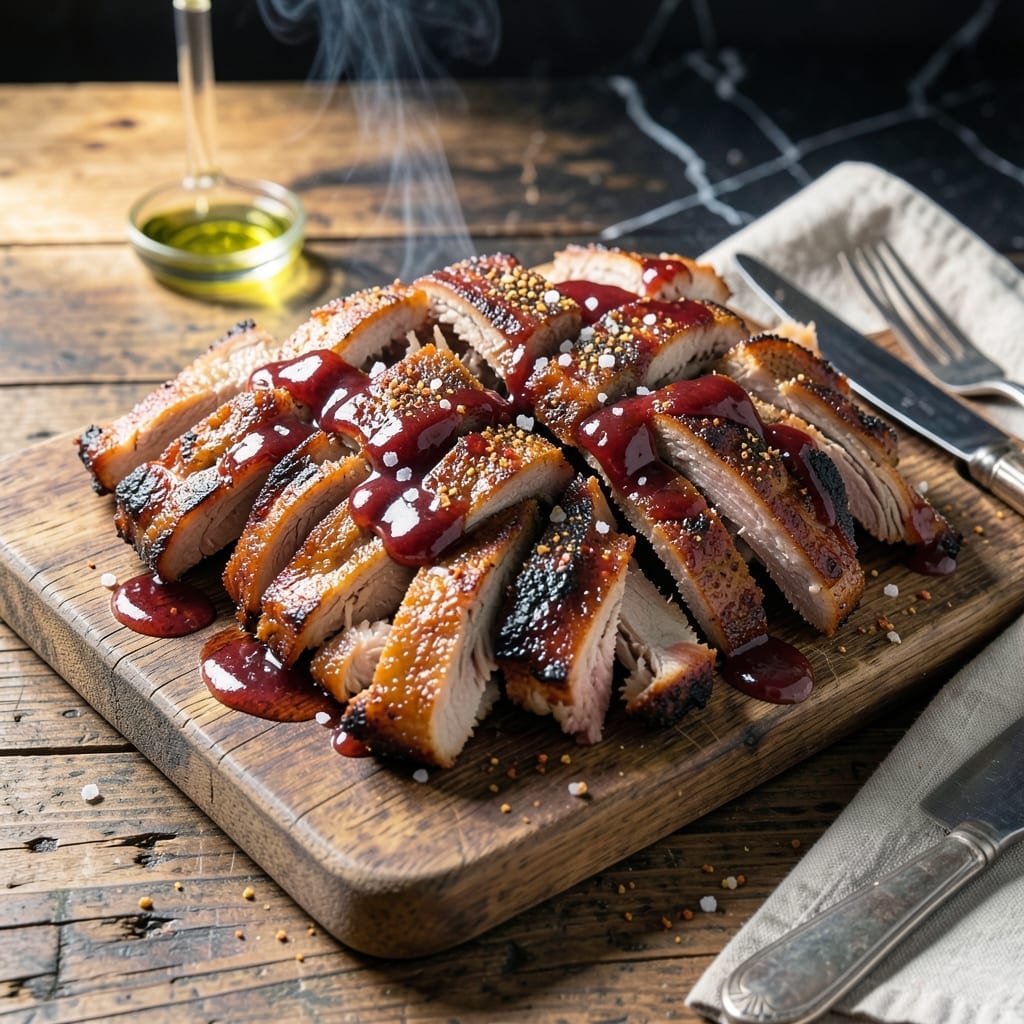
As a pitmaster, I know that true Texas pulled pork requires patience and precision. This method delivers tender results with a deep oak-smoked flavor that defines authentic barbecue.
Slow-cooked for hours, the meat becomes fall-apart tender while developing a rich bark. Perfect for feeding a crowd with professional-quality results.
Ingredients for Texas Barbecue Pulled Pork
Oak-smoked pork shoulder with a bold dry rub delivers authentic Texas barbecue flavor to feed a crowd.
| Ingredient | Amount | Notes |
|---|---|---|
| Pork Shoulder 🥩 | 8 lb | Bone-in, well-marbled preferred |
| Yellow Mustard 🟡 | ½ cup | For binder on pork rub |
| Coarse Kosher Salt 🧂 | ¼ cup | Diamond Crystal preferred |
| Freshly Ground Black Pepper 🌶️ | ¼ cup | Coarse grind for bark texture |
| Paprika 🌶️ | 3 tbsp | Sweet or smoked variety |
| Garlic Powder 🧄 | 2 tbsp | Not garlic salt substitute |
| Onion Powder 🧅 | 2 tbsp | Dehydrated for dry rub |
| Brown Sugar 🍚 | ½ cup | Light or dark variety |
| Chili Powder 🌶️ | 2 tbsp | Mild or medium heat |
| Oak Wood Chunks 🪵 | 4 lb | For authentic Texas smoke |
| Apple Cider Vinegar 🍏 | 1 cup | For spritzing during cook |
| BBQ Sauce 🍯 | 2 cups | Optional for serving |
| Burger Buns 🍞 | 12 whole | For serving pulled pork |
[recipe_ingredient_scaler]
The pork shoulder is non-negotiable for authentic pulled pork. Bone-in, well-marbled cuts from Costco or Sam’s Club offer the best value for large batches. Look for 8-10 lb roasts—smaller cuts dry out faster. The fat cap should be thick (at least 1/4 inch) to baste the meat during the long cook. Professional pitmasters insist on USDA Choice or higher for consistent results.
No oak chunks? Hickory or pecan wood work as substitutes, though oak delivers that signature Texas flavor. Short on time? Pre-ground spices are fine, but toast whole spices and grind fresh for superior bark. The brown sugar can be substituted with turbino for a deeper molasses note. For the binder, olive oil or mustard both help the rub adhere to the meat surface.
Store untrimmed pork in the fridge for 1-2 days before cooking, or freeze for 6 months. Leftovers keep 4 days refrigerated or 3 months frozen. Wood chunks should be kept in a dry place—moisture ruins the smoke quality (worth the extra minute to check).
Why You’ll Love This Recipe
- Set It and Forget: I rub the pork shoulder with mustard, salt, pepper, and paprika, then let the smoker do the work for hours.
- Smoky and Tangy: That yellow mustard in the rub gives it a subtle tang that cuts through the rich, smoky pork perfectly.
- Feeds a Crowd: I’ve served this at summer parties and weeknight dinners alike—it’s always the first thing to disappear.
- Leftovers for Days: Honestly, it tastes even better the next day in sandwiches, tacos, or straight from the fridge.
Step-by-Step Instructions for Texas Barbecue Pulled Pork
This method delivers competition-style results with a perfect bark and fall-apart tenderness.
Step 1: Prepare and Season the Pork Shoulder
Pat the 8 lb pork shoulder completely dry with paper towels. I remove any large fat caps beyond ¼ inch, but leave enough to protect the meat during the long cook. This step ensures the rub adheres properly and creates that signature bark we’re after.
Apply a thin, even layer of 0.5 cup yellow mustard all over the pork. This acts as a binder for the dry rub. In a bowl, combine the 0.25 cup coarse kosher salt, 0.25 cup freshly ground black pepper, 3 tbsp paprika, 2 tbsp garlic powder, 2 tbsp onion powder, 0.5 cup brown sugar, and 2 tbsp chili powder. Press this rub generously onto all surfaces of the pork, ensuring complete coverage.
Step 2: Set Up the Smoker with Oak Wood
Prepare your smoker with the 4 lb oak wood chunks for that authentic Texas flavor. I maintain a consistent temperature between 225-250°F throughout the cook. Oak provides a robust, clean smoke that complements pork beautifully without overpowering it.
Place a water pan in the smoker to maintain humidity. When you see thin blue smoke (not thick white smoke), you’re ready to add the pork. Position the shoulder fat-side up on the grate. This allows the rendering fat to baste the meat as it cooks.
Step 3: Smoke and Spritz for Bark Development
Smoke the pork undisturbed for the first 4-6 hours. Resist the temptation to check or baste during this period. You’ll know the bark is forming when you see a deep mahogany color developing on the surface.
After the initial period, begin spritzing the pork every hour with 1 cup apple cider vinegar mixed with an equal part water. This keeps the surface moist and helps build that beautiful, crispy bark. Continue smoking until the internal temperature reaches 165-170°F.
Step 4: Wrap and Finish the Cook
When the pork hits 165-170°F, you’ll likely encounter “the stall” where the temperature stops rising. Wrap the shoulder tightly in pink butcher paper (or foil if paper isn’t available) and return it to the smoker. This “Texas crutch” helps power through the stall while preserving the bark.
Continue cooking until the internal temperature reaches 200-205°F and a probe slides in like butter with no resistance. For an 8 lb pork shoulder, this typically takes 12-14 hours total. The meat should be probe-tender, not just temperature-accurate.
Step 5: Rest, Shred, and Serve
Remove the pork from the smoker and let it rest, wrapped, for at least 1 hour (I prefer 2 hours). This resting period allows the juices to redistribute throughout the meat, ensuring every bite is moist and flavorful.
Unwrap the pork and shred it using two forks or meat claws, discarding any large fat chunks. Mix in up to 2 cups BBQ sauce if desired, though I often serve it with sauce on the side to let the smoke flavor shine. Serve on 12 whole burger buns for perfect pulled pork sandwiches.
Pro Tips For Making Texas Barbecue Pulled Pork
- Rub Overnight: I learned this the hard way—coat the pork shoulder with that yellow mustard and spice rub the night before. The salt and paprika have time to work their way in, and the flavor actually changes the outcome.
- Low and Slow: Keep your smoker or oven at 225°F, no higher. After burning a few shoulders by rushing, I finally figured out that patience is the thing that matters most for fall-apart Texas pulled pork.
- Skip the Shortcut: Resist the urge to pull the pork too early just because it looks done. It needs to hit 195-205°F internally—anything less and it’ll shred tough, not tender.
- Rest Under Foil: Sounds weird, but it works: let the pork rest wrapped in foil for at least 30 minutes after cooking. My grandmother swore by this, and she was right—it keeps all the juices locked in when you shred it.
Pro Cooking Tips for This Dish
Temperature Control
Maintaining 225-250°F is non-negotiable for perfect pulled pork. I use a ThermoWorks Smoke thermometer with dual probes—one for the smoker, one for the meat. Fluctuations above 275°F can dry out the pork, while below 225°F extends cook time unnecessarily. 🌡️
Smoke Quality
Burn oak wood chunks down to embers before adding pork. You want thin blue smoke, not thick white plumes. White smoke creates bitter flavors. I soak my wood for 30 minutes before use to slow combustion and extend burn time.
Bark Development
Don’t spritz too early—wait until after the first 4-6 hours when the rub has set. Use apple cider vinegar mixed 1:1 with water for spritzing. This keeps the surface moist while building that coveted mahogany bark. 💡
The Texas Crutch
Wrap at 165-170°F with pink butcher paper to power through the stall. Paper preserves bark better than foil. I wrap tightly, then return to smoker until probe-tender at 200-205°F. This typically shaves 2-3 hours off total cook time.
Resting Period
Rest the wrapped pork for at least 1 hour, preferably 2 hours. This allows juices to redistribute. I use a cooler lined with towels to maintain temperature. Skipping this step results in dry, uneven meat.
Probe Testing
Don’t rely solely on temperature. Test doneness with a probe—it should slide in like butter with no resistance. For an 8 lb pork shoulder, expect 12-14 hours total. The meat will pull apart effortlessly when ready.
Nutrition Facts
Frequently Asked Questions
What’s the best wood for smoking?
Oak delivers that classic Texas flavor, but hickory or pecan work as substitutes. Always use chunks, not chips, for consistent thin blue smoke. Avoid softwoods like pine—they create bitter flavors.
Can I speed up the cooking process?
Rushing pulled pork ruins the texture. The 12-14 hour cook at 225-250°F is essential for tender results. The “Texas crutch” (wrapping at 165°F) helps cut time slightly without sacrificing quality.
How do I know when it’s done?
Temperature should reach 200-205°F, but the real test is probe tenderness. When the probe slides in like butter with no resistance, it’s ready. Don’t rely on time alone—larger cuts may need extra hours.
Should I trim the fat cap?
Leave at least ¼ inch of fat to baste the meat during cooking. Trim only excessive fat that won’t render. The fat cap protects the pork and contributes to moisture and flavor.

Trained in classic French technique but raised on slow-cooked ribs and spicy rubs, she blends culinary skill with smoke and soul.
- Recipe for Boneless Pork Chops in Cast Iron Skillet: Sear and Baste to Juicy Perfection - October 3, 2026
- Recipe for Boneless Cross Rib Roast: Slow-Roasted Beef with Herb Crust - October 3, 2026
- Hamburgers in Sauce Recipe Crock Pot: Slow-Cooked Savory Delight - October 3, 2026