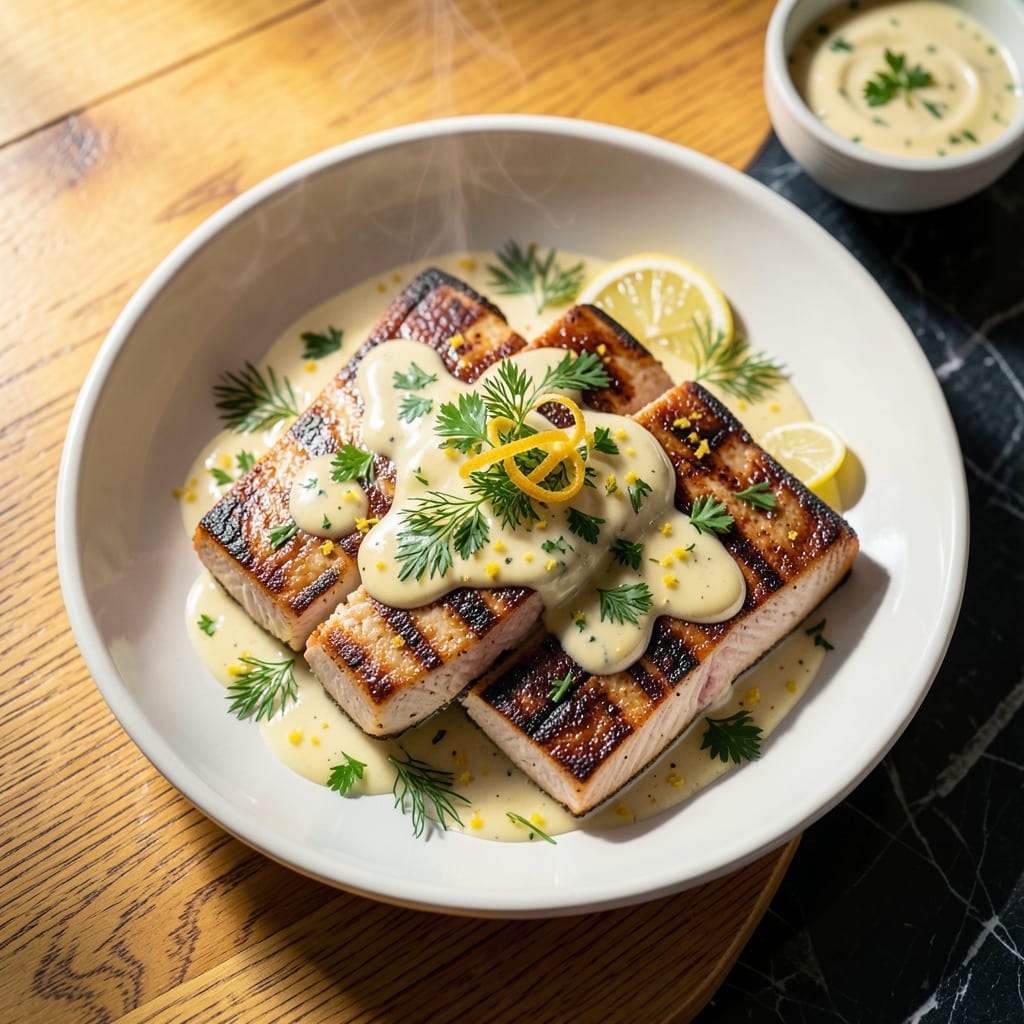
Grilled swordfish deserves a perfectly balanced finish, and this lemon-herb butter delivers every time. The key is high heat and precise timing.
I developed this method after years of fine-tuning—simple ingredients, professional results. The butter melts into the fish, creating a restaurant-quality dish.
Ingredients for The Best Swordfish
High-quality swordfish and a handful of fresh herbs create a restaurant-caliber dish with minimal effort.
| Ingredient | Amount | Notes |
|---|---|---|
| Swordfish Steaks 🐟 | 1 ½ lb | Skinless, 1-inch thick, uniform size |
| Unsalted Butter 🧈 | ½ cup | Softened to room temperature |
| Fresh Lemon Juice 🍋 | 3 tbsp | From about 1 large lemon |
| Lemon Zest 🍋 | 1 tbsp | Finely grated from 1 lemon |
| Fresh Parsley 🌿 | ¼ cup | Finely chopped, flat-leaf variety |
| Fresh Dill 🌿 | 2 tbsp | Finely chopped, stems removed |
| Garlic Cloves 🧄 | 3 cloves | Minced to fine paste |
| Extra-Virgin Olive Oil 🫒 | 2 tbsp | High smoke point preferred |
| Diamond Crystal Kosher Salt 🧂 | 1 ½ tsp | Divided for seasoning |
| Freshly Ground Black Pepper 🌶️ | ½ tsp | Coarse grind preferred |
| Dijon Mustard 🥄 | 1 tsp | Smooth, not whole grain |
| Shallot 🧅 | 1 whole | Finely minced, about 2 tbsp |
[recipe_ingredient_scaler]
The swordfish quality is paramount. Seek out sushi-grade from reputable seafood markets like Whole Foods or local fishmongers—look for firm, translucent flesh with no fishy odor. The steaks should be cut to uniform thickness for even cooking. For the butter, European-style unsalted provides superior richness and lower water content, ensuring a velvety finish.
Substitutions must respect the dish’s integrity. Halibut or mahi-mahi can replace swordfish if absolutely necessary, though texture will differ slightly. Fresh herbs are non-negotiable—dried at one-third the quantity lacks vibrancy. No shallots? Finely minced red onion works, but reduce by half to avoid overpowering. The Dijon mustard adds essential tang—whole grain mustard changes the texture but not the flavor.
Prepare the lemon-herb butter up to 2 days ahead—store covered in the refrigerator. Swordfish is best cooked immediately upon purchase or within 24 hours if refrigerated properly. Leftovers, while uncommon with this dish, keep for 1-2 days only—reheat gently to avoid drying out the fish.
Why You’ll Love This Recipe
- One Pan Wonder: I sear the swordfish in butter, then finish with lemon—cleanup’s just a quick wipe.
- Bright and Zesty: That combo of fresh lemon juice and zest cuts through the richness, making every bite sing.
- Dinner in Minutes: From fridge to table in 15, which honestly saves my sanity on busy nights.
- Leftover Magic: Cold swordfish? Toss it in a salad the next day—still ridiculously good.
Step-by-Step Instructions for Grilled Swordfish With Lemon-Herb Butter
Master these professional techniques to achieve perfectly cooked swordfish with vibrant herb butter every time.
Step 1: Prepare the Lemon-Herb Butter Compound
In a medium bowl, combine the 0.5 cup unsalted butter (softened to room temperature) with 3 tbsp fresh lemon juice, 1 tbsp lemon zest, 0.25 cup fresh parsley, 2 tbsp fresh dill, and 1 tsp Dijon mustard. The butter should be soft enough to mix easily but not melted.
Use a silicone spatula to fold everything together until uniformly incorporated. The mixture will have a vibrant green speckled appearance with citrus aroma. Set this compound butter aside at room temperature—it will be used both for basting during cooking and as a finishing touch.
Step 2: Season and Sear the Swordfish Steaks
Pat the 1.5 lb swordfish steaks completely dry with paper towels. This critical step ensures proper searing. Season both sides evenly with 1.5 tsp Diamond Crystal kosher salt and 0.5 tsp freshly ground black pepper, pressing the seasoning gently into the flesh.
Heat 2 tbsp extra-virgin olive oil in a grill pan or heavy skillet over medium-high heat until shimmering. Add the swordfish steaks and cook undisturbed for 4-5 minutes until the bottom develops a deep golden crust and releases easily from the pan.
Step 3: Add Aromatics and Finish Cooking
While the first side cooks, finely mince the 1 whole shallot and the 3 cloves garlic cloves. After flipping the swordfish, add the minced shallot and garlic to the pan around the steaks. Cook for 1-2 minutes until fragrant, being careful not to let the garlic burn.
Begin basting the swordfish with the prepared lemon-herb butter during the final 2-3 minutes of cooking. The fish is done when it reaches an internal temperature of 145°F and flakes easily with a fork. The total cooking time should be 8-10 minutes depending on thickness.
Step 4: Rest and Serve with Remaining Herb Butter
Transfer the swordfish to a serving platter and let it rest for 3-4 minutes. This allows the juices to redistribute throughout the thick steaks. Spoon the remaining lemon-herb butter over the top, letting it melt slightly from the residual heat.
Garnish with any remaining fresh herbs from your prep. The butter will create a luxurious sauce as it melts over the hot fish. Serve immediately while the swordfish is at its peak temperature and the herb butter is still glossy and fragrant.
Pro Tips For Making The Best Swordfish
- Sear Hot, Finish Low: Start with a ripping hot pan to get that golden crust on the swordfish, then drop the heat to medium to cook through without drying it out—I learned this the hard way after ruining two steaks with uneven heat.
- Pat Steaks Dry: Use paper towels to thoroughly dry the swordfish before cooking, or the butter will sputter and the steaks won’t brown properly—sounds tedious, but it actually changes the outcome.
- Skip Cold Butter: Let the unsalted butter sit at room temperature for 10 minutes before using, so it melts evenly into the lemon and parsley instead of clumping into a greasy mess.
- Rest Before Serving: Give the swordfish a solid 5 minutes under foil after cooking, so the juices redistribute—yes, even if you’re starving.
Wine and Beer Pairings for This Recipe
White Wine Pairings
A crisp Sauvignon Blanc from New Zealand pairs beautifully, with its citrus notes complementing the lemon in your dish. The Kim Crawford or Oyster Bay labels are reliable choices I often reach for. Serve chilled at 45-50°F for optimal flavor. 🍷
Rich White Options
For a fuller-bodied white, try a buttery Chardonnay from California. The Kendall-Jackson Vintner’s Reserve has enough body to stand up to the swordfish’s richness while balancing the herb butter’s acidity.
Rosé Selection
A dry Provence rosé offers a refreshing contrast with its subtle berry notes. I love Whispering Angel for its consistent quality and pale, crisp profile. Serve at 50°F to let the flavors shine.
Beer Pairings
A light pilsner like Samuel Adams Noble Pils cuts through the buttery richness with its crisp, clean finish. The subtle hop bitterness complements the lemon and herbs perfectly. 🍺
Wheat Beer Option
For something different, a Belgian witbier such as Blue Moon adds a citrusy, slightly spiced note that works well with the dish. The orange peel and coriander in the beer echo the lemon flavors.
Light Red Alternative
If you prefer red, go for a light Pinot Noir from Oregon. Meiomi offers a fruit-forward option that won’t overpower the fish. Serve slightly chilled at 55°F for best results.
Nutrition Facts
Frequently Asked Questions
How thick should swordfish steaks be?
For best results, use 1-inch thick steaks. This ensures even cooking and prevents drying out. Thinner steaks cook too quickly, while thicker ones may not cook through properly.
Can I use dried herbs instead of fresh?
Fresh herbs are ideal, but you can substitute with dried at one-third the amount. The flavor won’t be as vibrant, but it’ll still work. Just rehydrate them in a bit of warm water first.
What if my swordfish sticks to the pan?
Make sure the pan is very hot and the fish is completely dry before adding it. If it still sticks, don’t force it—wait another 30 seconds for a proper crust to form.
How do I know when it’s done?
The fish should reach an internal temperature of 145°F and flake easily with a fork. Total cooking time is typically 8-10 minutes for 1-inch steaks.

Trained in classic French technique but raised on slow-cooked ribs and spicy rubs, she blends culinary skill with smoke and soul.
- Recipe for Boneless Pork Chops in Cast Iron Skillet: Sear and Baste to Juicy Perfection - October 3, 2026
- Recipe for Boneless Cross Rib Roast: Slow-Roasted Beef with Herb Crust - October 3, 2026
- Hamburgers in Sauce Recipe Crock Pot: Slow-Cooked Savory Delight - October 3, 2026