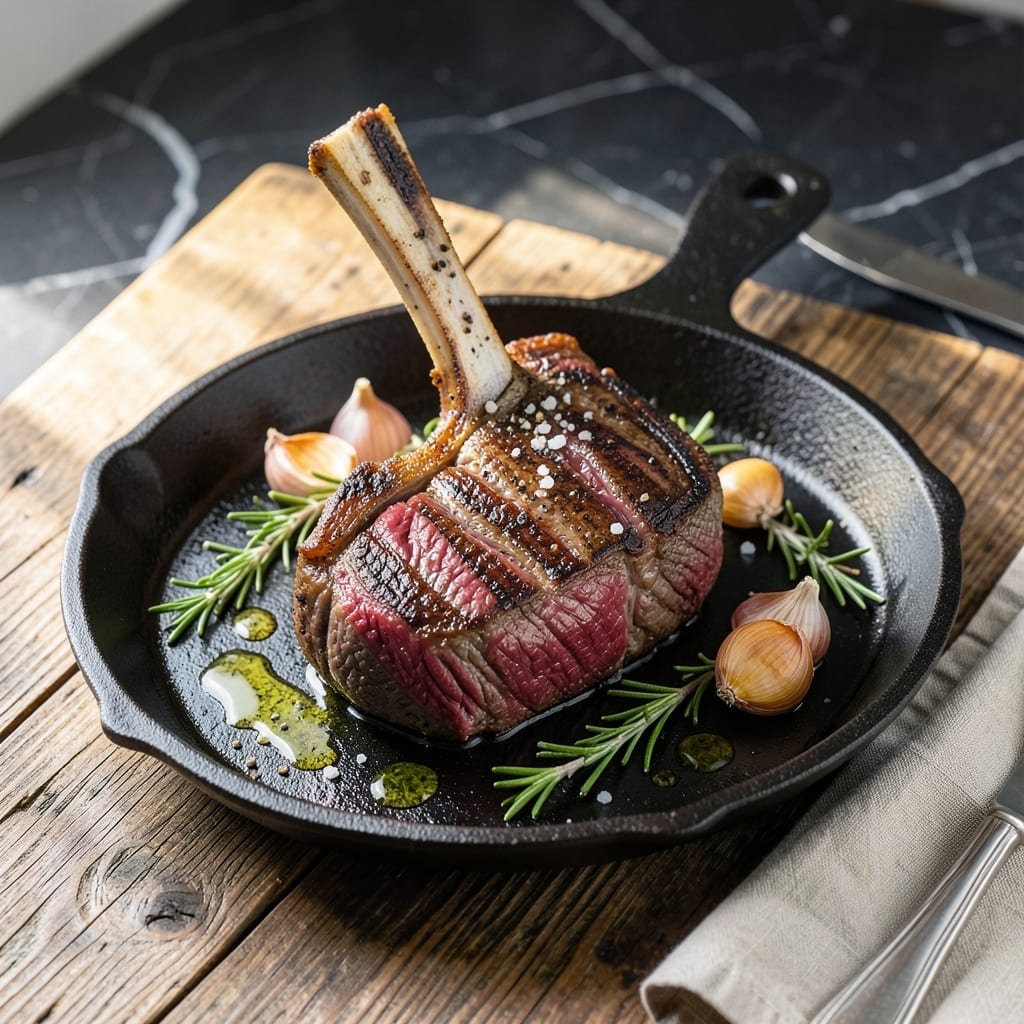
This method delivers a perfectly seared tomahawk with dry-aged depth, using just your oven and a hot pan. The thick cut demands precise timing to achieve edge-to-edge doneness.
My pitmaster training meets French technique here, ensuring a crust so crisp it cracks with each slice while the interior stays tender and juicy. No grill required for this showstopper.
Ingredients for Tomahawk Steak in Oven
Premium cut meets simple seasonings for a restaurant-worthy centerpiece at home.
| Ingredient | Amount | Notes |
|---|---|---|
| Tomahawk Steak 🥩 | 2 lb | Bone-in ribeye, 1.5-2 inches thick |
| Kosher Salt 🧂 | 2 tbsp | Diamond Crystal preferred |
| Freshly Ground Black Pepper 🌶️ | 1 tbsp | Coarse grind for crust |
| Garlic Cloves 🧄 | 4 cloves | Smashed, not minced |
| Fresh Rosemary Sprigs 🌿 | 2 whole | Woody stems removed |
| Fresh Thyme Sprigs 🍃 | 3 whole | For aromatic infusion |
| Unsalted Butter 🧈 | 4 tbsp | For basting finish |
| Olive Oil 🫒 | 2 tbsp | High smoke point preferred |
| Shallot 🧅 | 1 whole | Thinly sliced for garnish |
| Red Wine 🍷 | ½ cup | Dry variety for deglazing |
| Beef Tallow 🥩 | 2 tbsp | Optional for extra richness |
| Fleur de Sel 🧂 | 1 tsp | For finishing touch |
[recipe_ingredient_scaler]
The steak is everything here. Source a well-marbled tomahawk (bone-in ribeye) from a reputable butcher—Whole Foods or Local butcher shops typically carry quality cuts. Look for bright red color with creamy white fat. The thickness (1.5-2 inches) ensures even cooking from edge to edge. Avoid pre-cut steaks from the grocery case; they often lack the marbling needed for dry-aged depth.
No beef tallow? Extra butter works fine for basting. Fresh rosemary and thyme are ideal, but dried at one-third the amount will do in a pinch (just rehydrate in warm water). The red wine for deglazing can be swapped with beef broth—use a high-quality, low-sodium version. Shallots add a mild sweetness; red onion is a decent substitute if that’s what you have.
Let the steak rest at room temperature 45-60 minutes before cooking. Leftovers (if any) keep in the fridge for 3-4 days. For best results, slice against the grain just before serving. The bone makes great stock—simmer with aromatics for 2-3 hours.
Why You’ll Love This Recipe
- I’ll be real: the next-day steak sandwiches with those juices are almost better than the original meal.
- One Pan Wonder: I love that I can sear and roast this tomahawk steak in the same oven-safe pan—no juggling dishes.
- Garlic-Rosemary Magic: The garlic cloves and fresh rosemary infuse the meat with a rich, aromatic depth that’s hard to beat.
- Impresses Every Time: Honestly, it’s my go-to for dinner parties—everyone thinks I slaved over it, but it’s so simple.
Step-by-Step Instructions for Tomahawk Steak in Oven
Here’s the method to achieve a restaurant-quality sear and ideal doneness for this impressive cut.
Step 1: Season and Rest the Tomahawk Steak
Pat the 2 lb Tomahawk Steak completely dry with paper towels—this is essential for a good sear. Season generously with the 2 tbsp Kosher Salt and 1 tbsp Freshly Ground Black Pepper, pressing the seasoning into all surfaces, including the bone.
Place the steak on a wire rack set over a plate and let it rest uncovered at room temperature for 1 hour. This allows the salt to penetrate the meat and the surface to dry further, ensuring a better crust when cooked.
Step 2: Sear the Steak on the Stovetop
Preheat your oven to 425°F. Heat the 2 tbsp Olive Oil and 2 tbsp Beef Tallow in a large oven-safe skillet (cast iron works best) over high heat until the oil shimmers but does not smoke.
Add the steak and sear for 2-3 minutes per side until a deep, golden-brown crust forms. Use tongs to hold the steak and sear the edges as well. During the last minute, add the 4 cloves Garlic Cloves, 2 whole Fresh Rosemary Sprigs, and 3 whole Fresh Thyme Sprigs to the pan to infuse the oil.
Step 3: Baste with Butter and Finish in the Oven
Reduce the heat to medium. Add the 4 tbsp Unsalted Butter to the skillet and tilt the pan slightly. Using a spoon, baste the steak with the melted butter, garlic, and herbs for 1-2 minutes to build flavor.
Transfer the skillet to the preheated oven and roast for 6-8 minutes until the internal temperature reaches 125°F for medium-rare. Use a meat thermometer to check the thickest part of the steak, avoiding the bone.
Step 4: Rest, Deglaze, and Serve
Remove the steak from the skillet and transfer it to a cutting board. Tent loosely with foil and let it rest for 10-15 minutes—this allows the juices to redistribute for a juicier result.
Place the skillet back on the stovetop over medium heat. Add the thinly sliced 1 whole Shallot and cook for 1-2 minutes until softened. Deglaze with the 0.5 cup Red Wine, scraping up any browned bits from the bottom of the pan. Simmer for 2-3 minutes until the liquid reduces slightly.
Slice the steak against the grain and serve with the pan sauce drizzled on top. Finish with a pinch of 1 tsp Fleur de Sel for an elevated touch.
Pro Tips For Making Tomahawk Steak In Oven
- Dry the Steak: Pat the tomahawk steak thoroughly dry with paper towels before seasoning—I learned this the hard way after my first attempt steamed instead of seared.
- Start High, Finish Low: Sear the steak in a screaming hot oven (450°F or higher) for 10 minutes, then drop the temp to 275°F to finish cooking evenly without burning the herbs.
- Use Room-Temp Meat: Pull the tomahawk out of the fridge at least 1 hour before cooking, or the center stays cold while the outside overcooks.
- Crush the Garlic: Smash the garlic cloves lightly before adding them to the pan so they infuse the oil without burning—sounds weird, but it works.
Essential Equipment for Perfect Results
Oven-Safe Skillet
Invest in a 12-inch cast iron skillet—I swear by Lodge for its even heat distribution and durability. This is non-negotiable for achieving that perfect sear before transferring to the oven. A heavy stainless steel pan works too, but cast iron retains heat better. 🔥
Meat Thermometer
Precision matters with this thick cut. I use a ThermoWorks Instant Read for accurate internal temps. Aim for 125°F for medium-rare in the thickest part, avoiding the bone. Don’t guess—temperature is everything with a tomahawk.
Tongs for Control
Use 12-inch locking tongs to flip and maneuver the steak safely. I prefer OXO Good Grips for their comfort and grip. Avoid piercing the meat with forks—it releases precious juices.
Wire Rack
A wire cooling rack set over a plate is essential for resting the steak. This allows air circulation underneath, preventing the crust from steaming and getting soggy. It’s a small tool that makes a big difference.
Basting Spoon
For that buttery finish, a heat-resistant silicone spoon is perfect. It lets you baste the steak with melted butter, garlic, and herbs without melting or warping. I keep one dedicated just for this purpose.
Honestly, these tools are my kitchen workhorses for this recipe.
Nutrition Facts
Frequently Asked Questions
Do I need to preheat my skillet?
Get your cast iron or oven-safe pan ripping hot before adding the steak. This ensures a proper sear and prevents sticking. You’ll know it’s ready when oil shimmers but doesn’t smoke.
How do I know when it’s done?
Use a meat thermometer—125°F is perfect for medium-rare. The thick cut means the temperature will continue rising 5-10°F while resting, so pull it early. Never guess with steak this expensive.
Can I cook it without butter?
Yes, but you’ll miss out on rich flavor. Substitute with olive oil or beef tallow for basting. The butter adds a luxurious finish that complements the dry-aged taste beautifully.
Why rest the steak before serving?
Resting for 10-15 minutes lets juices redistribute. Cutting too soon causes all that precious moisture to spill out onto the cutting board. Patience makes it juicier.

Trained in classic French technique but raised on slow-cooked ribs and spicy rubs, she blends culinary skill with smoke and soul.
- Recipe for Boneless Pork Chops in Cast Iron Skillet: Sear and Baste to Juicy Perfection - October 3, 2026
- Recipe for Boneless Cross Rib Roast: Slow-Roasted Beef with Herb Crust - October 3, 2026
- Hamburgers in Sauce Recipe Crock Pot: Slow-Cooked Savory Delight - October 3, 2026