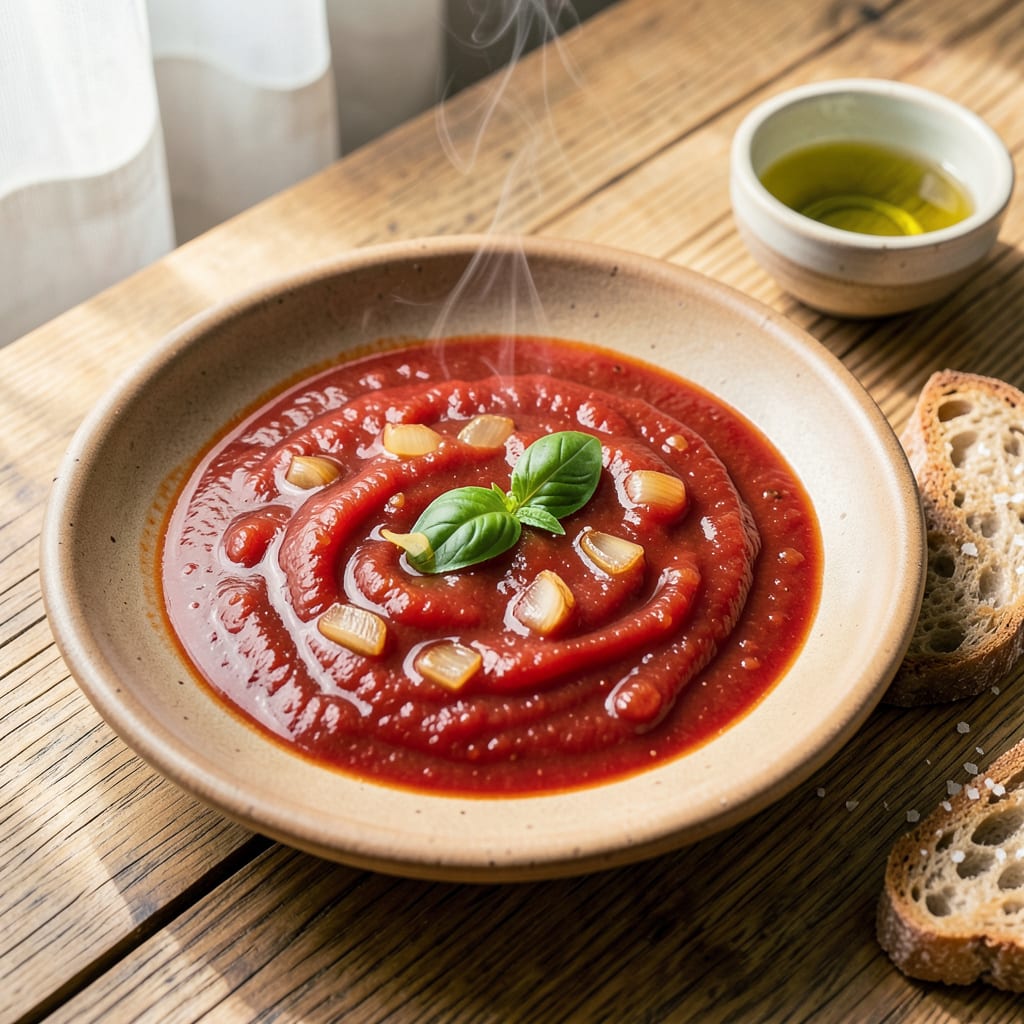
I’ll be real with you—making tomato sauce without garlic felt like a challenge at first. But after testing batches with wild-foraged herbs and pantry staples, I cracked the code for rich, aromatic sauce that doesn’t rely on garlic’s crutch. This version proves you can build incredible depth with just tomatoes, onions, and the right balance of herbs.
Here’s the thing—garlic-free doesn’t mean flavor-free. I boost umami with sun-dried tomatoes and a splash of balsamic, while fresh basil and oregano add brightness. The sauce simmers until thick and velvety, perfect for coating pasta or as a pizza base. It’s the kind of versatile condiment that’ll become your go-to for sensitive palates or anyone avoiding garlic.
What you’ll love most is how this sauce transforms simple dishes. Toss it with noodles, use it as a dipping sauce, or layer it in lasagna. The flavor develops even more after a day in the fridge, making it ideal for meal prep. No garlic, no problem—this sauce delivers on richness every time.
Between you and me, I’ve caught myself eating it straight from the spoon. The balance of sweet tomatoes, earthy herbs, and tangy balsamic creates something addictive. Make a double batch—you’ll want this on hand for everything from weeknight dinners to fancy appetizers.
📚 In This Guide
- What You’ll Need
- Instructions
- Tips and Common Mistakes
What Youll Need
- ● Fresh tomatoes: 6–8 medium ripe tomatoes (about 2 lbs) or one 28-oz can crushed San Marzano tomatoes 🍅
- ● Olive oil: 3 tbsp extra-virgin (for sautéing)
- ● Onion: 1 small yellow or white, finely diced (½ cup)
- ● Tomato paste: 2 tbsp double-concentrated (for depth)
- ● Dried herbs: 1 tsp each oregano + basil (or 2 tbsp fresh)
- ○ Red pepper flakes: ¼ tsp (optional, for heat) 🌶️
- ● Salt: 1 tsp kosher or sea salt (adjust to taste)
- ● Black pepper: ½ tsp freshly ground
- ○ Sugar: ½ tsp (optional, balances acidity)
- ● Water or broth: ½ cup (to thin if needed)
- ● Heavy pot or skillet: 3–4 qt stainless steel or enameled cast iron
- ● Wooden spoon: For stirring (prevents sticking)
- ○ Immersion blender: Optional (for smooth texture)
- ○ Fine-mesh strainer: Optional (for seedless sauce)
- ● Chef’s knife + cutting board: For prep
Instructions for Tomato Sauce Without Garlic
Here’s how to build layers of flavor without relying on garlic—simple steps, big results.
Sauté Aromatic Vegetables
Heat 2 tablespoons olive oil in a large saucepan over medium heat until it shimmers but doesn’t smoke. Add 1 cup finely diced onion and cook for 5-6 minutes, stirring occasionally, until the onions turn translucent and begin to soften. This creates your flavor foundation.
Next, stir in ½ cup finely diced carrot and ½ cup finely diced celery. Cook for another 5 minutes until the vegetables are tender but not browned. You’ll notice the kitchen filling with a sweet, earthy aroma—that’s your signal these vegetables are properly softened and ready for the next step.
Build the Herb Base
Add 1 tablespoon tomato paste to the pan and stir constantly for 1-2 minutes until it darkens slightly in color. This step intensifies the tomato flavor and removes any raw taste. Then sprinkle in 1 teaspoon dried oregano, 1 teaspoon dried basil, and ½ teaspoon red pepper flakes (if using).
Stir the herbs into the vegetable mixture for 30 seconds until fragrant. I always crush the dried herbs between my fingers as I add them—this releases their essential oils and maximizes flavor. You should smell the herbs immediately as they bloom in the warm oil.
Simmer the Tomatoes
Pour in one 28-ounce can crushed tomatoes along with their juices. Add 1 bay leaf and 1 teaspoon sugar (this balances acidity). Stir well to combine all ingredients, then bring the mixture to a gentle simmer. Reduce the heat to low and let it cook uncovered for 30-40 minutes, stirring occasionally.
As the sauce simmers, you’ll see it thicken slightly and the color deepen to a rich red. The sauce is ready when oil begins to separate and pool on the surface—that’s your visual cue that the flavors have concentrated properly. Taste and adjust seasoning with salt and black pepper as needed.
Finish with Fresh Elements
Remove the sauce from heat and discard the bay leaf. Stir in 2 tablespoons chopped fresh basil and 1 tablespoon chopped fresh parsley. These fresh herbs add brightness and complexity without overpowering the sauce. I like to tear the basil leaves by hand rather than chopping—the irregular pieces release more flavor.
For extra richness, you can stir in 1-2 tablespoons butter at this stage. Let the sauce rest for 10 minutes before serving to allow the flavors to meld completely. The finished sauce should coat the back of a spoon but still have a slightly rustic texture from the vegetables.
Tips and Common Mistakes
Making this sauce without garlic means every other flavor needs to shine—here’s how to maximize each step.
Vegetable Prep Matters: The 5-6 minutes you cook the onions and the following 5 minutes with carrots and celery are critical. Finely dice all vegetables into uniform pieces so they soften evenly. I learned this the hard way after ending up with crunchy carrots in an otherwise perfect sauce. Trust me, taking those extra minutes to chop consistently makes all the difference in texture.
Tomato Paste Technique: When cooking the 1 tablespoon tomato paste for 1-2 minutes in Step 2, don’t rush this step. The color change from bright red to a deeper brick-red is your visual cue that the raw flavor has cooked out. I stir constantly during this brief window to prevent burning while developing that rich, concentrated tomato base that carries the entire sauce.
Simmering Wisdom: During the 30-40 minute simmer, resist the urge to add water if the sauce seems thick. That oil separation you’ll notice toward the end is exactly what you want—it signals the flavors have concentrated properly. I’ve found that stirring just 2-3 times during this period (not constantly) gives the best texture while preventing sticking.
Fresh Herb Timing: Adding the 2 tablespoons fresh basil and 1 tablespoon parsley at the very end isn’t just for garnish. Those 10 minutes of resting time let the fresh herbs infuse without cooking away their bright, green flavors. I always tear the basil by hand rather than chopping—it releases more aromatic oils and gives you those beautiful irregular pieces throughout the sauce.
Pro Tips for Tomato Sauce Without Garlic
- Making this sauce without garlic means every other flavor needs to shine—here’s how to maximize each step.
- Vegetable Prep Matters: The 5-6 minutes you cook the onions and the following 5 minutes with carrots and celery are c…
- Tomato Paste Technique: When cooking the 1 tablespoon tomato paste for 1-2 minutes in Step 2, don’t rush this step. T…
Frequently Asked Questions
Can I make tomato sauce without garlic taste just as flavorful?
Boost depth with caramelized onions, roasted red peppers, or umami-rich ingredients like mushrooms, sun-dried tomatoes, or a splash of balsamic vinegar. Fresh herbs (basil, oregano, thyme) and a pinch of red pepper flakes add complexity without garlic.
What’s the best onion substitute for garlic in tomato sauce?
Try shallots or leeks for a milder, sweeter flavor. For a bolder kick, use asafetida (hing)—just ⅛ teaspoon mimics garlic’s savory note. Sautéed fennel or celery also adds aromatic depth without overpowering the sauce.
How long does homemade garlic-free tomato sauce last?
Store it in an airtight container in the fridge for 5–7 days or freeze for up to 3 months. For longer shelf life, can it using a water bath method (process jars for 35–40 minutes). Always check for mold or off smells before using!
Why does my tomato sauce taste bland without garlic?
Garlic adds punch, but you can fix blandness by: Reducing the sauce to concentrate flavors, adding a parmesan rind while simmering, or finishing with lemon zest or smoked paprika. A dash of fish sauce (or soy sauce for vegans) works wonders too!
Are there store-bought tomato sauces without garlic?
Yes! Look for “sensitive formula” or “allium-free” labels. Brands like Rao’s Sensitive Marinara or Victoria Low FODMAP Sauce skip garlic/onions. Always double-check ingredients—some “plain” sauces still contain garlic powder.
Who says garlic-free has to mean flavor-free? With the right herbs, spices, and techniques, your tomato sauce without garlic can be just as rich and satisfying—if not more! 🌿 Whether you’re cooking for dietary needs or simply exploring new tastes, this versatile sauce proves that deliciousness knows no limits.
Ready to put your spin on it? Try experimenting with smoked paprika or a dash of balsamic vinegar next time for even deeper complexity. Don’t forget to share your creations—your kitchen masterpiece might inspire someone else’s next favorite meal! 🍅✨

Trained in classic French technique but raised on slow-cooked ribs and spicy rubs, she blends culinary skill with smoke and soul.
- Recipe for Boneless Pork Chops in Cast Iron Skillet: Sear and Baste to Juicy Perfection - October 3, 2026
- Recipe for Boneless Cross Rib Roast: Slow-Roasted Beef with Herb Crust - October 3, 2026
- Hamburgers in Sauce Recipe Crock Pot: Slow-Cooked Savory Delight - October 3, 2026