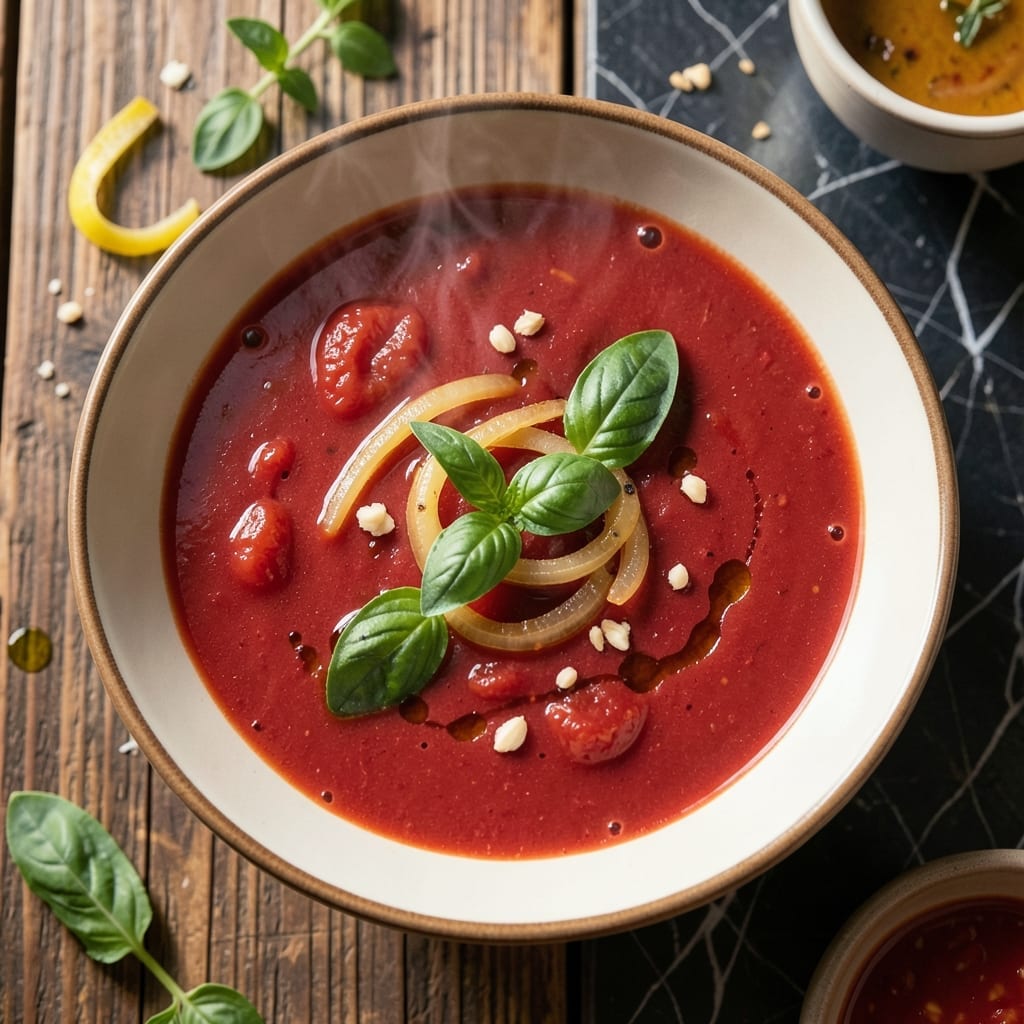
There’s nothing quite like the rich, velvety taste of soup made from ripe garden tomatoes. This method transforms fresh produce into a bowl of comforting warmth with minimal effort.
The secret lies in slow simmering, allowing the natural sweetness of the tomatoes to deepen into a smooth, satisfying base. It’s a timeless way to savor summer’s harvest all year long.
Ingredients for Tomato Soup Recipe with Fresh Tomatoes
Fresh tomatoes, aromatic herbs, and a slow simmer create this velvety garden classic.
| Ingredient | Amount | Notes |
|---|---|---|
| Ripe Garden Tomatoes 🍅 | 3 lb | Cored and quartered |
| Yellow Onion 🧅 | 1 whole | Medium, finely diced |
| Garlic Cloves 🧄 | 4 cloves | Peeled and minced |
| Extra-Virgin Olive Oil 🫒 | 3 tbsp | Divided for cooking and finishing |
| Vegetable Stock 🥫 | 4 cups | Low-sodium preferred |
| Fresh Basil Leaves 🌿 | ½ cup | Loosely packed, chopped |
| Dried Oregano 🍃 | 1 tsp | Mediterranean variety |
| Dried Thyme 🌿 | 1 tsp | Rubbed between fingers |
| Bay Leaf 🍃 | 1 whole | Removed before serving |
| Granulated Sugar 🍚 | 1 tsp | Balances acidity |
| Heavy Cream 🥛 | ½ cup | Optional for richness |
| Salt 🧂 | 1 ½ tsp | Diamond Crystal kosher preferred |
| Black Pepper 🌶️ | ½ tsp | Freshly ground |
| Red Pepper Flakes 🌶️ | ¼ tsp | Adjust to taste |
[recipe_ingredient_scaler]
The tomatoes are everything here. Farmers market heirlooms with their messy, juicy perfection are ideal, but any ripe garden tomatoes work. Look for deep color and heavy weight—signs of peak ripeness. The onion should be sweet and pungent; Vidalia or Walla Walla if you can find them. Avoid pre-diced onions—they lack the freshness needed for the base flavor.
No fresh basil? Dried basil at one-third the amount works, though fresh is preferred. Vegetable stock can be swapped for water in a pinch, but the depth suffers. For a dairy-free version, coconut milk replaces the heavy cream beautifully. Skip the sugar if your tomatoes are naturally sweet—taste as you go. The bay leaf is subtle but essential; don’t omit it.
This soup actually improves overnight—flavors meld and deepen. Store in an airtight container in the fridge for up to 5 days, or freeze for 3 months. Reheat gently to preserve that velvety texture you worked so hard to achieve.
Why You’ll Love This Recipe
- One Pot Wonder: I just toss in the tomatoes, onion, and garlic with olive oil—no complicated steps.
- Sun-Kissed Flavor: The ripe garden tomatoes make it taste like summer in a bowl.
- Freezer Friendly: I double the batch and freeze half for lazy nights.
- Budget Keeper: Five simple ingredients, most of which I already have on hand.
Step-by-Step Instructions for Tomato Soup With Fresh Tomatoes
This method extracts maximum flavor from garden-fresh produce for a silky, well-balanced soup.
Step 1: Sauté Aromatics to Build the Flavor Base
Heat 2 tbsp Extra-Virgin Olive Oil in a large pot over medium heat. Add the finely diced Yellow Onion and cook for 5-6 minutes until soft and translucent, stirring occasionally. The onion should turn glassy without browning—this creates a sweet, mellow foundation.
Add the minced Garlic Cloves and cook for 30 seconds until fragrant. I stir constantly here to prevent burning, which would add bitterness. The moment the garlic releases its aroma, you’re ready for the next step. This timing is critical for balanced flavor development.
Step 2: Simmer Tomatoes and Stock for Depth
Increase heat to medium-high and add the cored and quartered Ripe Garden Tomatoes. Cook for 5 minutes, stirring frequently, until the tomatoes begin to break down and release their juices. You’ll notice the liquid pooling at the bottom of the pot—this is the start of your soup base.
Pour in the 4 cups Vegetable Stock, then add the Dried Oregano, Dried Thyme, Bay Leaf, Granulated Sugar, 1.5 tsp Salt, 0.5 tsp Black Pepper, and 0.25 tsp Red Pepper Flakes. The sugar balances the tomatoes’ natural acidity. Bring to a boil, then reduce heat to maintain a gentle simmer.
Simmer uncovered for 20-25 minutes, stirring occasionally, until the tomatoes are completely broken down and the flavors have melded. The soup should reduce slightly and take on a deeper, more concentrated color.
Step 3: Blend to Silky Smoothness
Remove the pot from heat and discard the Bay Leaf. Using an immersion blender, purée the soup until completely smooth. If using a countertop blender, work in batches and be extremely careful with hot liquids—fill the blender only halfway and vent the lid.
For an ultra-silky texture, I strain the puréed soup through a fine-mesh sieve. This removes any remaining seeds or skins, creating that velvety mouthfeel promised in the title. Press firmly with a ladle to extract all the liquid and flavor from the solids.
Step 4: Finish with Cream and Basil
Return the soup to low heat and stir in the 0.5 cup Heavy Cream. This adds richness and rounds out the flavors, but the soup remains light enough to let the tomato flavor shine. Warm through for 2-3 minutes—do not boil, as this can cause the cream to separate.
Remove from heat and stir in the chopped Fresh Basil Leaves and the remaining 1 tbsp Extra-Virgin Olive Oil. The basil adds a bright, fresh note that complements the sweetness of the tomatoes. Taste and adjust seasoning if needed, though the initial measurements should provide perfect balance.
Ladle into bowls and serve immediately. The soup should have a vibrant red-orange color with a swirl of cream visible on the surface. Each spoonful should deliver the pure essence of garden tomatoes with layers of herbaceous complexity.
Pro Tips For Making Tomato Soup Recipe With Fresh Tomatoes
- Blanch the Tomatoes: Drop tomatoes in boiling water for 30 seconds, then shock in ice water—the skins slip right off, saving you from peeling struggles.
- Sweat the Onions: Cook the onions in olive oil over medium-low heat for at least 8-10 minutes until translucent; rushing this step leaves a raw, harsh bite.
- Strain for Silkiness: After blending, pass the soup through a fine-mesh strainer to remove seeds and skins—it’s the difference between chunky and velvety.
- Use Stale Bread: Sounds weird, but it works: toss in a slice of stale bread while simmering to thicken the soup naturally and add depth.
Health Benefits of This Dish
Rich in Lycopene
Fresh tomatoes are packed with lycopene, a powerful antioxidant that gives them their vibrant red color. Cooking tomatoes, like in this soup, actually increases lycopene availability, making it easier for your body to absorb. A single bowl provides a significant portion of your daily needs. 💪
Vitamin C Boost
This dish is an excellent source of vitamin C, with fresh tomatoes providing about 28mg per cup. That’s roughly 30% of your daily requirement in one serving. Vitamin C supports immune function and skin health, making this soup as nourishing as it is delicious.
Low-Calorie Comfort
With roughly 150-200 calories per serving (without cream), this soup offers satisfying richness without the guilt. The fiber from tomatoes and onion helps keep you full, making it a great option for weight management. I often enjoy it as a light lunch.
Hydration Support
Tomatoes are about 95% water, and this soup helps contribute to your daily hydration needs. The 4 cups of vegetable stock add even more fluid, making it a hydrating choice that still feels substantial and comforting.
Heart-Healthy Benefits
The combination of lycopene, potassium, and fiber in tomatoes supports cardiovascular health. Potassium helps regulate blood pressure, while fiber aids in cholesterol management. This makes the soup a heart-smart addition to any meal plan. 💛
B Vitamin Source
Tomatoes provide a range of B vitamins, including folate and B6, which are essential for energy metabolism and brain function. The garlic and herbs add even more nutritional value, making every spoonful packed with goodness.
Nutrition Facts
Frequently Asked Questions
Do I need to peel the tomatoes first?
No peeling required! The skins soften during cooking and get blended smooth. If you prefer a silky texture, strain the soup after blending to remove any remaining bits.
Can I make this without cream?
Skip the cream for a lighter version, or use coconut milk for richness. The tomatoes provide plenty of natural sweetness and body.
How do I fix a too-acidic batch?
Add a pinch more sugar or a splash of cream to balance acidity. Taste as you go—tomatoes vary in natural sweetness.
What’s the best way to store leftovers?
Cool completely, then refrigerate in an airtight container for up to 5 days. Freeze for longer storage (up to 3 months).

Trained in classic French technique but raised on slow-cooked ribs and spicy rubs, she blends culinary skill with smoke and soul.
- Recipe for Boneless Pork Chops in Cast Iron Skillet: Sear and Baste to Juicy Perfection - October 3, 2026
- Recipe for Boneless Cross Rib Roast: Slow-Roasted Beef with Herb Crust - October 3, 2026
- Hamburgers in Sauce Recipe Crock Pot: Slow-Cooked Savory Delight - October 3, 2026