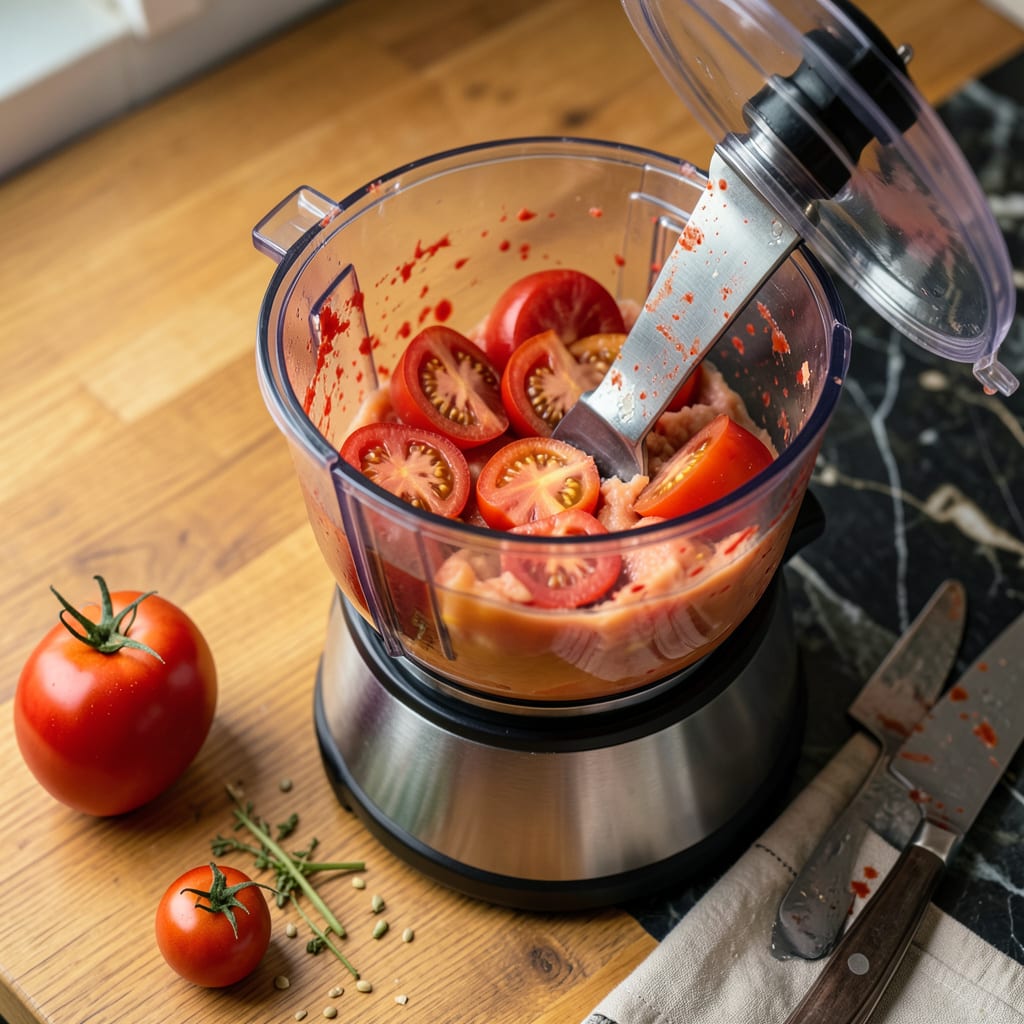
I’ll be real with you—using a food processor for tomatoes is the fastest way to get from whole fruit to silky sauce base without losing your mind. No peeling, no seeding, just pure tomato flavor in seconds. I used to spend forever chopping by hand until I realized my processor could do the work for me while I prepped the rest of dinner.
The trick is working in batches and pulsing instead of continuous blending. This gives you control over texture—whether you want a chunky salsa or velvety purée for pasta sauce. I always scrape down the sides halfway through to make sure every bit gets processed evenly. No wasted tomato, no uneven chunks.
What you end up with is a versatile base that’s ready for whatever you’re cooking. Need marinara? Add garlic and basil. Making salsa? Toss in jalapeños and lime. The processor does the heavy lifting while you customize the flavors. It’s my secret weapon for getting restaurant-quality sauces without the restaurant effort.
Store it in the fridge for up to a week or freeze in ice cube trays for easy portions later. This method changed how I cook with tomatoes—no more canned shortcuts when fresh tastes this good, this fast.
📚 In This Guide
- What You’ll Need
- Instructions
- Tips and Common Mistakes
What Youll Need
- ● Food processor – A 7-12 cup capacity model (like a Cuisinart DFP-14BCNY) for best results. Mini processors may struggle with larger batches. ⚠️
- ● Fresh tomatoes – 4-6 medium (about 2 lbs) ripe tomatoes (Roma or vine-ripened work best for sauce). Wash and core them first!
- ● Sharp knife – A chef’s knife (8-inch) or paring knife for trimming stems and chopping (if pre-cutting).
- ● Cutting board – Wood or plastic, at least 12×9 inches for safe prep.
- ● Measuring spoons/cups – For adding seasonings (if making sauce).
- ● Spatula – A silicone or rubber spatula to scrape down sides and transfer purée.
- ○ Fine-mesh strainer (optional) – For seed/skin removal if you want ultra-smooth texture.
- ● Bowl or container – To catch processed tomatoes (a 4-cup glass measuring cup with a pour spout is handy!).
- ○ Lemon juice or citric acid (optional) – 1 tsp to preserve color if storing.
- ○ Salt & seasonings (optional) – To taste (½ tsp salt, ¼ tsp black pepper, or herbs like basil/organo).
Instructions
Here’s how to transform fresh tomatoes into a velvety sauce base in just minutes.
Select and Prepare Your Tomatoes
Choose ripe, flavorful tomatoes for the best results. I prefer Roma or San Marzano tomatoes because they have less water content and more flesh, which gives you a thicker, richer sauce. Give them a quick rinse under cool water to remove any dirt or residue.
Cut out the stem area and quarter the tomatoes. You don’t need to peel them first—the food processor will handle the skins beautifully, and they actually add body and nutrients to your sauce. For about 4 servings, you’ll want roughly 2 pounds of tomatoes, which typically equals about 6-8 medium tomatoes.
Pulse for Perfect Texture
Add the quartered tomatoes to your food processor bowl. Don’t overfill—work in batches if needed, filling no more than halfway for each pulse. This ensures even processing and prevents the tomatoes from pureeing unevenly.
Pulse in 1-second bursts about 8-10 times, then pause to check the consistency. You’re aiming for a smooth but slightly textured sauce—not completely liquid, but with no large chunks remaining. The exact number of pulses depends on your food processor’s power, so watch the texture rather than counting pulses.
Strain for Silky Smoothness
Set a fine-mesh strainer over a large bowl and pour the processed tomatoes into it. Use a silicone spatula to press the mixture through the strainer, working in circular motions. This removes any remaining seeds and skins while keeping all that rich tomato flavor.
You’ll be left with a beautifully smooth tomato puree in the bowl below. The straining process takes about 2-3 minutes and makes a noticeable difference in your sauce’s texture. Don’t skip this step—it’s what transforms good tomato sauce into extraordinary.
Cook to Concentrate Flavors
Transfer the strained tomato puree to a saucepan and bring to a gentle simmer over medium heat. Let it cook uncovered for about 15-20 minutes, stirring occasionally. You’ll notice the color deepen and the volume reduce slightly as the flavors concentrate.
The sauce is ready when it coats the back of a spoon and has reduced by about one-third. At this point, you can season it to taste with salt and pepper. For a basic sauce, I start with ½ teaspoon salt and adjust from there. This cooked base will keep in your refrigerator for up to 5 days or can be frozen for 3 months.
Tips and Common Mistakes
Turning fresh tomatoes into silky sauce is easier than you think—here’s what I’ve learned from making this countless times.
Tomato Selection: For the best results in Step 1, choose Roma or San Marzano tomatoes as mentioned. I’ve found that their lower water content means you’ll spend less time reducing the sauce in Step 4. If using other varieties, you might need to extend the 15-20 minute cooking time slightly to achieve the same thickness. The 2 pounds of tomatoes makes exactly enough for 4 servings, so don’t skimp on quantity.
Pulsing Technique: In Step 2, those 1-second bursts are crucial. I count “one-thousand-one” for each pulse to keep them consistent. Watch the texture closely—you want it smooth but with tiny flecks, not completely liquid. If you over-process, you’ll lose that fresh tomato texture that makes this sauce special. Remember, 8-10 pulses is just a guideline; your food processor might need slightly more or less.
Straining Secret: The 2-3 minutes spent straining in Step 3 makes all the difference. Use the back of a large spoon if you don’t have a silicone spatula, pressing firmly in circles. Don’t rush this step—what you’re removing are the seeds and thicker skins that would make your sauce bitter. I’ve skipped it before and always regretted it when the final texture wasn’t as velvety.
Reduction Watch: During the 15-20 minute simmer in Step 4, stir more frequently as you approach the 15-minute mark. The sauce can go from perfect to over-reduced quickly. I like to use a wooden spoon and drag it through the sauce—when it leaves a clear path that slowly fills in, it’s getting close to that ideal spoon-coating consistency.
Pro Tips for Tomatoes In Food Processor
- Turning fresh tomatoes into silky sauce is easier than you think—here’s what I’ve learned from making this countless …
- Tomato Selection: For the best results in Step 1, choose Roma or San Marzano tomatoes as mentioned. I’ve found that t…
- Pulsing Technique: In Step 2, those 1-second bursts are crucial. I count “one-thousand-one” for each pulse to keep th…
Frequently Asked Questions
Got questions about using tomatoes in your food processor? You’re not alone! Here are the most common queries—answered in a snap.
Can I use canned tomatoes instead of fresh in a food processor?
Absolutely! Canned tomatoes (whole, crushed, or diced) work great—just drain excess liquid first for a thicker sauce. Tip: Fire-roasted canned tomatoes add a smoky depth without extra prep!
Why does my tomato puree turn out watery? How do I fix it?
Watery puree usually means overripe tomatoes or skipping the straining step. Fix it by:
- Simmering the puree to reduce liquid
- Adding a small potato (cooked) to thicken naturally
- Straining through a fine-mesh sieve post-processing
Do I need to peel tomatoes before processing?
Not mandatory, but peeling (via blanching) gives a smoother texture. Shortcut: If keeping skins, blend longer and strain for a silkier result. Skin-on works fine for rustic sauces!
How long should I process tomatoes for the perfect sauce consistency?
Start with 20–30 seconds on pulse, then blend continuously for 1–2 minutes. Stop to scrape sides and check texture. Over-blending can make it foamy—aim for “smooth but not fluffy.”
What’s the best food processor setting for tomatoes?
Use the “puree” or “liquify” setting if available. No fancy modes? Start on low to break down chunks, then switch to high for a uniform finish. Avoid overfilling—process in batches for even results!
Using a food processor to blend tomatoes is a game-changer for quick, velvety sauces, soups, and salsas! 🍅✨ Whether you’re whipping up a 5-minute marinara or a chunky pico de gallo, this method saves time while keeping flavors fresh. No more peeling or tedious chopping—just pulse, blend, and enjoy.
Ready to try it? Grab those ripe tomatoes and experiment with herbs, spices, or a splash of citrus for your next dish. Your next homemade sauce is just minutes away!

Trained in classic French technique but raised on slow-cooked ribs and spicy rubs, she blends culinary skill with smoke and soul.
- Recipe for French Pork Spread Gorton: Savory Gallic Flavors in a Spreadable Delight - October 3, 2026
- Recipe for Pan Fried: Golden Crust with Savory Depth - October 3, 2026
- Recipe For Fried Chicken In A Pressure Cooker: Crispy Golden Bites in Half the Time - October 3, 2026