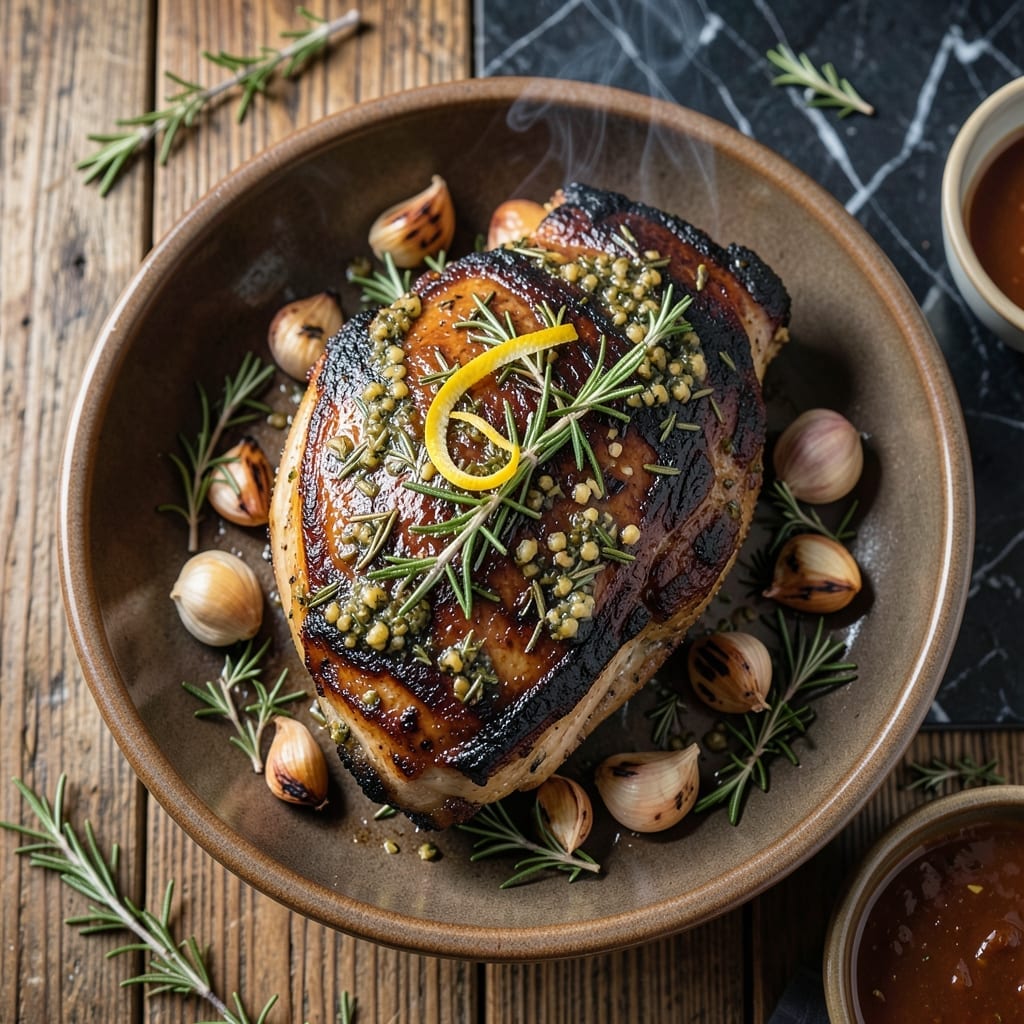
This rib roast recipe brings wood-fired elegance to your Traeger with a herb crust that seals in juices. The slow smoke infuses every bite with deep, rich flavor.
I’ve perfected this method to ensure tender, evenly cooked meat with a caramelized exterior. It’s a showstopper for any special occasion.
Ingredients for Traeger Grill Rib Roast
Prime rib roast meets aromatic herbs and wood-fired perfection for an unforgettable meal.
| Ingredient | Amount | Notes |
|---|---|---|
| Bone-In Rib Roast 🥩 | 4 lb | Prime grade preferred for marbling |
| Kosher Salt 🧂 | 2 tbsp | Diamond Crystal brand recommended |
| Freshly Ground Black Pepper 🌶️ | 1 tbsp | Coarse grind for crust texture |
| Fresh Rosemary 🌿 | 3 tbsp | Finely chopped, stems discarded |
| Fresh Thyme Leaves 🍃 | 2 tbsp | Stripped from stems |
| Garlic Cloves 🧄 | 6 cloves | Minced to paste consistency |
| Dijon Mustard 🟡 | 2 tbsp | Whole grain variety acceptable |
| Extra-Virgin Olive Oil 🫒 | 3 tbsp | High-quality for herb crust |
| Traeger Hardwood Pellets 🪵 | 2 cups | Hickory or oak recommended |
| Unsalted Butter 🧈 | 4 tbsp | Softened for finishing |
| Red Wine 🍷 | 1 cup | Dry variety for deglazing |
| Beef Broth 🥣 | 1 cup | Low-sodium preferred |
[recipe_ingredient_scaler]
The rib roast quality is paramount. Prime grade from a trusted butcher like Whole Foods or Local Butcher Shop ensures superior marbling and flavor. Look for bright red color with creamy white fat cap. For the herb crust, organic herbs from Trader Joe’s or your farmers market provide the most vibrant flavor (the good stuff, not the pre-shredded kind).
No prime grade available? Choice grade works with slightly less marbling. Fresh herbs can be replaced with dried at one-third the amount, though fresh is ideal. If avoiding alcohol, substitute beef broth with balsamic vinegar for the wine. The mustard can be whole grain or smooth—both add the necessary tang to balance the richness.
Store the rib roast uncovered on a rack in your fridge for 1-2 days before cooking to dry the surface. The herb crust mixture keeps for 24 hours refrigerated. Leftovers (if any) reheat beautifully and freeze for up to 3 months.
Why You’ll Love This Recipe
- Set and Forget: I toss the rosemary and thyme on the rib roast, salt it, and let the Traeger do the work—no babysitting required.
- Herb-Crusted Heaven: That crust from the kosher salt and fresh herbs? It’s the reason I make this every Christmas.
- Feeds a Crowd: One bone-in roast and suddenly I’ve got enough for Sunday dinner plus leftovers for sandwiches.
- Leftovers for Days: Honestly, the next-day rib roast hash might be even better than the first serving.
Step-by-Step Instructions for Traeger Grill Rib Roast
Master the art of wood-fired cooking with this precise, professional method for a stunning main course.
Step 1: Prepare the Herb Crust and Season the Roast
In a small bowl, combine the 3 tbsp fresh rosemary, 2 tbsp fresh thyme leaves, 6 cloves garlic cloves, 2 tbsp Dijon mustard, and 3 tbsp extra-virgin olive oil into a thick paste. I use the side of my knife to mash the garlic into a paste consistency first—this ensures even distribution in the crust.
Pat the 4 lb bone-in rib roast completely dry with paper towels. This step is critical for achieving a proper sear on the Traeger. Generously season all surfaces with the 2 tbsp kosher salt and 1 tbsp freshly ground black pepper, then coat evenly with the herb paste. The salt should form a visible crust on the meat.
Step 2: Set Up the Traeger for Indirect Heat
Fill the Traeger hopper with the 2 cups Traeger hardwood pellets—hickory or oak will complement the beef beautifully. Preheat the grill to 225°F with the lid closed for at least 15 minutes to stabilize the temperature.
Once preheated, place the rib roast directly on the grill grates, bone-side down. The indirect heat will cook the roast evenly while the wood pellets infuse smoky flavor. Close the lid and maintain the temperature between 225-250°F throughout the cooking process.
Step 3: Smoke to Perfect Internal Temperature
Insert a meat probe into the thickest part of the roast, avoiding the bone. Smoke the roast undisturbed until the internal temperature reaches 120-125°F for medium-rare, which typically takes 3-4 hours depending on your specific Traeger model and ambient temperature.
Resist the urge to open the lid frequently—each peek can extend the cooking time by 10-15 minutes. The roast is ready when the probe slides in with minimal resistance and the exterior has developed a deep mahogany crust.
Step 4: Rest and Prepare the Pan Sauce
Transfer the roast to a cutting board and tent loosely with foil. Let it rest for 20-30 minutes—this allows the juices to redistribute for maximum tenderness. Meanwhile, place a cast iron skillet on the Traeger and add the 4 tbsp unsalted butter.
Once melted, pour in the 1 cup red wine and 1 cup beef broth. Simmer for 8-10 minutes until reduced by half, stirring occasionally. The sauce should coat the back of a spoon. Strain and serve alongside the sliced roast.
Step 5: Slice and Serve
After resting, slice the rib roast between the bones into 1-inch thick portions. Each serving should have a portion of the herb crust on top. Arrange on a platter and drizzle with some of the warm pan sauce.
Serve immediately while warm. The ideal serving temperature is 130-135°F, which maintains the medium-rare center. The meat should be tender with a slight resistance, and the herb crust should provide a fragrant, flavorful contrast to the rich beef.
Pro Tips For Making Traeger Grill Rib Roast
- Dry the Roast: Pat the rib roast completely dry with paper towels before seasoning—this guarantees a better crust on the Traeger. I learned this the hard way after my first few attempts came out steamed instead of seared.
- Use a Meat Thermometer: Pull the roast at 120°F for medium-rare, not by time alone. After overcooking a $50 cut by guessing, I finally bought a thermometer, and it actually changes the outcome every time.
- Skip the Cold Herbs: Let the fresh rosemary and thyme sit at room temp for 30 minutes before chopping—their oils release better. Sounds weird, but it works.
- Rest Before Carving: Tent the roast with foil and give it a solid 20-30 minutes to rest. I was skeptical until I tried it, and the juices stayed in the meat instead of all over the cutting board.
Pro Cooking Tips for This Dish
Pellet Selection Matters
For this rib roast, I always use hickory or oak pellets—they deliver that classic smoke profile that pairs perfectly with beef. Avoid mesquite; it can overpower the herb crust. Fill your hopper with 2 cups of fresh, high-quality pellets before starting. 🌡️
Temperature Control
Maintain a steady 225-250°F throughout the cook. I use a dual-probe thermometer with one probe in the roast and another monitoring grill temp. The Traeger Pro Series models hold temperature best for long smokes.
Probe Placement
Insert your meat probe into the thickest part of the roast, avoiding bones. I aim for 120-125°F internal for medium-rare. The thickest part is usually near the center, away from the bone.
Resting Period
Let your roast rest for 20-30 minutes after smoking. I tent mine loosely with foil—this keeps it warm while juices redistribute. The internal temp will rise 5-10°F during resting, so pull it early. 💡
Crust Perfection
Pat the roast completely dry before applying the herb paste. I use paper towels and press firmly. This ensures the crust adheres properly and develops that beautiful mahogany color.
Sauce Timing
Start your pan sauce during the resting period. I use a cast iron skillet directly on the Traeger. The red wine and beef broth reduction adds depth to the herb flavors in the crust.
Nutrition Facts
Frequently Asked Questions
Do I need to reverse sear the roast?
Not necessary for this method. The 225°F smoke develops a beautiful crust while cooking through evenly. A final sear isn’t needed since the herb paste creates its own flavorful crust.
What if my roast finishes early?
Wrap it tightly in foil and place in a 170°F oven. It’ll stay warm for 1-2 hours without overcooking. The internal temp will hold perfectly while you finish other dishes.
Can I use dried herbs instead of fresh?
Yes, but reduce the amount by 2/3. So for 3 tbsp fresh rosemary, use just 1 tbsp dried. Rehydrate them in 1 tbsp olive oil first for better flavor distribution.
How do I know when it’s done?
Use a meat thermometer—the roast is ready at 120-125°F internal. The probe should slide in like butter. Remember it’ll rise another 5-10°F while resting.

Trained in classic French technique but raised on slow-cooked ribs and spicy rubs, she blends culinary skill with smoke and soul.
- Recipe for Boneless Pork Chops in Cast Iron Skillet: Sear and Baste to Juicy Perfection - October 3, 2026
- Recipe for Boneless Cross Rib Roast: Slow-Roasted Beef with Herb Crust - October 3, 2026
- Hamburgers in Sauce Recipe Crock Pot: Slow-Cooked Savory Delight - October 3, 2026