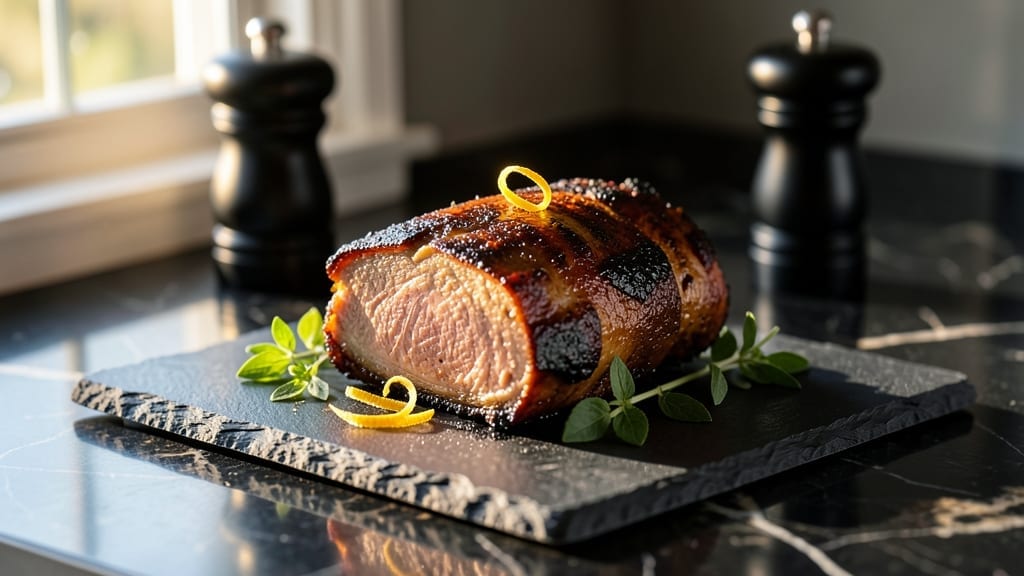
Smoking a Traeger pork butt recipe with applewood creates melt-in-your-mouth tenderness that rivals any competition-style pitmaster. Growing up in small-town Georgia, I learned that slow-smoked pork transforms tough cuts into something extraordinary—this method preserves that tradition while delivering restaurant-quality results at home.
The secret lies in precise temperature control and patience. Using a Traeger’s consistent heat (225°F) breaks down collagen over 12-16 hours, while applewood smoke infuses deep, aromatic layers. A simple dry rub of salt, pepper, and brown sugar forms a flavorful bark without overpowering the natural sweetness of the meat.
By the time you pull it off the smoker, the pork butt will be so tender it practically falls apart at the touch. The bark will be dark and crisp, the meat juicy and rich with smoke flavor.
This is the kind of dish that turns casual cookouts into memorable gatherings—exactly how it should be.
Serve with classic sides like coleslaw or cornbread to complete the meal. The leftovers reheat beautifully for sandwiches, making this recipe perfect for feeding a crowd or meal prepping. Here’s how to achieve that perfect pull every time.
Ingredients for traeger smoked pork butt
A perfect Traeger pork butt recipe transforms tough cuts into melt-in-your-mouth perfection with applewood smoke.
| Ingredient | Amount | Notes |
|---|---|---|
| Pork Butt (Boston Butt) 🐖 | 8 lb | Trimmed of excess fat |
| Diamond Crystal Kosher Salt 🧂 | 2 tbsp | For dry rub balance |
| Freshly Ground Black Pepper 🌶️ | 1 ½ tbsp | Coarse grind preferred |
| Brown Sugar (Packed) 🍚 | 1 ½ tbsp | Light or dark variety |
| Applewood Pellets 🌳 | 4 lb | Traeger-compatible pellets |
| Butcher Paper 📄 | 2 sheets | For smoke wrap |
| Pork Butt Injection (Optional) 💧 | 1 cup | House-made or store-bought |
| Applewood Smoke Liquid (Optional) 🍎 | ½ cup | For basting |
| Pork Butt Probe Thermometer 🔥 | 1 whole | Digital, 300°F+ range |
| Parchment Paper 📄 | 1 sheet | For storage |
| Aluminum Foil 🔥 | 1 sheet | Heavy-duty preferred |
| Apple Cider Vinegar (Optional) 🍎 | 2 tbsp | For injection base |
[recipe_ingredient_scaler]
The pork butt is the star, so source a high-quality 8 lb Boston butt from a reputable butcher like Costco or Whole Foods. Look for well-marbled meat with a bright red hue—avoid pale or dry cuts. Professional pitmasters swear by pre-trimming the fat cap to ¼ inch for even cooking. For the dry rub, Diamond Crystal kosher salt is essential—it dissolves more evenly than table salt and enhances flavor without overpowering. If you want to elevate the bark, consider adding 1 tbsp smoked paprika to the rub mixture, which adds a subtle wood-fired depth that complements the applewood smoke.
No applewood pellets? Hickory or cherry wood pellets work well as a substitute, though they impart a slightly different flavor profile. For the optional injection, store-bought pork butt injection from brands like Traeger or Pit Boss contains pre-mixed seasonings and moisture enhancers. If making your own, mix 1 cup apple cider vinegar, 1 cup chicken broth, 1 tbsp brown sugar, 1 tbsp garlic powder, and 1 tbsp onion powder—this balances acidity and sweetness for optimal tenderness. The butcher paper is non-negotiable for the smoke wrap; aluminum foil can be used but lacks the breathability needed for proper bark formation. For the thermometer, Traeger’s built-in probe is ideal, but a Meater+ or Thermoworks digital probe offers more precision for the stall phase.
The pork butt should be stored in the fridge for 1-2 days before smoking to allow the dry rub to adhere and develop flavor. Wrap tightly in parchment paper with a layer of aluminum foil between the meat and paper to prevent sticking. For leftovers, slice against the grain and reheat in a 325°F oven with a splash of apple juice or broth to maintain moisture. This recipe yields enough for 8 hearty servings, making it perfect for gatherings or meal prep. The smoke liquid can be stored in an airtight container in the fridge for up to 1 week, while the injection mixture keeps for 3 weeks if refrigerated. Always label containers with the date for optimal freshness.
Why You’ll Love This Recipe
- Unfussy Prep: Honestly, this isn’t one of those recipes that demands hours in the kitchen. Just trim that fat cap to a quarter-inch, slap on the dry rub of 2 tbsp Diamond Crystal Kosher Salt, 1.5 tbsp black pepper, and 1.5 tbsp brown sugar, and let it chill overnight. The Traeger does the heavy lifting while you nap or binge your favorite show.
- Chef’s Kiss Bark: That crackling dark crust? It’s not just pretty—it’s dangerously addictive. The applewood smoke from the 4 lb Applewood Pellets and the butcher paper wrap at 225°F give you that perfect balance of smoky depth and caramelized edge. Trust me, your guests will be licking their plates.
- Feeds a Crowd (and Leftovers Too): Easily feeds 12 people, but don’t worry about leftovers going to waste. Slice it against the grain, reheat with a splash of apple juice, and you’ve got a meal for days. My kids even ask for seconds—yes, even on a Tuesday night—because it’s that good.
- Budget-Friendly Powerhouse: You’re getting 8 lbs of pork butt for a fraction of what takeout costs, and those 2 tbsp kosher salt and 1.5 tbsp brown sugar stretch so far. Plus, the Traeger runs on 4 lb pellets—a small investment for a meal that’ll have everyone begging for seconds. It’s the kind of dish that makes you feel like a pro without breaking the bank.
Step-by-step instructions for Traeger smoked pork butt
Mastering this technique guarantees melt-in-your-mouth tenderness with perfect bark every time.
Prepare and Inject the Pork Butt
Begin by trimming the fat cap of the 8 lb Pork Butt (Boston Butt) to a uniform ¼-inch thickness using a sharp boning knife. This ensures even cooking while preserving moisture. Pat the surface dry with paper towels—removing excess moisture is critical for bark formation.
For the injection (if using), combine the 1 cup Pork Butt Injection (Optional) with the 2 tbsp Apple Cider Vinegar (Optional) in a clean syringe. Inject the mixture into the meat at ¼-inch intervals in a crosshatch pattern, avoiding fat pockets. This step adds moisture and flavor penetration, but if skipped, proceed with the dry rub only.
Apply the Dry Rub and Smoke
In a small bowl, combine the 2 tbsp Diamond Crystal Kosher Salt, 1½ tbsp Freshly Ground Black Pepper, and 1½ tbsp Brown Sugar (Packed). Rub this mixture evenly over the entire surface of the pork butt, pressing firmly to ensure adhesion. Let it rest uncovered in the refrigerator for 12-24 hours—this allows the rub to penetrate and develop flavor.
Load the Traeger with 4 lb Applewood Pellets and preheat to 225°F. Place the pork butt fat-side up on the grill grates, ensuring proper airflow around all sides. Insert the Pork Butt Probe Thermometer into the thickest part of the meat, avoiding bone. Smoke undisturbed for 6-8 hours, maintaining 225-250°F—resist the urge to open the lid, as temperature fluctuations delay the cooking process.
Wrap and Finish for Tenderness
When the internal temperature reaches 165-170°F, you’ll hit “the stall”—a plateau where evaporation slows progress. This is the moment to wrap the pork butt tightly in 2 sheets Butcher Paper, folding the edges to seal completely. The paper allows moisture to escape gradually while preserving the bark. Return it to the smoker and continue cooking.
If using the ½ cup Applewood Smoke Liquid (Optional), brush it lightly over the wrapped pork butt every 2 hours to enhance bark development. Continue smoking until the internal temperature reaches 203°F, at which point the meat should be fork-tender. Total cooking time typically ranges from 12-16 hours, depending on your smoker’s efficiency.
Rest and Slice for Maximum Juiciness
Remove the pork butt from the smoker and transfer it to a cutting board lined with 1 sheet Parchment Paper. Tent loosely with 1 sheet Aluminum Foil and let it rest for 2 hours—this critical step allows juices to redistribute, preventing dryness. The meat will continue rising in temperature to 205-208°F during this time.
Slice the pork butt against the grain into ¼-inch thick portions. Serve immediately with the rendered juices spooned over the top. The result should be fall-apart tenderness with a dark, crackling bark infused with applewood smoke. Store leftovers in the refrigerator for up to 5 days or freeze for longer preservation.
Pro Tips For Making Traeger Smoked Pork Butt
- Trim Fat Evenly: That fat cap’s got to be consistent—¼-inch thick, no thicker, no thinner. I used to eyeball it and ended up with uneven cooking. Grab a ruler or calipers if you’re not confident; your pork butt will thank you with even tenderness and that perfect bark.
- Skip the Injection Shortcut: If you’re short on time or just not feeling the injection, don’t sweat it—but make sure you pat the pork butt bone-dry before applying the dry rub. The salt and pepper will still stick, and you’ll still get great bark, even if it’s not quite as juicy.
- Wrap Tight at Stall: When you hit 165-170°F and panic about the stall, don’t just slap on the butcher paper and call it a day. Fold those edges tight—like you’re wrapping a gift you don’t want to fall apart. I learned this after one batch where the paper loosened, and half my bark ended up on the grill.
- Rest Longer, Slice Thinner: Two hours feels like forever when you’re hungry, but trust me—cutting into it early is how you end up with dry, sad pork. And slice against the grain every single time, even if it takes a little more effort. That’s the only way you’ll get those melt-in-your-mouth shreds.
Serving suggestions for this recipe
Classic Southern Sides
No smoked pork butt is complete without classic Southern sides that soak up those delicious juices. My go-to is creamy coleslaw—shredded cabbage and carrots tossed with mayonnaise, apple cider vinegar, and a touch of honey for sweetness.
I use Coleslaw Mix from Southern Pride for consistent texture, and the acidity cuts through the richness of the pork beautifully. 🥬
Cornbread with Pork Fat
For a true Southern touch, serve with homemade cornbread baked in a cast-iron skillet. I use Stone Ground Cornmeal from Bob’s Red Mill and sweeten it with apple cider instead of water for subtle depth.
The pork fat from the butt renders down into the cornbread, adding layers of flavor that elevate it from basic to spectacular.
Pickled Vegetables
Brighten the plate with quick-pickled okra, jalapeños, and red onions—a tradition from my Georgia upbringing. I use 5% vinegar, kosher salt, and a pinch of sugar for balance.
These pickles add a tangy crunch that contrasts the smoky pork perfectly. Store them in mason jars in the fridge for up to 3 weeks.
Mac & Cheese with Bacon
For a heartier option, I make elbow macaroni with sharp cheddar and smoked gouda, mixed with crispy applewood-smoked bacon. The smoky bacon ties into the pork’s flavor while the cheddar adds richness. I always use whole milk for the roux to keep it creamy—never skip this step! 🧀
Gravy for the Win
No smoked pork butt meal is complete without pork drippings gravy. After slicing, collect the rendered fat and reduce it with flour, chicken broth, and a splash of apple cider vinegar.
This gravy becomes the glue that holds the meal together—drizzle it over cornbread or mac and cheese for that extra Southern touch.
Nutrition facts
Frequently asked questions
Why does my Traeger smoked pork butt need to rest before slicing?
The 2-hour rest after smoking is critical to prevent juices from escaping when you slice. When you remove the pork butt from the smoker, its internal temperature is still rising slightly, and those juices are in motion. Resting allows them to redistribute evenly throughout the meat, ensuring every bite is as moist and flavorful as the first. Skipping this step often results in dry slices—trust the process!
Can I use foil instead of butcher paper for wrapping during the stall?
Butcher paper is the best choice for wrapping during the stall because it allows moisture to escape while preserving the bark. Foil traps too much moisture, which can lead to soggy meat and a less crispy exterior. However, if you’re in a pinch, use foil sparingly—just wrap it tightly and avoid brushing it with any liquids. The key is balance: let some moisture escape for that perfect texture.
How do I know when the pork butt is done if I don’t have a probe thermometer?
Without a probe thermometer, check for doneness by piercing the thickest part of the meat with a sharp knife or skewer. When it slides in easily and the juices run clear (not pink), it’s likely ready. Another trick is to press the meat gently with your finger—if it feels tender and gives slightly, it’s close to being done. For extra confidence, use the “pull test”: pull a small piece away from the bone; if it tears easily, it’s fork-tender.
What’s the best way to reheat leftovers without drying them out?
Slice the pork butt against the grain first, then reheat in a 325°F oven on a wire rack (to avoid sogginess) for about 20-25 minutes. Add a splash of apple juice or broth to the pan to keep it moist. Avoid microwaving unless you’re in a hurry, as it can make the meat rubbery. For sandwiches, warm the buns first and layer with the pork, juices, and condiments to trap the moisture.

Trained in classic French technique but raised on slow-cooked ribs and spicy rubs, she blends culinary skill with smoke and soul.
- Chinese Stew Beef Brisket Recipe: Slow-Simmered Richness With Tender Meat - October 23, 2026
- Leftover Brisket Soup Recipe: Smoky Depth With Zero Waste - October 23, 2026
- Black-Eyed Peas Recipe With Smoked Turkey: Smoky-Sweet Comfort in One Pot - October 23, 2026