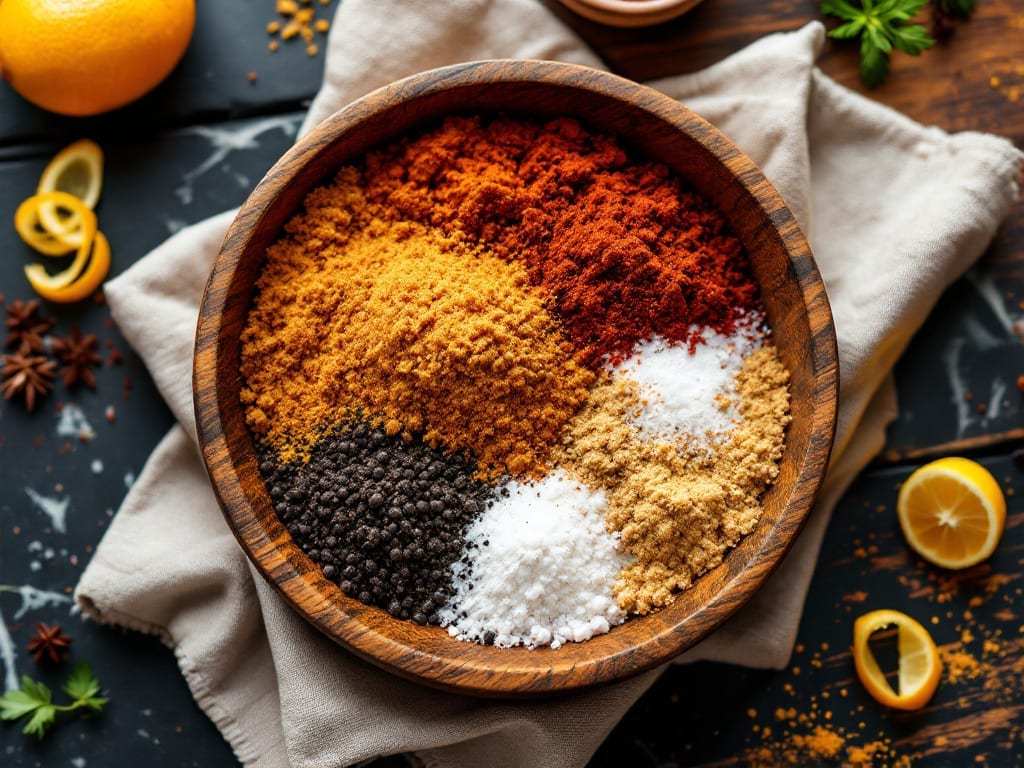
Creating the perfect smoked Boston butt rub is the secret weapon behind fall-apart meat that wins every cook-off. The day I realized French technique could elevate my rubs changed everything—this blend delivers deep smoky crunch with just the right balance of sweet, spicy, and savory.
What makes it special is how it transforms tough pork into tender, flavorful perfection when smoked low and slow.
This dry spice mix is designed for pitmasters who demand restaurant-quality results without complicated prep. With just 8 simple ingredients, you’ll create a rub that develops a beautiful bark while keeping the meat juicy inside.
The key is the combination of brown sugar for caramelization, smoked paprika for depth, and chili powder for heat—each playing its part in the symphony of flavors.
What you’ll end up with is a rub that creates a crispy, flavorful crust while ensuring tender meat that falls apart at the touch of a fork. The aroma alone will have your neighbors asking for the recipe, and the taste?
That’s where the magic happens—bold, smoky, and perfectly balanced. This is the kind of rub that turns a simple pork shoulder into a showstopper.
Perfect for competition-level smoking or backyard cookouts, this rub works equally well with electric smokers, pellet grills, or traditional charcoal pits. Store it in an airtight container for up to 6 months, and you’ll always have the perfect seasoning on hand. Let’s get started on crafting your signature blend.
Ingredients for smoked boston butt rub
Eight powerhouse ingredients transform your smoker into a flavor factory—crispy bark meets tender perfection.
| Ingredient | Amount | Notes |
|---|---|---|
| Light Brown Sugar 🍚 | ½ cup | Packed for maximum caramelization |
| Smoked Paprika 🌶️ | ¼ cup | High-quality smoked variety |
| Chili Powder 🔥 | ⅛ cup | Medium heat preferred |
| Ground Black Pepper 🌶️ | 2 tbsp | Freshly cracked for intensity |
| Diamond Crystal Kosher Salt 🧂 | 1 ½ tbsp | Coarse grain preferred |
| Garlic Powder 🧄 | 1 ½ tbsp | Freshly ground preferred |
| Onion Powder 🧅 | 1 ½ tbsp | Non-GMO preferred |
| Ground Cumin 🌿 | 1 tbsp | Toasted for depth |
[recipe_ingredient_scaler]
The brown sugar is your caramelization catalyst—Penzeys or Wholesale Spice brands deliver the most even granulation for consistent bark development. Smoked paprika? Look for brands with actual smoke infusion (not just coloring)—McCormick Smoked Paprika or Simply Organic are my go-tos. The chili powder should be medium heat—no cayenne sneaking in—or you’ll overpower the delicate pork. For the salt, Diamond Crystal is non-negotiable; its coarse texture clings better than table salt. Toast your cumin seeds in a dry pan for 30 seconds before grinding—game-changer for depth—though pre-ground works in a pinch.
No smoked paprika? Substitute 1 tbsp regular paprika + 1 tsp liquid smoke (like Traeger’s brand) for that authentic smoky punch. Out of cumin? 1 tsp coriander mimics some of its earthy notes. For a sweeter profile, add 1 tsp cinnamon—it pairs surprisingly well with pork. The garlic and onion powders can be swapped 1:1, but freshly toasted and ground versions (from a coffee grinder) elevate this from good to showstopping. Store-bought blends? Toss them—they lack the freshness factor this rub demands.
This blend stays potent for up to 6 months in an airtight container away from light. Portion into small jars for easy access—nothing worse than digging through a big container mid-smoke. For extra longevity, add a bay leaf to the container to repel moisture. The sugar will crystallize over time, so stir before each use. Once applied, this rub develops its magic during the first 45 minutes of smoke—don’t rush the bark formation, or you’ll miss the deep caramelization that makes competition-level pork sing.
Why You’ll Love This Recipe
- Five-Ingredient Magic: I swear by this mix—just toss those five pantry staples (brown sugar, smoked paprika, chili powder, pepper, salt) in a bowl and call it done. No measuring cups, no stress, no second-guessing.
- Sweet Heat Balance: That caramelized brown sugar meets the smoky paprika and just a whisper of chili—it’s the perfect dance. My husband licks the bowl after rubbing it on the meat, and I don’t even joke about it.
- Tailgates & Taco Nights: Slap this on a whole butt for slow-smoked perfection, or use it as a taco seasoning hack. I’ve even sprinkled it on roasted potatoes—works every time, no matter the occasion.
- Leftovers That Last: One batch of rub makes enough for multiple meals. Store it in a jar, and you’ve got flavor on standby for weeks. Honestly, I’ve had this same jar for three months and still reach for it.
Step-by-step instructions for smoked Boston butt rub
This blend delivers that perfect bark and deep smoky flavor—every time you fire up the smoker.
Combine the Dry Ingredients in a Mixing Bowl
In a large mixing bowl, add the 0.5 cup light brown sugar first—pack it firmly to maximize caramelization. This isn’t just sweetness; it’s the foundation for that beautiful crust that forms during smoking. The sugar will dissolve into the meat’s moisture, creating a sticky surface that browns beautifully.
Next, add the 0.25 cup smoked paprika and 0.125 cup chili powder. These are your flavor anchors—smoked paprika brings that deep, campfire aroma while the chili powder adds subtle heat. Sprinkle them evenly over the sugar and give everything a quick stir with a whisk or silicone spatula. You want these dry ingredients to break up any sugar clumps and distribute evenly.
Incorporate the Seasonings for Depth and Balance
Now it’s time for the aromatic boosters. Add the 2 tbsp ground black pepper, 1.5 tbsp garlic powder, 1.5 tbsp onion powder, and 1 tbsp ground cumin. Here’s where the magic happens—the pepper adds sharpness, garlic and onion bring savory depth, and the cumin provides that earthy, toasty note that makes this rub truly special. Use your hands to work these through the mixture, pressing firmly to ensure every grain of sugar gets coated with the spices.
The reason we add the spices last is to preserve their freshness. When mixed with sugar first, they release their essential oils more slowly, maintaining their punch throughout the smoking process. You’ll know it’s well combined when you can’t see any distinct clumps of sugar or individual spices—just a uniform, rich-looking blend.
Add the Salt and Final Adjustments
Sprinkle in the 1.5 tbsp diamond crystal kosher salt last. This isn’t just seasoning—it’s a flavor enhancer that makes every other component taste more vibrant. The coarse texture also helps create that perfect crust on your Boston butt. Use your fingers to work the salt into the mixture, breaking up any remaining clumps and ensuring even distribution throughout the rub.
Here’s the thing—this blend should look like wet sand when you’re done. If it’s too dry, add a few drops of water and mix again. The moisture helps the spices adhere better to the meat during application. Give it one final taste test right from the bowl. It should be bold, smoky, and just slightly sweet with a hint of heat—this is your quality control moment before it goes on the meat.
Store Properly for Maximum Freshness
Transfer the finished rub to an airtight container with a tight-sealing lid. I like to use a small mason jar because it’s easy to shake and portion out exactly what I need. The key to long-term freshness is keeping it in a cool, dark place—like your pantry—where it can maintain its aromatic oils for up to 6 months.
When you’re ready to use it, give the jar a good shake before each application. This ensures the spices don’t settle and you get that perfect even distribution every time. The rub should smell intensely aromatic—like a campfire meets a spice market. That’s your guarantee of flavor excellence when it hits the smoker.
Pro Tips For Making Smoked Boston Butt Rub
- Whisk the Sugar First: Light brown sugar clumps like a stubborn guest at a party. Break it up with your fingers first, then whisk it into the dry spices—this keeps your rub smooth and even. I used to just dump it in, and half the time, I’d end up with uneven patches of sweetness on the meat.
- Balance the Heat: Smoked paprika and chili powder can overpower if you’re not careful. Start with a 1:1 ratio of chili powder to smoked paprika, then adjust to taste—add more paprika if the rub feels too spicy. My first batch was way too aggressive, and I had to cut it with extra brown sugar to save it.
- Pat It Dry: A damp Boston butt won’t hold the rub well, and it’ll steam instead of sear. Use paper towels to dry the surface thoroughly before applying—this helps the spices stick and creates that coveted crust. I learned this after my rub slid off like it was greased, and the flavor was nowhere near as deep.
- Toast the Spices: Heat the dry spices (paprika, chili powder, pepper) in a dry skillet for 30 seconds before mixing with sugar—this deepens their flavors and cuts through any bitterness. Sounds weird, but it works: the rub tastes richer, and the smokiness pops more on the meat. (Yes, even if you’re impatient like me.)
Regional styles of this smoked boston butt rub
Texas-Style Bold
In Texas, this rub gets a heavier hand of chili powder—swap the 2 tbsp for 3 tbsp medium heat—and add 1 tbsp ground coriander for that signature Central Texas tang. The locals don’t skimp on brown sugar either; bump it to ⅔ cup for extra caramelization.
I first learned this version at a Lockhart BBQ competition where the judges raved about the “crunchy crust that hides no flavor.” 🌶️
Carolina Crisp
For a Carolina twist, reduce the sugar to ¼ cup and add 1 tbsp mustard powder—this creates that signature tangy bark. Swap the cumin for 1 tbsp celery salt (a must in Eastern NC) and keep the heat mild with just 1 tbsp chili powder.
The key here is the vinegar spray during the last hour of smoking—it cuts through the fat and sharpens the crust. I picked this up from a Pitmaster at Houston’s in Fayetteville, who swore by the “acid finish.”
Kansas City Sweet & Smoky
Kansas City pitmasters love their sweet-and-smoky balance, so here you’ll find ½ cup brown sugar (packed!) and 1 tbsp cinnamon for warmth. The rub also includes 1 tsp black pepper (not ground—whole peppercorns toasted and crushed) for a peppery crunch.
I met a legend at the American Royal who told me, “The cinnamon isn’t just for flavor—it slows the bark from burning too fast.” Trust me, it works. 🌟
Hawaiian Tropical Twist
For a Hawaiian-inspired version, replace ½ the chili powder with 1 tbsp ground ginger and add 1 tsp dried lemongrass. The brown sugar stays at ½ cup, but swap the smoked paprika for regular paprika + 1 tsp liquid smoke.
This rub is all about bright, citrusy notes that play off the pork’s richness. I developed this after a trip to Oahu’s local BBQ joints, where they used fresh ginger and lime zest—this is a dry-spice adaptation. 🌺
Competition-Level Pro Tips
No matter the region, here’s my pro move: Apply the rub in two stages. First, coat the meat thinly before smoking to help the bark form. Then, after 4-5 hours, add a second layer—this builds depth without overwhelming the meat.
For extra competition flair, add a pinch of cayenne to the final layer (just ¼ tsp) for a subtle kick. I’ve seen this trick win awards at the Memphis in May** festival. 🔥
Nutrition facts
Frequently asked questions
Can I use this rub on other meats besides Boston butt?
This versatile rub works beautifully on pork ribs, chicken thighs, and even brisket. The key is adjusting the smoking time—thinner cuts like chicken need 2-3 hours while brisket can handle 6+ hours at 225°F. For chicken, reduce the chili powder to 1 tablespoon to avoid overpowering the delicate meat.
How do I prevent the rub from burning before the meat is cooked?
Start with a thin layer of rub and apply it 1-2 hours before the end of cooking. The sugar needs time to caramelize without burning. Use a meat thermometer to monitor internal temp—195°F for pulled pork. If the rub starts darkening too quickly, lightly mist with apple cider vinegar to help it develop without scorching.
What’s the best way to store leftover pulled pork?
Let the meat rest 30 minutes after smoking, then store in an airtight container with the juices. It keeps for 4 days in the fridge or 3 months frozen. For reheating, use a 350°F oven or slow cooker with ¼ cup broth to restore moisture. Never microwave—it turns the meat rubbery.
Can I make this rub spicier?
Yes! For extra heat, add 1-2 teaspoons cayenne pepper or ½ teaspoon red pepper flakes to the base recipe. Start with 1 teaspoon and adjust to taste—this rub is already bold. For a smoky kick, replace 1 tablespoon of chili powder with 1 teaspoon chipotle powder. Always taste test before applying to meat.
How do I adjust this rub for a pellet grill vs. charcoal smoker?
Pellet grills maintain steady temps, so you can use the full recipe as-is. For charcoal smokers, add 1 extra tablespoon brown sugar to help with bark formation in fluctuating heat. Pellet grills also benefit from a light spritz of apple juice during the last hour to enhance crust development. Both methods work—just monitor the bark closely.

Trained in classic French technique but raised on slow-cooked ribs and spicy rubs, she blends culinary skill with smoke and soul.
- Beef Brisket Rolls Recipe: Flaky Layers and Smoky Sweet Filling - October 15, 2026
- Masterbuilt Smoker Beef Brisket Recipe: Bark-To-Meat Ratio Hack for Unmatched Flavor - October 15, 2026
- Costco Beef Brisket Recipe: Low-and-Slow Masterpiece With Molasses-Kissed Crust - October 15, 2026