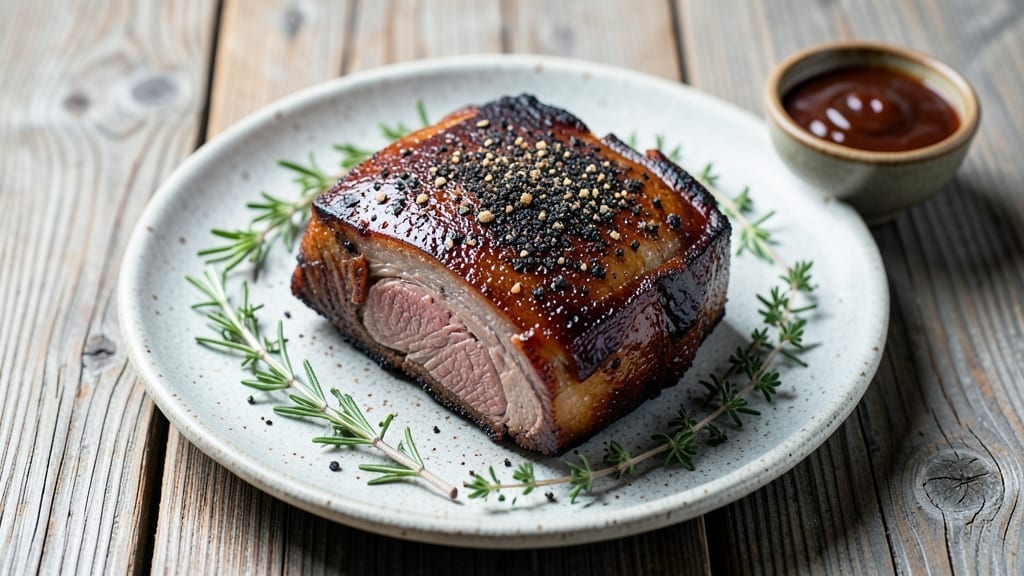
Mastering a Traeger smoked rump roast transforms tough cuts into melt-in-your-mouth perfection with a deep smoky bark that rivals any competition BBQ. The key lies in low-and-slow precision—something I perfected after years of backyard cookouts where hickory smoke first hooked me on this art.
This method delivers restaurant-quality results at home, using only your Traeger and a few simple steps.
The secret starts with the right wood—hickory or cherry for that classic balance of sweetness and depth—and maintaining a steady 225°F temperature.
A well-seasoned rump roast develops a perfect smoke ring and falls apart at the touch, while a simple dry rub of salt, pepper, and garlic powder ensures that smoky bark that’s impossible to resist.
The beauty of this technique is its simplicity: minimal prep, hands-off cooking, and a dish that gets better as it rests.
By the time you pull it from the smoker, you’ll have a roast so tender it practically shreds with a fork, all while maintaining that signature smoky flavor that defines great BBQ.
The internal temperature should reach 195°F for that ideal pull, and letting it rest for 30 minutes ensures every slice stays juicy and cohesive. This is the kind of roast that makes Sunday dinners unforgettable.
Pair it with classic sides like roasted garlic mashed potatoes or grilled green beans to complete the meal. The smoky aroma alone will have everyone at the table asking for seconds—proof that slow cooking isn’t just a technique, but an experience worth mastering.
Ingredients for traeger smoked rump roast
A few key ingredients create Traeger smoked rump roast perfection with tender fall-apart texture.
| Ingredient | Amount | Notes |
|---|---|---|
| Rump Roast 🥩 | 5 lb | Bone-in preferred for flavor |
| Hickory Wood Chips 🌳 | 1 lb | For authentic smoky flavor |
| Cherry Wood Chips 🍒 | ½ lb | Balances sweetness and depth |
| Coarse Sea Salt 🧂 | 2 tbsp | Kosher or flaky preferred |
| Freshly Ground Black Pepper 🌶️ | 1 tbsp | Freshly ground for best flavor |
| Garlic Powder 🧄 | 1 tbsp | For aromatic depth |
| Traeger Pellets 🔥 | 20 lb | Hickory blend recommended |
| Apple Cider Vinegar 🍎 | 2 tbsp | For bark adhesion |
| Butter 🧈 | 4 tbsp | Full-fat for richness |
| Meat Thermometer 📏 | 1 whole | Instant-read preferred |
| Parchment Paper 📄 | 1 sheet | For easy cleanup |
[recipe_ingredient_scaler]
The rump roast is your star—bone-in cuts give you that rich, juicy depth, but Costco or Whole Foods have great prepped options if you’re short on time. I always grab hickory wood chips from Traeger’s official store—they’re consistent and smell amazing. For the cherry chips, local smoke shops often have small bags that work perfectly. Pro tip: soak the wood chips in water for 30 minutes before using—they’ll smoke longer and more evenly. The meat thermometer is non-negotiable; Meater or Thermoworks models are reliable and easy to read.
No hickory chips? Applewood or pecan wood chips work in a pinch—just adjust smoke time. Short on garlic powder? Fresh garlic minced at half the amount adds even more punch. The apple cider vinegar might seem odd, but it helps the bark stick better and adds a subtle tang. Butter sounds random, but it melts into the bark during the last 30 minutes of cooking, making it irresistibly crispy. If you’re worried about prep time, pre-mix your dry rub the night before—just add the vinegar and butter right before smoking.
This roast tastes even better the next day—the flavors meld perfectly after resting. Store leftovers in an airtight container in the fridge for up to 4 days. For longer storage, slice and freeze portions for up to 3 months. I always portion mine into meal-sized containers so I can grab a slice for lunch without fuss. The parchment paper makes cleanup a breeze—just wrap the roast in it before smoking and peel it off once it’s done. Trust me, you’ll thank me later.
Why You’ll Love This Recipe
- Traeger’s Secret Weapon: That crispy, smoky bark with the creamy center? Chef’s kiss. The mix of hickory and cherry wood chips—savory and just a touch sweet—turns a simple rump roast into something special. You’ll rub that garlic powder, coarse salt, and pepper all over, and trust me, the flavor sticks like glue.
- Feed a Crowd Easily: One 5 lb roast feeds everyone without stress. My family of five? We polish off leftovers for lunch the next day, and the freezer portion lasts through the week. Plus, it’s the kind of dish that disappears fast—no one will ask for seconds, but they’ll definitely take a plate.
- No Fuss, Just Flavor: Honestly, the hardest part is waiting. Just season, smoke at 225°F for 6-8 hours, then let the Traeger do the rest. The 2 tbsp apple cider vinegar and butter finish? Game-changer. It’s not complicated, but it’s exactly what you need for a meal that feels special without hours of work.
- Budget-Friendly Luxury: A bone-in rump roast is cheaper than you think, and those wood chips? A little goes a long way. You’ll spend less than you’d on takeout, but the results? Dangerously addictive. Plus, the leftovers? Perfect for sandwiches or tacos the next day.
Step-by-step instructions for smoked rump roast on Traeger
Here’s how to transform a simple rump roast into melt-in-your-mouth perfection with a smoky crust.
Prepare the Roast and Seasoning Blend
Take the 5 lb rump roast out of the fridge and let it sit at room temperature for 1 hour. This ensures even cooking throughout. While it rests, combine the 2 tbsp coarse sea salt, 1 tbsp freshly ground black pepper, and 1 tbsp garlic powder in a small bowl. Mix well until the spices are evenly distributed—this creates a flavorful crust that clings to the meat.
Pat the roast dry with paper towels, then rub the seasoning blend all over the meat, pressing firmly so it adheres. Pay special attention to the edges and crevices where the seasoning tends to fall off. This step is crucial for developing that beautiful smoky bark later on. Once seasoned, place the roast on a tray lined with the parchment paper to catch any drippings.
Set Up the Traeger for Low and Slow Cooking
Load the Traeger with the 20 lb Traeger Pellets and add the 1 lb Hickory Wood Chips and ½ lb Cherry Wood Chips to the smoker box. Set the temperature to 225°F and let it preheat for 15 minutes until you see steady, thin blue smoke—this indicates the pellets are burning properly and ready for cooking.
Once the temperature stabilizes, place the seasoned roast fat-side up on the grill grates. The fat will render slowly and baste the meat as it cooks, adding flavor and moisture. Avoid the temptation to open the lid frequently—each time you do, you lose heat and extend cooking time. Instead, trust the process and let the Traeger do its magic.
Smoke Until Probe-Tender
Smoke the roast undisturbed for 6-8 hours, or until the internal temperature reaches 165°F. This is where the magic happens—the low and slow cooking breaks down the connective tissue, turning tough meat into tender, fork-shreddable perfection. Use the meat thermometer to check the temperature in the thickest part of the roast, avoiding the bone.
Here’s the thing—you’ll hit “the stall” around 160°F, where the temperature plateaus as moisture evaporates. Don’t panic; this is normal. Once the temperature reaches 165°F, remove the roast from the Traeger and let it rest for 15 minutes. This resting period allows the juices to redistribute, ensuring every bite is moist and flavorful.
Create the Smoky Bark and Finish
While the roast rests, prepare the finishing touch. In a small bowl, mix the 2 tbsp apple cider vinegar and 4 tbsp butter until smooth. Brush this mixture all over the roast, focusing on the top and sides. The vinegar helps the bark adhere to the meat, while the butter adds richness and enhances the smoky flavor.
Return the roast to the Traeger and smoke for an additional 30-45 minutes at 275°F until the internal temperature reaches 203°F. This final step develops that beautiful, dark smoky bark that’s crispy on the outside and tender on the inside. You’ll know it’s ready when the bark is deep mahogany in color and the meat pulls apart easily with a fork.
Rest and Serve
Remove the roast from the Traeger and transfer it to a cutting board. Tent loosely with the parchment paper and let it rest for at least 30 minutes. This resting period is critical—it allows the juices to settle back into the meat, ensuring each slice is juicy and flavorful. During this time, the internal temperature will rise another 5-10°F, reaching the ideal serving temperature.
Slice the roast against the grain into ½-inch thick pieces and serve immediately. The result should be fall-apart tender meat with a smoky, crispy bark that’s sure to impress. Pair it with your favorite sides, and enjoy the fruits of your low and slow labor—every bite should be a testament to the power of patience and the Traeger’s ability to deliver restaurant-quality results at home.
Pro Tips For Making Traeger Smoked Rump Roast
- Preheat with Wood Chips: I learned this the hard way—adding wood chips after the Traeger reaches 225°F means you’re chasing smoke instead of cooking. Load the 1 lb hickory and 0.5 lb cherry chips into the smoker box before preheating. That way, you’re starting with a steady, flavorful cloud of smoke from the get-go, not playing catch-up.
- Press Salt Like Glue: The seasoning blend won’t stick if you just sprinkle it on. Use your palms to press the 2 tbsp coarse sea salt, 1 tbsp black pepper, and 1 tbsp garlic powder into every crevice—especially the bone side. I used to skip this, and half the flavor would flake off during cooking. It’s the thing that matters most for that smoky crust.
- Stall? Stay Patient: Hitting the 160°F stall and panicking is a rookie mistake. The meat will crawl back up to 165°F—it’s science. Keep the lid closed, resist the urge to poke it, and trust the Traeger. I’ve seen people crank the heat, thinking they’re helping, but that just turns the roast dry. Let it work.
- Vinegar Butter Hack: Mixing 2 tbsp apple cider vinegar with 4 tbsp butter sounds weird, but it works: the acid cuts through the fat, making the bark actually stick. Brush it on after the initial smoke but before the final 275°F push—it’s the shortcut to that glossy, crackling crust without fussing with sauces. (Yes, even if you’re impatient like me.)
Best sauces and condiments for this recipe
Classic BBQ Sauce Finish
After smoking, I love brushing on Traeger’s signature hickory BBQ sauce for that sweet-tangy contrast. The 2 tbsp of sauce adds a sticky glaze that enhances the smoky bark while balancing the richness. I apply it during the final 15 minutes of the 275°F sear phase so it caramelizes beautifully.
For a tangier kick, try Primal Palate’s Smoky Maple—it’s got a perfect balance of sweetness and heat that pairs amazingly with the rump roast’s depth. 🔥
Creamy Horseradish Cream
For a bold, peppery twist, mix ¼ cup sour cream with 2 tbsp prepared horseradish and a pinch of black pepper. Spoon this over sliced roast just before serving to cut through the fat and add a sharp, zesty bite.
I find this especially refreshing when paired with the smoky, buttery finish of the apple cider vinegar butter. The creaminess also helps balance the intensity of the bark. ✨
Brown Butter & Herb Drizzle
Brown 4 tbsp butter in a pan until nutty and golden, then whisk in 1 tbsp chopped fresh rosemary and 1 tsp lemon zest. Drizzle this over the sliced rump roast—it adds a luxurious, herby richness that complements the smoky notes without overpowering them.
I often forage rosemary from my coastal rides to add that extra local touch. This is my go-to for a more refined, French-inspired finish. 🌿
Spicy Mango-Chili Glaze
Blend ½ cup mango puree, 1 tbsp lime juice, 1 tsp chili powder, and ½ tsp smoked paprika until smooth. Brush this vibrant glaze over the roast during the last 20 minutes of cooking.
The sweet-tart mango and subtle heat create a perfect contrast to the smoky, salty bark. It’s a summer favorite that brings a tropical twist to your Traeger masterpiece. 🍍
Onion Jam Swirl
Cook 1 cup sliced yellow onions in 2 tbsp apple cider vinegar and 1 tbsp brown sugar until caramelized, then stir in 1 tsp thyme. Let it cool, then swirl this jammy mixture over the sliced roast.
The sweetness of the onions pairs beautifully with the smoky depth, while the thyme adds an aromatic layer. This is one of my secret tricks to elevate the dish beyond just the bark. 🧅
Nutrition facts
Frequently asked questions
Why does the recipe call for a bone-in rump roast?
The bone-in cut adds incredible depth of flavor through natural juices and collagen that render during smoking. The bone also helps maintain even cooking and creates a more complex, restaurant-quality taste that dry cuts simply can’t match.
What if I don’t have cherry wood chips?
No problem! Substitute with applewood or pecan wood chips for a similar smoky profile. Just note that the flavor will be slightly different—hickory remains the star, while cherry adds that subtle sweetness. The cooking time may adjust slightly, so keep an eye on the temperature.
How do I know when the “stall” has passed?
Watch your thermometer closely around 160°F—the stall occurs when the needle stops rising despite continued cooking. This typically lasts 30-60 minutes as moisture evaporates. Once it breaks and climbs steadily again, you’re back on track!
Can I use this method for other cuts?
This low-and-slow technique works beautifully for brisket, pork shoulder, or even chicken whole. Just adjust time based on cut size—thinner pieces will cook faster. The key remains: 225°F temperature and patient smoking for maximum tenderness.
What’s the best way to reheat leftovers?
Reheat slices in a 300°F oven for 10-15 minutes or use a skillet over medium-low heat. Add a splash of water or beef broth to prevent drying. For maximum tenderness, wrap portions in parchment paper before reheating to retain moisture.

Trained in classic French technique but raised on slow-cooked ribs and spicy rubs, she blends culinary skill with smoke and soul.
- Slow Cooker Barbecue Pork Recipe: Fall-Apart Tender With Smoky Depth - November 2, 2026
- Pork Butt Smoker Recipe: Low and Slow to Juicy, Fall-Off-Bone Tenderness - November 2, 2026
- Brisket Recipe Slow Cooker: Fall-Apart Tender With Minimal Effort - November 2, 2026