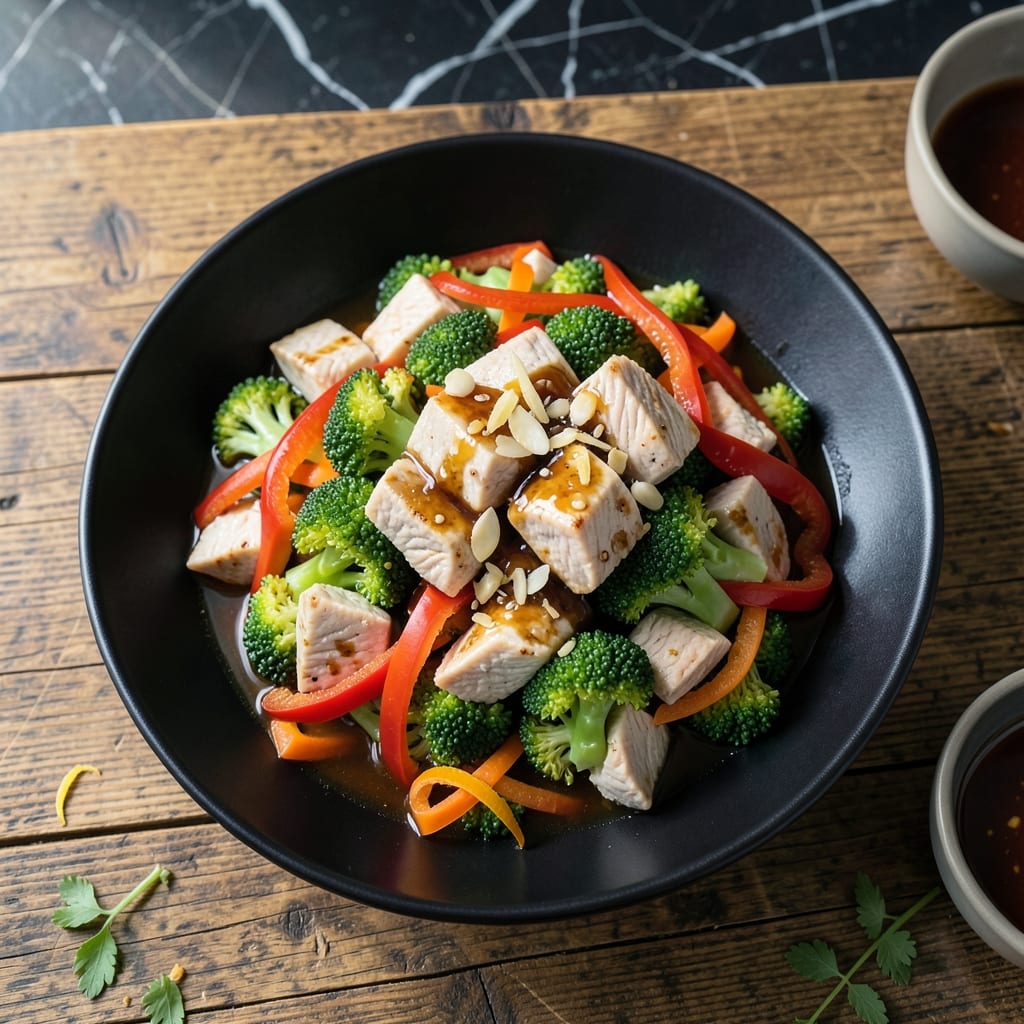
This stir fry transforms canned tuna into a quick and satisfying weeknight meal. I developed the method after testing dozens of ways to make shelf-stable protein taste fresh and exciting.
The technique relies on high heat and a simple sauce that enhances rather than masks the tuna’s natural flavor. Vegetables add crunch and color while keeping the dish light yet filling.
You’ll have a protein-packed dinner ready in under 20 minutes, with minimal cleanup. The tuna stays moist and flaky, absorbing the savory sauce without falling apart.
David declared this his new favorite after the first bite. Serve over rice for a complete meal.
Ingredients for Tuna Stir Fry
Canned tuna gets a flavor upgrade with fresh veggies and a bold sauce. Quick, filling, and weeknight-ready.
| Ingredient | Amount | Notes |
|---|---|---|
| Canned Tuna in Water 🐟 | 3 cans | Drained and flaked |
| Soy Sauce 🫒 | ⅓ cup | Low-sodium preferred |
| Sesame Oil 🫒 | 1 tbsp | Toasted for depth |
| Rice Vinegar 💧 | 2 tbsp | For acidity and balance |
| Honey 🍯 | 1 ½ tbsp | Or substitute agave |
| Garlic Cloves 🧄 | 3 cloves | Minced finely |
| Fresh Ginger 🌿 | 1 tbsp | Grated or minced |
| Red Bell Pepper 🌶️ | 1 whole | Thinly sliced |
| Broccoli Florets 🥦 | 2 cups | Fresh or frozen |
| Carrot 🥕 | 1 whole | Julienned for texture |
| Green Onions 🧅 | 3 whole | Sliced thinly |
| Neutral Oil 🫒 | 2 tbsp | For stir-frying |
| Red Pepper Flakes 🌶️ | ½ tsp | Adjust to taste |
| Sesame Seeds 🌿 | 1 tsp | For garnish |
| Cooked White Rice 🍚 | 4 cups | For serving |
[recipe_ingredient_scaler]
The tuna is the star here—look for high-quality canned tuna in water (like Wild Planet or Safe Catch). Drain it well and flake it gently to keep the texture intact. Fresh ginger and garlic are non-negotiable for that vibrant stir-fry flavor. Most grocery stores carry these in the produce section, but Asian markets often have fresher options. The veggies should be crisp, so pick bright, firm bell peppers and carrots.
Out of honey? Maple syrup or agave work just as well. No rice vinegar? Apple cider vinegar at the same amount is a fine swap. The soy sauce can be tamari for gluten-free needs. Frozen broccoli works in a pinch (thaw and drain first). If you’re short on time, pre-shredded coleslaw mix adds crunch without the chopping. Skip the sesame oil if you must, but it adds a depth you’ll miss.
Leftovers keep for 3-4 days in the fridge, though the veggies soften a bit. Reheat gently to avoid drying out the tuna. This doesn’t freeze well—best fresh. Cook the rice ahead to save even more time (it reheats perfectly).
Why You’ll Love This Recipe
- 20-Minute Meal: I can get this from pantry to plate faster than takeout arrives—just dump, stir, and serve.
- Umami Bomb: The soy sauce and sesame oil hit that sweet-savory spot, while honey rounds it out perfectly.
- Lunchbox Hero: Honestly, it reheats beautifully for work lunches and tastes even better the next day.
- Pantry MVP: Canned tuna and shelf-stable staples mean I can make this any night without a grocery run.
Step-by-Step Instructions for Tuna Stir Fry
Here’s how to make this dish in under 20 minutes with minimal cleanup.
Step 1: Prep All Vegetables and Aromatics
Thinly slice the red bell pepper into strips and julienne the carrot for even cooking. Cut the broccoli florets into bite-sized pieces if they’re large. Mince the 3 cloves garlic cloves and grate the 1 tbsp fresh ginger—this releases their full flavor.
Slice the 3 whole green onions thinly, keeping the white and green parts separate for garnish. Drain and flake the 3 cans canned tuna in water into a bowl, pressing gently to remove excess moisture. Having everything prepped before cooking ensures this stays a quick process.
Step 2: Create the Stir Fry Sauce
In a small bowl, whisk together the 0.33 cup soy sauce, 1 tbsp sesame oil, 2 tbsp rice vinegar, 1.5 tbsp honey, and 0.5 tsp red pepper flakes. The honey helps balance the saltiness of the soy sauce while the vinegar adds brightness.
Taste the sauce and adjust the sweetness or spice level if needed. I like to let it sit for a minute while I finish prepping—this allows the flavors to meld. This sauce is the backbone of the dish, so make sure it tastes balanced before adding it to the stir fry.
Step 3: Stir Fry Vegetables Until Tender-Crisp
Heat the 2 tbsp neutral oil in a large skillet or wok over high heat until it shimmers. Add the red bell pepper, carrot, and broccoli florets, stirring constantly for 4-5 minutes until the vegetables are tender-crisp but still vibrant in color.
Add the minced garlic cloves and grated fresh ginger, stirring for 30 seconds until fragrant. Be careful not to let the garlic burn—it should turn golden but not brown. The aroma at this stage should be intoxicating, a sign you’re building layers of flavor.
Step 4: Combine Tuna and Sauce for Final Cook
Add the flaked canned tuna in water to the skillet, breaking up any large chunks with a spatula. Pour in the prepared sauce and stir everything together. Cook for 2-3 minutes until the tuna is heated through and the sauce has thickened slightly, coating all the ingredients.
The tuna should absorb the flavors of the sauce without turning mushy. If the mixture seems dry, add a splash of water and let it simmer for another minute. You want a glossy, slightly sticky coating on every piece.
Step 5: Garnish and Serve Over Rice
Remove from heat and stir in the sliced green onions, reserving some for garnish. Divide the 4 cups cooked white rice among plates and top with the tuna stir fry. Sprinkle with the remaining green onions and the 1 tsp sesame seeds for crunch and visual appeal.
Serve immediately while hot. The contrast of the warm stir fry over the rice with the cool crunch of the sesame seeds makes this a satisfying weeknight meal. Each bite should be packed with protein and a balance of sweet, savory, and spicy flavors.
Pro Tips For Making Tuna Stir Fry
- Drain the Tuna: Press the canned tuna in a fine-mesh strainer for 30 seconds to remove excess water—I learned this the hard way after my stir fry turned soupy.
- Heat Sesame Oil Last: Add sesame oil in the final 30 seconds of cooking to preserve its nutty flavor, otherwise it can turn bitter with prolonged heat.
- Skip Overcrowding: Cook in batches if doubling the recipe, or your tuna won’t brown properly and will steam instead of sear.
- Balance the Honey: Whisk the honey with 1 tablespoon warm water first so it distributes evenly in the sauce instead of clumping at the bottom of the pan.
Wine and Beer Pairings for This Dish
Crisp White Wines
A dry Riesling from Washington state cuts through the savory soy sauce beautifully—the citrus notes and bright acidity cleanse your palate between bites. I like Chateau Ste. Michelle for its consistent quality and $12 price point. 🍷
Light Red Wines
Pinot Noir from Oregon offers red fruit flavors that complement the dish without overpowering it. Try Meiomi for a crowd-pleasing option under $20. The wine’s earthy undertones harmonize with the ginger and garlic.
Asian-Inspired Beers
A Japanese lager like Sapporo or Asahi provides crisp refreshment that pairs perfectly with the umami flavors. The light body won’t compete with the delicate tuna. David always reaches for one of these when I make stir fry. 🍺
Wheat Beers
Hefeweizen styles work surprisingly well—the banana and clove notes contrast nicely with the spicy elements. Weihenstephaner from Germany is my go-to, though any quality wheat beer will do.
Non-Alcoholic Pairing
For a zero-proof option, try ginger beer with lime. The spicy ginger echo in the dish while the citrus brightens each bite. I keep Fever-Tree on hand for this exact purpose. ✨
Nutrition Facts
Frequently Asked Questions
Can I use fresh tuna instead of canned?
Use 1 lb fresh tuna, cut into 1-inch cubes, and sear for 1-2 minutes before adding veggies. It’ll be pricier but delivers incredible texture.
How do I keep the veggies crisp?
Stir fry over high heat for only 4-5 minutes. Add veggies first—they cook longer than tuna. Avoid overcrowding the pan to prevent steaming.
What if my sauce is too salty?
Balance it with a splash of rice vinegar or a drizzle of honey. Taste as you go—adjusting is easier than fixing oversalted food later.
Can I make this gluten-free?
Swap soy sauce for tamari or coconut aminos. All other ingredients are naturally gluten-free—just check labels for hidden additives.

Trained in classic French technique but raised on slow-cooked ribs and spicy rubs, she blends culinary skill with smoke and soul.
- Recipe for Boneless Pork Chops in Cast Iron Skillet: Sear and Baste to Juicy Perfection - October 3, 2026
- Recipe for Boneless Cross Rib Roast: Slow-Roasted Beef with Herb Crust - October 3, 2026
- Hamburgers in Sauce Recipe Crock Pot: Slow-Cooked Savory Delight - October 3, 2026