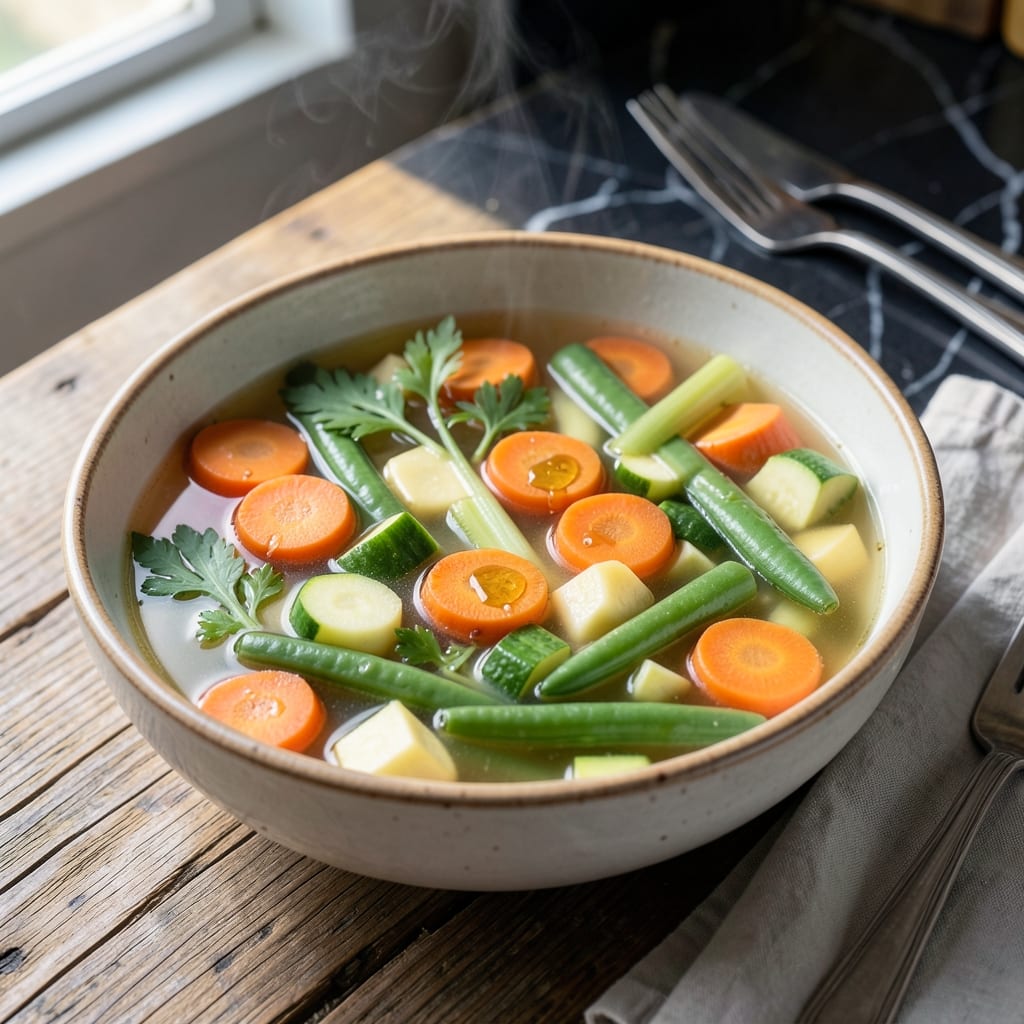
This dog-safe vegetable broth offers a nutrient-packed alternative to traditional bone broth for your furry friend.
I developed this recipe to provide essential vitamins and minerals without any harmful ingredients. The slow simmering process extracts maximum flavor and nutrition from the vegetables.
You’ll end up with a flavorful, nutrient-dense liquid that can be served as a meal topper or hydrating treat. It’s completely free from onions, garlic, and other toxic ingredients.
Store in the refrigerator for up to 5 days or freeze for longer preservation. Here’s how to make it safely.
Ingredients for Vegetable Broth for Dogs
Nutrient-rich vegetables and water create this safe, hydrating broth for your pup.
| Ingredient | Amount | Notes |
|---|---|---|
| Carrots 🥕 | 2 whole | Large, roughly chopped |
| Celery Stalks 🌿 | 2 whole | Including leafy tops |
| Zucchini 🥒 | 1 whole | Medium, diced |
| Green Beans 🌱 | 1 cup | Trimmed, fresh or frozen |
| Sweet Potato 🍠 | 1 whole | Medium, peeled and cubed |
| Apple 🍎 | 1 whole | Cored, no seeds |
| Fresh Parsley 🌿 | ¼ cup | Loosely packed, stems okay |
| Water 💧 | 8 cups | Filtered preferred |
| Olive Oil 🫒 | 1 tbsp | Optional, for sautéing |
| Turmeric Powder 🌶️ | ½ tsp | Anti-inflammatory boost |
| Sea Salt 🧂 | ¼ tsp | Optional, omit for strict low-sodium |
[recipe_ingredient_scaler]
The vegetables must be dog-safe. Carrots and celery are staples—ensure they’re fresh and free from pesticides. Sweet potato adds natural sweetness and fiber. I source organic produce from Whole Foods or my local farmers market to avoid chemical residues. Always wash thoroughly, especially leafy greens like parsley, which can harbor dirt.
No carrots? Butternut squash or pumpkin work well. Out of celery? Fennel stalks offer a similar mild flavor. Avoid any alliums (onions, leeks) or cruciferous veggies like broccoli, which can upset digestion. Turmeric is optional but adds anti-inflammatory benefits—just a pinch is plenty. Frozen veggies (without additives) are fine in a pinch.
This broth keeps 5 days refrigerated in an airtight container. For longer storage, freeze in ice cube trays—thaw only what you need. Serve warm or at room temperature, never hot. Discard if it develops an off smell or cloudiness.
Why You’ll Love This Recipe
- One Pot Wonder: I just toss in the carrots, celery, zucchini, green beans, and sweet potato—simmer and done.
- Tail-Wagging Good: My pup goes wild for the natural sweetness of the carrots and sweet potato in every spoonful.
- Batch & Freeze: I make a big pot on Sunday and freeze portions for the week—no daily prep.
- Penny-Wise Treat: Honestly, it costs less than store-bought and uses veggies I already have on hand.
Step-by-Step Instructions for Vegetable Broth for Dogs
This straightforward method extracts maximum nutrients while maintaining gentle flavors safe for canine digestion.
Step 1: Prepare and Sauté the Aromatic Base
Begin by roughly chopping the 2 whole Carrots, 2 whole Celery Stalks, and dicing the 1 whole Zucchini. I maintain uniform pieces to ensure even cooking and consistent flavor extraction throughout the 8 cups Water.
Heat 1 tbsp Olive Oil in a large stockpot over medium heat. Add the chopped carrots and celery, including the leafy tops, and sauté for 3-4 minutes until they begin to soften and release their fragrance. This step builds the flavor foundation without any onions or garlic, which are toxic to dogs.
Step 2: Add Remaining Vegetables and Liquids
To the pot, add the diced zucchini, 1 cup Green Beans (trimmed), cubed 1 whole Sweet Potato, and cored 1 whole Apple. Pour in all 8 cups Water until the vegetables are fully submerged. The apple adds natural sweetness that dogs love while providing beneficial fiber.
Stir in 0.5 tsp Turmeric Powder for its anti-inflammatory properties, which can support joint health in dogs. If using, add 0.25 tsp Sea Salt—though for strict low-sodium diets, this can be omitted entirely without affecting the broth’s nutritional value.
Step 3: Simmer to Extract Maximum Nutrition
Bring the mixture to a boil over high heat, then immediately reduce to a gentle simmer. Partially cover the pot and maintain this low, steady simmer for 45-60 minutes. You’ll notice the liquid transform to a rich golden color as the vegetables release their nutrients.
Add the 0.25 cup Fresh Parsley during the last 10 minutes of simmering to preserve its delicate flavors and vitamins. Avoid boiling vigorously, as this can break down the vegetables too much and make the broth cloudy rather than clear and nutrient-rich.
Step 4: Strain and Cool for Safe Serving
After simmering, remove the pot from heat and let it cool slightly for 10 minutes. Line a fine-mesh strainer with cheesecloth if available, and strain the broth into a clean container, pressing gently on the vegetables to extract all liquid without forcing pulp through.
Discard the spent vegetables and allow the broth to cool completely to room temperature before serving. For storage, refrigerate for up to 5 days or freeze in ice cube trays for 3 months. Serve warmed or at room temperature, always checking that it’s not too hot for your dog to consume safely.
Pro Tips For Making Vegetable Broth For Dogs
- Simmer Low and Slow: Keep the heat at a gentle simmer for 45-60 minutes—boiling too hard turns the broth bitter and muddles the sweetness from the carrots and sweet potato.
- Skip the Onions: I learned this the hard way—onions and garlic are toxic to dogs, so even a small amount in the broth can be dangerous.
- Chop Evenly: Cut all veggies into roughly 1-inch pieces so they cook at the same rate, especially the denser sweet potato and carrots.
- Strain While Hot: Pour the broth through a fine-mesh strainer right after cooking—waiting lets the veggies release more starch, making the broth cloudy.
Best Sauces and Condiments for This Dish
Dog-Safe Toppings
I love drizzling this broth over my dog’s kibble for extra moisture. Mix in 1 tbsp plain pumpkin puree for added fiber and digestion support. The combination makes dry food irresistible to picky eaters.
Homemade Dog Treats
Use this broth as a base for homemade dog treats by mixing with 2 cups oat flour and 1 egg. Bake at 350°F for 20 minutes for crunchy, nutritious snacks. My pup goes crazy for these! 💛
Frozen Broth Cubes
Freeze the broth in ice cube trays for single-serving portions. Pop out 1-2 cubes as a refreshing treat on hot days. These also work great for hiding medication when needed.
Mixing with Wet Food
Stir ¼ cup warm broth into canned dog food to enhance flavor and hydration. This is especially helpful for senior dogs who need extra encouragement to eat.
Gravy Consistency
For a thicker gravy texture, mix 1 tsp cornstarch with 2 tbsp cold water and stir into simmering broth. Cook for 1-2 minutes until slightly thickened. Serve warm over meals.
Veggie Boost
Blend ½ cup cooked carrots with 1 cup broth for a nutrient-packed puree. This adds texture and extra vitamins to your dog’s meal. Store in the fridge for up to 3 days. 🥕
Nutrition Facts
Frequently Asked Questions
Can I use frozen vegetables for this broth?
Yes, frozen veggies work perfectly as long as they’re plain with no added salt or seasonings. Thaw them first for even cooking.
How much broth can I give my dog daily?
For small dogs, 1-2 tablespoons is plenty. Medium to large breeds can have ¼-½ cup per day. Always introduce new foods gradually.
Can I add chicken bones for extra flavor?
Never add bones—cooked or raw—as they can splinter and pose a serious choking hazard. This is a vegetable-only recipe for safety.
What’s the best way to store leftover broth?
Pour cooled broth into an airtight container and refrigerate for up to 5 days. For longer storage, freeze in ice cube trays for 3 months.

Trained in classic French technique but raised on slow-cooked ribs and spicy rubs, she blends culinary skill with smoke and soul.
- Recipe for Boneless Pork Chops in Cast Iron Skillet: Sear and Baste to Juicy Perfection - October 3, 2026
- Recipe for Boneless Cross Rib Roast: Slow-Roasted Beef with Herb Crust - October 3, 2026
- Hamburgers in Sauce Recipe Crock Pot: Slow-Cooked Savory Delight - October 3, 2026