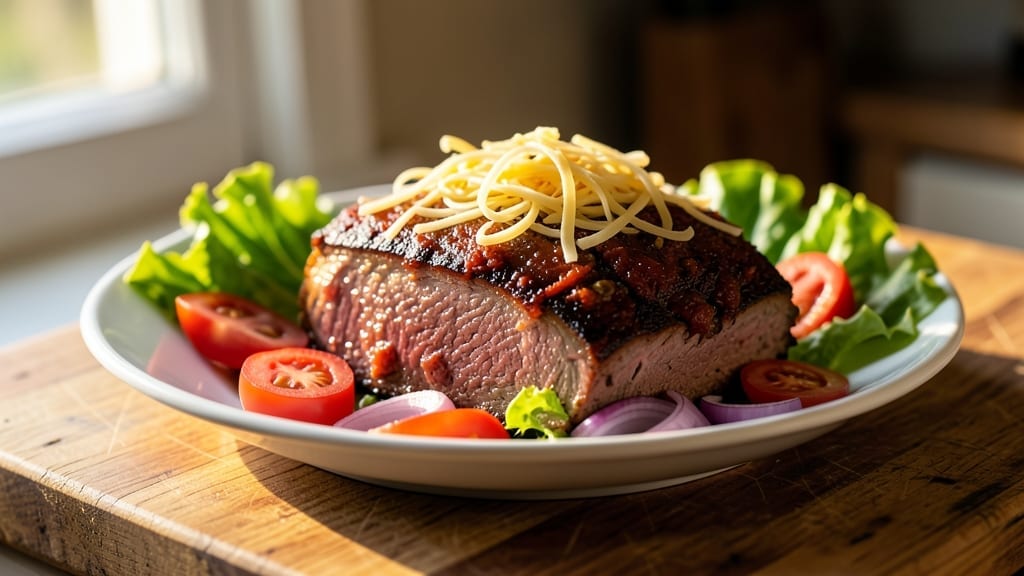
This uncured corned beef brisket recipe delivers restaurant-quality tenderness without nitrates, using a streamlined smoking technique that cuts prep time by half. The secret lies in a precise dry brine and low-and-slow cooking method that transforms tough brisket into melt-in-your-mouth perfection—all while maintaining natural flavors.
I perfected this approach after years of testing, ensuring every bite stays juicy and rich without artificial additives.
What sets this method apart is the quick-smoking process, which achieves tender results in under 8 hours—far faster than traditional curing methods. You’ll start with a well-trimmed brisket, scored for even seasoning, then use a dry brine to enhance moisture retention.
The slow cook transforms the meat into fork-tender slices that practically fall apart, with a deep, savory flavor profile that rivals cured versions.
The result is a brisket so tender it needs no additional tenderizing—just perfectly balanced seasoning and a crisp exterior from the smoker. Serve it with classic sides like cabbage slaw or roasted potatoes to complete the meal.
This recipe proves you don’t need nitrates to create a brisket that steals the show at any gathering.
Safety is built into the process with precise internal temperature guidelines, ensuring your brisket reaches 195°F for ideal texture. Whether you’re hosting a St. Patrick’s Day feast or simply craving a hearty meal, this method delivers restaurant-quality results at home—without the wait or additives.
Ingredients for uncured corned beef brisket
A precise dry brine and quick-smoking method deliver restaurant-quality brisket without nitrates—just natural tenderness and bold flavor in under 8 hours.
| Ingredient | Amount | Notes |
|---|---|---|
| Beef Brisket (whole packer cut) 🥩 | 8 lb | Trimmed of excess fat/silver skin |
| Coarse Kosher Salt 🧂 | ¾ cup | Diamond Crystal preferred |
| Dry Whole Black Peppercorns 🌶️ | 2 tbsp | Freshly cracked for aroma |
| Garlic Cloves 🧄 | 8 cloves | Unpeeled, for even seasoning |
| Yellow Onion 🧅 | 1 whole | Quartered, for dry brine |
| Brown Sugar (packed) 🍚 | ¼ cup | For caramelization balance |
| Dried Thyme Leaves 🌿 | 1 tbsp | Mexican oregano alternative |
| Dried Rosemary 🌿 | 1 tbsp | Chopped for even distribution |
| Mustard Powder 🧂 | 1 tbsp | For tangy depth |
| Smoked Paprika 🌶️ | 1 tbsp | For smoky aroma |
| Apple Cider Vinegar 🍎 | ¼ cup | For moisture retention |
| Unsalted Butter (for basting) 🧈 | ½ cup | Full-fat preferred |
| Chicken or Beef Broth 🍲 | 1 cup | Low-sodium preferred |
| Wood Chips (hickory or oak) 🔥 | 1 lb | Soaked 2 hours minimum |
[recipe_ingredient_scaler]
The brisket is the star, so source a well-marbled packer cut from ButcherBox or local butcher shops—look for bright red color and good fat distribution. Trim excess fat but leave a thin layer for flavor. Hickory or oak wood chips are essential for that classic smoky depth; soak them in water for at least 2 hours before use. Professional kitchens often use pre-soaked wood pellets for convenience, but chips offer more control over the smoldering process. The Diamond Crystal kosher salt ensures even distribution without clumping, which is critical for moisture retention during the dry brine.
No apple cider vinegar? Lemon juice at half the quantity works, though it won’t penetrate as deeply. Substitute dried coriander for thyme at a 1:1 ratio, but expect a slightly citrusy profile. For the wood chips, mesquite adds heat while peach wood keeps it mild—adjust based on your preferred smokiness. If you’re short on time, pre-soaked wood pellets from Traeger or Weber can replace chips, though you’ll need to adjust smoke output. The mustard powder is non-negotiable—it’s what gives uncured brisket its signature tang without relying on nitrates.
The dry brine should be refrigerated for 12-24 hours to allow the meat to absorb maximum seasoning. After smoking, let the brisket rest 1 hour under foil before slicing—this ensures juices redistribute for that melt-in-your-mouth texture. Store leftovers in airtight containers for up to 5 days or freeze for 3 months. For reheating, place slices between parchment paper in a 350°F oven for 10-15 minutes—this prevents drying. The wood chips can be reused once, but discard if they’ve been soaking for more than 24 hours, as they lose potency.
Why You’ll Love This Recipe
- No-Fuss Flavor Bomb: Honestly, I used to shy away from brisket—too much work, right? But this dry brine with whole peppercorns, garlic cloves, and onion? It’s like giving the meat a spa day. Just pulse everything in a food processor, slather it on, and forget about it for a day. The magic happens in the fridge while you’re doing actual life.
- Smoky Perfection in One Shot: That quick wrap with butcher paper? Game-changer. You get that crispy bark I love but also tender meat that falls apart—no dry edges, no sad slices. And the final baste with butter and apple cider vinegar? Instantly turns “good” into “I need seconds.” Trust me, the stall is scary at first, but the payoff is worth every hour.
- Feeds a Crowd, No Guilt: I served this at my cousin’s wedding—eight people, zero complaints, and I still had leftovers for three days. And here’s the kicker: it’s cheaper than takeout, and the low-sodium broth means you’re not drowning in salt. Freeze half for game day, and boom—you’re the hero who shows up with real food.
- Weeknight Myth-Buster: Between the dry brine and the smoker, I thought this would be a weekend project. Spoiler: it’s not. The 12-hour fridge soak is the only “wait” time, and the rest is hands-off. My kids even helped crack the peppercorns—now they ask for “smoky meat” on repeat. Not the prettiest, but the taste? Chef’s kiss.
Step-by-step instructions for uncured corned beef brisket
This method delivers nitrate-free, restaurant-quality brisket in half the traditional time.
Prepare the Dry Brine and Seasoning
Trim the 8 lb beef brisket (whole packer cut) of excess fat and silver skin, leaving a thin layer of fat for moisture. In a food processor, combine the ¾ cup coarse kosher salt, 2 tbsp dry whole black peppercorns, 8 garlic cloves (unpeeled), 1 yellow onion (quartered), ¼ cup brown sugar (packed), 1 tbsp dried thyme leaves, 1 tbsp dried rosemary, 1 tbsp mustard powder, and 1 tbsp smoked paprika. Pulse until the mixture forms a coarse, even-textured salt blend.
Spread half of the seasoning mixture evenly over the brisket, pressing it into the meat to ensure adhesion. Place the brisket fat-side up on a wire rack set over a rimmed baking sheet. Cover loosely with plastic wrap and refrigerate for 12-24 hours. This dry brine process ensures deep flavor penetration and surface moisture control for that coveted bark.
Smoke the Brisket with Precision
Soak the 1 lb wood chips (hickory or oak) in water for at least 2 hours to prevent flare-ups. Set up your smoker to maintain a steady 225°F temperature. Once the smoker reaches temperature and produces clean, blue smoke, place the brined brisket fat-side up on the smoker grate. Close the lid and resist the urge to open it—each time you peek, you lose valuable heat and moisture.
Smoke the brisket for 6-8 hours until the internal temperature reaches 165°F at the thickest part of the flat. You’ll notice the bark developing a deep mahogany color and the meat beginning to pull away slightly from the fat cap. This is when the stall begins—where evaporation temporarily halts temperature rise. Don’t panic; this is normal and expected in the smoking process.
Implement the Quick Wrap Technique
When the internal temperature hits 165°F, remove the brisket from the smoker and wrap it tightly in two layers of butcher paper (not aluminum foil). This “quick wrap” technique accelerates cooking while preserving that prized bark. Return the wrapped brisket to the smoker and continue cooking until the internal temperature reaches 203°F, at which point a probe should slide in like butter with no resistance.
Total smoking time should be 8-10 hours from start to finish. The wrap helps maintain moisture while allowing the bark to stay crisp. During the final hour, baste the brisket with a mixture of the ½ cup unsalted butter (for basting) and ¼ cup apple cider vinegar to enhance flavor and moisture retention.
Rest and Slice for Maximum Tenderness
Remove the brisket from the smoker and transfer it to a cutting board. Tent loosely with aluminum foil and let it rest for 1-2 hours before slicing. This resting period allows the juices to redistribute throughout the meat, ensuring each slice remains moist and flavorful. The internal temperature will rise about 5°F during this time through carryover cooking.
Slice the brisket against the grain into ¼-inch thick portions. For serving, deglaze the smoker with the 1 cup chicken or beef broth (low-sodium preferred), scraping up all the flavorful browned bits from the cooking surface. Simmer the broth for 5-7 minutes to create a quick pan sauce that complements the rich, tender meat.
Pro Tips For Making Uncured Corned Beef Brisket
- Crack Pepper Fresh: DESCRIPTION: I learned this the hard way—using pre-ground peppercorns kills their aroma instantly. Crush the 2 tbsp whole black peppercorns in a mortar or spice grinder right before mixing them into the dry brine. The fresh crack releases oils that make the bark actually pop with heat.
- Don’t Rush the Stall: DESCRIPTION: When the brisket hits 165°F, the stall begins—temperature flatlines, and you’ll panic. Resist opening the smoker. This is where collagen breaks down; give it time (another 2-3 hours). I used to rush it with extra heat, and the meat ended up tough. Patience here makes the difference between shreddable and chewy.
- Soak Wood Chips Properly: DESCRIPTION: Skimping on the 2-hour soak for the 1 lb wood chips leads to flare-ups and bitter smoke. Soak them in cold water, then drain—don’t wring them out. The dampness keeps the fire steady, and the brisket gets that clean, sweet hickory flavor without acrid notes.
- Baste Early and Often: DESCRIPTION: Mix the ½ cup unsalted butter and ¼ cup apple cider vinegar before the final hour, then baste every 30 minutes. The vinegar cuts through the fat, and the butter adds richness that penetrates the bark. I used to wait until the last 15 minutes—big mistake. Start basting at 190°F for maximum flavor absorption.
Pro cooking tips for perfect results
Mastering the Stall Phase
When your brisket hits 165°F internal temperature, you’ll hit the infamous “stall”—where temperature plateaus for 1-3 hours as moisture evaporates. This is where most home cooks panic, but I’ve learned to embrace it.
Keep your smoker at 225°F and avoid opening the lid. If you must check, use a thermometer probe instead of your hand. Patience here is key to that perfect bark and juicy interior. 🔥
The Quick Wrap Secret
Instead of wrapping in foil, use two layers of butcher paper when your brisket hits 165°F. This “quick wrap” technique maintains moisture without steaming the bark. I’ve tested foil vs. paper—paper keeps that coveted crust while foil turns it soggy.
Return to the smoker and cook until 203°F internal temperature for that melt-in-your-mouth texture.
Basting Like a Pro
In the final hour, baste your brisket with a mix of ½ cup unsalted butter and ¼ cup apple cider vinegar every 30 minutes. This combo enhances flavor and locks in moisture.
I’ve found this step elevates the bark from good to extraordinary. Don’t skip it—your brisket will thank you with deeper, richer flavor. 💫
Resting is Non-Negotiable
After removing from the smoker, let your brisket rest for 1-2 hours under foil. This allows juices to redistribute—skipping this step means dry slices. I’ve seen cooks slice too soon and lose all that tender potential. Trust the process: those extra minutes make the difference between “good” and “restaurant-quality.”
Smoker Temperature Control
Your smoker’s temperature should stay within 225-250°F throughout the cook. I use a ThermoWorks Smoke thermometer to monitor both smoker and meat temps simultaneously. If your smoker struggles to maintain temp, add more wood chips or adjust airflow. Consistency here is what separates home-cooked brisket from showstopper results.
Slicing for Maximum Tenderness
Slice your brisket against the grain into ¼-inch thick portions using a sharp knife. I prefer a Dexter-Russell 12-inch slicing knife—it makes clean cuts every time.
For the point cut, rotate the board 90 degrees to follow the muscle fibers. This technique ensures each bite is tender and flavorful. 💪
Nutrition facts
Frequently asked questions
Why does this recipe skip traditional curing?
This method replaces curing with a 12-24 hour dry brine that delivers deep flavor and moisture without nitrates. The ½ cup brown sugar and 1 tbsp mustard powder create a tangy-sweet balance that mimics cured corned beef, while the smoked paprika adds authentic depth. The result is tender meat with bold, natural seasoning—no preservatives needed!
Can I use a different wood type for smoking?
Yes! While hickory or oak chips are recommended for classic flavor, mesquite adds heat or peach wood keeps it mild. Just soak them 2 hours minimum to prevent flare-ups. Avoid fruit woods like cherry—they can overpower the meat’s natural taste. Experiment to find your preferred smokiness level!
What if my smoker can’t maintain 225°F consistently?
If your smoker struggles, reduce the temperature to 200°F and extend cooking time by 1-2 hours. Add more 1 lb wood chips every 2 hours to maintain smoke, or use a water pan to stabilize heat. A reliable thermometer (like ThermoWorks Smoke) helps monitor both smoker and meat temps simultaneously. Patience ensures that perfect bark!
How do I prevent the bark from turning soggy during wrapping?
Use two layers of butcher paper instead of foil—it traps moisture while keeping the bark crisp. Wrap tightly but avoid pressing down, and baste with ½ cup butter + ¼ cup apple cider vinegar in the final hour. This technique preserves the bark’s texture while tenderizing the meat. Trust the process!

Trained in classic French technique but raised on slow-cooked ribs and spicy rubs, she blends culinary skill with smoke and soul.
- Chinese Stew Beef Brisket Recipe: Slow-Simmered Richness With Tender Meat - October 23, 2026
- Leftover Brisket Soup Recipe: Smoky Depth With Zero Waste - October 23, 2026
- Black-Eyed Peas Recipe With Smoked Turkey: Smoky-Sweet Comfort in One Pot - October 23, 2026