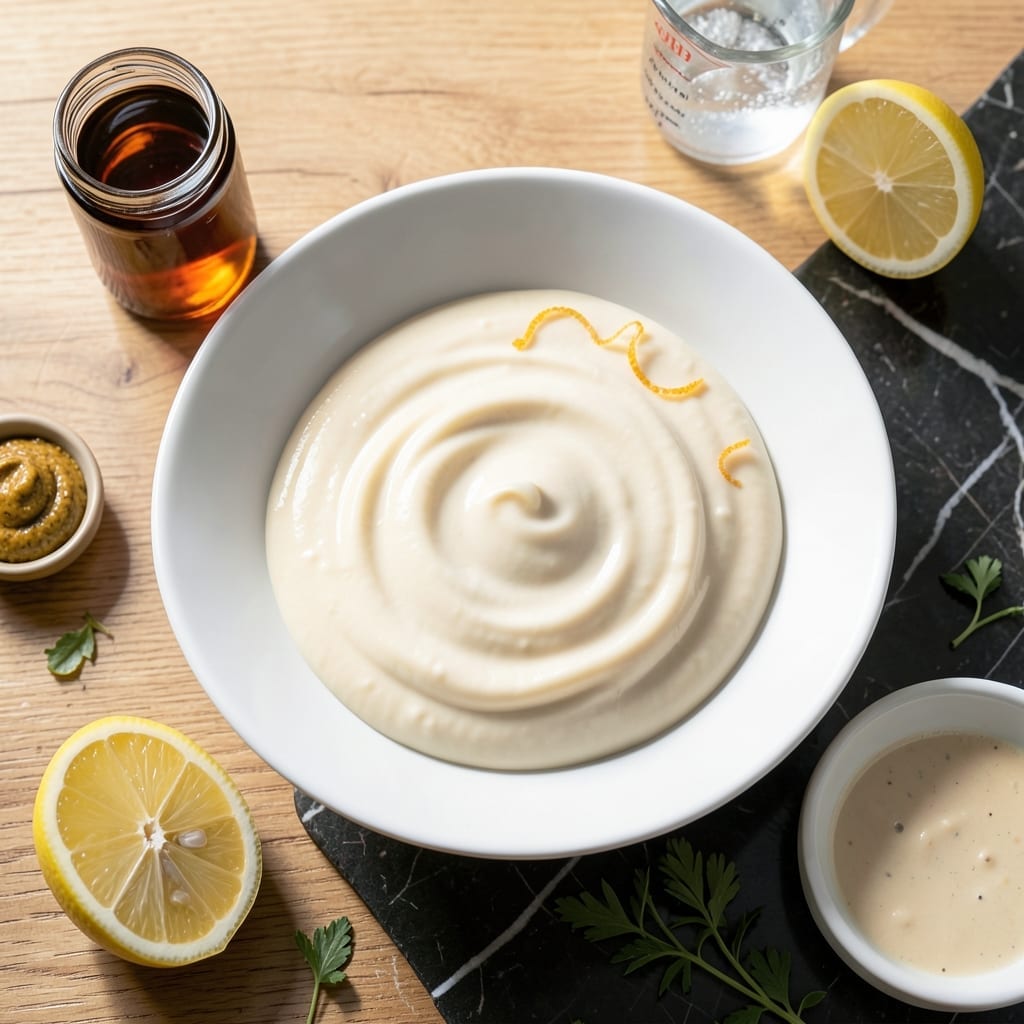
This aquafaba-based spread delivers a creamy texture without dairy or soy. I developed this method after testing multiple plant-based emulsifiers, and the results rival traditional mayo.
With just a handful of ingredients and a few minutes, you’ll have a versatile vegan condiment perfect for sandwiches, dressings, or dips. The key is patience while emulsifying.
Ingredients for Vegan Mayo Recipe Without Soy
Eight simple ingredients transform into a rich, velvety plant-based spread with no dairy or soy in sight.
| Ingredient | Amount | Notes |
|---|---|---|
| Aquafaba 🥫 | ⅓ cup | Unsalted chickpea brine, chilled |
| Neutral-Flavored Oil 🫒 | ¾ cup | Avocado or light olive oil |
| Dijon Mustard 🟡 | 1 tsp | Smooth, not whole grain |
| Apple Cider Vinegar 🍏 | 1 tbsp | Or white vinegar alternative |
| Lemon Juice 🍋 | 1 tbsp | Freshly squeezed preferred |
| Sea Salt 🧂 | ½ tsp | Fine grain for even distribution |
| Garlic Powder 🧄 | ¼ tsp | Optional for depth of flavor |
| Maple Syrup 🍁 | ½ tsp | Balances acidity, optional |
[recipe_ingredient_scaler]
The aquafaba is everything here. Use liquid from canned chickpeas—homemade brine lacks the starch needed for stable emulsification. Westbrae or Eden Organic brands work consistently. Chill the aquafaba and oil for 30 minutes before starting; this prevents separation. For the oil, avocado oil gives the cleanest flavor, but any neutral oil (grapeseed, refined coconut) works too.
No Dijon? Yellow mustard at the same amount works, though the flavor will be milder. Swap apple cider vinegar for white wine or rice vinegar if preferred. For sweetness, maple syrup can be replaced with agave nectar. If you’re missing garlic powder, a tiny pinch of onion powder adds similar depth. The lemon juice is non-negotiable—it brightens the whole emulsion.
Store in an airtight glass jar in the fridge for up to 1 week. The emulsion may thin slightly after storage—just whisk vigorously to restore. For longer storage, freeze in ice cube trays for up to 3 months (thaw before using).
Why You’ll Love This Recipe
- 5-Minute Magic: I just dump aquafaba, oil, and a splash of lemon into the blender and it emulsifies like a dream.
- Tangy Kick: Dijon mustard and apple cider vinegar give it that classic mayo zing without any weird aftertaste.
- Sandwich Savior: Slather it on burgers, mix into potato salad, or use as a dip—it’s my new condiment workhorse.
- Fridge Friendly: One batch lasts me all week, and it’s way cheaper than store-bought vegan mayo.
Step-by-Step Instructions for Vegan Mayo Without Soy
Master this emulsion technique for a silky, rich spread that rivals traditional mayonnaise.
Step 1: Stabilize the Aquafaba Base
Chill your 0.33 cup Aquafaba thoroughly—this is non-negotiable for proper emulsification. Pour it into the bowl of a stand mixer fitted with the whisk attachment. The colder the aquafaba, the better it will whip and hold the emulsion.
Add the 1 tsp Dijon Mustard, 1 tbsp Apple Cider Vinegar, 1 tbsp Lemon Juice, 0.5 tsp Sea Salt, 0.25 tsp Garlic Powder, and 0.5 tsp Maple Syrup. Whip on high speed for 2-3 minutes until the mixture becomes frothy and slightly thickened. You should see soft peaks forming when you lift the whisk.
Step 2: Begin the Emulsion with Slow Oil Incorporation
With the mixer running on medium speed, begin adding the 0.75 cup Neutral-Flavored Oil in a very thin, steady stream. Start with just a few drops at a time—the first addition is critical for establishing a stable emulsion.
After about 1 minute of slow dripping, you’ll notice the mixture begin to thicken and lighten in color. This is the emulsion forming. Continue adding the oil in a thin stream, slightly increasing the flow as the mixture thickens. The process should take 4-5 minutes total.
Step 3: Adjust Consistency and Check Emulsion
Once all the oil is incorporated, increase the speed to medium-high and whip for an additional 1-2 minutes. The mixture should now resemble thick, creamy mayonnaise. If it appears too thin, it means the emulsion hasn’t fully set—continue whipping for another 30-60 seconds.
Stop the mixer and check the texture. The finished product should hold its shape when you scoop some onto a spoon. If it separates at all, it means the oil was added too quickly. In this case, start over with a fresh bowl and add the broken mixture slowly to new aquafaba while whipping.
Step 4: Rest and Verify the Final Product
Transfer the mayonnaise to a clean jar or airtight container. Let it rest at room temperature for 10-15 minutes to allow the flavors to meld and the emulsion to fully stabilize. The texture will thicken slightly during this time.
Taste and adjust seasoning if needed, though be conservative with additional salt as the flavors will intensify as it chills. The finished mayo should have a smooth, glossy appearance and a rich, tangy flavor with a subtle garlic note. Store in the refrigerator for up to 1 week.
Pro Tips For Making Vegan Mayo Recipe Without Soy
- Drip Oil Slowly: Add the oil in a thin, steady stream while blending—about 1 teaspoon every 5 seconds at first. I learned this the hard way after my first batch broke because I poured too fast.
- Chill the Aquafaba: Use cold aquafaba straight from the fridge. It emulsifies better and gives a creamier texture than room temp.
- Skip the Salt First: Hold off on adding salt until the mayo is fully emulsified. Adding it too early can interfere with the binding process.
- Use a Tall Container: Blend in a tall, narrow container rather than a wide bowl. The shape helps the immersion blender incorporate air more efficiently for a thicker mayo.
Troubleshooting This Recipe
🥘 Too Thin or Runny?
If your vegan mayo lacks thickness, it’s likely due to insufficient emulsification or too much liquid. Aquafaba needs time to bind with the oil, so rushing the process can leave it watery.
Quick Fix: Slowly drizzle in more oil while blending continuously. If it’s still thin, chill the mixture for 30 minutes to help it thicken.
🔥 Separating or Breaking?
Separation happens when the oil and aquafaba don’t fully combine, often because the oil was added too quickly or the ingredients weren’t at room temperature.
Quick Fix: Start over with a fresh batch, adding oil very slowly at first. Use a blender or immersion blender for better emulsification.
🌡️ Too Tangy or Bitter?
A strong vinegar or lemon taste can overpower the mayo. This usually means you’ve added too much acid or used a sharp-tasting aquafaba (like from chickpeas with added salt).
Quick Fix: Balance the flavor with a touch of sweetener like maple syrup or agave. Alternatively, dilute with a little neutral oil or water.
⏰ Not Setting Properly?
If your mayo doesn’t firm up, the aquafaba may have been under-whipped or the oil wasn’t incorporated gradually. Temperature also plays a role—cold ingredients can hinder emulsification.
Quick Fix: Ensure aquafaba is whipped to stiff peaks before adding oil. Use room-temperature ingredients and blend for an extra 30 seconds to stabilize.
Nutrition Facts

Trained in classic French technique but raised on slow-cooked ribs and spicy rubs, she blends culinary skill with smoke and soul.
- Recipe for Boneless Pork Chops in Cast Iron Skillet: Sear and Baste to Juicy Perfection - October 3, 2026
- Recipe for Boneless Cross Rib Roast: Slow-Roasted Beef with Herb Crust - October 3, 2026
- Hamburgers in Sauce Recipe Crock Pot: Slow-Cooked Savory Delight - October 3, 2026