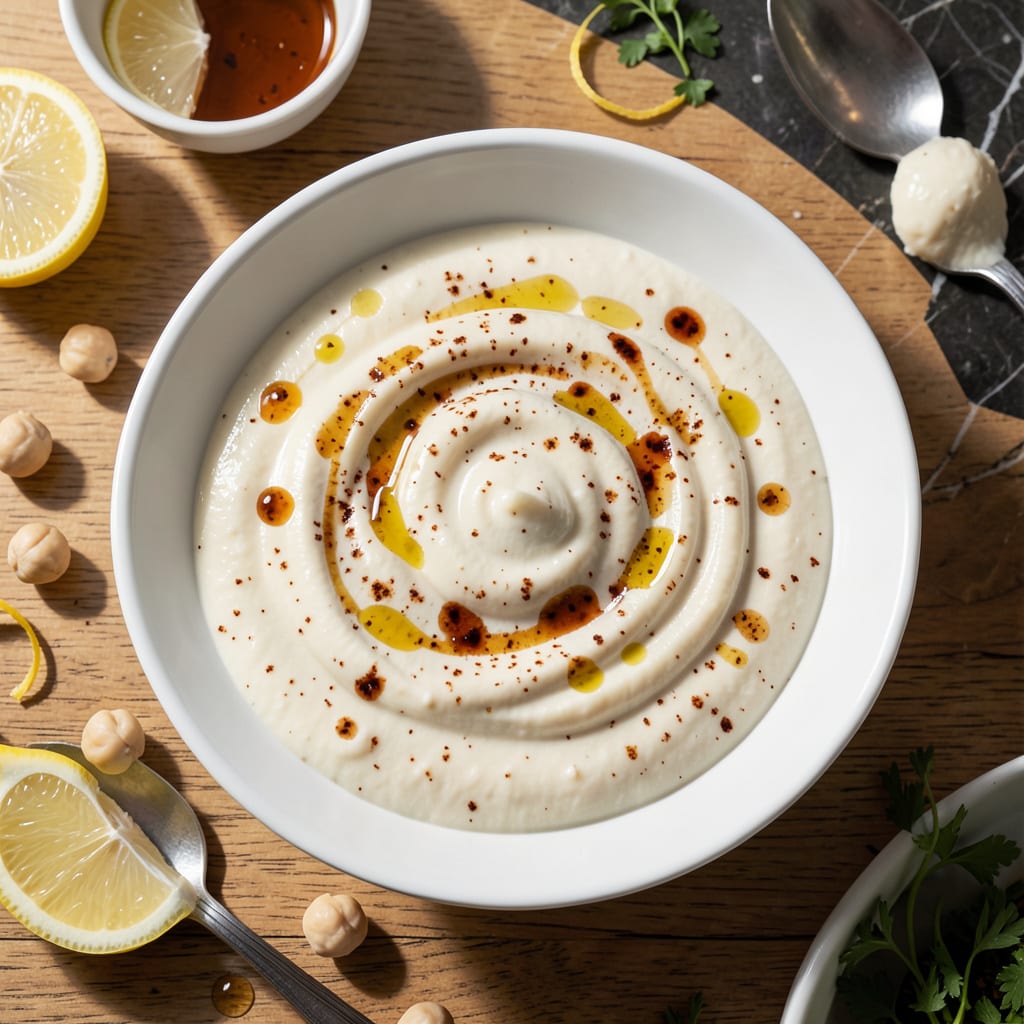
This plant-based condiment delivers creamy richness without dairy or soy, using aquafaba as the secret emulsifier.
I developed this vegan version after years of testing, perfecting a stable emulsion that holds up in sandwiches and dressings. Store in the fridge for up to 5 days.
Ingredients for Vegan Mayonnaise Recipe No Soy
Eight plant-based ingredients create this velvety, dairy-free, soy-free emulsion that clings to sandwiches and salads.
| Ingredient | Amount | Notes |
|---|---|---|
| Aquafaba 🥫 | ½ cup | Chickpea brine, unsalted |
| Neutral-Flavored Oil 🫒 | 1 cup | Avocado or light olive oil |
| Dijon Mustard 🟡 | 2 tsp | Smooth, no seeds |
| Apple Cider Vinegar 🍏 | 1 tbsp | Or white wine vinegar |
| Lemon Juice 🍋 | 1 tbsp | Freshly squeezed |
| Agave Nectar 🍯 | 1 tsp | Or maple syrup |
| Sea Salt 🧂 | ½ tsp | Fine grain preferred |
| Garlic Powder 🧄 | ¼ tsp | Optional for depth |
[recipeingredientscaler]
Aquafaba quality varies by brand (the liquid from canned chickpeas works best—Westbrae or Eden Organic have consistent viscosity). Use unsalted brine only; salted can throw off the emulsion. The oil needs to be truly neutral—avocado oil is my go-to, but refined coconut oil (melted first) works too. For the mustard, avoid yellow mustard; its tang is too sharp for this delicate balance.
No aquafaba? Flax egg (1 tbsp ground flax + 3 tbsp water) can substitute but the texture won’t be as light. Swap apple cider vinegar for rice vinegar at equal amounts for milder flavor. Missing agave? Date syrup works but adds color. The garlic powder is optional, but fresh minced garlic at one-third the amount gives a brighter punch if you prefer.
This keeps 5 days in the fridge—no longer, as aquafaba can start to separate. Store in a clean glass jar (sterilized is best). If it thickens too much in the fridge, whisk in 1 tsp warm water to loosen. Don’t freeze; the emulsion breaks.
Why You’ll Love This Recipe
- Blends in Seconds: I just dump everything in a blender—aquafaba, oil, mustard—and it emulsifies before my coffee gets cold.
- Tangy Brightness: The apple cider vinegar and lemon juice give it that sharp kick that’s missing from so many vegan mayos.
- Sandwich Hero: Honestly, it’s my secret to turning sad leftovers into a lunch I actually look forward to.
- Pantry Staples: Between us, I always have chickpea water and oil on hand, so I can make this without a grocery run.
Step-by-Step Instructions for Vegan Mayonnaise No Soy
Here’s the method. Straightforward, tested, works every time.
Step 1: Whisk Aquafaba and Acid Base
In a medium bowl, combine 0.5 cup Aquafaba, 2 tsp Dijon Mustard, 1 tbsp Apple Cider Vinegar, 1 tbsp Lemon Juice, 1 tsp Agave Nectar, 0.5 tsp Sea Salt, and 0.25 tsp Garlic Powder. I use a wire whisk for this—it helps break down the aquafaba strands and creates a stable base.
Whisk vigorously for 1-2 minutes until the mixture thickens slightly and becomes frothy. You’re looking for small bubbles throughout—this indicates the aquafaba is starting to emulsify. The acid ingredients help stabilize the emulsion, so don’t skip them.
Step 2: Begin Slow Oil Incorporation
With one hand, start dripping in the 1 cup Neutral-Flavored Oil 1 teaspoon at a time while whisking constantly with your other hand. This slow incorporation is crucial—adding oil too quickly will break the emulsion and leave you with a greasy mess instead of creamy mayo.
After adding about ¼ cup of oil, you’ll notice the mixture starting to thicken and turn opaque. This is the emulsion forming. Keep whisking vigorously—your arm will get a workout, but it’s worth it for that perfect creamy texture.
Step 3: Stream in Remaining Oil
Once the emulsion has started and the mixture looks stable, you can begin adding the oil in a thin, steady stream while continuing to whisk. I find it helpful to pour from a measuring cup with a spout for better control.
As you add more oil, the mixture will become thicker and more mayonnaise-like. If it starts looking too thick, add a teaspoon of water and whisk to thin it slightly. The final result should be creamy but still pourable, with a beautiful pale ivory color.
Step 4: Adjust Consistency and Flavor
After all the oil is incorporated, taste and adjust seasoning if needed. I sometimes add an extra pinch of Sea Salt or splash of Lemon Juice to brighten the flavor. If the mayonnaise is too thick, whisk in 1 teaspoon of water at a time until it reaches your desired consistency.
Real talk: The flavor develops as it sits, so don’t be alarmed if it seems a bit sharp right after making. Transfer to an airtight container and let it rest in the refrigerator for at least 30 minutes before using to allow the flavors to meld together.
Pro Tips For Making Vegan Mayonnaise Recipe No Soy
- Drip the Oil Slow: Add the oil in a thin, steady stream—I learned this the hard way after my first attempt broke into a sad, oily mess. A slow drizzle gives the aquafaba time to emulsify properly.
- Chill the Aquafaba: Use cold aquafaba straight from the fridge. Room temperature works, but chilled beans give the liquid more structure, and I noticed my mayo held better.
- Skip the Blender Rush: Start with a stick blender or whisk—pouring everything into a high-speed blender too fast usually means a split emulsion. I ruined two batches before I slowed down.
- Balance the Acid: Taste as you go with the lemon juice and vinegar. Sounds obvious, but I used to overdo it, and the mayo turned bitter—now I add a teaspoon at a time, then adjust.
Dietary Considerations for This Dish
Keto-Friendly Options
For a keto-friendly version, replace traditional sweeteners with erythritol or monk fruit to keep carbs minimal. Use avocado oil or MCT oil as the base for healthy fats that align with keto goals.
Gluten-Free
This vegan mayonnaise is naturally gluten-free, as it relies on aquafaba (chickpea brine) and oil. Just ensure all ingredients, like vinegar or mustard, are certified gluten-free to avoid cross-contamination.
Allergens
This recipe avoids soy, but check labels for mustard or vinegar if you have sensitivities. For nut-free versions, use sunflower or safflower oil instead of nut-based oils.
Vegetarian Modifications
Already vegetarian by design, this recipe can be adjusted for vegans by confirming no animal-derived additives are in ingredients like vinegar or mustard.
Low-Sodium
To reduce sodium, use low-sodium aquafaba or rinse chickpeas before draining. Skip added salt or use herbs like dill or parsley for flavor without the sodium.
Nutrition Facts

Trained in classic French technique but raised on slow-cooked ribs and spicy rubs, she blends culinary skill with smoke and soul.
- Recipe for Boneless Pork Chops in Cast Iron Skillet: Sear and Baste to Juicy Perfection - October 3, 2026
- Recipe for Boneless Cross Rib Roast: Slow-Roasted Beef with Herb Crust - October 3, 2026
- Hamburgers in Sauce Recipe Crock Pot: Slow-Cooked Savory Delight - October 3, 2026