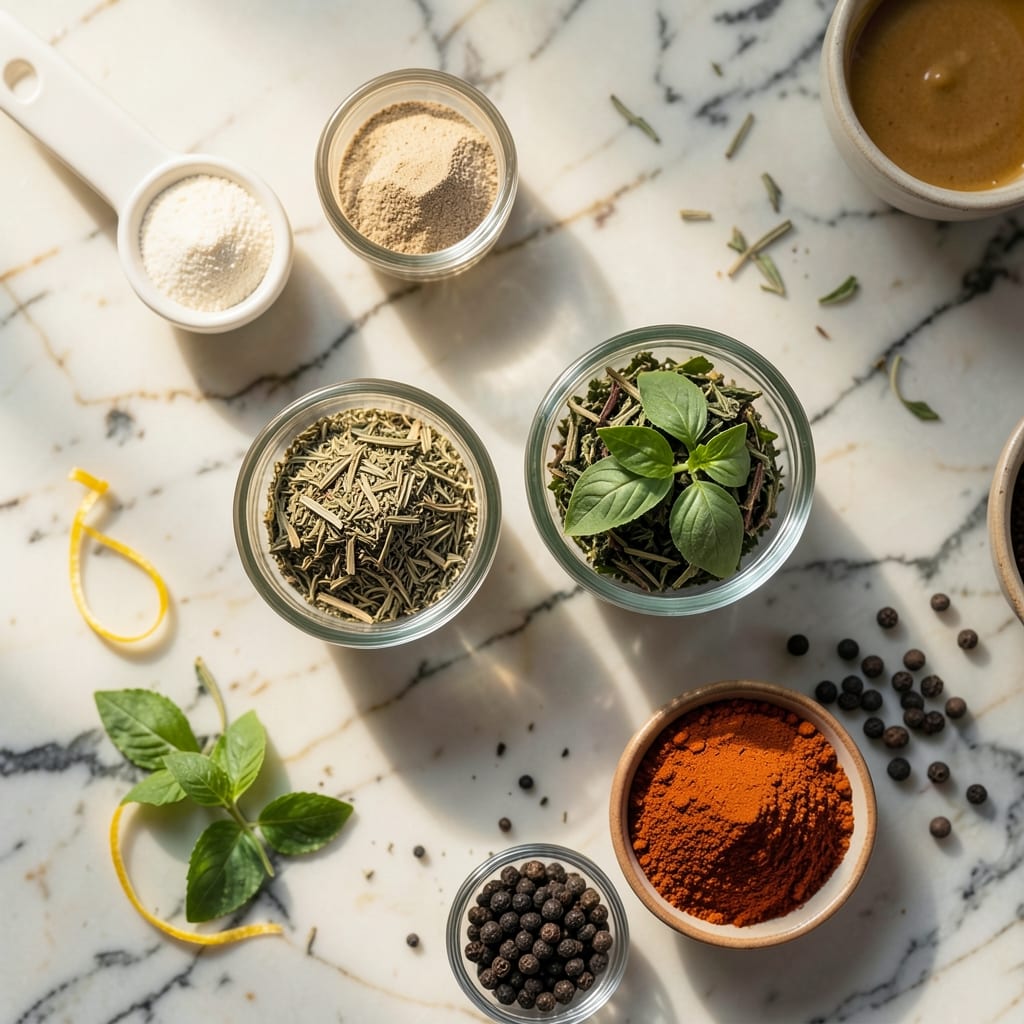
This recipe captures the essence of Vietnamese street food with its lemongrass-marinated pork and charred sweetness. The marinade infuses the meat with aromatic depth, while grilling delivers those signature smoky edges.
What emerges is tender, flavorful pork with a caramelized crust, ready to serve with rice paper wraps or steamed rice. The balance of sweet, savory, and herbal notes makes this dish unforgettable.
Ingredients for Vietnam Grill Pork
Thin-cut pork shoulder meets lemongrass, fish sauce, and brown sugar for authentic Vietnamese grill flavor.
| Ingredient | Amount | Notes |
|---|---|---|
| Pork Shoulder 🥩 | 2 lb | Cut into thin strips, boneless preferred |
| Lemongrass Stalks 🌿 | 4 whole | Tender inner white parts only, finely minced |
| Fish Sauce 🐟 | 3 tbsp | Vietnamese variety like Red Boat or Three Crabs |
| Brown Sugar 🍚 | ¼ cup | Light or dark, packed firmly |
| Garlic Cloves 🧄 | 6 cloves | Peeled and minced finely |
| Shallots 🧅 | 2 whole | Peeled and minced |
| Soy Sauce 🫒 | 2 tbsp | Low-sodium preferred for balance |
| Black Pepper 🌶️ | 1 tbsp | Freshly ground for best aroma |
| Vegetable Oil 🫒 | 2 tbsp | Neutral flavor for high-heat grilling |
| Rice Vinegar 🍶 | 1 tbsp | Adds tangy brightness to marinade |
| Fresh Cilantro 🌿 | ½ cup | Chopped, for garnish and marinade |
| Lime 🍈 | 1 whole | Juiced, about 2 tbsp needed |
| Sesame Oil 🫒 | 1 tsp | Toasted variety for depth |
[recipe_ingredient_scaler]
The pork shoulder is critical—look for well-marbled, boneless cuts at Asian markets or Whole Foods for optimal tenderness. Lemongrass must be fresh (dried won’t deliver the same aromatic punch). Red Boat fish sauce is the gold standard here, but Three Crabs is a solid, more affordable alternative. The brown sugar should be fine-grained to dissolve evenly in the marinade (don’t skip packing it firmly).
No lemongrass? Lemongrass paste at half the amount works in a pinch. Fish sauce can be replaced with soy sauce plus a pinch of salt, though the flavor profile will shift slightly. Out of shallots? Red onion at a 1:1 ratio is acceptable. For a sweeter glaze, increase the brown sugar to 1/3 cup. The cilantro garnish is optional but adds freshness (don’t skip it if possible).
Marinate the pork for at least 4 hours (overnight is ideal) to let the flavors penetrate. Grill immediately after marinating for the best char. Leftovers keep for 3 days in the fridge or 3 months frozen—perfect for quick weeknight meals.
Why You’ll Love This Recipe
- Minimal Chopping Required: I just bruise the lemongrass and mince the garlic—no fancy knife skills needed.
- Sweet-Savory Magic: The brown sugar and fish sauce caramelize into this sticky, umami-packed glaze on the pork.
- Feeds a Crowd: One pork shoulder serves eight, and honestly, it’s even better the next day in a bánh mì.
- Budget Stretcher: Pork shoulder is cheap, and those bold flavors make it taste like a restaurant dish.
Step-by-Step Instructions for Lemongrass-Marinated Grilled Pork
Master the technique for perfectly charred, aromatic pork with this professional method.
Step 1: Prepare the Lemongrass Marinade Base
Finely mince the tender inner white parts of the 4 whole Lemongrass Stalks until you have about 3 tablespoons of paste-like consistency. In a large bowl, combine this with the 3 tbsp Fish Sauce, 0.25 cup Brown Sugar, minced 6 cloves Garlic Cloves, and minced 2 whole Shallots.
Add the 2 tbsp Soy Sauce, 1 tbsp Black Pepper, 1 tbsp Rice Vinegar, juiced 1 whole Lime, and 1 tsp Sesame Oil. Whisk vigorously until the Brown Sugar fully dissolves and the marinade becomes a uniform dark amber liquid with visible herb flecks.
Step 2: Marinate the Pork for Maximum Flavor Penetration
Cut the 2 lb Pork Shoulder into thin strips, about ¼-inch thick and 2-3 inches long. This cut ensures quick marinating and even cooking on the grill. Place the pork in the marinade, turning to coat every piece thoroughly.
Cover and refrigerate for a minimum of 4 hours, or ideally overnight. The longer marinating time allows the complex flavors to penetrate deeply. The pork should appear slightly translucent at the edges when properly marinated, indicating the acids and enzymes are breaking down the surface proteins.
Step 3: Grill to Achieve Perfect Char and Caramelization
Preheat your grill to medium-high heat (about 400°F). Remove the pork from the marinade, shaking off excess but leaving a visible coating. Discard any remaining marinade that touched raw meat. Lightly brush the grill grates with vegetable oil to prevent sticking.
Grill the pork strips for 3-4 minutes per side, resisting the urge to move them. You want to achieve distinct grill marks and a deep char on the edges. The strips are done when they develop a dark caramelized crust and reach an internal temperature of 145°F.
Step 4: Rest and Garnish for Optimal Texture and Presentation
Transfer the grilled pork to a clean plate and let it rest for 5 minutes. This allows the juices to redistribute throughout the meat, ensuring each bite remains moist and flavorful. The pork should be glossy from the caramelized sugars and slightly sticky to the touch.
Garnish with the 0.5 cup Fresh Cilantro, chopping just before serving to preserve its bright green color and fresh aroma. The herb’s citrusy notes will complement the charred sweetness of the pork perfectly. Serve immediately while the crust is still crisp.
Pro Tips For Making Vietnam Grill Pork
- Score the Fat: Cut 1/4-inch deep slits in the pork shoulder fat cap so the lemongrass marinade penetrates deeper—I learned this the hard way after my first few batches tasted bland on the surface.
- Bruise the Lemongrass: Smash the lemongrass stalks with the flat side of your knife before mincing; it releases way more aromatic oils into the fish sauce and brown sugar marinade.
- Skip the High Heat: Grill over medium indirect heat to prevent the sugar in the marinade from burning before the pork shoulder cooks through—after charring three batches, I finally got the timing right.
- Rest Before Slicing: Let the pork rest 10 minutes under foil after grilling so the juices redistribute; I was skeptical until I tried it and stopped having dry edges on my slices.
Regional Styles of This Recipe
Northern Vietnam Style
In Hanoi, this dish is often made with leaner pork cuts like shoulder or loin, marinated with extra fish sauce for a saltier profile. The grilling is typically done over charcoal for that authentic smoky aroma. I love the simplicity of this approach.
Central Vietnam Twist
Hue’s imperial cuisine adds complexity with turmeric and chili flakes in the marinade, giving the pork a golden hue and subtle heat. The pork is often grilled on bamboo skewers for easy street food serving. This version packs serious flavor.
Southern Vietnam Approach
Ho Chi Minh City’s version leans sweeter, with extra brown sugar and a touch of coconut milk in the marinade. The pork is grilled over wood fires, adding a distinct smokiness. It’s richer and more caramelized. 🔥
Saigon Street Food
Vendors in Saigon often serve this with pickled vegetables and fresh herbs wrapped in rice paper. The pork is sliced thinner for quick grilling and maximum char. I always add extra cilantro for freshness.
Mekong Delta Variation
This rural take uses pork belly for extra fat, marinated with fermented shrimp paste for umami depth. Grilled on open flames, it’s crispy on the edges and juicy inside. A true hidden gem. ✨
Urban Adaptation
In modern Vietnamese cities, you’ll find this dish made with pork tenderloin for a leaner option. The marinade often includes honey instead of sugar for a smoother glaze. Still delicious, just lighter.
Nutrition Facts

Trained in classic French technique but raised on slow-cooked ribs and spicy rubs, she blends culinary skill with smoke and soul.
- Recipe for Boneless Pork Chops in Cast Iron Skillet: Sear and Baste to Juicy Perfection - October 3, 2026
- Recipe for Boneless Cross Rib Roast: Slow-Roasted Beef with Herb Crust - October 3, 2026
- Hamburgers in Sauce Recipe Crock Pot: Slow-Cooked Savory Delight - October 3, 2026