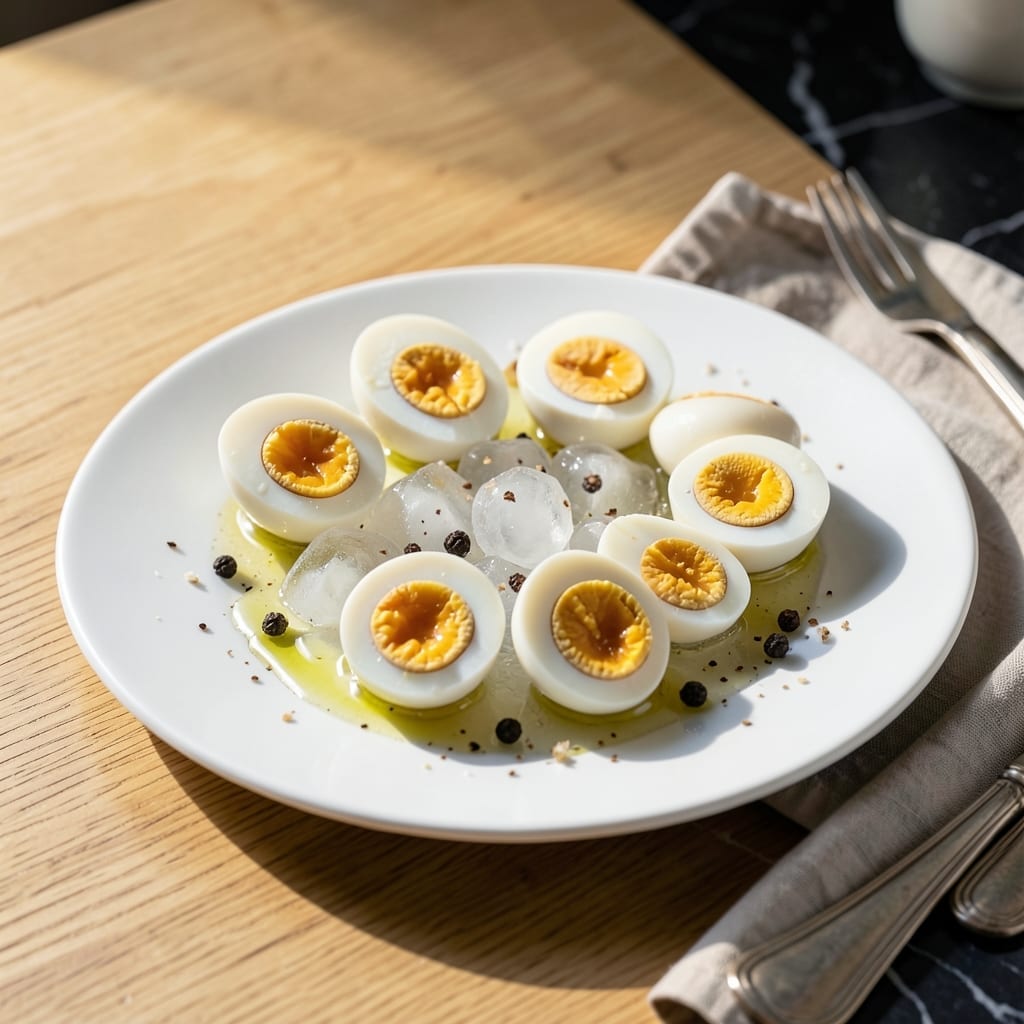
I’ve been boiling eggs for years, but adding vinegar was the game-changer. It softens the shells so they slip right off.
This easy method delivers that classic hard-boiled taste with none of the peeling frustration.
Ingredients for Vinegar Boiled Eggs
Six ingredients. Simple method. Perfect eggs every single time.
| Ingredient | Amount | Notes |
|---|---|---|
| Large Eggs 🥚 | 8 whole | Room temperature preferred |
| Water 💧 | 8 cups | Enough to cover eggs by 1 inch |
| White Vinegar 🍶 | ½ cup | Distilled or apple cider works too |
| Ice Cubes ❄️ | 2 cups | For ice bath cooling |
| Salt 🧂 | 1 tbsp | Optional for cracking prevention |
| Baking Soda 🧂 | ½ tsp | Helps with peeling |
[recipe_ingredient_scaler]
The eggs are the star here—fresh is fine, but older eggs (about a week old) peel even easier. Vinegar breaks down the shell’s membrane, which is why they slip right off. I grab my white vinegar from Costco in bulk (cheaper per ounce), but any grocery store brand works. The baking soda? That’s the secret weapon for extra-smooth peeling (trust me on this one).
No white vinegar? Apple cider vinegar works the same. Skip the salt if you’re watching sodium—it’s optional anyway. The ice bath is non-negotiable though (don’t skip this part). If you’re doubling the batch, use a bigger pot and double the vinegar. The water amount can be eyeballed—just make sure the eggs are fully submerged.
Hard-boiled eggs keep 1 week in the fridge, unpeeled. Once peeled, store them in water in a sealed container for 3-4 days. I always make a dozen—half disappear immediately, half last for snacks all week.
Why You’ll Love This Recipe
- One Pot Wonder: I just boil eggs with vinegar and salt—no fancy steps, no mess, just set a timer and walk away.
- Tangy Bite: That sharp vinegar kick cuts through the richness of the egg, making every bite bright and satisfying.
- Meal Prep Magic: I make a batch on Sunday and they keep beautifully for quick snacks or salads all week.
- Pocket Change: A dozen eggs and a splash of vinegar cost pennies but taste like I put in serious effort.
Step-by-Step Instructions for Vinegar Boiled Eggs
Here’s my no-fail method for perfectly peelable eggs with a subtle tangy flavor.
Step 1: Prepare the Boiling Water with Additives
In a large pot, combine the 8 cups Water, 0.5 cup White Vinegar, 1 tbsp Salt, and 0.5 tsp Baking Soda. The vinegar helps prevent cracking and adds a mild tang, while the baking soda raises the pH to make peeling easier later.
Bring the mixture to a full rolling boil over high heat. You’ll see large, vigorous bubbles breaking the surface continually. This ensures the water is hot enough to properly cook the eggs evenly from the start.
Step 2: Gently Add the Eggs and Cook
Using a slotted spoon, carefully lower the 8 whole Large Eggs into the boiling water one at a time. I always use room temperature eggs here—they’re less likely to crack when they hit the hot water.
Once all eggs are in the pot, maintain a gentle boil. Cook the eggs for 12-13 minutes for fully set yolks with no greenish ring. You’ll see the eggs bobbing slightly in the water as they cook.
Step 3: Create an Ice Bath for Rapid Cooling
While the eggs cook, prepare a large bowl with the 2 cups Ice Cubes and enough cold water to cover the eggs completely. The ice bath stops the cooking process immediately and helps contract the egg whites, pulling them away from the shell.
This step is crucial for easy peeling. I’ve found that eggs cooled this way peel cleanly with no stubborn bits of shell clinging to the whites.
Step 4: Transfer and Cool Completely
As soon as the cooking time is up, use the slotted spoon to transfer the eggs directly to the ice bath. Let them cool completely for at least 10-15 minutes—you should be able to handle them comfortably with your bare hands.
The eggs will develop a faint vinegar scent during cooling, but this disappears once peeled. The shells may appear slightly rough from the vinegar, which actually helps with gripping them for peeling.
Step 5: Peel and Serve
Remove the eggs from the ice water and peel under a thin stream of running water if desired. The combination of vinegar and baking soda in the cooking water makes the shells slip off effortlessly, often coming away in large pieces.
Serve immediately or store peeled eggs in water in the refrigerator for up to 5 days. The subtle tang from the vinegar makes these perfect for egg salad or deviled eggs, or simply enjoy them as a snack with a sprinkle of salt.
Pro Tips For Making Vinegar Boiled Eggs
- Start Cold: Place your eggs in cold water first, then bring to a boil—this prevents cracking and ensures even cooking, especially with the vinegar in the mix.
- Use Old Eggs: I learned this the hard way—older eggs peel easier than fresh ones, so grab those that have been in your fridge for at least a week.
- Shock Immediately: Transfer the eggs straight from boiling water to an ice bath for at least 5 minutes to stop the cooking and make peeling easier.
- Vinegar Ratio: About 1/4 cup white vinegar per quart of water is the sweet spot—enough to help with peeling but not so much that it overpowers the flavor.
Make-Ahead Tips for This vinegar boiled eggs
Batch Cooking Tips
I always make a double batch—16 eggs fits comfortably in a standard 5-quart pot. Just double the vinegar to 1 cup and ensure the water covers all eggs by 1 inch. This way, I have enough for the week without extra effort. 💡
Storage Before Peeling
Keep unpeeled eggs in their shells in the fridge for up to 1 week. The vinegar helps preserve freshness, and the shells act as a natural barrier. I store mine in a sealed container to prevent any fridge odors from seeping in.
Peeled Egg Storage
Once peeled, place eggs in a bowl of water in an airtight container. This keeps them moist and fresh for 3-4 days. Change the water daily for the best texture, especially if using them in salads or snacks.
Meal Prep Uses
These eggs are perfect for grab-and-go lunches. Chop them for salads, slice for sandwiches, or mash for egg salad. The tangy flavor from the vinegar adds a nice kick to any dish. I often pair them with avocado for a quick, protein-packed meal.
Freezing Not Recommended
Hard-boiled eggs don’t freeze well—the whites become rubbery. Stick to refrigerating for the best results. If you need long-term storage, it’s better to boil fresh eggs as needed.
Honestly, I’ve tried freezing, and the texture just isn’t the same. 🚫
Nutrition Facts
Frequently Asked Questions
Why does vinegar make eggs easier to peel?
The acidity breaks down the shell’s inner membrane, allowing it to separate more cleanly from the white.
Can I use apple cider vinegar instead?
Yes, apple cider vinegar works just as well as white vinegar. The flavor difference is negligible once cooked.
How long should I cool the eggs in ice water?
Cool for at least 10-15 minutes to stop cooking and contract the whites for easy peeling.
Can I skip the baking soda?
Yes, but it helps raise the water’s pH for even easier peeling. The vinegar alone still improves results.

Trained in classic French technique but raised on slow-cooked ribs and spicy rubs, she blends culinary skill with smoke and soul.
- Recipe for Crock Pot Swiss Steak: Slow-Cooked Beef With Mushroom Gravy - October 3, 2026
- Recipe for Kabsa Rice: Spiced Middle Eastern Feast in One Pot - October 3, 2026
- Hamburger Stir Fry Recipe Healthy: Lean Protein and Veggie-Packed Dinner - October 3, 2026