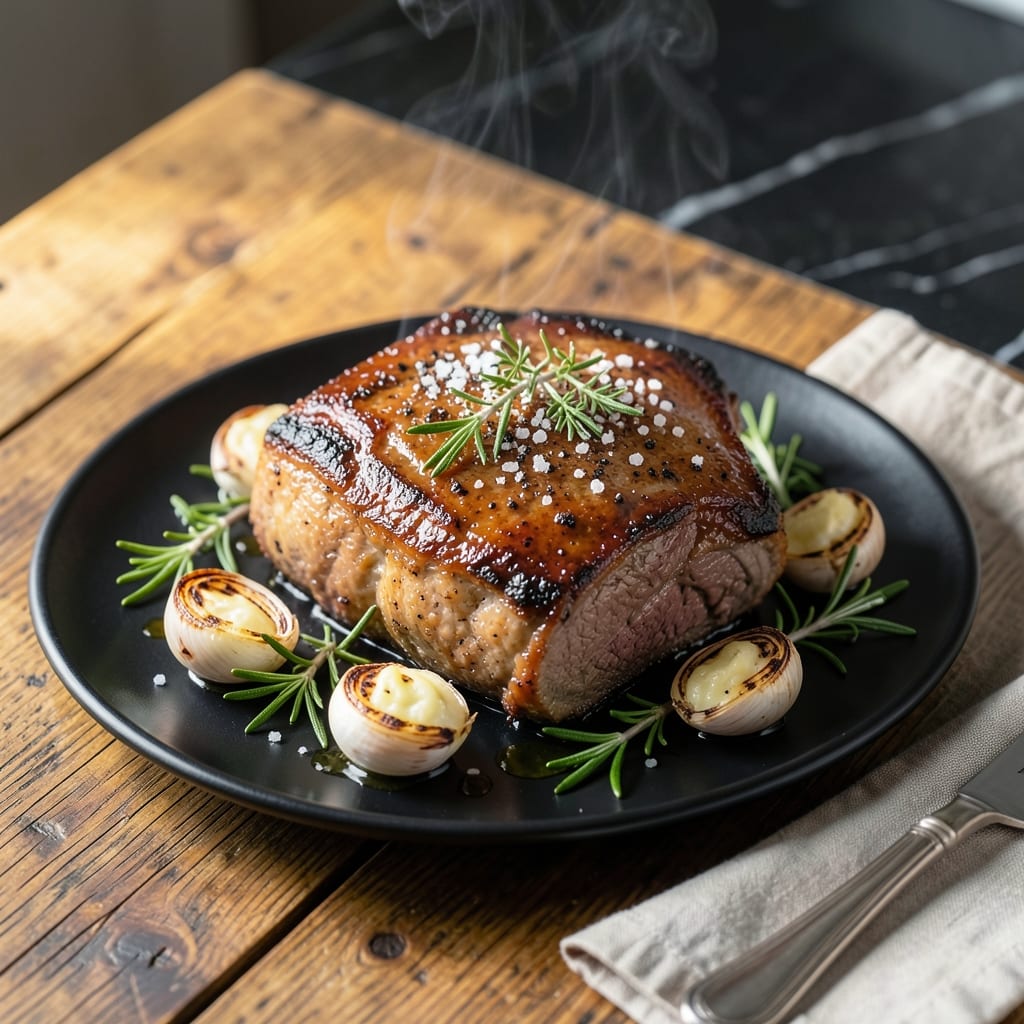
This oven method unlocks the full potential of wagyu chuck roast with a slow-roasted approach that renders the fat into buttery richness. I developed this technique after realizing that such a luxurious cut deserves more than a standard pot roast treatment.
The key is low and slow heat, allowing the marbled fat to melt gradually while the meat becomes fork-tender. A simple seasoning blend enhances rather than overpowers the beef’s natural depth of flavor.
What emerges from the oven is a roast with a caramelized crust and interior so tender it nearly falls apart. The juices create a natural sauce that’s rich enough to serve as-is or reduce into a glossy finish.
Perfect for Sunday suppers or special occasions when you want restaurant quality at home. Here’s how to achieve it.
Ingredients for Wagyu Chuck Roast Recipe Oven
Luxurious wagyu chuck roast plus simple aromatics create this slow-roasted masterpiece with minimal effort.
| Ingredient | Amount | Notes |
|---|---|---|
| Wagyu Chuck Roast 🥩 | 3 lb | Well-marbled, bone-in preferred |
| Kosher Salt 🧂 | 2 tsp | Diamond Crystal preferred |
| Black Pepper 🌶️ | 1 tsp | Freshly cracked for best flavor |
| Garlic Cloves 🧄 | 6 cloves | Smashed, peeled |
| Fresh Rosemary 🌿 | 2 tbsp | Chopped, stems removed |
| Fresh Thyme 🍃 | 2 tbsp | Chopped, stems removed |
| Olive Oil 🫒 | 2 tbsp | Extra-virgin for richness |
| Red Wine 🍷 | 1 cup | Dry variety like Cabernet Sauvignon |
| Beef Stock 🥣 | 2 cups | Low-sodium preferred |
| Yellow Onion 🧅 | 1 whole | Large, quartered |
| Carrots 🥕 | 3 whole | Peeled, cut into chunks |
| Celery Stalks 🌿 | 2 whole | Cut into large pieces |
| Bay Leaves 🍃 | 2 pieces | Dried, whole |
| Unsalted Butter 🧈 | 2 tbsp | For finishing sauce |
[recipe_ingredient_scaler]
The wagyu chuck roast is non-negotiable here. Costco or Snake River Farms are reliable sources for high-quality wagyu with excellent marbling. Look for pieces with visible fat streaks throughout—the more marbling, the better the result. The beef stock should be high-quality; avoid the canned varieties with added MSG. Fresh herbs are ideal, but dried can work in a pinch (use about a third the amount).
No red wine? Beef broth with a splash of balsamic vinegar mimics the depth. If wagyu is unavailable, regular chuck roast works but won’t have the same buttery richness. The vegetables can be swapped for whatever you have on hand—parsnips or potatoes hold up well. For extra depth, add a Parmesan rind to the roasting pan while cooking (remove before serving).
Leftovers keep beautifully. Store in an airtight container with some of the juices for up to 5 days in the fridge or freeze for 3 months. The flavors deepen overnight, making it even better for sandwiches or tacos the next day.
Why You’ll Love This Recipe
- I’ll be real: the roast tastes even better the next day, and it stretches into sandwiches, tacos, or just reheated with its juices.
- One Pan Wonder: I toss the wagyu chuck with salt, pepper, and rosemary, then let the oven do the rest—minimal mess, maximum flavor.
- Sunday Dinner, Easy: Honestly, this is my go-to for feeding a crowd or prepping meals for the week—fancy enough for guests, simple enough for Tuesday.
- Leftovers for Days: I’ll be real: the roast tastes even better the next day, and it stretches into sandwiches, tacos, or just reheated with its juices.
Step-by-Step Instructions for Wagyu Chuck Roast Oven
This method transforms the rich marbling into fall-apart tender meat with deep, concentrated flavor.
Step 1: Season and Sear the Chuck Roast
Pat the 3 lb Wagyu Chuck Roast dry with paper towels, then rub it generously with the 2 tsp Kosher Salt and 1 tsp Black Pepper on all sides. I press the seasoning into the meat to ensure every bite is well-flavored. Let it sit at room temperature for 30 minutes while you prep the remaining ingredients.
Heat the 2 tbsp Olive Oil in a large Dutch oven over medium-high heat until shimmering. Sear the chuck roast on all sides for 3-4 minutes per side until deeply browned. This creates a flavorful crust and renders some of the fat. Remove the roast and set it aside temporarily.
Step 2: Sauté Aromatics and Build the Braising Liquid
In the same pot, add the 1 whole Yellow Onion, 3 whole Carrots, and 2 whole Celery Stalks. Cook for 5-6 minutes until the vegetables begin to soften and develop some color. Stir in the 6 cloves Garlic Cloves, 2 tbsp Fresh Rosemary, and 2 tbsp Fresh Thyme, cooking for another 1 minute until fragrant.
Pour in the 1 cup Red Wine and scrape up any browned bits from the bottom of the pot. Let it simmer for 2-3 minutes until reduced by half. Add the 2 cups Beef Stock and 2 pieces Bay Leaves, bringing the mixture to a gentle simmer.
Step 3: Slow Roast Until Fork-Tender
Return the seared chuck roast to the pot, along with any accumulated juices. The liquid should come about halfway up the roast—if it doesn’t, add a bit more beef stock. Cover the pot and transfer it to a preheated 325°F oven.
Roast for 3 to 3½ hours, turning the roast every 45 minutes to ensure even cooking. The chuck roast is done when a fork slides in easily and the meat pulls apart with minimal resistance. The rich marbling will have melted into the braising liquid, creating a luxurious sauce.
Step 4: Rest and Finish with Butter
Carefully remove the roast from the pot and transfer it to a cutting board. Tent it loosely with foil and let it rest for 15-20 minutes. This allows the juices to redistribute, ensuring every slice is moist and flavorful.
Skim any excess fat from the surface of the braising liquid, then stir in the 2 tbsp Unsalted Butter to add a silky finish. Slice the roast against the grain and serve it with the vegetables and sauce spooned over the top.
Pro Tips For Making Wagyu Chuck Roast Recipe Oven
- Sear It Hard: I learned this the hard way—get your pan screaming hot before adding the wagyu chuck, and don’t move it for at least 2-3 minutes per side to develop that deep, crusty fond.
- Salt Overnight: Dry-brine the roast with kosher salt 12-24 hours before cooking; it penetrates deep into the wagyu and guarantees even seasoning without overpowering the beef’s natural richness.
- Skip the Overcrowding: Resist the urge to add all the garlic and rosemary at once—scatter half in the pan and the rest on top so the flavors don’t steam the meat instead of searing it.
- Rest Under Foil: After pulling it from the oven, tent the roast loosely with foil and let it sit for 15-20 minutes—this keeps the juices inside where they belong, not on your cutting board.
Storing and Reheating Leftovers
Refrigerator Storage
Let the roast cool in its juices for no more than 2 hours before transferring to an airtight container. I use glass containers to preserve those precious wagyu juices. Store in the fridge at 40°F or below for up to 4 days. The flavors deepen overnight, making leftovers even more delicious. ❄️
Freezer Storage
For longer storage, portion the roast with its sauce into freezer-safe containers or heavy-duty bags. Leave 1 inch of headspace for expansion. It freezes beautifully for up to 3 months without losing texture. I always label with the date to keep track.
Stovetop Reheating
This is my preferred method for maintaining texture. Gently reheat in a saucepan over low heat with a splash of beef stock or water. Cover and warm for 10-15 minutes, stirring occasionally. This prevents drying while restoring that buttery richness. 🔥
Oven Reheating
Preheat oven to 300°F. Place the roast in an oven-safe dish with some juices, cover with foil, and warm for 20-25 minutes. This method works well for larger portions and keeps the meat incredibly tender.
Microwave Reheating
For quick meals, microwave individual portions covered with a damp paper towel. Use 50% power in 1-minute intervals, stirring between each, until reaching 165°F. Add a spoonful of juices to maintain moisture.
Nutrition Facts
Frequently Asked Questions
Is it necessary to sear the roast first?
Yes, searing develops deep flavor and a beautiful crust. Sear over medium-high heat for 3-4 minutes per side in a Dutch oven until deeply browned.
Can I use a regular chuck roast instead?
Yes, but the texture and richness won’t be the same. Wagyu’s high marbling creates that signature buttery tenderness that standard chuck can’t match.
How do I know when it’s done?
It should be fork-tender after 3 to 3½ hours at 325°F. When a fork slides in easily and the meat pulls apart, it’s ready.
What if my liquid reduces too much?
Add more beef stock to keep the liquid halfway up the roast during cooking. This prevents drying out and ensures a rich sauce.

Trained in classic French technique but raised on slow-cooked ribs and spicy rubs, she blends culinary skill with smoke and soul.
- Recipe for Boneless Pork Chops in Cast Iron Skillet: Sear and Baste to Juicy Perfection - October 3, 2026
- Recipe for Boneless Cross Rib Roast: Slow-Roasted Beef with Herb Crust - October 3, 2026
- Hamburgers in Sauce Recipe Crock Pot: Slow-Cooked Savory Delight - October 3, 2026